What Makes a Packaged Plant Suitable for Barcelona Housing?
A packaged sewage treatment system for Barcelona housing is most likely to be an underground A/O sewage treatment plant when sewer access is impractical and the effluent can serve conventional discharge or an authorised reuse purpose. An integrated MBR membrane bioreactor becomes more attractive when tighter solids separation, a smaller footprint or near-reuse-quality effluent is required. Selection must begin with four linked inputs: sewer connection feasibility, design flow and organic load, receiving-water and reuse constraints, and installation and operating requirements. The decision should be developed through Barcelona’s municipal requirements, the applicable Catalan approval route and the Agència Catalana de l’Aigua, rather than by choosing equipment from headline capacity alone.
First establish whether a municipal sewer is technically and legally available, including gravity connection, pumping requirements, easements and the authority’s willingness to accept the development load. If sewering is feasible, assess it before selecting an off-grid plant. If it is not, identify the receiving point and whether treated water will be discharged, reused for irrigation or landscaping, or subject to another approved destination.
The permit stack then has to be separated. The HydropureWater residential wastewater treatment guide, published in 2026, identifies EU reference values of BOD₅ ≤25 mg/L, COD ≤125 mg/L and TSS ≤35 mg/L. It also describes national transposition, regional rules and municipal bylaws as separate layers. Those EU values are technical reference points for supplier discussions, not automatic permit limits for every Barcelona development. Catalan coastal-discharge conditions, municipal requirements and any reuse authorization must be confirmed for the specific site.
Water reuse can add value but cannot be assumed. The MDPI eBooks study Water Exchange and Wastewater Reuse to Achieve SDG 6 concludes that water exchange and wastewater reuse could help address water-scarcity pressures in water-stressed locations. That supports consideration of reuse in Barcelona, but it does not establish that reuse is permitted at a particular development.
Size the Plant from Occupancy and Phased Growth
The design basis must be traceable from occupancy to installed and future capacity, because a housing development can present different flow and loading conditions at initial occupation and at full build-out. The HydropureWater 2026 residential guide supplies residential reference inputs: 150–200 L per person per day of wastewater flow, BOD₅ of 40–60 g/person/day, COD of approximately 250 g/person/day, TSS around 70 g/person/day and TKN of 10–15 g/person/day. These values are a starting point, not a substitute for a site-specific survey and approved design calculation.
| Sizing input | Residential reference from the 2026 HydropureWater guide | Information still required for the development |
|---|---|---|
| Design population | 150–200 L per person per day | Approved occupancy schedule, dwelling mix and phasing |
| Organic loads | BOD₅ 40–60 g/person/day; COD approximately 250 g/person/day; TSS around 70 g/person/day; TKN 10–15 g/person/day | Site-specific sampling or verified wastewater characteristic survey |
| Household illustration | 4 persons: 0.6–0.8 m³/day; 6 persons: 0.9–1.2 m³/day; 10 persons or small rural B&B: 1.5–2.0 m³/day | Confirmation that household usage represents the development |
| Hydraulic peaks | No development-specific peak value supplied | Fixture contribution, peak factor, storm drainage and groundwater infiltration |
| Equipment capacity | WSZ: 1–80 m³/h; MBR: 10–2,000 m³/day | Current-flow and ultimate-capacity cases with required reserve |
The household examples are illustrations from the same 2026 source, not proof that any particular equipment configuration fits the development. The calculation should separately identify average daily flow, peak hydraulic flow, organic loading and the treatment unit selected for each case.
Equipment ranges are also not a development-size verdict. The WSZ underground A/O sewage treatment plant spans 1–80 m³/h, whereas the integrated MBR membrane bioreactor spans 10–2,000 m³/day. These are different capacity bases, so bids must state whether each number refers to average, peak or another duty point and how the design day is derived.
For phased construction, issue two cases: present occupancy and ultimate occupancy. Require each bidder to identify plant installed initially, modular units retained, future equipment reserved, connecting works, control changes and the conditions that trigger expansion. This prevents a first-phase unit from becoming an undersized permanent asset or an unnecessarily large initial installation.
Choose A/O or MBR Using the Site Constraints
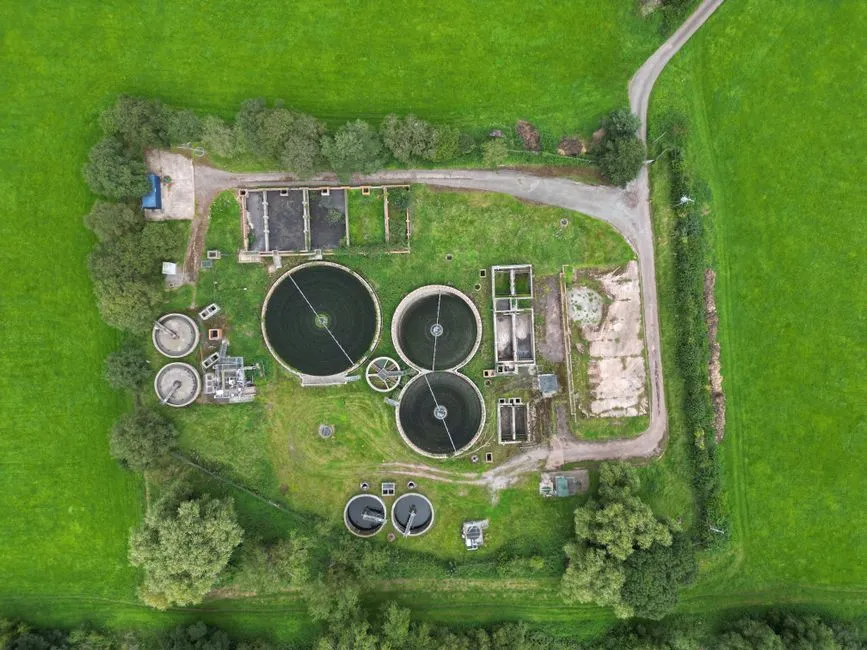
The practical choice is A/O for conventional domestic wastewater where automated operation, low routine attendance and below-ground installation dominate; MBR is the stronger candidate where near-reuse-quality effluent, tighter solids separation or footprint reduction justifies greater mechanical and membrane complexity. The supplied research does not provide a verified Barcelona lifecycle-cost comparison, so added complexity must be evaluated against site and reuse requirements rather than treated as automatic superiority.
The WSZ process train combines anoxic/aerobic biological contact oxidation, sedimentation and disinfection in one automated buried unit. The integrated MBR combines activated sludge with submerged PVDF membrane filtration. The HydropureWater 2026 guide describes MBR effluent as near-reuse quality and its filtration as below 1 μm. These process differences affect equipment layout, maintenance access and the quality evidence required from each bidder.
| Decision factor | WSZ A/O packaged plant | Integrated MBR | Passive alternative |
|---|---|---|---|
| Process | Anoxic/aerobic contact oxidation, sedimentation and disinfection | Activated sludge with submerged PVDF membrane filtration | Passive biological treatment with no electrical connection |
| Published capacity | 1–80 m³/h | 10–2,000 m³/day | ClearFox is expandable to approximately 50 residents |
| Best fit | Conventional domestic wastewater and landscaped below-ground installation | Near-reuse-quality effluent, tighter solids separation or footprint pressure | Small or remote developments where power is unavailable and passive treatment is approved |
| Planning checks | Access covers, ventilation, odour control, power, sludge withdrawal, burial depth and landscaping | Access for membrane cleaning, replacement and instrumentation, plus the same civil interfaces | Site conditions, treatment suitability and disposal route |
| Main procurement caution | Do not infer guaranteed effluent or operating cost without a guaranteed design case | Require lifecycle inputs for servicing and membrane replacement without assuming cycles | Do not substitute a passive unit for an approved higher-performance process |
The passive ClearFox option is an edge case rather than the default. Its published Spanish case describes a rotationally moulded, no-bind-seam container, no electrical connection, modular expansion up to approximately 50 residents and treated water suitable for watering or gardening where reuse is authorised. Its suitability still depends on the approved application, wastewater characteristics, receiving point and site-specific design.
Site planning must also test maintenance access, sludge removal, odour control, electrical supply, groundwater, burial depth and flood exposure. An underground package can reduce visible plant footprint, but inaccessible covers or controls can turn routine service into excavation work. The bid drawings should show the actual access routes rather than rely on a plan-view footprint.
Navigate Barcelona Permits, Discharge and Water Reuse
Approval must be treated as a sequence of separate decisions, because connection availability, discharge, installation and reuse may involve different authorities and different conditions. The HydropureWater 2026 guide sets out EU, national, regional and municipal layers, while also warning that Spain’s rules vary regionally. It does not establish a single Barcelona rule that universally determines capacity, process or discharge point for every housing development.
| Approval layer | Buyer action | Document to obtain or request |
|---|---|---|
| Municipal sewer availability | Confirm whether connection is technically and legally available before treating an off-grid plant as the base case | Written sewer investigation, connection route, pumping assessment and authority correspondence |
| Barcelona municipal requirements | Consult the Barcelona municipal authority on installation, discharge, works, maintenance and any local conditions | Site-specific municipal approval or written decision on the applicable route |
| Catalan water and discharge authority | Engage the Agència Catalana de l’Aigua and identify the competent wastewater and discharge authority | Authorised discharge point, effluent objectives, monitoring and sampling requirements |
| EU reference criteria | Use BOD₅ ≤25 mg/L, COD ≤125 mg/L and TSS ≤35 mg/L as technical reference points, not automatic site permit conditions | Supplier performance schedule and compliance calculation mapped to the approved permit |
| Reuse authorization | Include the intended irrigation or landscaping destination in the regulatory assessment before relying on reuse | Reuse approval, destination, flow, quality controls, monitoring and operating records |
Use the permit-check sequence as follows: confirm municipal sewer availability; consult the Barcelona municipal authority; engage the Agència Catalana de l’Aigua; identify the competent wastewater and discharge authority; and confirm any reuse authorization. The Spain wastewater treatment guidance provides a broader national framework, while the 2026 Spanish residential wastewater treatment engineering guide identifies the regional and municipal layers that must be checked rather than treated as interchangeable.
Catalan coastal-discharge or reuse conditions may be stricter than the supplied EU reference values. The supplier should therefore state the receiving point, effluent objectives, sampling requirements, reuse destination, required controls and documents it can support. Do not permit a bid to rely on irrigation reuse because the ClearFox case states that purified water can support watering or gardening; permission must precede design reliance.
Plan Installation, Commissioning and Lifecycle Support
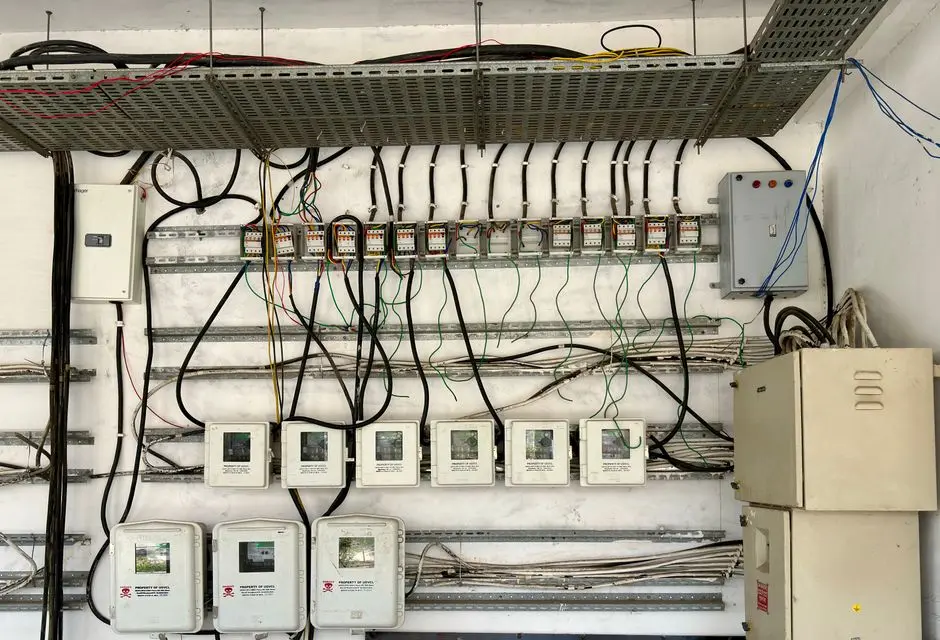
A complete package requires defined interfaces, commissioning evidence and operating support, not merely a vessel and a quoted flow rate. The civil and mechanical scope should cover inlet and outlet routes, access covers, power, controls, ventilation, odour management, sludge withdrawal, bypass strategy, sampling points and landscaping interfaces. Each item needs an owner so that a civil-works gap does not remain between supplier and contractor.
| Delivery stage | Minimum evidence required | Key buyer check |
|---|---|---|
| Design and civil interface | General arrangement, invert levels, loads, access routes and utility requirements | Confirm groundwater, geotechnical, burial-depth and flood conditions |
| Installation | Installation method, civil works schedule, testing and reinstatement requirements | State excavation, power, connections, controls, landscaping and restoration exclusions |
| Commissioning | Hydraulic and process commissioning records, alarm tests and verified effluent sampling | Define acceptance criteria and the approved test protocol |
| Operations handover | Operator training, manuals, spares list, remote-support arrangement and alarm procedure | Confirm responsibilities for routine attendance and call-out response |
| Sludge management | Written extraction, storage, transport and disposal plan | Identify the licensed route and responsible party |
For a WSZ installation, require confirmation of below-grade installation, automated operation without a routine on-site operator and the proposed phasing or relocation strategy. The HydropureWater 2026 source describes the unit as trailer-mounted and relocatable, but the supplier must still verify transport, lifting, access and site constraints.
For MBR, the maintenance plan must address membrane cleaning, replacement, instrumentation and physical access. Do not insert replacement cycles or cleaning frequencies unless the bidder supports them for the specified wastewater and operating duty. The integrated wastewater treatment plant process guide provides useful context for defining the treatment train and supplier responsibilities.
The passive ClearFox case illustrates a different boundary: no electrical connection, no binding seam in its rotationally moulded container, installation generally of one to two days depending on local conditions, and maintenance limited to regular inspections and occasional sludge disposal. Those are case-specific characteristics, not a substitute for development-scale design verification.
Issue a Supplier Brief That Produces Comparable Quotes
A comparable tender starts with a common design basis and a defined scope, not a request for each supplier to select its own assumptions. Include the site plan, sewer investigation, design population, occupancy phasing, flow and load basis, peak factor, groundwater and geotechnical information, receiving point, reuse objective and permit correspondence. Ask bidders to complete the same schedule and identify every exclusion.
| Bid schedule | Required response |
|---|---|
| Process and capacity | Guaranteed process performance, hydraulic and organic loading, treated-effluent values and the current-flow and ultimate-capacity cases |
| Equipment and utilities | Materials, reactor configuration, controls, power demand, sludge handling, access, sampling and instrumentation |
| Interfaces | Installation, excavation, electrical works, inlet and outlet routes, bypass, commissioning, training, landscape restoration and warranty scope |
| Operations | O&M tasks, consumables, membrane or spare-parts strategy, alarm handling, remote support, sludge disposal and training records |
| Commercial exclusions | Permits, excavation, electrical upgrade, sludge disposal, membrane replacement, landscape restoration, taxes, logistics and any other excluded item |
| Alternatives | WSZ, MBR and passive option where applicable, with technical reasons, assumptions and lifecycle inputs |
The supplied research contains no verified 2026 Barcelona packaged-plant price range. The cost schedule must therefore be obtained through site-specific quotations, with assumptions and exclusions shown; an invented benchmark would not support either budgeting or supplier comparison. For process context, see the WSZ underground A/O sewage treatment plant and integrated MBR membrane bioreactor only as technical alternatives to be evaluated under the same tender requirements.
Before award, check that the selected proposal closes the permit-to-procurement chain: the sewer alternative was investigated; both occupancy cases were calculated; the receiving point and reuse route were confirmed; the process matches the site constraints; civil and utility interfaces are priced; commissioning tests are defined; and operating and sludge responsibilities are contractual.
Frequently Asked Questions
What packaged sewage treatment plant fits a housing development in Barcelona, Spain?
Start with the development’s wastewater flow and load, sewer feasibility, receiving point, intended reuse and site constraints. A WSZ A/O package is the practical starting point for conventional domestic wastewater where automated below-ground operation is required; an MBR is the stronger option where near-reuse-quality effluent, tighter solids separation or footprint reduction is necessary. The final choice must reflect site-specific permit conditions rather than equipment capacity alone.
How should packaged wastewater treatment sizing be calculated?
Use 150–200 L per person per day as the residential reference in the HydropureWater 2026 guide, together with its stated BOD₅, COD, TSS and TKN loads. Then apply the approved occupancy schedule, fixture contribution, peak factor, infiltration and development phasing. Request a current-flow and ultimate-capacity calculation from each bidder, with the duty basis and treatment units identified.
How much does a packaged sewage treatment plant cost for a Barcelona housing development?
The supplied research provides no verified 2026 Barcelona package-plant price range, so request a site-specific quotation rather than use an unsupported benchmark. Give bidders the same design population, flow/load basis, receiving point, civil information and permit requirements, then require a priced exclusions schedule covering excavation, electrical works, permits, sludge disposal, membrane replacement and landscape restoration.
How should a supplier be selected for a Catalonia sewage treatment plant?
Compare WSZ A/O and MBR on the same evidence: guaranteed process performance, treatment train, capacity basis, utilities, civil interfaces, commissioning, training, O&M, sludge handling, warranty and exclusions. Give particular weight to demonstrated service arrangements for the selected process. Treat a supplier’s capacity claim as incomplete unless supported by the site-specific design calculation and acceptance criteria.
What discharge and reuse approvals are needed in Barcelona?
Use BOD₅ ≤25 mg/L, COD ≤125 mg/L and TSS ≤35 mg/L as the EU reference values reported in the HydropureWater 2026 guide, but do not treat them as automatic permit limits for the site. Confirm municipal requirements with Barcelona, engage the Agència Catalana de l’Aigua and the competent discharge authority, and obtain any reuse authorization before the design relies on irrigation or landscaping.