Start with the site constraints that determine the plant
The best packaged sewage treatment plant for a Frankfurt housing development depends on sewer access, the residential flow profile, the legally permitted discharge route, development phasing, ground conditions, available space and maintenance access. A compact buried system is a strong candidate where a low-impact layout is required, while MBR deserves consideration where the permit or reuse objective demands tighter solids separation.
Selection should follow a permit-based process design and comparable supplier quotations, not industrial wastewater benchmarks. The legal route comes first: establish whether public sewer connection is possible, whether direct on-site discharge is permitted, and which Frankfurt or Hessian conditions apply. Biocell Water notes that some residential developments require on-site treatment because public sewerage is unavailable, while others require pretreatment before sewer discharge. The project should obtain the discharge route and permit basis in writing before selecting a process. The wastewater basis must then be residential. Biocell Water states that residential flow varies through the day, with peaks typically in the morning, late afternoon and evening, so the plant must handle peak flow combined with low-flow periods. The developer should provide current and planned phases, design population, wastewater-generation and peak factors, groundwater and soil conditions, footprint, maintenance access, and noise and odour limits.
The cited 125 mg/L COD and 25 mg/L BOD5 values must be scoped correctly. HydropureWater’s Frankfurt supplier guide presents them as municipal-sewer values for industrial discharge under EU Directive 91/271/EEC; they are not automatically the applicable limits for a housing-development discharge. The responsible authority must confirm the applicable standard. Likewise, the guide’s statistics that industrial facilities represent approximately 30% of Hesse’s industrial wastewater and that 20% of Frankfurt industrial facilities have moved toward reuse are industrial indicators, not residential demand or reuse factors.
| Input to fix before selection | Evidence or project information required | Why it changes the decision |
|---|---|---|
| Discharge route | Written confirmation of sewer connection, direct discharge or reuse route and applicable permit | Determines the required treatment and compliance evidence |
| Residential flow | Average and peak flow, low-flow periods and current and future development phases | Sets hydraulic and biological sizing |
| Site conditions | Soil, groundwater, footprint, access, noise and odour constraints | Determines whether buried, containerized or phased installation is practical |
| Effluent basis | Authority-confirmed parameters, monitoring requirements and reuse restrictions | Separates a confirmed permit condition from an industrial benchmark |
An underground WSZ packaged sewage treatment plant should be screened against these conditions, but it is not technically or legally selectable from flow and footprint alone.
Match the treatment process to the discharge and reuse objective
Treatment intensity should follow the confirmed effluent or reuse requirement, rather than assuming the most advanced process is the best commercial choice. The process sequence may require screening, flow equalization, biological treatment, solids separation, disinfection and discharge management, with each stage responding to the site permit and influent characteristics. For a compact buried solution, the WSZ configuration uses anoxic and aerobic biological contact oxidation, followed by sedimentation and disinfection within an integrated underground package. That arrangement can reduce the visible plant footprint while retaining an established biological-solids separation sequence. Where the permit is stringent or water reuse is an explicit objective, the MBR sewage treatment system for demanding effluent or reuse is the more relevant candidate for comparative design. HydropureWater describes the MBR as activated sludge combined with submerged PVDF membrane filtration, with a rated range of 10–2,000 m³/day. A membrane process adds solids separation and tighter solids control, but it also introduces membrane maintenance, cleaning, replacement and performance guarantees that must be included in the lifecycle comparison. Neither the WSZ nor the MBR should be credited with a guaranteed discharge concentration from a catalogue description alone. The supplier must demonstrate performance for the project’s stated influent, hydraulic conditions and effluent limits. ClearFox’s FBBR alternative provides useful evaluation criteria: automatic operation, optional remote monitoring and a modular fixed-film process. Biocell Water likewise identifies fixed-bed biological reactor, MBBR and MBR processes within containerized residential systems, with the selection depending on the required effluent standard and budget. These are comparative process routes, not a substitute for a site-specific process design.
| Process concept | Relevant configuration | Selection trigger | Main design question |
|---|---|---|---|
| Buried A/O WSZ | Anoxic/aerobic contact oxidation, sedimentation and disinfection in an underground package | Compact installation and a confirmed conventional discharge basis | Will the demonstrated effluent performance satisfy the permit? |
| SBR or MBBR | Cyclic activated sludge or fixed-film biological treatment | Residential deployment with phased civil or modular installation | How are peak flow, low flow, solids and maintenance access handled? |
| MBR | Activated sludge with submerged PVDF membrane filtration | More demanding effluent or a defined reuse objective | Are membrane cleaning, replacement and guarantees included? |
| FBBR | Fixed-film biological reactor with automatic operation and optional remote monitoring | A modular alternative requiring comparative hydraulic and lifecycle assessment | Does the proposed train meet the permitted flow and effluent basis? |
The permit-based design should state the hydraulic basis, treatment stages, sludge route, disinfection, monitoring and reuse conditions.
Compare buried, containerized and phased installation concepts
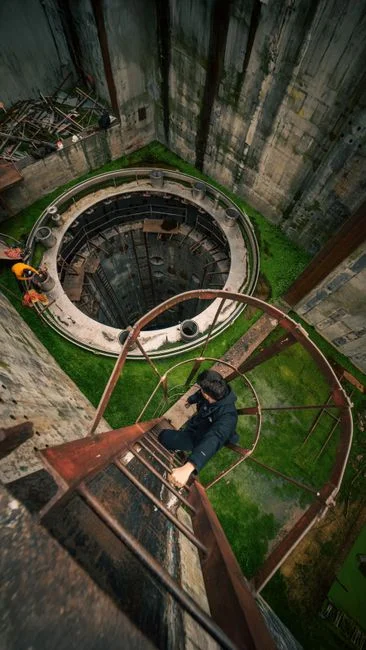
Installation form changes the civil-works burden, expansion path and operating arrangements as much as the biological process. The WSZ is the buried option: HydropureWater lists a catalog range of 1–80 m³/h and describes the system as fully automated, suitable for installation below grade with landscaping above, and operable without a resident operator. It can also be mounted on a trailer for mobile deployment. Containerized or trailer-mounted systems are more relevant for temporary deployment, construction-phase service, restricted excavation or a different financing model. ClearFox states that containerized capacity can be added incrementally as development phases are completed, reducing the need to install the full ultimate load at the outset. The trade-offs remain substantial. Underground construction requires excavation, structural and waterproofing work, safe access arrangements and groundwater management. A containerized system still needs an appropriate plant pad, utilities, noise control, service clearance and an agreed operating boundary. The supplier should explain whether expansion changes the tank, aeration, pumping, control or sludge-handling arrangement.
Biocell Water provides a useful market comparison: below-ground residential solutions commonly use MBBR or SBR, while above-ground solutions commonly use containerized fixed-bed, MBBR or MBR technology. A defensible selection follows five steps:
- Define the permitted discharge, reuse and connection route.
- Calculate average, peak and low-flow requirements for each development phase.
- Screen soil, groundwater, footprint, access, noise and odour constraints.
- Compare A/O, SBR, MBBR, FBBR and MBR process packages against the confirmed effluent basis.
- Request a phased performance, installation and lifecycle proposal from shortlisted suppliers.
| Installation concept | Suitable project situation | Principal project work | Expansion and O&M issue |
|---|---|---|---|
| Buried integrated package | Long-term housing plant where land and amenity space must be preserved | Excavation, structural works, waterproofing, groundwater control and access | Plan safe entry, lifting provisions and any future tank or process additions |
| Containerized or plug-and-play modules | Construction-phase service, restricted excavation, temporary use or modular deployment | Pad, utilities, service routes, noise control and external access | Confirm how additional modules connect to pumps, controls and sludge handling |
| Trailer-mounted system | Temporary or mobile service | Utilities, secure siting and temporary effluent arrangements | Clarify whether the proposal is temporary or a permanent operating concept |
| Phased permanent installation | Development released in stages | Civil interfaces and future tie-ins must be designed from the outset | Require phase-specific hydraulic, permit and handover obligations |
For a Frankfurt housing development, the phased criterion requires the authority and supplier to define which treatment capacity, sampling points, controls and operating conditions apply when each phase is commissioned.
Build a Frankfurt cost and procurement model
A housing-development budget must separate plant equipment from the civil and operating works required to make the installation operational and compliant. HydropureWater’s Frankfurt supplier guide gives €50,000–€2 million as an industrial package-plant CAPEX benchmark. It is not a Frankfurt housing-development quotation and should not be entered as a project price. The same guide gives industrial OPEX of €0.50–€2.00/m³ and municipal OPEX of €0.20–€0.80/m³; these cover different operating contexts and do not establish the applicable rate for this housing scheme. Its screening allowances are installation at 10–20% of base equipment CAPEX, annual maintenance at 5–10% of initial investment and permitting at €5,000–€20,000. The Frankfurt and Hessian approval scope and fee must be confirmed directly with the responsible authority.
The supplier quotation should identify the equipment package, civil works, installation, electrical and control integration, commissioning, permit support, maintenance, sludge handling, alarms, remote monitoring, energy assumptions, training, spares and future expansion. The process guarantee must be tied to the stated influent and effluent conditions. A low equipment price can be displaced by excavation, waterproofing, groundwater control, membrane cleaning, sludge removal, monitoring or later tie-ins. Conversely, a modular proposal may defer civil works and some installed capacity until later phases, but the developer must identify the interim servicing arrangement and who carries operating and compliance risk.
| Cost element | Available benchmark | Scope limitation | Required quotation detail |
|---|---|---|---|
| Equipment CAPEX | €50,000–€2 million industrial package-plant benchmark | Not a Frankfurt housing-project price | Process scope, rated flow, civil-interface exclusions and options |
| Installation | 10–20% addition to base equipment CAPEX as a screening allowance | Published industrial benchmark, not a site estimate | Installation, testing, electrical, controls and civil interfaces |
| Annual maintenance | 5–10% of initial investment as a screening allowance | Scope and asset value remain project-specific | Response time, visits, spares, sensors, sludge work and replacement exclusions |
| Permitting | €5,000–€20,000 early planning allowance | Actual Frankfurt approval scope and fee require authority confirmation | Applications, studies, monitoring, commissioning evidence and responsible parties |
| OPEX | €0.50–€2.00/m³ industrial; €0.20–€0.80/m³ municipal | Neither range is a confirmed housing-development rate | Energy, chemicals, sludge disposal, labour, monitoring and replacement assumptions |
Comparable quotations should follow the method set out for packaged sewage treatment plant selection for housing developments: same design basis, same permit conditions and explicit scope boundaries.
What to request from Frankfurt authorities and suppliers
Ask the responsible Frankfurt and Hessian authorities for written confirmation of the discharge route, applicable permit, monitoring requirements, reuse restrictions, construction and operating conditions, and commissioning evidence required before discharge. Do not treat a catalogue statement or industrial benchmark as the approval basis. The authority should also identify whether connection to public sewer, direct discharge or another route is legally available for the specific parcel and development phase.
Give each supplier the same information request. Require a process flow diagram; hydraulic calculations for average, peak and low flow; stage-by-stage capacity; civil footprint; utility demand; control philosophy; alarm and monitoring scope; commissioning tests; operating and maintenance plan; sludge route; energy assumptions; training; and a lifecycle cost breakdown. Ask for a process guarantee tied to the stated influent and effluent conditions, with the test method and acceptance period defined. Require each proposal to explain how the plant remains compliant and serviceable during phased handover and future capacity additions. The German AbwV and WHG treatment technology guide can support the technical-document request, but project compliance still depends on the authority’s written determination.
Frequently Asked Questions
Is a buried WSZ package the best fit for a compact Frankfurt housing development?
A buried WSZ package is a strong candidate when sewer access is unavailable, the confirmed discharge route is suitable, and preserving above-ground amenity space is important. HydropureWater describes the WSZ as an underground, automated A/O contact-oxidation, sedimentation and disinfection system with a 1–80 m³/h catalog range. It remains conditional on average and peak residential flow, soil and groundwater conditions, excavation access
Frequently Asked Questions
Which packaged sewage treatment plant is best for a housing development in Frankfurt?
For a Frankfurt housing development, a Sequencing Batch Reactor (SBR) system is generally the most suitable choice due to its high adaptability to variable hydraulic loads and consistent effluent quality. Given the strict environmental regulations in the Hesse region, these systems are preferred for their ability to reliably achieve nutrient removal levels required for discharge into local sensitive water bodies.
How much does a packaged sewage treatment plant cost for a Frankfurt housing development?
Capital expenditure for a packaged plant typically ranges from 1,200 EUR to 2,500 EUR per population equivalent (PE), depending on the treatment technology and site-specific civil engineering requirements. Ongoing operational costs, including electricity, sludge disposal, and mandatory biennial inspections, generally fall between 50 EUR and 120 EUR per PE annually.
Should we choose a buried WSZ plant, an SBR/MBBR system or an MBR system?
The selection depends on the required effluent quality: SBR/MBBR systems are the industry standard for residential developments, offering a robust balance of cost and performance. MBR (Membrane Bioreactor) systems should only be chosen if the development requires water reuse or if discharge permits mandate exceptionally low pathogen and nutrient counts, as they involve significantly higher energy consumption and membrane maintenance costs compared to standard SBR setups.
How do we size a packaged sewage plant for a residential development with phased housing?
Systems must be sized based on the final total capacity to avoid costly retrofitting, but the chosen technology must be capable of operating efficiently at partial loads during early phases. Modular SBR systems are ideal here, as they allow for the activation of additional tank compartments or aeration cycles as the population equivalent (PE) increases, ensuring that the biological process remains stable even when the plant is operating at 30-50% of its ultimate design capacity.
What permits and discharge limits apply to an on-site sewage treatment plant in Frankfurt?
On-site plants must comply with the Abwasserverordnung (AbwV) and the specific requirements set by the Frankfurt Untere Wasserbehörde. Typical discharge limits for small to medium plants require a COD below 90 mg/l, BOD5 below 20 mg/l, and NH4-N below 10 mg/l. Furthermore, all installations must adhere to DIN EN 12566 standards and require a formal water law permit (wasserrechtliche Erlaubnis) before construction begins.