Why Goyang's Liquid-Cooling Growth Changes the Water-Treatment Requirement
A Goyang-si data center needs a source-specific treatment plan for domestic wastewater, cooling-water blowdown, direct-to-chip condensate, and wash water. The local development is concrete: Data Center Dynamics reported in 2026 that LG CNS began phase two of the 80MW Samsong data center in December 2025 and took over operations in April 2026. Its direct-to-chip liquid cooling is intended to support planned Nvidia Vera Rubin systems for Naver Cloud. The required treatment train cannot be specified until streams are segregated, water quality is measured, the destination is confirmed, and Korean approval conditions are established.
This development changes the design question from “Will the facility discharge wastewater?” to “Which source requires which treatment step?” Direct-to-chip cooling can create condensate, while closed recirculating loops can require purge to control accumulated dissolved and suspended contaminants. A single blended wastewater stream would conceal those differences and could oversize biological equipment, underprotect membranes, or contaminate a reuse stream.
Data Center Dynamics described the Samsong deployment as LG CNS’s first liquid-cooling system and expected it to become one of the largest of its kind in South Korea. The same report says Naver Cloud’s colocation agreement extends beyond ten years and may change because of factors such as inflation; in June 2026, Naver announced a 55MW Nvidia hardware expansion in South Korea. These are commercial and capacity signals, not wastewater-flow data, so they justify staged design rather than a fixed plant capacity.
Baker Donelson’s analysis identifies water consumption, stewardship, and emerging operational risks as cooling-system concerns. The MDPI study Groundwater Potential Mapping Using Data Mining Models of Big Data Analysis in Goyang-si, South Korea likewise supports quantitative, site-specific resource assessment and systematic management. Neither source establishes a Goyang withdrawal allowance, reuse mandate, or data-center discharge limit. A regional guide to data-center wastewater and cooling-blowdown treatment provides useful planning structure, but local measurements and approvals must govern the final design.
Separate the Wastewater and Cooling-Blowdown Sources
Cooling-loop blowdown is the controlled purge used to prevent dissolved and suspended contaminants from accumulating beyond the loop’s operating limits. Its required flow cannot be calculated without makeup-water chemistry, evaporation, permitted concentration limits, and the control target for conductivity, hardness, alkalinity, and other constituents. Treating blowdown as a fixed percentage of IT load is therefore not an engineering basis.
Direct-to-chip condensate should be collected separately from chemically stabilized recirculating-loop blowdown. Condensate may require a different balance of monitoring, equalization, and treatment from a purge containing corrosion-control chemicals, suspended material, or concentrated dissolved solids. Sanitary wastewater, kitchen and staff facilities, equipment wash water, and process drains must also remain separate in the initial inventory. Blending them may simplify piping, but it destroys source-specific evidence and makes reuse quality harder to control.
For every stream, request the flow distribution, temperature, pH, conductivity, hardness, alkalinity, suspended solids, and a representative laboratory analysis. Add oil and grease where kitchen, vehicle, or equipment-washing sources are present, and identify chemical additives used in each cooling system. Samples should cover normal operation and representative startup, shutdown, maintenance, and upset periods.
| Stream | Primary design questions | Minimum information for sizing |
|---|---|---|
| Direct-to-chip cooling condensate | Can it enter reuse or cooling service directly, or does it require polishing and disinfection? | Flow profile, temperature, pH, conductivity, suspended solids, microbial indicators, and known contamination risks |
| Recirculating cooling-water blowdown | Which constituents drive purge, and what endpoint applies? | Makeup chemistry, evaporation, control limits, concentration factors, flow profile, and chemical inventory |
| Sanitary wastewater | What biological and solids treatment duty is present? | Flow, biodegradability, nutrients, suspended solids, pH, toxicity, and discharge or reuse destination |
| Kitchen and staff wastewater | Does it require FOG removal before biological treatment? | Flow, oil and grease, suspended solids, detergents, pH, and temperature |
| Equipment or process wash water | Is it episodic, contaminated, or suitable for controlled reuse? | Event flow, cleaning chemistry, suspended solids, pH, and segregation requirements |
The Goyang groundwater study supports a systematic, quantitative understanding of local water resources, but it does not authorize a discharge route. Confirm sewer connection, receiving-facility capacity, water-use conditions, and any separate environmental approvals before drawing the conceptual treatment train. Available pretreatment components and replacement media can be reviewed through the referenced water-treatment parts, valves, and filter-media range, after the water matrix is known.
Build a Water Balance Before Choosing Equipment
Equipment sizing must begin with a measured water balance, because the supplied research does not provide a wastewater flow for the Samsong site. Establish measured or contracted makeup supply, evaporation, blowdown, drainage, storage, and expected capacity changes. Then reconcile each term across base, peak, expansion, and shutdown scenarios rather than sizing from the initial IT build-out alone.
Model reuse as a simultaneous supply-and-demand problem. Compare treated-water production with non-potable demand, including any variability in cooling demand, cleaning schedules, occupancy, and wastewater generation. Storage is part of the balance: it must absorb timing differences without creating an unverified water-quality hold time. The data-center blowdown treatment guide for a water-scarcity metropolitan context provides a useful comparative planning frame, but Goyang conditions remain site-specific.
Keep hydraulic capacity separate from contaminant-removal duty. Hydraulic capacity depends on flow and operating time; contaminant duty depends on source chemistry, target endpoint, recovery objective, and variability. A low-flow stream with high conductivity can still impose a difficult desalination or concentrate-management duty, while a higher-flow sanitary stream may be comparatively straightforward to treat biologically.
| Water-balance scenario | Flows to reconcile | Design consequence |
|---|---|---|
| Base operation | Makeup, evaporation, blowdown, wastewater generation, reuse demand, storage change | Establishes initial hydraulic and treatment basis |
| Peak demand | Hourly and daily peaks, concurrent wastewater generation, storage drawdown | Tests equalization, peak treatment, and reuse reliability |
| Expansion | Planned IT and cooling changes, additional non-potable demand | Identifies modular capacity and future space requirements |
| Shutdown or maintenance | Reduced reuse demand, residual blowdown, cleaning flows, stored water | Tests discharge resilience and temporary operating strategy |
Long-term occupancy supports lifecycle planning but not a flow assumption. Data Center Dynamics reported a colocation agreement extending beyond ten years, with possible changes including inflation, and a 55MW Nvidia hardware expansion announced for South Korea in June 2026. The treatment design should therefore preserve space and connection points for expansion while basing initial equipment duty on documented operating data.
Match Each Treatment Train to the Effluent Destination
The required endpoint determines the treatment train; technology brands do not. A biological route is appropriate only after the wastewater is shown to be biodegradable and its nutrient, solids, pH, and toxicity characteristics are understood. Depending on those results, activated sludge, biofilm, or an integrated MBR wastewater treatment system may be considered. An MBR combines biological treatment with membrane separation, but it does not remove dissolved salts and still requires a defined solids-handling route.
Physical pretreatment should solve a demonstrated problem. Screening and grit removal address gross solids. Equalization controls hydraulic and quality variation. Coagulation or flotation may be justified by colloids, suspended solids, oil and grease, or FOG; otherwise, they add chemicals, sludge, and operating burden. This separation of pretreatment from biological treatment, membrane polishing, and disinfection prevents unnecessary equipment.
Membrane selection follows the endpoint. UF can remove suspended solids and support a solids or pathogen-barrier objective. MBR provides biological treatment with membrane solids separation. RO is relevant when dissolved-salts rejection is required for a defined reuse application. The required quality must come from a reuse specification or confirmed Korean discharge permit, neither of which is provided in the supplied research. A comparison of 2026 BOD and TSS discharge limits by country can support international orientation, but it cannot replace Goyang’s confirmed conditions.
Disinfection is a separate design decision. Evaluate the application, contact conditions, residual, chemical generation, storage, handling, and Korean approval requirements. The referenced on-site chlorine dioxide disinfection system is identified for industrial cooling loops and process wastewater, but suitability must be demonstrated through water chemistry, demand, safety review, and local approvals.
For circular infrastructure, the Tomorrow Water concept offers a precedent rather than a Goyang guarantee. Data Center Dynamics reported in 2021 that its BBF/Proteus process uses microbial biofilm to remove organic pollution, can be built underground, and uses 80–85% less area than a clarifier according to the company. The same report says installation at Seoul’s Jungnang Water Reclamation Center halved the footprint and energy use. Neither claim proves equivalent performance at a Goyang data center.
| Treatment route | Suitable duty | Key issue to close |
|---|---|---|
| Source segregation and physical pretreatment | Removing solids, grit, colloids, oil, grease, or FOG | Representative analysis and downstream compatibility |
| Biological treatment or MBR | Biodegradable organic wastewater requiring biological solids separation | Biodegradability, nutrients, toxicity, sludge handling, and endpoint |
| UF or other polishing | Suspended-solids removal, pretreatment, or a required pathogen barrier | Pore selection, feed chemistry, recovery, cleaning, and fouling |
| RO | Dissolved-salts rejection for a defined reuse endpoint | Energy, recovery, scaling, and concentrate disposal |
| Disinfection | Microbial control before discharge or reuse | Target organism, dose, contact, residual, and chemical approval |
| Evaporation, crystallization, or other residual management | Concentrated reject or residual salts from high-recovery treatment | Authorized destination, energy, chemical use, and residual handling |
Where membrane concentrate or residual salts remain, evaluate an authorized evaporation, crystallization, or other residual-management route. Membrane treatment does not eliminate the residual stream. A high-recovery or zero-liquid-discharge concept remains conditional on that route and its economics.
Use Local Water-Scarcity and Resource-Recovery Context Without Overclaiming
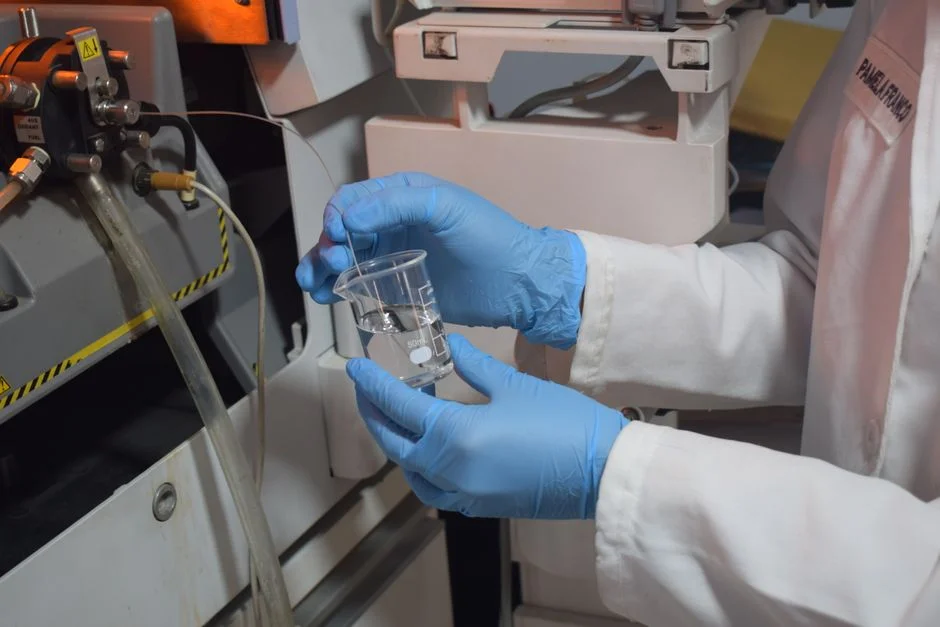
Baker Donelson supports reviewing water consumption and stewardship as operational risks, but its analysis does not establish a Goyang withdrawal allowance, tariff, or reuse mandate. The MDPI Goyang groundwater study supports quantitative mapping and systematic management of groundwater potential, but it neither defines data-center discharge criteria nor proves that reclaimed water may be recharged underground. Those distinctions matter when a business case is prepared for approval.
Resource recovery should therefore be tested as an option. The Tomorrow Water model co-locates treatment and data-center infrastructure, uses data-center waste heat to support biological processes and sludge drying, and may recover space otherwise occupied by treatment assets. For Goyang, each component needs a separate feasibility check: available heat, seasonal and operational mismatch, biological demand, sludge-drying requirements, parcel constraints, utility interfaces, and institutional ownership.
Heat reuse and treatment-plant colocation are not baseline requirements for the Samsong project. They are engineering and commercial concepts that become credible only if the site has compatible infrastructure and partner commitments. A plate-and-frame filter press may be relevant if measured sludge-generation and solids-dewatering data establish a dewatering requirement; no such Goyang data were supplied.
Frame the business case around avoided freshwater demand, operational resilience, and regulatory-risk reduction. Do not calculate return on investment from generic assumptions. The model must use the site water balance, contracted water conditions, confirmed treatment and disposal costs, energy demand, chemical use, maintenance, and the value assigned to reduced water exposure.
Environmental claims also require traceability. Groundwater-potential mapping is not a site water-balance calculation, and a reclaimed-water concept is not an approval to discharge or recharge. Keep the project’s reuse claim limited to the endpoint, quantity, quality monitoring, and approval pathway confirmed by the relevant Korean authority.
Specify, Pilot, and Procure Against the Real Operating Risk
A defensible wastewater equipment procurement starts with the measured water matrix and operating envelope. Issue a request for information covering hourly and daily flow profiles, required endpoint, recovery objective, footprint, utility demand, noise limits, automation scope, residual handling, and Korean site-service capability. Require bidders to expose their assumptions, biological or membrane loading basis, redundancy, cleaning strategy, chemical requirements, commissioning sequence, and performance exclusions.
For direct-to-chip cooling, require compatibility confirmation against expected changes in cooling-water chemistry and operating temperature. Treatment equipment should not be selected from a generic “blowdown” flow. The supplier must show how the selected process responds to makeup-water variability, additive use, contamination events, shutdowns, and changes in evaporation and blowdown control.
Pilot representative flows when available evidence cannot establish biological treatability, membrane performance, or reuse stability. The pilot should use the anticipated feed chemistry and operating variability, not a clean synthetic water substitute. Record removals, energy, chemicals, membrane or biological behavior, sludge generation, cleaning frequency, and concentrate quality. A short demonstration of product water does not replace full-scale performance evidence.
Verify the Korean pathway in parallel: environmental permits, water-use conditions, sewer or receiving-facility requirements, chemical controls, sludge handling, discharge destination, and local implementation responsibilities. The supplied research contains no site-specific permit values, so quotations should be conditional and should state which approvals or analyses are excluded.
| Procurement package | Required evidence | Acceptance check |
|---|---|---|
| Source characterization | Flow records, temperature, pH, conductivity, hardness, alkalinity, suspended solids, and representative laboratory analysis | Data represents normal, peak, startup, shutdown, and upset conditions |
| Process basis | Endpoint, recovery objective, loading rates, redundancy, cleaning, chemicals, residuals, and utility demand | Assumptions match measured site conditions and future scenarios |
| Pilot evidence | Representative-feed test with operating records and product or discharge analysis | Results cover the specified operating envelope |
| Compliance scope | Permit pathway, receiving-facility requirements, chemical controls, and sludge route | Responsibilities and exclusions are stated contractually |
| Service scope | Local commissioning, spare parts, operator training, maintenance, and response times | Supplier can support operation in South Korea |
The referenced UF system is suitable for preliminary solids-removal and pretreatment evaluation where the measured duty supports it. HydropureWater specifies 0.03 micron PVDF membranes, systems from 2,000 to 40,000 L/h, automatic backwash, and air scour. These are equipment specifications, not a Goyang sizing recommendation. Selection still requires feed-water analysis, target recovery, operating time, footprint, utilities, and cleaning validation. Automatic chemical dosing should be specified around actual chemistry and control requirements, not added as a default package.
Make the Final Treatment Decision with a Clear Decision Framework
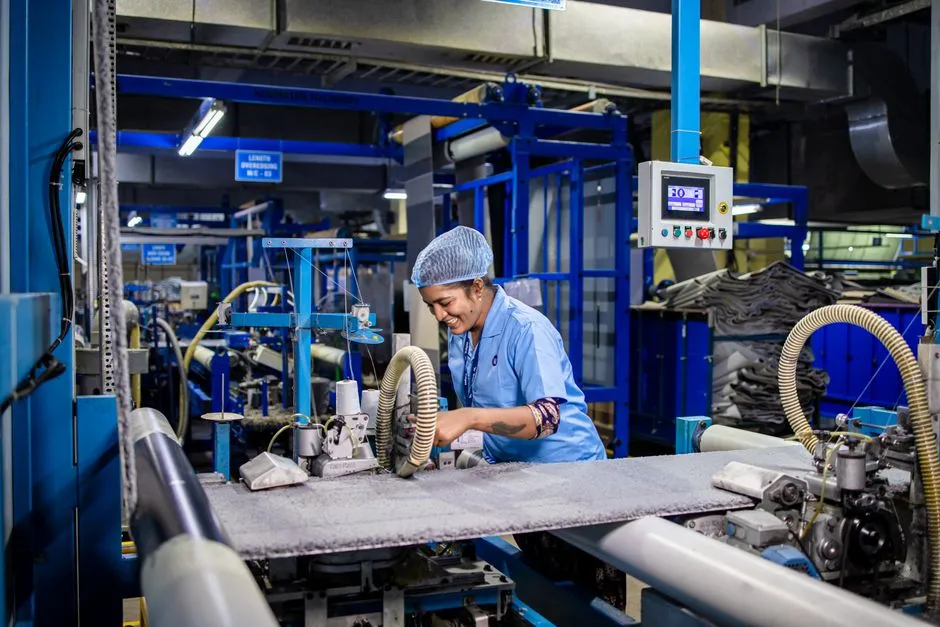
The lowest-complexity compliant train should win when the confirmed destination can accept demonstrated effluent quality. Choose direct discharge treatment when equalization, required pretreatment, residual handling, monitoring, and operating risks produce a defensible lifecycle case. This is usually the first decision to test; it should not be rejected merely because reuse has greater strategic appeal.
Choose partial reuse when a reliable non-potable demand can absorb treated water. The design must prevent contamination, define quality monitoring, provide storage, and tolerate variable demand and production. If those conditions are not met, a reuse claim adds operational exposure without delivering reliable freshwater displacement.
Choose high-recovery reuse or zero-liquid-discharge only after the residual route, energy use, chemical use, equipment availability, and economics are demonstrated. Membrane recovery, concentrate salinity, evaporator duty, and authorized residual handling must be evaluated together. A high recovery percentage alone is not a complete solution.
Evaluate an integrated Tomorrow Water-style concept only where land, heat recovery, treatment objectives, and institutional partnerships align. Use the Seoul installation as a precedent for considering footprint and resource integration, not as proof of Goyang performance. Do not make an unverified concept the default specification.
| Decision condition | Preferred route | Evidence required before commitment |
|---|---|---|
| Confirmed destination accepts the demonstrated quality | Source-specific treatment and compliant discharge | Flow and water matrix, permit pathway, lifecycle comparison, residual plan |
| Reliable non-potable demand exists | Partial reuse with segregated distribution and monitoring | Demand profile, storage assessment, quality specification, source-protection plan |
| High recovery is mandatory and residual handling is viable | Advanced membrane treatment with approved residual management | Recovery and concentrate tests, energy and chemical assessment, authorization |
| Land, heat, and partner conditions align | Integrated circular treatment and infrastructure concept | Site feasibility study, heat balance, partnership terms, and verified process evidence |
Do not issue a final purchase order until the source inventory, water balance, confirmed endpoint, Korean approval pathway, pilot evidence, residual-management route, and supplier guarantees are closed. If a material input remains unverified, keep the procurement conditional and define who must provide it and by when.
Frequently Asked Questions
How much does a data-center wastewater and cooling-blowdown treatment system cost in Goyang-si?
The supplied research provides no quotation or site-specific cost for a Goyang-si treatment system. A defensible budget request should provide the source-by-source flow profile, laboratory analyses, endpoint, recovery target, footprint, utility requirements, residual route, installation boundary, and Korean permitting scope. Require bidders to separate equipment, civil work, chemical storage, commissioning, sludge or concentrate handling, energy, and service costs. Do not compare bids until they use the same endpoint and operating basis.
Should a Goyang data center use MBR, UF, RO, or a biological system for cooling blowdown?
Select from measured chemistry and the required endpoint, not from the technology name. Biological treatment or MBR may suit biodegradable sanitary wastewater; UF may suit solids-removal duties; RO is relevant when dissolved salts must be rejected. Cooling blowdown may contain no substantial biodegradable organic load, so a biological reactor may add unnecessary complexity. A representative pilot should verify the selected duty.
What capacity data should a supplier request before quoting wastewater treatment equipment?
Request hourly and daily source flows, operating schedule, makeup-water chemistry, evaporation and blowdown control, storage, and future expansion scenarios. Also provide the required effluent or reuse quality, recovery objective, footprint, utilities, noise, automation, and residual-handling requirements. These inputs are necessary to distinguish hydraulic capacity from contaminant-removal duty.
Can a data center reuse cooling blowdown instead of discharging it?
Possibly, but only where measured water quality, a defined non-potable use, reliable demand, monitoring, and an approved discharge or reuse route support the decision. Blowdown chemistry may change with cooling chemistry and operating conditions, so reuse requires source control and verification. Do not assume that condensate or blowdown can enter a potable or cooling system without an approved quality specification.
Which Korean approvals must be confirmed before installing wastewater-treatment equipment?
Confirm the applicable environmental permit, water-use conditions, sewer or receiving-facility requirements, chemical controls, sludge handling, discharge destination, and local implementation responsibilities with the relevant Korean authorities. The supplied research gives no Goyang-specific permit values or approval list, so ask the authority and receiving utility to define the site’s conditions in writing. Chemical storage, generation, and disinfection systems should also be included in that review.