Why Santiago housing projects need a packaged sewage plant, not a central connection
Peripheral housing sites in Chile's Metropolitan Region sit outside the dense concession collector grid that Aguas Andinas inherited when the centralised state operator was replaced in May 1990 by 13 regional companies, structured under the 1988 contract-ex-ante framework (PECC, "Santiago de Chile Water Supply, Sanitation and Water Treatment"). For a project of tens to a few hundred dwellings on the urban fringe, laying a long rising-main to reach the concession's interceptor is rarely cheaper or faster than a self-contained buried package plant sized for the development's own population equivalent.
Because the concession network was not laid out to cover every new loteo, the developer usually faces a binary choice: negotiate a discharge point with the concessionaire and accept whatever pretreatment it imposes, or commit to on-site treatment and reuse inside the development. In the Santiago Metropolitan Region, where the Lund 2021 study notes that over 40% of Chile's population is concentrated in the capital valley, decentralised treatment is a structural feature of new residential supply rather than an exception. The same study links that concentration to increasing waste-management pressure and to slow progress toward a circular economy, which makes the per-development choice between a buried A/O unit, a packaged MBR, or a biofiltro a recurring procurement decision.
Choosing a package plant locks the developer into the concession's long-term expectations: the regional company is the counterparty that will eventually accept or refuse the asset, and the 1988 contract-ex-ante design embedded benchmark obligations for effluent quality into the concession. Packaged-plant selection in Santiago is a compliance pathway decision that must align with the concessionaire's pretreatment and discharge requirements from day one.
Sizing inputs every packaged plant for a Santiago housing site must be checked
Suppliers quote a "rated m³/h" headline figure, but that single number does not size a residential plant. The inputs below are the ones a hydraulic study must lock before a quotation can be compared on equal terms.
| Sizing input | What to confirm in the hydraulic study | Why it changes the package selection |
|---|---|---|
| Population equivalent (PE) and number of dwellings | PE count from dwellings × assumed occupancy, plus any non-residential flow (clubhouse, commercial pad) | Drives average daily flow and biological load |
| Per-capita wastewater flow (L/person·d) | Confirm the value used in the project's hydraulic study, since Chilean residential figures vary by development type | Sets average daily flow and tank volume |
| Peak factor (hourly ratio to average) | Peak factor appropriate for small residential catchments, which is typically higher than for city-scale networks | Sets hydraulic capacity and equalisation volume |
| Influent BOD, COD, TSS | Site-specific characterisation or a documented Chilean residential default used by the supplier | Sets biological reactor volume and sludge production |
| Effluent target | Chilean discharge standard (DS Nº 609/1998 and current applicable rules) plus any Aguas Andinas concessionaire-specific limit and any reuse goal for irrigation | Drives whether a simple A/O, an MBR, or a tertiary polish is needed |
| Design wastewater temperature | Minimum 2026 design temperature assumption for the Santiago winter case | Lower temperatures reduce biological kinetics, so required tank volume rises |
| Land and burial constraints | Available footprint, burial depth, vehicle loading above the tank | Determines whether a buried A/O package, a compact MBR, or a surface biofiltro is feasible |
Two non-negotiables: ask the supplier which design BOD loading (kg BOD/m³·d) their quoted unit is selected against, and ask which peak factor was used in the hydraulic sizing. If those numbers are not in the offer, the offer is not comparable to a competitor's. The same logic applies to reuse targets: lock the effluent requirement before the technology, because switching from "discharge to sewer" to "reuse for irrigation" after procurement typically forces a redesign toward an MBR.
Process options that realistically fit a Santiago housing development

Three process families are technically and commercially credible in Chile for a residential development of tens to a few hundred dwellings. These options provide the necessary scale and performance to meet local regulatory requirements.
| Process family | Typical driver | Footprint and operating profile |
|---|---|---|
| Buried A/O contact-oxidation package | Default for small to medium residential developments with no reuse requirement; combines anoxic and aerobic zones with sedimentation and disinfection in a single buried unit, with flow range 1–80 m³/h per WSZ-class equipment | Buried, low visual impact, moderate operator skill, lowest CAPEX in most quotations |
| MBR membrane bioreactor package | Upgrade path when near-reuse effluent is required for landscape irrigation or toilet flushing inside the development, with effluent filtered to under 1 μm and a footprint about 60% smaller than conventional activated sludge at the same load | Compact, mechanised, higher CAPEX and energy use, membrane cleaning schedule required |
| Biofiltro (trickling filter / buried biological filter) | Simpler gravity-flow alternative where land is available and a less mechanised system is preferred; common in Latin American residential projects | Larger footprint, lower electricity use, lower mechanical complexity, more sensitive to hydraulic load swings |
Anaerobic co-digestion of organic waste alongside sewage sludge is a value-add, not a baseline selection criterion. The Lund 2021 study reports that 58% of Chilean waste is organic matter, and that the average municipality in the Metropolitan Region has a biogas potential of 86 GWh per year, with a possible CO2-eq reduction of about 2 million tonnes per year at regional scale. For a single housing development those numbers translate into a potential revenue or greenhouse-gas offset if the package plant is co-located with an organic-waste reception point, but the developer should not select a process around that upside alone.
Aguas Andinas concession acceptance: what to verify before procurement
Most package-plant failures in the Santiago Metropolitan Region are not hydraulic or biological failures; they are acceptance failures. The plant works, the effluent is compliant with the generic Chilean standard, and the concessionaire still refuses to take it over. Four checks reduce that risk before the purchase order is signed.
First, confirm whether the site sits inside an existing Aguas Andinas concession area and whether the concessionaire will accept the package plant's effluent into its network or will require on-site reuse or discharge to a watercourse under its own conditions. Second, be aware of the 50% national market-share cap rule, which prohibits one investor or operator from holding companies whose combined drinking-water and sewage customers exceed 50% of the national total (PECC). That cap shapes who the long-term accepting party is, and it can change if concessions are reassigned. Third, recognise that the Chilean regulatory framework was defined in 1988 on a contract-ex-ante basis, and that the regional companies — originally held under CORFO — are the counterparties developers must align with on technical specifications, not generic "the regulator" (PECC). Fourth, if the design includes a UV polishing step, size it against the actual prefiltered water quality rather than a generic UV curve; the Azud case study at a Santiago WWTP documents that prefiltration directly reduces the shadow effect on UV lamps and therefore the energy the disinfection stage consumes.
One procurement-side decision that follows from these checks: request the supplier to provide, in writing, the design basis they will submit to the concessionaire (flows, loads, effluent targets, standby philosophy). If they cannot produce that document, they are selling equipment, not a project, and the acceptance risk stays with the developer.
Decision framework: choosing between A/O, MBR and biofiltro for your project
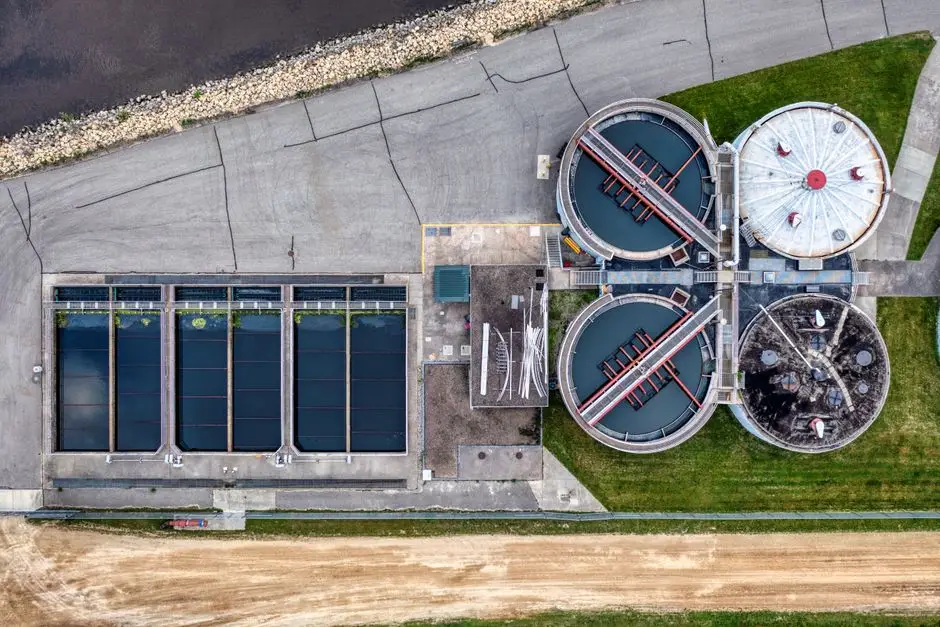
The choice collapses to a small set of binary conditions, and a developer can usually reach a decision in one working session once the hydraulic study is in hand. The framework below maps the most common project profiles to the right process family.
Choose a buried A/O contact-oxidation package when the project is a standard residential development with no reuse requirement and the developer's priority is the lowest CAPEX and the simplest operation. In that case, a buried A/O package sewage treatment plant in the 1–80 m³/h class covers the majority of loteo-scale projects. Choose an MBR package when reuse-quality effluent is required for irrigation, toilet flushing, or fire-water makeup, when the footprint is constrained, or when the concessionaire imposes a tight BOD/TSS limit that a conventional clarifier cannot meet consistently. A packaged MBR package plant for reuse-quality effluent in the same flow class is the upgrade path; the trade-off is membrane replacement and energy. Choose a biofiltro when land is available, mechanical simplicity is valued, and the development wants to minimise electricity use and operator intervention, accepting a larger surface footprint in exchange. Re-evaluate the choice if population, peak factor, or effluent target change after the hydraulic study, because each of the three families responds differently to scale-up: A/O scales linearly in tank volume, MBR scales with membrane area, and biofiltro scales with filter surface area and recirculation pumping. For broader context on packaged selection across regions, the packaged sewage treatment plant for residential developments guide covers a parallel cold-climate case, and the regional concession and privatization context for Santiago piece documents the kind of US$2 billion 1995–2000 sector investment scale (PECC) that shaped the current concession environment.
Frequently Asked Questions
What budget range should we plan for a packaged sewage plant in a Santiago housing development?
Budget depends on population equivalent, effluent target, and whether the unit is buried A/O, MBR, or biofiltro. The supplied research does not provide a quoted price for Chilean residential package plants, so request a written design basis (PE, peak factor, influent BOD, effluent target) and a separate equipment, civil, and 5-year operating cost line from each bidder, then compare on the same basis.
How do we pick a supplier that the Aguas Andinas concessionaire will accept?
Ask each bidder for a reference list of installed package plants in the Santiago Metropolitan Region that were formally accepted by the concessionaire, and for the design basis document they submitted for that acceptance. A supplier who cannot produce both has not closed the loop in this regulatory environment and the acceptance risk stays with the developer.
Which influent and hydraulic inputs do we need before we can compare quotations?
Lock the population equivalent, per-capita flow, peak factor, influent BOD/COD/TSS, design winter temperature, and effluent target (Chilean standard plus any concessionaire-specific limit and any reuse goal) before issuing the inquiry. Without these, two suppliers quoting the same m³/h headline can be sizing for very different plants.
What is the lead time and compliance risk for an MBR versus a buried A/O package?
Buried A/O units are typically shorter to deliver and simpler to commission because there is no membrane skid to install and integrity-test; MBR packages add membrane delivery, clean-in-place commissioning, and a more demanding operator handover. Compliance risk for both is driven by the concessionaire's pretreatment and discharge conditions, not by the equipment itself, so the same Aguas Andinas acceptance check applies to either choice.