Why Montreal Housing Needs Packaged Sewage Treatment in 2026
The federal government and the City of Montreal announced a joint investment of $320 million on 15 September 2025 to build the drinking-water, stormwater and wastewater infrastructure serving Phase 1 of the Namur-Hippodrome neighbourhood in the Côte-des-Neiges–Notre-Dame-de-Grâce borough, with a federal contribution of up to $128.3 million through the Canada Housing Infrastructure Fund (CHIF) and a City of Montreal contribution of $192.5 million, serving 2,250 non-market housing units on the Hippodrome site (Housing, Infrastructure and Communities Canada, 15 September 2025).
On projects of this scale, packaged sewage treatment plants are typically the practical answer where central sewer capacity has not yet caught up to new housing density: they are factory-built, buried or trailer-mounted biological units that run fully automated with no on-site operator (per the WSZ underground integrated sewage treatment description). CHIF, announced in Budget 2024 with an overall envelope of up to $6 billion, is authorized to fund drinking-water, wastewater, stormwater, system-reliability, capacity-preservation and waste-diversion infrastructure tied to new housing, which is a direct policy fit for packaged STP procurement (Housing, Infrastructure and Communities Canada, 15 September 2025). For similar guidance on a comparable Canadian context, see our walkthrough of packaged sewage treatment plant for Calgary housing developments.
Packaged Sewage Treatment Plant Options for Residential Developers
Three packaged process families are typically tendered for Montreal residential work. Option A is a buried anoxic/aerobic contact-oxidation package such as the buried A/O packaged sewage treatment plant (WSZ series), which combines anoxic and aerobic biological contact oxidation, sedimentation and disinfection in a single buried or trailer-mounted unit rated for 1–80 m³/h, fully automated with no operator required and capable of being installed below grade with landscaping above. Option B is a containerized integrated membrane bioreactor (MBR) using submerged PVDF membranes at the integrated MBR packaged plant level, rated for 10–2,000 m³/day with sub-1 μm effluent, near-reuse quality, and a footprint roughly 60% smaller than conventional activated sludge. Option C is a pre-engineered biological package using lamella clarification or dissolved-air flotation (DAF) pre-treatment for residential mixed-use sites with high fats-oils-grease or peak loads; specific sizing inputs for this option should be confirmed directly with the vendor. A packaged MBR has been documented in a peer-reviewed source as serving a Canadian community wastewater application, which establishes Canadian precedent for the MBR route (Auricle Global Society of Education and Research, 2018).
| Technology | Capacity envelope | Footprint | Effluent quality | Operator | Canadian precedent |
|---|---|---|---|---|---|
| Buried A/O package (WSZ) | 1–80 m³/h | Below-grade, landscaping above | Secondary biological | None required | Common in similar buried applications |
| Containerized integrated MBR | 10–2,000 m³/day | ~60% smaller than conventional activated sludge | Sub-1 μm, near-reuse | None required | Documented in Canadian community application (2018) |
| A/O + lamella or DAF pre-treatment | Vendor-confirmed | Slightly larger than A/O alone | Improved on FOG/peak loads | None required | Vendor-confirmed |
How to Size a Packaged STP for a Montreal Housing Development
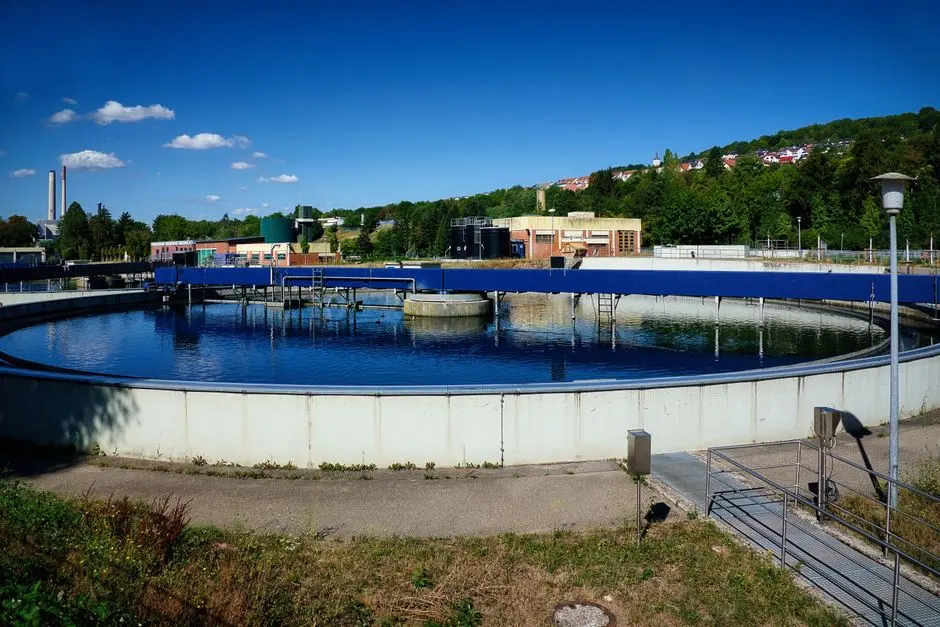
The sizing inputs the developer must collect before contacting a vendor are: total unit count, bedrooms per unit, expected occupancy, peaking factors, commercial or amenity load, and the discharge destination (combined versus separate sewer, or surface water). Selecting the right technical approach requires matching these variables to the system's capacity. Applying that logic to the Namur-Hippodrome Phase 1 scale of 2,250 non-market housing units, a design engineer would multiply unit count by typical per-capita domestic flow and by expected persons per unit; the specific per-capita domestic flow figure for this project is not stated in the supplied research, so the design engineer must confirm it before sizing. The two relevant envelopes to match are: a packaged A/O unit at 1–80 m³/h (WSZ), which covers small-to-mid communities, and an integrated MBR at 10–2,000 m³/day, which covers mid-to-large developments. Both should be matched to the calculated average dry-weather flow and the peak wet-weather flow. The hydraulic-versus-organic loading decision also matters: a biological A/O envelope handles most residential organic loads, while an MBR is preferred where higher mixed-liquor suspended solids and tighter effluent quality are required. Finally, confirm whether the development can tie into existing City of Montreal trunk sewers — that decision dictates whether a packaged plant is temporary bridging or permanent treatment, and the supplied research does not state which applies at Namur-Hippodrome. A worked containerized MBR STP sizing methodology is available for cross-reference.
| Sizing input | Source to confirm | Why it matters |
|---|---|---|
| Per-capita domestic flow (L/person/day) | Design engineer / Quebec design guide | Drives average dry-weather flow |
| Persons per unit | Developer / municipal housing plan | Sets total population equivalent |
| Peaking factor (peak/avg) | Design engineer | Drives peak wet-weather flow |
| Commercial/amenity load | Developer site program | Adds BOD and flow beyond residential |
| Discharge destination | City of Montreal | Determines whether STP is bridging or permanent |
Cold-Climate and Site Constraints Specific to Montreal
Montreal-specific design constraints dictate that systems must be rated for low temperatures and frost conditions. Burial depth must clear the local frost line; specify below-grade installation with adequate soil cover and access risers, which the WSZ series supports. Influent temperature in Quebec winters drops well below 10 °C; the supplied research does not publish a specific minimum operating temperature for these packaged units, so the design engineer must confirm the minimum influent temperature and any enclosure or heating requirements directly with the vendor before tender. Snow load and access must be addressed: confirm hatch ratings, venting, and above-grade control cabinets are rated for Quebec winter conditions. Noise, odour, and setback must also be reviewed: even automated packaged plants must meet current City of Montreal bylaw setbacks from residential lot lines, and the design engineer should request the current bylaw numbers from the borough before tender. Skipping these items is the single most common reason a packaged STP specified on paper fails its first winter on site.
Permitting, Discharge Limits, and CHIF Funding Readiness
The CHIF direct-delivery application period is now closed, and future residential packaged-STP funding for Montreal will more likely flow through successor programs such as Build Canada Homes (launched 14 September 2025) and the CMHC Apartment Construction Loan Program (Housing, Infrastructure and Communities Canada, 15 September 2025). A Quebec-specific procedural step applies: under the Act respecting the Ministère du Conseil exécutif, federally approved projects in Quebec must also obtain authorization from the Conseil exécutif before a CHIF funding agreement can be signed, and that authorization must be built into the project schedule (Housing, Infrastructure and Communities Canada, 15 September 2025). For discharge compliance, packaged STPs for Montreal housing must meet the receiving environment's requirements, and the design engineer must confirm the applicable Quebec discharge criteria and the City of Montreal sewer-use bylaws before specifying limits. Document the project against CHIF's stated eligible categories — drinking water, wastewater, stormwater, system reliability, capacity preservation, or waste diversion — even when applying to a different program, because successor streams tend to inherit the same category language (Housing, Infrastructure and Communities Canada, 15 September 2025).
Choosing Between an A/O Package and an MBR for Your Project
Choose the buried A/O packaged sewage treatment plant (WSZ, 1–80 m³/h) when the development is small-to-mid scale, footprint is not the limiting factor, fully buried installation with landscaping above is desired, and the lowest operator burden is the priority. Choose the integrated MBR packaged plant (10–2,000 m³/day) when site footprint is constrained, near-reuse-quality effluent is specified or planned for reuse, or effluent quality must be tighter than a conventional clarifier can deliver, since the MBR achieves sub-1 μm filtration. A hybrid option — a packaged A/O upstream of a polishing MBR — is worth considering for very tight site footprints or phased builds, provided the design engineer confirms that hydraulic flows match across both stages. The final choice should always be validated against three project-specific filters: the discharge destination, Quebec winter operability, and whether the project intends to seek federal infrastructure co-funding (Housing, Infrastructure and Communities Canada, 15 September 2025).
| If your project looks like this | Then choose | Reason |
|---|---|---|
| Small-to-mid scale, buried installation, lowest operator burden | A/O package (WSZ, 1–80 m³/h) | Matches envelope; landscaping above grade |
| Constrained footprint, near-reuse effluent, tight quality | Integrated MBR (10–2,000 m³/day) | Sub-1 μm effluent; ~60% smaller footprint |
| Phased build or very tight site | A/O upstream of polishing MBR | Confirm flow match across stages |
Frequently Asked Questions
What sizing inputs do I need to specify a packaged STP for a Montreal housing development?
You need total unit count, bedrooms per unit, expected occupancy, peaking factor, any commercial or amenity load, and the discharge destination (combined sewer, separate sewer, or surface water). The specific per-capita domestic flow figure for a project at the scale of Namur-Hippodrome Phase 1 (2,250 non-market housing units, announced 15 September 2025) is not published in the supplied research, so the design engineer must confirm it from the applicable Quebec design guide before sizing. Request the vendor to provide a sizing curve keyed to the calculated average dry-weather flow and the peak wet-weather flow rather than to unit count alone.
Is a packaged STP eligible for CHIF or successor federal funding in Quebec?
Yes in principle. CHIF covers drinking-water, wastewater, stormwater, system-reliability, capacity-preservation and waste-diversion infrastructure tied to new housing (Housing, Infrastructure and Communities Canada, 15 September 2025). However, the direct-delivery application window is now closed, and Quebec projects must also obtain authorization from the Conseil exécutif under the Act respecting the Ministère du Conseil exécutif before a federal funding agreement can be signed. Watch Build Canada Homes (launched 14 September 2025) and the CMHC Apartment Construction Loan Program as the live successor streams, and confirm the current application status directly with the program before tendering.
Should I pick an A/O package or an MBR for a Montreal housing project?
Pick the A/O package (WSZ, 1–80 m³/h) when the development is small-to-mid scale, footprint is not limiting, and a buried installation with landscaping above is desired. Pick the integrated MBR (10–2,000 m³/day) when the footprint is constrained, near-reuse-quality effluent is specified, or effluent quality must be tighter than a conventional clarifier can deliver. A hybrid A/O upstream of a polishing MBR is worth considering for phased builds, but the design engineer must confirm hydraulic flow match across both stages.
How does a packaged STP operate through a Montreal winter, and what is the lead time?
Packaged units such as the WSZ series are specified for below-grade burial, which protects the process from extreme surface cold, but the design engineer must confirm the minimum operating temperature, heating requirements, and access-hatch ratings with the vendor for Quebec winters. Public sources do not publish a 2026 lead time for these units, so the buyer must request a current lead-time figure in writing from the manufacturer before locking the project schedule. As a procurement check, ask the vendor for a Montreal or Quebec reference project and a documented cold-climate