The Growing Pressure to Upgrade Municipal Wastewater Plants
Across the world, municipal wastewater treatment plants (WWTPs) built in the 1990s and early 2000s are reaching the limits of their original design capacity and capability. Population growth, urban densification, and increasingly stringent discharge standards—particularly for total nitrogen (TN) and total phosphorus (TP)—are forcing municipalities to upgrade plants that were originally designed only for basic BOD and TSS removal.
The EU Urban Waste Water Treatment Directive (91/271/EEC) mandates TN below 10–15 mg/L and TP below 1–2 mg/L for plants discharging to sensitive waters. In the United States, many NPDES permits now include seasonal or year-round nutrient limits well below the technology-based standards of a decade ago. In developing economies, rapid urbanization means that plants designed for 50,000 population equivalents are now receiving loads from 80,000–120,000 PE, with no room for a greenfield expansion.
The question is no longer whether to upgrade, but how to do it cost-effectively, with minimal service disruption, and in a way that accommodates further growth over the next 20 years.
Understanding the A²/O Process
Process Fundamentals
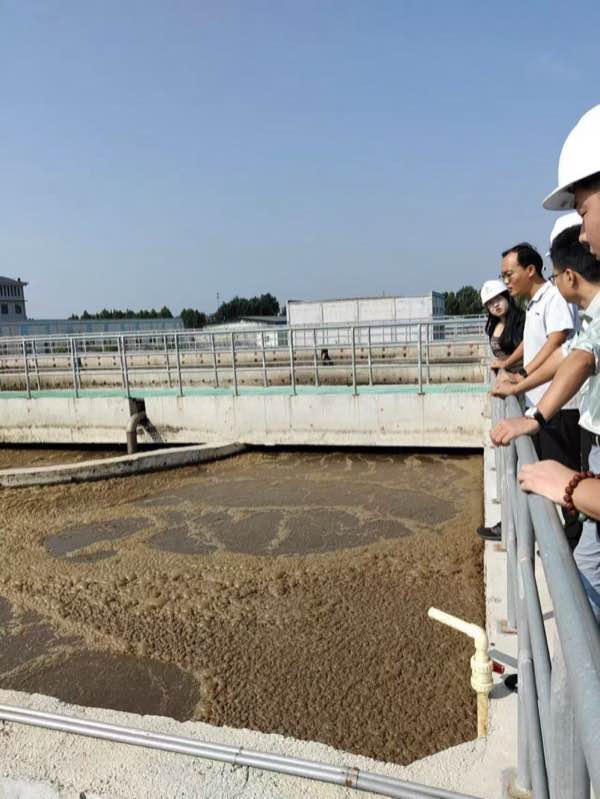
The Anaerobic-Anoxic-Oxic (A²/O) process is one of the most widely adopted biological nutrient removal (BNR) configurations worldwide. It achieves simultaneous removal of organic carbon, nitrogen, and phosphorus through three sequential zones:
- Anaerobic zone (A1): Phosphorus-accumulating organisms (PAOs) release phosphorus under anaerobic conditions while taking up volatile fatty acids (VFAs). This "luxury uptake" mechanism is the foundation of enhanced biological phosphorus removal (EBPR). Typical HRT: 1–2 hours.
- Anoxic zone (A2): Denitrifying bacteria use nitrate (recycled from the oxic zone) as an electron acceptor to oxidize organic carbon, converting NO₃⁻ to N₂ gas. This removes nitrogen from the liquid phase. Typical HRT: 2–4 hours.
- Oxic (aerobic) zone (O): Nitrifying bacteria convert ammonia (NH₄⁺) to nitrate (NO₃⁻). PAOs take up excess phosphorus, incorporating it into cell biomass. Carbonaceous BOD is also removed. Typical HRT: 4–8 hours.
Internal recycle (from the oxic zone to the anoxic zone) at 200–400% of influent flow brings nitrate-rich mixed liquor back for denitrification. Return activated sludge (RAS) from the secondary clarifier at 50–100% of influent flow returns biomass and residual nitrate to the anaerobic zone.
Common Limitations of Existing A²/O Plants
Many operational A²/O plants struggle to consistently meet TN < 10 mg/L and TP < 0.5 mg/L due to:
- Insufficient anoxic volume: The original design may have allocated too little anoxic HRT for complete denitrification, especially during cold-weather periods when biological kinetics slow.
- Nitrate recycle to the anaerobic zone via RAS: Excessive nitrate in the RAS disrupts EBPR by providing an alternative electron acceptor that denitrifiers consume before PAOs can access VFAs.
- Low influent C/N ratio: As infiltration and inflow (I&I) dilute the influent, or as industrial pre-treatment removes organics upstream, the carbon available for denitrification becomes limiting.
- Aging aeration equipment: Fine-bubble diffusers lose efficiency over time, increasing energy consumption while delivering less oxygen transfer.
- Hydraulic overloading: Peak wet-weather flows overwhelm secondary clarifiers, causing solids washout and permit exceedances.
Upgrade Strategy 1: Optimizing the Existing A²/O Process
Zone Volume Reallocation
Before adding new tankage, evaluate whether the existing volume can be used more effectively. Many plants have oversized aerobic zones relative to their anoxic needs. Converting 20–30% of the oxic zone to anoxic operation—by turning off diffusers and installing mixers—can dramatically improve TN removal at near-zero capital cost. This approach requires careful modeling (typically using BioWin, GPS-X, or SIMBA) to verify that nitrification capacity remains adequate at design MLSS and minimum winter temperatures.
Step-Feed Configuration
Converting a conventional A²/O to a step-feed configuration distributes the influent across multiple anoxic zones, providing carbon for denitrification exactly where it is needed. This can improve TN removal by 3–5 mg/L without external carbon addition.
Internal Recycle Optimization
Many plants run internal recycle pumps at a fixed rate regardless of actual nitrate concentrations. Installing online nitrate analyzers in the oxic zone and controlling recycle rate proportionally can reduce both energy consumption and nitrate intrusion into the anaerobic zone.
Upgrade Strategy 2: Adding Advanced Tertiary Treatment
When Biological Optimization Alone Is Not Enough
Even a perfectly optimized A²/O process has practical limits. Achieving consistent effluent TN < 5 mg/L or TP < 0.3 mg/L typically requires tertiary treatment. This is where advanced physical-chemical and membrane technologies come into play.
MBR Retrofit: Replacing the Secondary Clarifier
One of the most impactful upgrades is replacing conventional secondary clarification with a Membrane Bioreactor (MBR). By immersing ultrafiltration membranes directly in the biological reactor (or in an external membrane tank), the MBR eliminates the need for a secondary clarifier entirely, while delivering effluent with TSS < 1 mg/L, turbidity < 0.2 NTU, and near-complete pathogen removal.
The benefits for a municipal upgrade are substantial:
- Higher MLSS operation (8,000–12,000 mg/L vs. 3,000–4,000 mg/L): This means more biomass in the same tank volume, effectively doubling the plant's biological treatment capacity without building new tanks.
- Complete solids-liquid separation: No more clarifier washout during storm events.
- Reuse-ready effluent: MBR permeate is suitable as RO feed for water reuse applications.
- Smaller footprint: Eliminating clarifiers frees up land for other upgrades or future expansion.
The choice of membrane module is critical to long-term success. Flat-sheet MBR membrane modules offer advantages in municipal applications: they are more resistant to clogging by fibrous materials (hair, rags) that are common in municipal sewage, easier to clean in place, and typically deliver longer membrane life (7–10 years) compared with hollow-fiber modules in challenging municipal applications.
Tertiary Clarification and Filtration
For plants that cannot justify the full capital cost of an MBR retrofit, a lamella clarifier followed by dual-media filtration provides a cost-effective tertiary treatment train. Chemical coagulation (typically ferric chloride or alum) upstream of the lamella clarifier achieves chemical phosphorus removal to TP < 0.3 mg/L, while the inclined plates provide rapid settling in a compact footprint. The downstream sand/anthracite filter polishes TSS to < 5 mg/L.
Disinfection
UV disinfection has largely replaced chlorination in municipal applications due to the absence of disinfection byproducts (DBPs). However, for plants discharging to sensitive receiving waters or producing reuse water, a dual-barrier approach (UV + chloramination or UV + ozone) provides additional pathogen inactivation and residual protection.
Energy Considerations in Plant Upgrades
Aeration Energy Optimization
Aeration typically accounts for 50–65% of a WWTP's total energy consumption. An upgrade project should always include:
- Replacement of aged fine-bubble diffusers (SOTE drops from 6–8% per meter to 3–4% after 8–10 years)
- Installation of high-efficiency turbo blowers (single-stage, oil-free, with VFD) to replace positive displacement or multi-stage centrifugal blowers
- Dissolved oxygen (DO) control with online DO probes and automated blower modulation—targeting DO 1.5–2.0 mg/L in the oxic zone rather than the conservative 3.0+ mg/L that many older plants maintain
These measures alone can reduce aeration energy by 25–40%, often paying for themselves within 3–5 years.
Energy Recovery
Plants above 20,000 m³/day should evaluate anaerobic digestion of waste activated sludge (WAS) with biogas capture. Combined heat and power (CHP) generation from biogas can offset 30–50% of the plant's electricity demand, moving toward energy-neutral operation—a goal that the EU and several US utilities are actively pursuing.
Process Modeling and Simulation
Modern municipal WWTP upgrades rely heavily on dynamic process simulation using software such as BioWin, GPS-X, SIMBA, or SUMO. These tools model the biological, chemical, and physical processes in the treatment train and predict effluent quality under varying influent conditions, temperatures, and operational strategies. Key applications in an upgrade project include:
- Capacity assessment: Determining the maximum throughput of the existing plant under current and upgraded configurations
- Zone optimization: Testing different anaerobic/anoxic/aerobic volume ratios to find the optimal configuration for nutrient removal
- Stress testing: Simulating wet-weather events, cold-weather nitrification limits, and industrial discharge impacts on the biological process
- Chemical dosing optimization: Predicting ferric chloride or alum doses needed for chemical phosphorus polishing at different influent TP concentrations
- Energy optimization: Modeling the relationship between DO setpoint, aeration energy, and nitrification/denitrification performance
A calibrated process model—validated against 12 months of historical plant data—reduces design risk and can save 10–20% on overdesign safety margins, translating directly to capital cost savings. The model also becomes an invaluable operational tool after the upgrade, allowing operators to predict the impact of operational changes before implementing them on the full-scale plant.
Project Execution: Maintaining Service During Construction
Unlike greenfield projects, municipal upgrades must maintain continuous treatment throughout construction. This requires:
- Phased construction: Upgrade one process train at a time while the other(s) remain in service
- Temporary bypass arrangements: Permitted and monitored, with appropriate public notification
- Night and weekend shutdowns: Major tie-ins to existing infrastructure should be scheduled during low-flow periods
- Commissioning overlap: New equipment should be commissioned and performance-verified before decommissioning old equipment
A well-planned upgrade of a 30,000 m³/day municipal WWTP typically takes 18–30 months from detailed design to performance acceptance, with the plant remaining in continuous compliance throughout.
Frequently Asked Questions
What effluent quality can an upgraded A²/O + MBR plant achieve?
A well-designed A²/O process with MBR tertiary treatment can consistently achieve: BOD₅ < 3 mg/L, TSS < 1 mg/L, NH₃-N < 0.5 mg/L, TN < 8 mg/L (with external carbon if needed), TP < 0.3 mg/L (with chemical polishing), and turbidity < 0.2 NTU. This effluent quality meets the most stringent discharge standards worldwide and is suitable as feed water for reverse osmosis in water reuse schemes.
How much does a typical municipal wastewater plant upgrade cost?
Costs depend heavily on the scope of the upgrade, existing infrastructure condition, and target effluent quality. As a general guide: process optimization only (zone reallocation, control upgrades) costs USD 50–150 per m³/day of capacity; adding tertiary filtration and chemical phosphorus removal adds USD 100–300 per m³/day; a full MBR retrofit adds USD 200–500 per m³/day. A comprehensive upgrade of a 20,000–50,000 m³/day plant typically falls in the range of USD 5–20 million, depending on the extent of civil works required.
Is it better to upgrade an existing plant or build a new one?
In most cases, upgrading is significantly more cost-effective than greenfield construction—typically 40–60% of the cost of a new plant with equivalent capacity. Upgrades also avoid the challenges of land acquisition, new environmental impact assessments, and community opposition to new facilities. However, if the existing plant's civil structures are severely deteriorated, or if the required capacity increase exceeds 3× the original design, a new plant may be more practical. A thorough condition assessment of existing structures should be part of every upgrade feasibility study.
How can a municipality fund a wastewater plant upgrade?
Common funding mechanisms include: municipal bonds, state revolving fund (SRF) loans (in the US, these offer below-market interest rates), EU Cohesion Fund grants (for eligible member states), public-private partnerships (PPP/P3), and direct rate increases. Many jurisdictions now offer green bonds or climate resilience financing for projects that include energy recovery or water reuse components. A blended financing approach—combining low-interest loans with grants—typically provides the lowest overall cost of capital.