What Is a Package Wastewater Treatment Plant for Bali Sites?
A package wastewater treatment plant for Bali hotels and small municipal loads is a factory-built biological system sized for about 10–2,000 m³/day of sewage. CapEx typically runs from about USD 50,000 at 10 m³/day to more than USD 2 million above 1,000 m³/day, with O&M often USD 0.10–0.40/m³. Effluent must meet P.68/2016 domestic discharge limits before release or reuse.
Bali hotels, SEZ projects, and coastal villas use these compact trains when the Denpasar sewer network cannot serve the site. The Kura Kura Bali ARB plant treats about 1,100–1,200 m³/day and recycles effluent for irrigation and aquaculture. Most plants we size for mid-scale resorts run nearer the lower end of the CapEx band once civil works and power are fixed.
Why Bali Needs Decentralized Onsite Treatment
Bali’s tourism growth has outrun centralized sewer coverage, so decentralized package plants fill the gap outside Denpasar’s served zones. Roughly 65% of the island’s groundwater sources show coliform contamination, largely from leaking septic tanks. With Bali Tourism Board (2024) figures citing up to about 2.5 million visitors per month at peak, onsite treatment is now a planning prerequisite for new hospitality stock.
Regulatory pressure comes through the Denpasar Sewerage Development Master Plan (DSDMP) and national effluent rules. JICA-supported sewerage work in Denpasar and Badung aims to expand treatment capacity and collection; according to JICA’s Bali wastewater improvement profile, the program targets higher plant capacity and wider sewer reach to protect coastal waters. Outside that network, Indonesian Ministry of Environment and Forestry Regulation P.68/2016 still binds every commercial discharge. Non-compliance can draw administrative fines up to IDR 5 billion, a risk managers weigh when comparing industrial wastewater treatment strategies for Bali’s food processing sector with hospitality systems.
Monsoon hydraulics make septic tanks unreliable on the coast. Field data cited from PT Tiger Water Solutions indicate about 30% of resort septic tanks fail in heavy rain where water tables rise in Seminyak and Canggu. Packaged biological plants with equalization and controlled aeration hold up better under those surges. At Kura Kura Bali, the ARB train cut freshwater demand by about 40% through reuse (Biosystems Group 2024), which is the closed-loop pattern many developers now specify.
Treatment Technologies for Bali: How They Work and Which to Choose
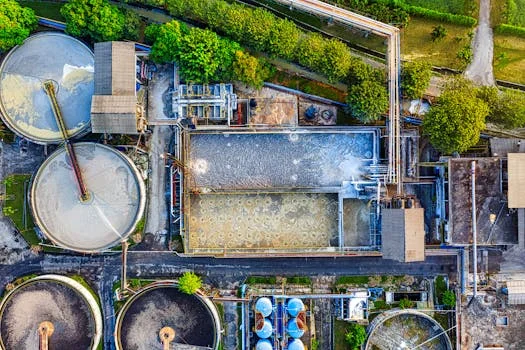
Technology choice for Bali sites turns on footprint, reuse goals, and how hard occupancy swings between peak and off-season. Coastal salinity and ambient temperatures near 30°C change oxygen transfer and sludge settleability, so aeration and nutrient removal must be sized for warm water, not temperate design charts.
Four primary technologies are deployed in the region:
- ARB (Air Recirculation Bioreactor): Favored for large coastal developments such as Kura Kura Bali. It handles about 1,100–1,200 m³/day with roughly 95% BOD removal and salinity tolerance up to about 3,000 mg/L.
- MBR (Membrane Bioreactor): For resorts prioritizing water reuse, the MBR membrane bioreactor for water reuse in Bali can deliver near-reuse-quality effluent.
- SBR (Sequencing Batch Reactor): Suited to hotels with sharp seasonality. Batch cycles can be shortened or idled when occupancy drops, though control logic and operator skill must be stronger than for continuous-flow plants.
- WSZ Series (Integrated Underground Plants): The Underground Package Sewage Treatment Plant (WSZ Series) buries the process train under landscaping, which helps space-constrained resorts meet discharge limits without a visible plant building.
| Technology | BOD Removal | Footprint | O&M Cost ($/m³) | Best Application |
|---|---|---|---|---|
| ARB | 90-95% | Medium | $0.10 - $0.20 | Large coastal developments, SEZs |
| MBR | >98% | Small | $0.25 - $0.40 | High-end resorts, irrigation reuse |
| SBR | 90-96% | Medium | $0.15 - $0.25 | Seasonal hotels, municipal clusters |
| WSZ (Activated Sludge) | 85-92% | Medium (Underground) | $0.10 - $0.18 | Budget hotels, rural villas |
Engineers comparing options should also review how MBR systems in extreme climates: lessons for Bali’s monsoon season handle hydraulic surges. MBR O&M is higher because of scour air and membrane replacement every 5–7 years, yet payback can still be short where irrigation water purchase prices are high.
Bali-Specific Compliance Requirements for Wastewater Plants
Bali compliance sits on national effluent limits plus local sewerage connection rules. The primary national benchmark is Ministry of Environment and Forestry Regulation P.68/2016 on domestic wastewater quality standards.
Mandatory effluent limits (P.68/2016):
- BOD: < 30 mg/L
- TSS: earlier project briefs often cited < 50 mg/L; according to P.68/2016 as summarized by WEPA (2016 standard table), the national limit is 30 mg/L
- COD: < 100 mg/L
- Oil & Grease: < 5 mg/L
- Ammonia: < 10 mg/L
- Total Coliform: earlier guidance on some Bali RFPs used E. coli < 1,000 MPN/100 mL; P.68/2016 sets total coliform at 3,000 MPN/100 mL (WEPA; MoEF 2016 via Widyarani et al., 2022)
- pH: 6.0 – 9.0
According to Widyarani et al. (2022) in Environmental Science and Pollution Research, only about 1% of Indonesian households connect to centralized sewerage, while Denpasar’s municipal WWTP capacity is listed near 51,000 m³/day—still leaving large hospitality zones on onsite plants. Inside the DSDMP coverage zone (about 1,145 hectares targeted for expanded sewerage by 2030 under the JICA-supported program), properties must connect when capacity exists. Connection fees are typically IDR 5,000–10,000 per m³ of flow. Outside that zone, an independent package wastewater treatment plant with permits is mandatory.
The permitting process follows three critical steps:
- AMDAL or UKL-UPL: An environmental impact assessment is required for plants exceeding 50 m³/day.
- Design Approval (Persetujuan Teknis): Technical specs go to DLHK Bali before construction.
- Operational Permit (SLO): After commissioning, a certified lab samples effluent; Dinas PUPR then issues the operating permit. Total processing usually spans 3–6 months.
Cost Breakdown: Capital, O&M, and Upgrade Economics
Bali project budgets must separate packaged equipment from all-in cost, which includes civil works, buried piping, electrical feeders, and permits. Based on 2025 market data used in this guide, CapEx bands are:
| Capacity (m³/day) | Technology Type | Estimated CapEx (USD) | Annual O&M (USD) |
|---|---|---|---|
| 10 - 50 | WSZ / Conventional | $50,000 - $100,000 | $4,000 - $8,000 |
| 100 - 500 | SBR / MBR | $200,000 - $550,000 | $15,000 - $45,000 |
| 1,000 - 2,000 | ARB / Large MBR | $1,100,000 - $2,500,000 | $60,000 - $120,000 |
O&M is driven by electricity and chemicals. ARB and SBR systems commonly sit at USD 0.10–0.30 per m³ treated. MBR systems often run USD 0.25–0.40 per m³ because of membrane scour energy and module replacement every 5–7 years. Hidden line items include land at about USD 50–150/m² in prime Bali parcels and permit/consulting fees of about USD 5,000–20,000. For a typical 200-room resort, irrigation reuse can save up to about USD 40,000 per year in purchased water, supporting a 3–5 year payback. Kura Kura Bali reported a 3-year payback after offsetting about 40% of freshwater demand with ARB effluent.
What does a package sewage plant upgrade cost?
For a 100–500 m³/day hotel train, that often lands near USD 60,000–350,000 for equipment and tie-ins, excluding major civil rebuilds. Most plants we retrofit after septic failures spend the first budget on equalization and UV or chlorination to hit coliform limits.
How much does upgrading a package treatment plant cost?
Upgrading a package treatment plant to meet P.68/2016 or to add reuse typically costs USD 0.15–0.45 million for mid-size resort systems when membranes, nutrient removal, or higher aeration are added. Full replacement toward the USD 200,000–550,000 band is cheaper than fighting chronic non-compliance fines once tanks are corroded or undersized. Factor membrane O&M of USD 0.25–0.40/m³ if the upgrade path is MBR rather than SBR or WSZ.
Selection checklist before you lock CapEx:
- Confirm whether the plot sits inside DSDMP sewer coverage or needs an onsite plant.
- Size for monsoon peak flow and for 50% off-season load without biomass washout.
- Match effluent path: discharge, irrigation reuse, or both.
- Budget power at Bali grid rates plus diesel backup for blowers.
- Include certified lab sampling for SLO commissioning.
- Price membrane or diffuser replacement at year 5–7, not only year-1 O&M.
- Require local 24-hour service coverage in Bali or Surabaya.
Vendor Selection Guide for Bali Onsite Plants
Vendor selection for a Bali onsite sewage plant is a process-risk decision, not a catalogue purchase. Biological failure creates odor complaints that empty rooms and can trigger DLHK enforcement. Score suppliers on local service, technology fit, Indonesian reference plants, and lifecycle cost—not brochure BOD claims alone.
Key questions for your RFP:
- "What is the system’s nutrient removal efficiency (Total Nitrogen/Phosphorus) for sensitive coastal discharge?"
- "Do you have a local service team based in Bali or Surabaya capable of 24-hour emergency response?"
- "Can the system handle a 50% drop in hydraulic load during the tourism off-season without biological die-off?"
- "What is the specific energy consumption (kWh/m³) at peak flow?"
Red flags to avoid: Reject “maintenance-free” claims and vendors without operating references in Indonesia. Vague E. coli or total coliform guarantees are a common permit risk on the island. Biosystems Group is known for ARB work at Kura Kura Bali. PT Tiger Water Solutions is active in local contracting and tank fabrication. For MBR or underground WSZ trains, HydropureWater works through Indonesian distributors for spares and after-sales support tied to Ministry of Environment standards.
Who This Is For / Who Should Look Elsewhere / Next Step
EPC leads, resort asset managers, and procurement teams sizing onsite plants from about 10 to 2,000 m³/day in Bali are the primary readers for this guide. Plots that already have DSDMP sewer capacity and a connection offer usually should not buy a packaged plant. Teams that need a Bali-specific equipment shortlist with duty points and O&M assumptions can request a packaged plant quotation with design flow, reuse target, and site salinity notes.
Frequently Asked Questions

Does Bali have a sewage treatment plant?
Yes, but coverage remains limited. Denpasar’s municipal WWTP capacity is reported near 51,000 m³/day, and modern plants such as Kura Kura Bali (about 1,200 m³/day) and Pelindo’s Benoa Port WWTP serve specific catchments. Most resorts and villas outside the sewered zone still rely on septic tanks or onsite package systems. Nationally, only about 1% of households connect to centralized sewerage (Widyarani et al., 2022).
What effluent limits apply to hotel wastewater in Bali?
Hotels must meet P.68/2016 domestic limits: BOD < 30 mg/L, COD < 100 mg/L, TSS 30 mg/L, oil and grease < 5 mg/L, ammonia < 10 mg/L, total coliform 3,000 MPN/100 mL, and pH 6–9. Earlier Bali briefs sometimes listed TSS < 50 mg/L or E. coli < 1,000 MPN/100 mL; design to the national P.68 table unless a stricter local permit states otherwise. SLO sampling by a certified lab confirms compliance after commissioning.
How much does a 100–500 m³/day package plant cost in Bali?
Expect about USD 200,000–550,000 CapEx for SBR or MBR equipment in the 100–500 m³/day band, plus civil works and permits. Annual O&M commonly runs USD 15,000–45,000, or roughly USD 0.15–0.40/m³ depending on membranes and power. Land, consulting, and connection fees sit outside those equipment numbers. Reuse credits of up to about USD 40,000/year on a 200-room resort can cut payback to 3–5 years.
When should a Bali resort choose MBR over SBR or WSZ?
Choose MBR when irrigation reuse or a tiny footprint outweighs higher O&M of USD 0.25–0.40/m³ and 5–7 year membrane replacement. SBR fits seasonal hotels that can vary batch cycles with occupancy. WSZ underground plants fit villas and budget hotels that need landscaping cover and lower O&M near USD 0.10–0.18/m³. Warm coastal water and monsoon peaks still require equalization on every option.
Do I need AMDAL for a package plant under 50 m³/day?
Plants exceeding 50 m³/day typically need AMDAL or UKL-UPL before design approval. Smaller villa systems may follow a lighter environmental document path, but DLHK Bali still reviews technical design and later issues operating clearance after lab testing. Budget 3–6 months for the full Persetujuan Teknis plus SLO sequence. Confirm the exact document class with the local environmental agency before ordering steel.