A wastewater treatment plant in Jeddah costs between $1.5M and $25M+ depending on capacity and technology. The $267M Miahona project (2025) serves Jeddah's 1st Industrial City with a 200,000 m³/day capacity, translating to ~$1,335 per m³ of daily treatment. For industrial projects, costs typically range from $2,000 to $5,000 per m³/day for MBR systems (higher efficiency) and $800 to $2,000 for conventional activated sludge. Local compliance with Saudi Standards (SASO 2015) adds 10-15% to CAPEX for tertiary treatment and disinfection.
Why Jeddah’s Wastewater Treatment Costs Are Rising in 2025
Jeddah’s industrial output grew 12% year-over-year in 2024, according to the Saudi Ministry of Industry data, directly increasing industrial wastewater volumes by an estimated 8-10% annually. This growth, coupled with ambitious national directives and environmental pressures, is driving up the capital expenditure (CAPEX) and operational expenditure (OPEX) for wastewater treatment projects across the city. Saudi Vision 2030 mandates 100% wastewater reuse for industrial zones by 2030, a target that necessitates the adoption of advanced treatment technologies such as Membrane Bioreactors (MBR) and Reverse Osmosis (RO), which typically incur 20-30% higher CAPEX compared to conventional methods.
Water scarcity in Jeddah, with approximately 100 m³ per capita per year available compared to a global average of 1,000 m³, further intensifies the demand for treated effluent. This acute scarcity not only drives the need for more efficient treatment but also influences project financing costs, as treated water becomes a valuable commodity for industrial and agricultural reuse. The $267M Miahona project in Jeddah’s 1st Industrial City, designed for a 200,000 m³/day capacity, exemplifies this trend by integrating advanced treatment to meet industrial reuse standards. This facility aligns directly with Vision 2030’s circular economy goals, with its treated water marketed and sold for industrial purposes, thereby generating revenue and offsetting treatment costs for the industries it serves.
The imperative for water reuse and the stringent quality requirements for industrial applications mean that basic primary and secondary treatment are no longer sufficient. Projects must incorporate tertiary treatment and advanced disinfection, significantly impacting overall project budgets. These factors combine to create a challenging yet opportunity-rich environment for wastewater treatment plant development in Jeddah, where compliance, efficiency, and resource recovery are paramount.
Engineering Cost Breakdown: What’s Inside a $267M Wastewater Plant?
A large-scale wastewater treatment plant in Jeddah, such as the $267M Miahona project, represents a complex engineering endeavor with a significant CAPEX distribution across various components. For plants exceeding 200,000 m³/day capacity, the CAPEX typically splits as follows: 40% for equipment, 35% for civil works, 15% for labor, and 10% for compliance and permits, according to SaudiGulf Projects 2025 data. Understanding this breakdown is crucial for accurate project budgeting and feasibility assessment.
Equipment costs constitute the largest share, encompassing the core treatment technologies and auxiliary systems. For a plant like Miahona’s, approximately $50M would be allocated for advanced MBR membranes, often made of PVDF with 0.1 μm pore sizes, critical for high-quality effluent suitable for reuse. Dissolved Air Flotation (DAF) systems might account for $30M, providing efficient pre-treatment for industrial effluents high in suspended solids and oil/grease. Chemical dosing systems, typically automated and PLC-controlled, would add another $20M. Other equipment includes pumps, blowers, instrumentation, and SCADA systems.
Civil works, representing 35% of CAPEX, involve extensive construction. Reinforced concrete tanks for various treatment stages (aeration, clarification, membrane tanks) can cost around $60M. Underground piping and infrastructure, particularly challenging in Jeddah due to its high water table, can add $25M, with excavation costs increasing by 15-20% compared to areas with stable ground conditions. This category also includes administration buildings, laboratories, and maintenance facilities.
Labor costs for a 3-year construction period can reach $40M. Saudi Nitaqat requirements mandate a significant percentage of local hires (often 60% or more), which can add 5-8% to labor costs compared to expat-only teams due to different wage structures and training requirements.
Compliance and permits represent a substantial 10% of CAPEX, approximately $27M for a project of this scale. This includes tertiary treatment units like UV disinfection and ClO₂ generators, essential for meeting stringent SASO 2015 standards for industrial reuse. Environmental impact assessments, regulatory approvals, and ongoing monitoring infrastructure also fall under this category.
| CAPEX Component | Approximate % of Total CAPEX | Estimated Cost ($M) for $267M Plant | Key Items/Considerations |
|---|---|---|---|
| Equipment | 40% | $106.8M | MBR membranes ($50M), DAF systems ($30M), Chemical dosing ($20M), Pumps, Blowers, SCADA |
| Civil Works | 35% | $93.45M | Reinforced concrete tanks ($60M), Underground piping ($25M), High water table premium (15-20%) |
| Labor | 15% | $40.05M | 3-year construction, Saudi Nitaqat (60% local hires, 5-8% cost premium) |
| Compliance & Permits | 10% | $26.7M | Tertiary treatment (UV, ClO₂), SASO 2015, EIAs, Regulatory approvals |
| Total | 100% | $267M |
Cost per m³: How to Scale Your Jeddah Wastewater Project
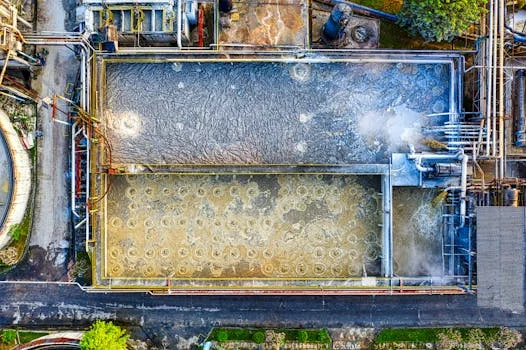
The cost of building a wastewater treatment plant in Jeddah is highly dependent on its capacity and the chosen technology, typically expressed as cost per cubic meter per day ($/m³/day). For Jeddah projects in 2025, conventional activated sludge systems generally range from $800 to $2,000 per m³/day, while more advanced MBR systems command $2,000 to $5,000 per m³/day due to their higher efficiency and smaller footprint. DAF systems, often used for pre-treatment, fall into an intermediate range of $1,200 to $3,000 per m³/day (per Gulf Construction Online 2025 data).
Significant economies of scale apply to wastewater treatment plant construction. A smaller 10,000 m³/day plant might cost around $3,000/m³ of daily capacity, whereas a much larger 100,000 m³/day facility could see costs drop to $1,500/m³, representing a 50% reduction in unit cost. This is primarily due to shared infrastructure, bulk purchasing advantages for equipment, and more efficient utilization of labor and project management resources on larger scales. This principle is evident in projects like the $280M Marafiq sewage treatment plant, which achieves lower unit costs, estimated at $1,400/m³, partly by reusing existing infrastructure and leveraging its substantial scale.
Industrial wastewater treatment projects typically incur a 20-40% CAPEX premium compared to municipal projects of similar capacity. This premium is driven by the need for specialized equipment to handle hazardous waste, high concentrations of pollutants, or specific industrial effluents (e.g., petrochemical, food processing). These facilities often require more robust pre-treatment, higher chemical usage, and more complex sludge management systems. For smaller, specialized industrial needs, considering package wastewater treatment plants can offer a modular and cost-effective solution.
| Technology Type | Capacity Range (m³/day) | Estimated Cost per m³/day (2025, Jeddah) | Key Factors Influencing Cost |
|---|---|---|---|
| Conventional Activated Sludge | 1,000 - 100,000+ | $800 – $2,000 | Land availability, lower efficiency, higher footprint, requires tertiary for reuse |
| MBR Systems | 500 - 50,000+ | $2,000 – $5,000 | High efficiency, small footprint, membrane cost, higher energy |
| DAF Systems (Pre-treatment) | 200 - 20,000+ | $1,200 – $3,000 | Industrial effluent type (FOG, TSS), chemical usage, integration with other systems |
| Example: 10,000 m³/day Plant | $3,000/m³ (average) | Lower economies of scale | |
| Example: 100,000 m³/day Plant | $1,500/m³ (average) | Significant economies of scale |
Treatment Technology Comparison: MBR vs. DAF vs. Conventional for Jeddah’s Wastewater
Selecting the appropriate wastewater treatment technology for Jeddah projects requires a careful evaluation of removal efficiency, physical footprint, lifecycle costs, and specific challenges like high salinity. Each technology—Membrane Bioreactor (MBR), Dissolved Air Flotation (DAF), and conventional activated sludge—offers distinct advantages and trade-offs.
MBR systems provide superior effluent quality, achieving over 99% TSS removal and 95% BOD removal. Their compact design allows for a 60% smaller footprint compared to conventional activated sludge plants, making them ideal for urban or industrial areas with limited land. However, MBRs come with higher energy costs, typically ranging from 0.8–1.2 kWh/m³ due to membrane aeration and permeate pumping. Jeddah’s high salinity (5,000–10,000 mg/L TDS) can reduce MBR membrane lifespan by 20-30%, increasing operational expenditure (OPEX) by $0.15–$0.30/m³ for more frequent membrane replacement and cleaning.
DAF systems are highly effective for pre-treatment, especially for industrial effluents containing high levels of Total Suspended Solids (TSS) and Fats, Oils, and Grease (FOG). They typically achieve 95% TSS removal and 85% FOG removal, making them ideal for food processing, slaughterhouses, and petrochemical wastewater. DAF systems generally have 20% lower CAPEX than MBR systems and are crucial for protecting downstream advanced treatment processes. For more insights on DAF system selection, refer to our guide on DAF systems in Saudi Arabia.
Conventional activated sludge systems offer the lowest CAPEX, ranging from $800–$2,000/m³ of daily capacity. They achieve approximately 85% TSS removal and 90% BOD removal. However, they require a significantly larger footprint (often 2x that of MBR) and typically necessitate additional tertiary treatment (e.g., filtration, disinfection) to meet industrial reuse standards. This adds to their overall lifecycle costs, particularly if land is expensive or if high-quality effluent is required. For a deeper dive into treatment methods, explore the engineering comparison of aerobic vs. anaerobic wastewater treatment.
Many modern plants, like the Miahona facility, adopt a hybrid approach, combining technologies to leverage their respective strengths. For instance, using DAF for pre-treatment to remove heavy solids and FOG, followed by MBR for final polishing, ensures optimal treatment efficiency and compliance with stringent industrial reuse standards for Jeddah’s specific wastewater characteristics.
| Technology | TSS Removal Efficiency | BOD Removal Efficiency | Footprint (Relative to Conventional) | CAPEX ($/m³/day) | OPEX (kWh/m³ or Key Factor) | Ideal Application in Jeddah |
|---|---|---|---|---|---|---|
| MBR Systems | >99% | >95% | 60% smaller | $2,000 – $5,000 | 0.8–1.2 kWh/m³ (higher energy, salinity impact on membranes) | High-quality reuse, limited space, industrial zones needing advanced treatment |
| DAF Systems | >95% | (Pre-treatment) | Compact | $1,200 – $3,000 | Chemical usage, air compression | Pre-treatment for high FOG/TSS (food, petrochemical, industrial effluent) |
| Conventional Activated Sludge | >85% | >90% | 2x larger | $800 – $2,000 | Lower energy but requires tertiary for reuse | Large land availability, municipal applications, lower effluent quality needs |
ROI Calculator: How to Justify Your Jeddah Wastewater Project
Justifying a significant investment in a wastewater treatment plant requires a robust Return on Investment (ROI) analysis, focusing on payback periods and long-term financial benefits. The core formula for calculating the payback period is: (CAPEX + Annual OPEX) / (Annual Savings + Revenue from Treated Water). This framework allows facility owners and procurement managers in Jeddah to quantify the financial viability of their projects, taking into account local economic factors and regulatory incentives.
Annual savings are a major component of ROI. Avoiding municipal sewer fees is a significant driver, as Jeddah charges approximately $0.80/m³ for industrial discharge. By treating wastewater onsite and reducing reliance on the municipal system, facilities can save between $0.50–$1.50/m³. revenue from treated water, especially for industrial reuse, provides a direct income stream. In Jeddah’s 1st Industrial City, treated effluent can be sold for $0.30–$0.70/m³ (2025 market rates), creating a valuable commodity from what was once a waste product.
The Saudi government actively supports wastewater reuse projects that align with Vision 2030 targets. The Saudi Industrial Development Fund, for example, offers up to a 30% CAPEX subsidy for projects demonstrating significant contributions to water circularity and sustainability. These incentives can dramatically shorten payback periods and enhance project attractiveness for private investors.
Consider an example calculation for a 5,000 m³/day MBR plant:
- CAPEX: $10M (at $2,000/m³/day)
- Annual OPEX: $1.2M (at $0.80/m³ for 5,000 m³/day * 300 operating days)
- Annual Savings (avoided discharge fees): $1.5M (5,000 m³/day * $1.00/m³ * 300 days)
- Annual Revenue (treated water sales): $0.75M (5,000 m³/day * $0.50/m³ * 300 days)
- Total Annual Savings + Revenue: $2.25M
Without government subsidy, the payback period would be ($10M + $1.2M) / $2.25M = 5 years. With a 30% CAPEX subsidy ($3M reduction), the CAPEX becomes $7M, leading to a payback period of ($7M + $1.2M) / $2.25M = 3.64 years. This demonstrates how government support can make a project significantly more attractive. Companies like those in Jazan’s industrial zones are also leveraging such incentives.
| Financial Metric | Value/Range | Impact on ROI |
|---|---|---|
| Avoided Municipal Sewer Fees | $0.50 – $1.50/m³ | Direct annual savings, reduces OPEX. Jeddah charges $0.80/m³ for industrial discharge. |
| Revenue from Treated Water Sales | $0.30 – $0.70/m³ | Direct annual revenue, particularly for industrial reuse in Jeddah. |
| Saudi Government CAPEX Subsidy | Up to 30% of CAPEX | Reduces initial investment, significantly shortens payback period. |
| Example: 5,000 m³/day MBR Plant | ||
| CAPEX | $10M (pre-subsidy) | Base investment |
| Annual OPEX | $1.2M | Ongoing operational costs |
| Annual Savings/Revenue | $2.25M | Total financial benefit per year |
| Payback Period (without subsidy) | 5 years | Calculated as ($10M + $1.2M) / $2.25M |
| Payback Period (with 30% subsidy) | 3.64 years | Calculated as ($7M + $1.2M) / $2.25M |
Jeddah Compliance Costs: What You Must Budget for Saudi Standards
Meeting regulatory standards in Jeddah for wastewater treatment is not merely a technical requirement but a significant financial consideration, adding substantial costs to both CAPEX and OPEX. Saudi Standards Organization (SASO) 2015 mandates tertiary treatment (including advanced filtration and disinfection) for all industrial wastewater reuse projects, typically adding 10-15% to the total CAPEX. This ensures that treated effluent meets the stringent quality parameters required for various reuse applications, from irrigation to industrial processes.
The Jeddah municipality enforces strict discharge limits for wastewater released into its sewer system, requiring 90% BOD removal and 95% TSS removal. Non-compliance can result in severe penalties, with fines reaching up to $50,000 per incident, making proactive investment in robust treatment systems a financial necessity. To achieve the required disinfection levels for reuse, the installation of chlorine dioxide (ClO₂) generators or UV disinfection systems is common. ClO₂ generators, for instance, can add an estimated $0.05–$0.10/m³ to OPEX, considering chemical consumption and maintenance, as per ClO₂ generator specifications.
Beyond initial installation, ongoing compliance testing represents a recurring operational expense. Annual third-party laboratory analysis, conducted by SASO-accredited labs in Jeddah, can cost between $20,000–$50,000. These labs typically charge around $150 per sample for comprehensive wastewater analysis, ensuring continuous adherence to discharge and reuse standards. The Miahona plant, for example, incorporates redundant UV systems to meet SASO 2015 redundancy requirements, ensuring continuous disinfection capability even during maintenance or component failure, which adds to the initial investment but prevents costly downtime and non-compliance fines.
Budgeting for these compliance costs from the outset is critical to avoid budget overruns and operational disruptions. It's not just about building a plant, but building a compliant and sustainable operation within Jeddah's regulatory framework.
Frequently Asked Questions
How much does a 1,000 m³/day wastewater treatment plant cost in Jeddah?
A 1,000 m³/day wastewater treatment plant in Jeddah typically costs between $1.5M–$3M for conventional activated sludge systems, including civil works and compliance. For more advanced MBR systems, the cost ranges from $3M–$5M. DAF systems for pre-treatment at this capacity would cost approximately $2M–$4M.
What is the salary of a water treatment plant operator in Saudi Arabia?
The average salary for a water treatment plant operator in Saudi Arabia ranges from SAR 8,000–15,000 per month (2025 data). Expatriate operators often earn 20-30% more due to specific skill sets or contractual terms. Implementing highly automated systems, such as HydropureWater’s WSZ series, can reduce overall labor costs by up to 60% by minimizing the need for manual intervention.
Does Jeddah have a sewage system?
Yes, Jeddah does have a sewage system, but its coverage is limited to approximately 65% of the city as of 2024, according to Jeddah Municipality data. Many industrial zones, such as the 1st Industrial City, and developing residential areas, still rely on private or localized wastewater treatment plants, like the $267M Miahona project, to manage their effluent.
How much will it cost to build a wastewater treatment line in Saudi Arabia?
The cost to build a wastewater treatment pipeline (collection line) in Saudi Arabia typically ranges from $500–$1,500 per linear meter. This cost varies significantly based on factors such as pipe diameter, material, depth of excavation, and soil conditions. In Jeddah, the high water table can increase excavation and dewatering costs by 15-20%, impacting the overall per-meter cost.
What are the operating costs for a wastewater treatment plant in Jeddah?
Operating costs (OPEX) for wastewater treatment plants in Jeddah typically range from $0.30–$0.80/m³ for conventional systems and $0.80–$1.50/m³ for MBR systems. Energy costs, at 0.15–0.40 SAR/kWh, represent a significant portion, often accounting for 40-50% of the total OPEX. Other major OPEX components include chemicals, labor, maintenance, and sludge disposal.