Package Wastewater Treatment Plants in Israel: 2025 Engineering Guide, Costs & Compliance
Israel’s package wastewater treatment plants offer a compact, modular solution for municipal and industrial projects constrained by space or strict discharge limits. For example, a 50 m³/day MBR system can fit in a 20-foot container, achieve <10 mg/L BOD/TSS (meeting Israeli Inbar Standards), and reduce energy use by 30–50% compared to conventional activated sludge plants. This guide provides 2025 engineering specs, cost benchmarks, and compliance requirements for Israeli projects, with case data from Shafdan and WFI Group installations.
Why Israel’s Water Scarcity Demands Compact Wastewater Treatment
Israel reuses approximately 90% of its wastewater, the highest rate globally, which necessitates decentralized, high-efficiency treatment systems to meet the strict 2025 reuse mandates. According to the Israel Water Authority 2023 report, the national strategy focuses on closed-loop systems where treated effluent is immediately repurposed for agriculture or industrial cooling. This high reuse rate creates a technical challenge: as water is recycled multiple times, the concentration of pollutants and salinity increases, requiring more advanced treatment than traditional secondary systems can provide.
Urban density in major hubs like Tel Aviv and Haifa severely limits the available footprint for traditional treatment infrastructure. For instance, the Shafdan wastewater treatment plant, which processes 360,000 m³/day, occupies roughly 120 hectares. In contrast, modern package plants require less than 0.5 hectares to treat 1,000 m³/day, making them the only viable option for "inside-the-fence" industrial upgrades or new neighborhood-level municipal projects. This spatial efficiency is critical in Haifa’s industrial zones, where land prices and proximity to the coastline make massive civil works projects prohibitively expensive.
Industrial sectors, including pharmaceuticals, food processing, and textiles, face increasingly stringent discharge limits under the Israeli Inbar Standards. To qualify for unrestricted reuse in irrigation, effluent must maintain BOD and TSS levels below 10 mg/L. Package plants address these requirements through modularity and rapid deployment. Unlike traditional plants that may take years to commission, modular systems can be operational within months. advanced package systems have demonstrated significant operational efficiency; for example, the Menashe project by WFI Group reported up to 80% OPEX savings compared to older, centralized infrastructure by optimizing aeration and sludge management.
How Package Wastewater Treatment Plants Work: Core Technologies for Israeli Projects
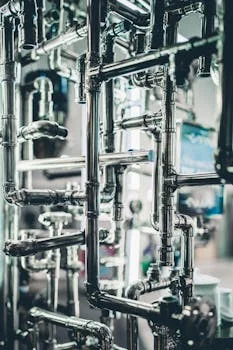
Membrane Bioreactor (MBR) technology achieves total suspended solids (TSS) levels of <1 mg/L, making it the primary choice for Israeli industrial facilities aiming for unrestricted irrigation reuse. An MBR system integrates biological degradation with ultrafiltration (typically 0.1–0.4 μm pores), effectively replacing the secondary clarifier of a traditional plant. This results in a 95% or higher removal rate of BOD and COD. In the context of Israeli projects, MBR package plants for Israeli reuse standards are frequently used to retrofit existing facilities where footprint is limited but effluent quality must be upgraded to meet 2025 standards.
Dissolved Air Flotation (DAF) is the preferred technology for removing fats, oils, and grease (FOG) and high concentrations of suspended solids from industrial streams. By utilizing microbubbles (10–100 μm) to float particles to the surface for mechanical skimming, DAF systems can remove 90–97% of TSS. This is a critical pretreatment step for food processing and petrochemical plants in Israel. Implementing DAF pretreatment for Israeli industrial wastewater ensures that downstream biological processes are not fouled by high organic loads, a common issue in Haifa’s industrial corridor.
The Anoxic/Oxic (A/O) process is a two-stage biological treatment specifically designed for nitrogen removal. In Israel, where nitrogen limits are strictly enforced to prevent groundwater contamination, A/O systems provide a reliable solution for municipal sewage. These systems typically operate with a Hydraulic Retention Time (HRT) of 6–12 hours and maintain Mixed Liquor Suspended Solids (MLSS) between 3,000 and 5,000 mg/L. For complex industrial wastewater, engineers often deploy hybrid systems, such as a DAF unit followed by an MBR, to handle both high solids and dissolved organics.
| Technology | Primary Application | BOD/TSS Removal | Footprint Requirement | Israeli Standard Match |
|---|---|---|---|---|
| MBR | Municipal Reuse, Pharma | >98% | Very Low (0.2 m²/m³) | Inbar 521 (Unrestricted) |
| DAF | Food Processing, FOG Removal | 90-97% (TSS) | Low | Pretreatment/Industrial |
| A/O | Nitrogen Removal, Small Municipal | 85-90% | Moderate | Inbar 522 (Restricted) |
| SBR | Batch Industrial Processes | 90-95% | Moderate | General Discharge |
Package Plant vs. Traditional Systems: Engineering Comparison for Israeli Projects
Modular package plants in Israel require an average footprint of 0.2–0.5 m² per m³/day of capacity, representing a 60–80% reduction in land requirements compared to conventional activated sludge systems. This is evidenced by recent retrofits at the Shafdan facility, where MBR installations allowed for a 40% reduction in the footprint of specific treatment trains while doubling throughput. For EPC contractors, this footprint reduction translates directly into lower land acquisition costs and fewer civil engineering complexities, such as extensive excavation or large-scale concrete pouring.
From a financial perspective, the 2025 CAPEX for package plants in Israel ranges from $1,200 to $2,500 per m³/day, whereas traditional plants often exceed $3,000 per m³/day when accounting for the extensive infrastructure required. OPEX is similarly optimized; advanced MBR package systems consume between 0.15 and 0.30 kWh/m³, while traditional activated sludge plants often range from 0.4 to 0.6 kWh/m³. This energy efficiency is a major driver for Israeli facility managers facing rising electricity tariffs.
| Parameter | Package Plant (MBR/Modular) | Traditional Plant (Activated Sludge) |
|---|---|---|
| Footprint (m²/m³/day) | 0.2 – 0.5 | 1.0 – 3.0 |
| CAPEX ($/m³/day) | $1,200 – $2,500 | $2,000 – $4,000+ |
| Energy Use (kWh/m³) | 0.15 – 0.35 | 0.40 – 0.65 |
| Effluent Quality (BOD/TSS) | <10 mg/L (Consistent) | 20 – 30 mg/L (Variable) |
| Deployment Time | 3 – 6 Months | 18 – 36 Months |
| Automation Level | High (PLC/Remote) | Moderate to Low |
Scalability is another critical advantage for Israeli projects. Modular plants can be expanded in small increments (e.g., 50–100 m³/day) by simply adding extra containerized units. Traditional plants require massive "jumps" in capacity (often 500+ m³/day) due to the nature of large-scale tank construction. This allows Israeli municipalities to align infrastructure investment with actual population growth, avoiding the "stranded asset" problem of overbuilt facilities.
Israeli Compliance: Standards and Permitting for Package Wastewater Treatment Plants
The Israeli Inbar Standards (Standard 521) mandate that effluent used for unrestricted irrigation must maintain BOD and TSS levels below 10 mg/L, a threshold consistently met by advanced package systems. These regulations, updated in 2023, also set strict limits on Total Nitrogen (TN < 10 mg/L) and Total Phosphorus (TP < 1 mg/L). For projects involving wastewater reuse, the Ministry of Environmental Protection (MoEP) requires that the treatment technology be proven to meet these levels under varying influent conditions, often making MBR the default choice for EPC contractors.
Permitting for package plants follows a specific regulatory pathway managed by the MoEP. For systems with a capacity of less than 200 m³/day, many projects qualify for fast-track approval under MoEP Circular 2022/5. Larger plants (>500 m³/day) require a full Environmental Impact Assessment (EIA). The process generally involves four stages: a pre-application meeting, submission of detailed engineering plans, pilot testing (especially for unique industrial streams), and final operational approval. This timeline typically spans 3 to 12 months, significantly faster than the permitting for centralized municipal plants.
Industrial discharge limits are sector-specific in Israel. For example, pharmaceutical facilities must often reach COD levels below 100 mg/L before discharging to the municipal sewer, while textile plants face strict color limits (typically <50 ADMI units). Package plants equipped with advanced oxidation or specialized chemical dosing for Israeli compliance are necessary to meet these tailored requirements. Failure to comply can result in heavy fines and the suspension of business licenses, driving the demand for highly automated, reliable package systems.
Cost Breakdown and ROI Calculator for Israeli Package Wastewater Treatment Plants
Capital expenditure for package wastewater treatment plants in Israel typically ranges from $1,200 to $2,500 per m³/day, depending on the complexity of the influent and the required reuse quality. A standard 100 m³/day MBR plant generally requires an investment of $150,000 to $250,000. The cost breakdown usually consists of 40% for core equipment (membranes, pumps, blowers), 30% for site installation and piping, 20% for civil works (slabs and housing), and 10% for permitting and engineering fees.
Operational expenditure (OPEX) in the Israeli market averages $0.20 to $0.50 per cubic meter of treated water. Energy consumption accounts for approximately 50% of this cost, followed by chemicals (20%), labor (15%), and routine maintenance/membrane replacement (15%). These costs are often offset by the high price of fresh water in Israel; with industrial water tariffs ranging from $1.50 to $2.50 per m³, the ROI for a reuse-oriented package plant is exceptionally strong.
| Cost Component | Estimated Cost (per m³) | Percentage of OPEX |
|---|---|---|
| Energy (Aeration/Pumping) | $0.10 – $0.25 | 50% |
| Chemicals (Coagulants/Cleaning) | $0.04 – $0.10 | 20% |
| Maintenance & Parts | $0.03 – $0.08 | 15% |
| Labor (Monitoring/Sampling) | $0.03 – $0.07 | 15% |
| Total OPEX | $0.20 – $0.50 | 100% |
To calculate the Return on Investment (ROI), facility managers must weigh the CAPEX against three primary drivers: energy savings (often 30–50% over older systems), water reuse revenue (avoided fresh water purchases), and reduced sludge disposal fees. In many Israeli industrial cases, the payback period for a package MBR plant is between 3 and 5 years. Over a 15-year lifecycle, package plants typically offer a 20-25% lower total cost of ownership than traditional centralized alternatives.
ROI Calculator Template (Inputs for Project Justification):Outcome: Package plants often yield an Internal Rate of Return (IRR) of 18-24% in the Israeli industrial sector.
- Plant Capacity (m³/day)
- Current Water Tariff ($/m³)
- Energy Cost ($/kWh)
- Influent BOD/COD Concentration
- Required Payback Period (Years)
Case Studies: Package Wastewater Treatment Plants in Israel
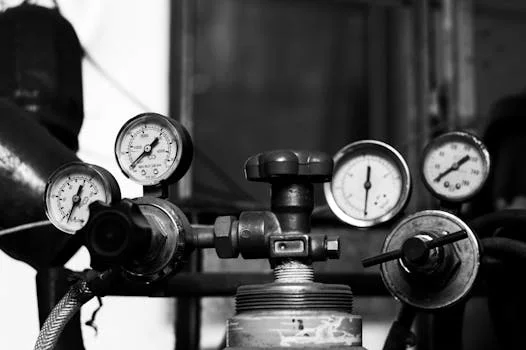
The Menashe Regional Council project, implemented by WFI Group, serves as a benchmark for modular MBR performance in Israel. This 1,200 m³/day package plant was designed to replace an aging system that struggled with fluctuating loads. By utilizing advanced membrane technology, the facility achieved an 80% reduction in OPEX and produced effluent with BOD/TSS levels consistently below 5 mg/L. This high-quality water is now used for 90% of the region’s agricultural irrigation, directly supporting local citrus and avocado groves.
At the Shafdan facility, the integration of ROTEC’s Flow Reversal RO technology demonstrated how modular retrofits can maximize water recovery. By retrofitting a 50,000 m³/day section of the plant, engineers increased water recovery from 75% to 90%. This improvement saves approximately 1.2 million m³ of water annually. While Shafdan is a large-scale plant, the "retrofit package" approach used here is identical to the modular logic applied in smaller industrial package plants across the country.
In Haifa, a food processing facility installed a 200 m³/day DAF + MBR package system to handle wastewater with high FOG and TSS levels (initially >800 mg/L). The DAF unit provides essential DAF pretreatment for Israeli industrial wastewater, reducing the organic load before it enters the MBR. The resulting effluent meets Inbar Standard 521 for unrestricted reuse, allowing the factory to use treated water for non-potable utility purposes and landscape irrigation, saving the company over $100,000 annually in water procurement costs.
How to Select a Package Wastewater Treatment Plant for Your Israeli Project
Selecting a package plant for Israeli industrial or municipal projects requires a five-step engineering audit that begins with a granular characterization of influent salinity and organic load. Because Israel’s water supply often has higher chloride levels due to desalination and recycling, membranes must be selected for high-salinity resilience. Engineers should use historical data or conduct 24-hour composite sampling to determine peak loads, as Israeli design standards typically require plants to handle 1.5x average flow for municipal and 2x for industrial applications.
The second step involves matching the technology to the influent profile. For example, if the wastewater contains high levels of fats or oils, a DAF system is mandatory. For high-clarity reuse, MBR is the standard. This decision framework is similar to the strategies used for Saudi Arabia’s package plant market, where water scarcity also drives high-efficiency technology selection. Third, the plant must be sized not just for current flow, but for modular expansion. A well-designed package plant will allow for additional membrane modules or tanks to be added without disrupting existing operations.
Finally, supplier evaluation and pilot testing are critical. In Israel, working with suppliers who understand local MoEP regulations and have a track record with the Water Authority is essential. For any industrial project exceeding 100 m³/day, a pilot test (typically costing $20,000–$50,000) is highly recommended. This prevents common mistakes such as underestimating the fouling rate of membranes in high-salinity environments—a challenge also noted in MBR systems in high-salinity environments elsewhere. Skipping this step often leads to higher-than-expected chemical cleaning costs and membrane degradation.
Frequently Asked Questions
Q: What is the smallest package wastewater treatment plant available in Israel?
A: The smallest standard MBR package plants typically start at 10 m³/day, such as those found in the WSZ series. However, custom-engineered systems can be designed for as little as 5 m³/day for specialized applications like remote military bases or small clinics. These units have an extremely small footprint of approximately 4 m².
Q: How does Israel reuse its wastewater?
A: Israel reuses 90% of its treated wastewater. The majority (65%) goes to agricultural irrigation, 20% is used for groundwater recharge through soil aquifer treatment (SAT), and the remaining 15% is utilized for industrial processes and river restoration. Package plants are vital for achieving the <10 mg/L BOD/TSS required for these reuse applications.
Q: What are the energy requirements for a package wastewater treatment plant in Israel?
A: Modern package plants are highly efficient. MBR systems typically require 0.15–0.30 kWh/m³, while older activated sludge systems use 0.4–0.6 kWh/m³. For comparison, the WFI Group’s Menashe project achieved an impressive 0.18 kWh/m³, representing significant savings under Israeli energy tariffs.
Q: How much does a package wastewater treatment plant cost in Israel?
A: CAPEX ranges from $1,200 to $2,500 per m³/day of capacity. For a 100 m³/day facility, expect an investment between $150,000 and $250,000. OPEX generally falls between $0.20 and $0.50 per m³, with payback periods of 3–5 years common for industrial reuse projects.
Q: Can package plants handle industrial wastewater in Israel?
A: Yes, but they often require integrated pretreatment. For industrial applications, a combination of DAF vs. API separators for industrial pretreatment is evaluated to remove solids and oils before the biological stage. A Haifa-based food processor successfully used a DAF+MBR system to reduce TSS from 800 mg/L to <10 mg/L to meet Inbar standards.