Why Angola’s Industries Are Turning to MBR Systems
Angola’s water scarcity has left approximately 60% of Luanda’s population without reliable access to clean water (World Bank 2023), a crisis that is forcing industrial operators to move toward closed-loop water reuse systems. For sectors like oil and gas, mining, and textiles, the ability to treat and reuse process water is no longer a luxury but a operational necessity. Traditional treatment methods often fail to reach the high-purity standards required for reuse, whereas an mbr wastewater treatment system in angola provides the filtration precision needed to recycle water back into cooling towers or irrigation systems.
Regulatory pressure is the second major driver. Angola’s Decreto Presidencial 200/18 sets stringent discharge limits, including 30 mg/L for BOD and 10 mg/L for ammonia, which conventional activated sludge (CAS) plants struggle to meet consistently under fluctuating industrial loads. High-strength wastewater from textile mills in Benguela or oil refineries in Cabinda requires the high biomass concentration that only MBR technology can maintain. For instance, a Sonangol refinery in Lobito reported a 40% reduction in environmental fines during its 2024 internal audit after upgrading its treatment train to include MBR, while simultaneously recovering 30% of its treated effluent for industrial cooling.
The adoption of MBR technology is particularly high in Luanda’s rapid municipal expansion projects and remote mining camps in Lunda Norte. In these environments, land is either expensive or geographically constrained. Because MBR systems eliminate the need for secondary clarifiers, they offer a 60% smaller footprint compared to conventional plants. This allows municipal planners to integrate decentralized treatment facilities directly into urban developments, reducing the need for massive, expensive piping infrastructure to centralized plants.
Angola’s Wastewater Regulations: What MBR Systems Must Achieve
Decreto Presidencial 200/18 establishes the legal framework for effluent discharge in Angola, mandating that all industrial and municipal projects meet specific physical and chemical parameters before environmental release. For engineers designing an mbr wastewater treatment system in angola, these limits serve as the baseline for system performance. Failure to comply can lead to fines totaling up to 2% of a company’s annual revenue, with enforcement overseen by ANGOP (Angola’s water authority) through quarterly site audits.
| Parameter | Decreto 200/18 Discharge Limit | MBR Typical Effluent Quality | WHO Reuse Standard (Irrigation) |
|---|---|---|---|
| BOD5 (mg/L) | 30 | < 5 | < 10 |
| TSS (mg/L) | 35 | < 1 | < 1 |
| Ammonia (mg/L) | 10 | < 1 | N/A |
| Fecal Coliforms (CFU/100mL) | 1,000 | < 10 | < 100 |
| pH | 6.0 – 9.0 | 6.5 – 8.5 | 6.5 – 8.5 |
While discharge is the minimum requirement, many Angolan projects now aim for "unrestricted reuse" standards as defined by the WHO (2023). To achieve this, MBR effluent often undergoes tertiary polishing. Utilizing chlorine dioxide disinfection for MBR effluent reuse ensures that pathogens are fully neutralized, making the water safe for landscape irrigation in Luanda’s new residential districts. Specific industries face additional hurdles: the oil sector must maintain TPH (Total Petroleum Hydrocarbons) below 5 mg/L, while textile operations must reduce color to less than 50 Pt-Co units, both of which are achievable through the tight 0.1 μm pore size of MBR membranes.
MBR System Technical Specs: How They Work in Angola’s Conditions
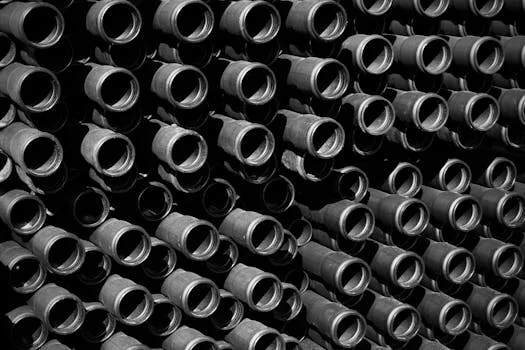
MBR systems in Angola utilize high-flux PVDF membranes with 0.1 μm pore sizes to achieve complete physical separation of liquids and solids, effectively replacing the gravity settling used in older technologies. This process allows the bioreactor to operate at much higher Mixed Liquor Suspended Solids (MLSS) concentrations—typically 8,000 to 12,000 mg/L—compared to the 3,000 to 5,000 mg/L found in conventional systems. This higher biomass density is what enables MBRs to process high-strength industrial waste in a fraction of the time and space.
Designing for Angola requires accounting for high ambient temperatures (25–35°C), which significantly impacts biological activity and membrane fouling rates. While warmer water improves membrane permeability, it also accelerates the growth of extracellular polymeric substances (EPS), which can clog membrane pores. To counter this, HydropureWater’s integrated MBR system for Angola’s industrial projects employs automated air-scouring (1.5–2.5 Nm³/m²/h) and periodic chemical backwashing to maintain stable flux rates. For a deeper dive into the mechanics, engineers can reference a detailed MBR process explanation and efficiency benchmarks to optimize their aeration-to-permeate ratios.
| Technical Parameter | MBR Specification (Flat Sheet/Hollow Fiber) | Performance Efficiency |
|---|---|---|
| Membrane Material | Reinforced PVDF (Hydrophilic) | High Chemical Resistance |
| Pore Size | 0.03 μm - 0.1 μm | 99.9% Bacteria Removal |
| COD Removal Rate | 92% – 97% | Excellent for Industrial Loads |
| Energy Consumption | 0.6 – 1.2 kWh/m³ | Optimized via VFD Control |
| Cleaning Cycle | Maintenance Wash: Weekly; CIP: 3-6 Months | Ensures 5-8 Year Lifespan |
The choice of membrane geometry is also critical. For municipal projects in Luanda, hollow-fiber modules offer high packing density, while for the high-viscosity wastewater found in textile dyeing, flat-sheet modules like the MBR membrane module are preferred due to their superior resistance to fouling and easier manual cleaning protocols. Energy efficiency is managed through Variable Frequency Drives (VFDs) on the aeration blowers, keeping consumption within the 0.6–1.2 kWh/m³ range even during peak heat periods.
MBR vs. MBBR vs. Conventional Systems: Which is Right for Angola?
A head-to-head comparison shows that MBR systems achieve 99% TSS removal, making them the superior choice for projects where water reuse or strict compliance is the priority. In contrast, Moving Bed Biofilm Reactors (MBBR) are often selected for remote mining camps in Angola because they require less specialized maintenance and have lower energy demands. However, MBBR systems still require a downstream clarifier or DAF unit to remove solids, which increases the total footprint and complexity of the site layout.
| Feature | MBR (Membrane Bioreactor) | MBBR (Moving Bed) | Conventional (CAS) |
|---|---|---|---|
| Effluent Quality | Superior (Reuse Ready) | Good (Needs Polishing) | Moderate |
| Footprint | Minimal (Smallest) | Moderate | Large |
| Maintenance | High (Membrane Care) | Low | Moderate |
| Energy Use | Moderate-High | Low-Moderate | Moderate |
| Sludge Production | Low (30-50% less) | Moderate | High |
| CAPEX | High | Moderate | Low-Moderate |
For municipal planners in Luanda, the small footprint of MBR is the deciding factor. When land costs exceed $200/m², the 60% space saving of an MBR plant offsets its higher initial equipment cost. For industrial sites, the decision often hinges on the "strength" of the wastewater. Oil refineries and textile plants produce high-COD effluent that is difficult for MBBR or CAS to treat to discharge limits in a single pass. In these cases, MBR is the only technology that guarantees compliance with Decreto 200/18 without massive over-engineering of the biological tanks.
Cost Breakdown: MBR System in Angola (2025 Data)

The CAPEX for an industrial MBR system in Luanda typically ranges from $800 to $1,200 per m³ of daily treatment capacity, depending on the complexity of the influent. For a standard 500 m³/day plant, total investment—including equipment, civil works, and installation—usually falls between $1.2M and $1.8M. Procurement managers must also account for Angola’s import landscape; equipment sourced from non-EAC countries typically incurs import duties of 10–15%, which should be factored into the initial budget. For comparison with neighboring markets, one might look at MBR systems in Central Africa: cost and compliance insights to see how regional logistics affect pricing.
| Cost Component | Estimated Cost (USD) | Notes for Angola |
|---|---|---|
| Equipment (MBR Modules, Pumps, Blowers) | $800 – $1,200 / m³ | Includes PVDF membranes & PLC |
| Civil Works & Tankage | $200 – $400 / m³ | Local concrete & labor costs |
| Installation & Commissioning | $150 – $300 / m³ | Expert supervision required |
| Total CAPEX (500 m³/day) | $1.2M – $1.8M | Excludes import duties |
Operating expenses (OPEX) in Angola are heavily influenced by energy tariffs, which range from $0.12 to $0.18/kWh for industrial users. This results in an energy cost of approximately $0.15–$0.30/m³ of treated water. Membrane replacement, which occurs every 5 to 8 years, adds another $0.10–$0.20/m³ to the lifecycle cost. While these costs are higher than conventional systems, they are often offset by the elimination of water procurement costs (as treated water is reused) and the reduction in sludge disposal fees, which are significantly lower due to the MBR's high sludge age and reduced biomass production.
ROI Calculator: Is MBR Worth It for Your Angola Project?
The return on investment for MBR technology in Angola is primarily driven by the avoidance of regulatory fines and the reduction in raw water consumption. For a textile plant in Benguela consuming 500 m³ of water daily, the cost of purchasing water from municipal sources or private tankers can exceed $2.50/m³. By reusing 50% of the MBR effluent for process washing or cooling, the facility can save over $150,000 annually in water procurement alone. When combined with the avoidance of Decreto 200/18 non-compliance fines, the payback period for the system is often less than six years.
| ROI Factor | Annual Impact (500 m³/day plant) | Calculation Basis |
|---|---|---|
| Water Reuse Savings | $45,000 – $75,000 | 30-50% reuse @ $1.50/m³ |
| Avoided Regulatory Fines | $20,000 – $40,000 | Based on historical non-compliance |
| Sludge Disposal Savings | $10,000 – $15,000 | 40% reduction in sludge volume |
| Total Annual Savings | $75,000 – $130,000 | Varies by sector |
To calculate a project-specific ROI, engineers should use the formula: (Annual Savings + Avoided Fines) / (CAPEX + Annual OPEX). In many Angolan industrial contexts, the "intangible" ROI—such as maintaining a social license to operate in water-stressed regions—is equally important. financing options like the Fundo Ambiental or World Bank-backed municipal loans are becoming more accessible for projects that demonstrate significant water conservation through MBR technology. Procurement teams can use this data to justify the initial CAPEX premium to stakeholders by highlighting the long-term operational stability the system provides.
Frequently Asked Questions
Q: Which is better for Angola: MBR or MBBR?
A: MBR is superior for water reuse and high-strength industrial wastewater (oil, textiles) due to its high effluent quality. MBBR is better for mid-strength municipal waste or remote mining camps where low-maintenance, off-grid operation is more critical than water reuse.
Q: What is the total cost of an MBR system in Angola?
A: For a 500 m³/day plant, CAPEX ranges from $1.2M to $1.8M. OPEX is typically $0.35–$0.50/m³, which is 20-30% higher than in South Africa due to Angola's higher energy costs ($0.12–$0.18/kWh) and import duties.
Q: What are the specific effluent limits for MBR in Angola?
A: Per Decreto Presidencial 200/18, discharge limits are 30 mg/L BOD, 35 mg/L TSS, and 10 mg/L ammonia. MBR systems consistently exceed these, often delivering <5 mg/L BOD and <1 mg/L TSS, which allows for water reuse.
Q: How often do MBR membranes need replacement in Angola’s climate?
A: Membranes typically last 5–8 years. In Angola, high ambient temperatures (up to 35°C) can increase fouling, so chemical cleaning (CIP) should be performed every 3–6 months to maintain the design lifespan.
Q: Can MBR handle high-strength oil and gas wastewater?
A: Yes, but pre-treatment is essential. Using a DAF system for FOG removal prior to the MBR is recommended to protect the membranes from hydrocarbons, ensuring the final effluent meets the TPH <5 mg/L limit.