Mendoza’s Regulatory Landscape: Effluent Standards and Industry-Specific Limits
Mendoza’s sewage treatment equipment market is shaped by Argentina’s Law 25.687 (effluent COD ≤ 250 mg/L, BOD ≤ 50 mg/L) and Provincial Decree 1059/2018, which enforces stricter limits for wineries and food processors. Suppliers like HydropureWater offer DAF systems (92–97% TSS removal) and MBR plants (effluent <1 μm) starting at $80K for 10 m³/h, with CAPEX rising to $2M for 200 m³/h municipal plants. Local compliance, import logistics, and after-sales service are critical selection factors—this guide provides Mendoza-specific benchmarks and a zero-risk vendor framework.
A winery manager in Luján de Cuyo recently faced a shutdown order after effluent tests revealed a Chemical Oxygen Demand (COD) of 400 mg/L, significantly exceeding the 250 mg/L limit established by national standards. In Mendoza, compliance is not a suggestion but a survival requirement. Under Article 4 of Argentina’s Law 25.687 (2023 update), national discharge limits are set at COD ≤ 250 mg/L, BOD ≤ 50 mg/L, and TSS ≤ 80 mg/L, with a pH range of 6–9. However, Mendoza’s Provincial Decree 1059/2018 tightens these screws further: wineries must achieve COD ≤ 200 mg/L, while food processors are often held to ≤ 150 mg/L. Enforcement is rigorous, with penalties for non-compliance ranging from ARS 1M to 5M per violation.
Mendoza’s semiarid climate also dictates that treated effluent must meet specific irrigation standards per INTA 2024 guidelines if the water is to be reused for vineyards. These standards require salinity levels below 1,000 mg/L and a Sodium Adsorption Ratio (SAR) of less than 6. Common violations in the region typically involve wineries exceeding organic load limits due to grape pomace and lees, or food processors failing to manage high Fats, Oils, and Grease (FOG) levels from olive oil production.
| Parameter | National Law 25.687 | Mendoza Decree 1059/2018 | INTA Irrigation Standard (2024) |
|---|---|---|---|
| COD (mg/L) | ≤ 250 | ≤ 200 (Wineries) / ≤ 150 (Food) | N/A |
| BOD (mg/L) | ≤ 50 | ≤ 30 | ≤ 20 |
| TSS (mg/L) | ≤ 80 | ≤ 40 | ≤ 30 |
| SAR | N/A | N/A | < 6 |
| Salinity (mg/L) | N/A | N/A | < 1,000 |
Sewage Treatment Equipment Options for Mendoza: How Each System Meets Local Standards
Selecting the right technology depends on the specific influent characteristics of Mendoza’s primary industries. Dissolved Air Flotation (DAF) systems are the primary choice for removing 92–97% of Total Suspended Solids (TSS) and 85–90% of FOG, according to EPA 2024 benchmarks. For an olive oil processor in Maipú dealing with wastewater containing 5,000 mg/L of FOG, DAF systems for Mendoza’s high-FOG wastewater provide the necessary pretreatment to protect downstream biological stages or meet municipal sewer codes.
For facilities targeting water reuse in vineyards, Membrane Bioreactor (MBR) systems are the gold standard. These deliver effluent with less than 1 μm filtration and COD levels often below 30 mg/L. However, MBR systems in Mendoza face specific risks: grape tannins in winery effluent can lead to rapid membrane fouling. Mitigation requires a strict chemical cleaning frequency—typically every 3 to 6 months—using specialized surfactants. MBR systems for Mendoza’s water reuse projects ensure that the treated water meets the SAR and salinity requirements for sensitive grape varieties.
Urban wineries or boutique hotels in Mendoza often face space constraints. In these scenarios, WSZ series integrated plants offer a footprint advantage. These systems combine Anoxic/Oxic (A/O) biological treatment with sedimentation to achieve BOD levels ≤ 20 mg/L. They are frequently installed underground, such as beneath parking lots, to preserve aesthetic and functional space. For such applications, compact sewage treatment for Mendoza’s urban wineries provides a discreet yet high-performance solution.
Effective sludge management is the final hurdle. Sludge dewatering equipment can reduce waste volume by 70–80%, which is critical given Mendoza’s landfill restrictions and provincial waste disposal fees that currently average ARS 8,000 per ton. Hybrid systems, such as a DAF unit followed by an MBR, are often recommended for large-scale wineries that must handle high peak organic loads during the harvest season while maintaining high-quality effluent for year-round irrigation.
| Equipment Type | Primary Removal Target | Efficiency (COD/TSS) | Best Application in Mendoza |
|---|---|---|---|
| DAF System | FOG, TSS, Pomace | 85% COD / 95% TSS | Olive oil, Large Wineries (Pre-treatment) |
| MBR System | Dissolved Organics, Bacteria | 98% COD / 99% TSS | Vineyard Irrigation, Water Reuse |
| Integrated (WSZ) | BOD, Nitrogen | 90% COD / 90% TSS | Urban Wineries, Municipal Small-Scale |
| Sludge Press | Water Content | 75% Volume Reduction | All industrial facilities (Cost Savings) |
Cost Benchmarks for Mendoza: CAPEX, OPEX, and Hidden Costs to Avoid
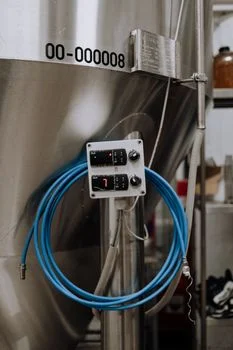
Budgeting for a sewage treatment plant in Mendoza requires accounting for both the equipment price and the logistical reality of the Argentine market. CAPEX ranges vary widely based on technology: a 10 m³/h integrated plant may start at $80,000, while a 200 m³/h MBR system for a municipal facility can exceed $2M. When sourcing from international manufacturers, import duties are a significant factor. Under AFIP 2024 tariff codes, wastewater equipment from China typically incurs duties of 15–25%, plus a 21% VAT. Some firms mitigate these costs by utilizing free trade zones in Buenos Aires or La Plata for temporary storage and assembly.
Operational expenditures (OPEX) are driven largely by energy and chemical consumption. In Mendoza, energy costs average ARS 120/kWh (2024 data). DAF systems generally operate at $0.15/m³, whereas MBR systems, due to aeration and pumping requirements, average $0.22/m³. Integrated plants sit in the middle at approximately $0.18/m³. Understanding cost benchmarks for another water-scarce region can help local planners contextualize these figures against global trends.
Hidden costs often derail projects. Permitting fees for the Departamento General de Irrigación can range from ARS 50,000 to 200,000. Monthly effluent testing, required for compliance, costs approximately ARS 15,000 per test. For a 50 m³/h DAF system with a $120,000 CAPEX, the ROI is often achieved within 5 years through the elimination of non-compliance fines and the savings generated by reusing water for landscape or vineyard irrigation.
| Capacity (m³/h) | System Type | Est. CAPEX (USD) | Est. OPEX (USD/m³) |
|---|---|---|---|
| 10 | Integrated (WSZ) | $80,000 - $110,000 | $0.18 |
| 50 | DAF System | $120,000 - $160,000 | $0.15 |
| 100 | MBR System | $450,000 - $600,000 | $0.22 |
| 150 | Integrated (WSZ) | $750,000 - $950,000 | $0.17 |
| 200 | MBR System | $1.8M - $2.2M | $0.21 |
Vendor Selection Framework: How to Choose a Supplier for Mendoza’s Market
The lack of major local equipment distributors in Mendoza makes vendor selection a high-stakes decision. A zero-risk framework must prioritize compliance expertise. Vendors must provide effluent testing reports that specifically address Mendoza’s standards (COD ≤ 200 mg/L). Generic reports from other regions are a major red flag. because Mendoza is geographically isolated from major ports, import logistics are critical. Lead times from China average 6–8 weeks, while equipment from the USA can take 10–12 weeks. These timelines are often extended by AFIP inspections for electrical components, so vendors with experience in the Argentine customs landscape are preferred.
After-sales support is the most common point of failure. Since local stockists are rare, vendors must offer a consignment inventory of critical spare parts, such as MBR membranes and DAF pumps, to be held on-site. Technical support should include 24/7 remote monitoring and a guaranteed on-site commissioning response time. While international vendors may take 72+ hours to arrive, they should have a network of local specialized technicians for immediate mechanical repairs. Evaluating how Mendoza’s market compares to India’s regulatory landscape can provide insights into how global suppliers manage local service in complex regulatory environments.
Finally, demand case studies from semiarid regions. A supplier’s success in Chile or Peru is a better indicator of performance in Mendoza than a project in a tropical climate. Site visits or direct contact with previous clients to verify effluent test data should be part of any RFP preparation checklist.
DAF vs. MBR for Mendoza Wineries: A Side-by-Side Comparison
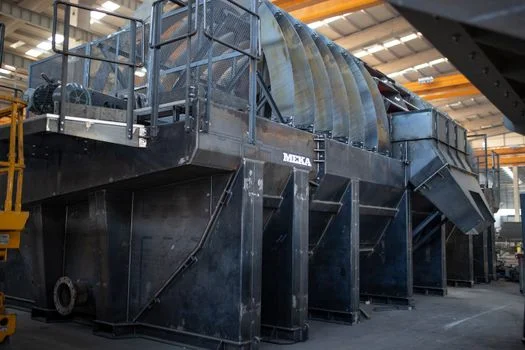
For winery managers, the choice usually narrows down to DAF vs. MBR. DAF is the superior choice for high-load compliance, handling the "shock" of harvest season with ease. It removes the bulk of solids and fats, but the effluent may still require additional polishing if the goal is high-end reuse. MBR, conversely, provides a "one-step" solution for high-purity water, though it requires more sophisticated operation and higher energy inputs. It is useful to observe lessons from Recife’s semiarid wastewater challenges where membrane technologies have been successfully deployed for industrial reuse.
| Feature | DAF System (50 m³/h) | MBR System (50 m³/h) |
|---|---|---|
| Effluent COD | ≤ 150 mg/L | ≤ 30 mg/L |
| CAPEX | ~$120,000 | ~$250,000 |
| OPEX (Energy/Chem) | $0.15/m³ | $0.22/m³ |
| Space Needed | 50 m² | 30 m² |
| Operator Skill | Low-Medium | High (2 Operators) |
| Reuse Potential | Requires Filtration | Direct Irrigation |
Frequently Asked Questions
What are Mendoza’s effluent standards for wineries?
Under Provincial Decree 1059/2018, wineries in Mendoza must meet a COD limit of ≤ 200 mg/L and BOD ≤ 30 mg/L. This is stricter than the national Law 25.687, which allows up to 250 mg/L COD.
How much does a sewage treatment plant cost in Mendoza?
CAPEX ranges from $80,000 for small 10 m³/h integrated plants to over $2M for 200 m³/h MBR systems. OPEX typically ranges from $0.15 to $0.22 per cubic meter treated, depending on technology and local energy rates.
Can I reuse treated wastewater for irrigation in Mendoza?
Yes, provided the effluent meets INTA 2024 guidelines (salinity < 1,000 mg/L and SAR < 6). MBR systems are generally required to reach these levels consistently for vineyard use.
What are the import duties for sewage treatment equipment in Argentina?
Wastewater equipment typically falls under AFIP tariff codes carrying a 15–25% import duty. Additionally, a 21% VAT is applied at the time of customs clearance.
How do I choose between DAF and MBR for my winery?
If your primary goal is meeting discharge limits at the lowest cost, DAF is usually sufficient. If you need to reuse water for irrigation in a water-scarce area, MBR is the necessary investment despite the higher CAPEX.