Industrial wastewater treatment in Wellington, New Zealand follows two rulebooks: Trade Waste Bylaw 2016 Schedule 1 for sewer discharge, and resource consents for direct discharge to receiving waters. On-site trains for 50–500 m³/h typically span NZD $1.5M–$10M in CAPEX and NZD $0.40–$1.20/m³ in OPEX.
Industrial Wastewater Treatment in Wellington, New Zealand: Specs at a Glance
Wellington on-site trains are sized against the active discharge pathway. Sewer users meet Trade Waste Bylaw 2016 Schedule 1 limits of suspended solids ≤ 1000 g/m³ and FOG ≤ 200 g/m³. Direct-discharge consents commonly demand COD ≤ 125 mg/L and TSS ≤ 30 mg/L, which pushes selection from simple settling toward DAF or MBR.
Wellington Water's four metropolitan plants serve Wellington, Lower Hutt, Upper Hutt, and Porirua, so pathway rules reach every industrial catchment in the region. Plant engineers therefore settle the pathway question before any equipment question: sewer trade-waste acceptance, or a site-specific resource consent. The pathway fixes the numbers the train must hit, and it fixes the fee exposure when those numbers are missed.
A mid-sized Wellington dairy plant that discharged TSS near 150 mg/L in 2024 — about five times a 30 mg/L direct-discharge target — moved from gravity settling to DAF after surcharges and abatement pressure. Food processors and manufacturers with rising organic loads face the same trade-off between upfront CAPEX and rising volumetric fees.
Regional scrutiny of coastal and stream receiving environments under the Resource Management Act 1991 raises the cost of non-compliant discharges. Facilities without reliable pretreatment carry both surcharge exposure and production-stop risk when consents or bylaw conditions are breached.
Veolia Wellington Water Wastewater Contract Cost Benchmark
Veolia's Wellington Water operations contract is worth NZD $170 million over ten years, or NZD $17 million per year, and it covers the four metropolitan treatment plants. According to Wellington Water's 2019 award notice, still summarised in a June 2025 Official Information Act response, Moa Point, Western, Seaview, and Porirua sit under that contract. The contract is the municipal OPEX reference most Wellington industrial buyers quote in board papers.
Higher municipal operating cost feeds through to trade-waste charging. That is why many sites compare on-site advanced treatment with continued full reliance on the public network before accepting new mass charges. Reading the contract as a unit-cost reference — four plants for NZD $17 million per year — frames what compliant treatment costs at utility scale.
MBR vs DAF Wastewater Treatment Wellington Cost Comparison
MBR and DAF trains split the Wellington market by duty: MBR polishes soluble organics and solids to consent grade, while DAF strips FOG and suspended solids ahead of the sewer or a biological stage. Membrane bioreactor trains retain solids at about 99.9% when hollow-fibre membranes are intact. That performance supports effluent TSS below 5 mg/L and COD below 50 mg/L on well-operated industrial feeds.
Modern MBR systems for high-strength industrial wastewater in Wellington commonly use PVDF hollow-fibre membranes with a nominal 0.03 micron pore size. Higher allowable MLSS cuts bioreactor volume. Many designs claim about a 60% footprint cut versus conventional activated sludge on constrained Wellington sites.
Where fats, oils, and grease dominate the load, dissolved air flotation remains the usual first stage. High-performance DAF systems for food processing and metalworking effluents in Wellington inject micro-bubbles that float solids for skimming. Engineering data for well-dosed units show 92–97% TSS removal and up to 95% FOG removal before sewer discharge or a biological stage.
Conventional activated sludge needs large clarifiers, often 1,200–2,000 m² for about 500 m³/h, and OPEX frequently lands near NZD $0.60–$1.20/m³ because of aeration and sludge handling. For variable industrial loads, the lower civil cost can be offset by higher long-run operating risk and land use.
| Technology | Effluent Quality (COD/TSS) | CAPEX (Estimated) | OPEX ($/m³) | Footprint | Best Use Case |
|---|---|---|---|---|---|
| MBR (DF Series) | COD ≤ 50 / TSS ≤ 5 mg/L | High ($8M-$10M) | $0.70 - $1.10 | Compact (40% of CAS) | Dairy, Pharma, Direct Discharge |
| DAF | COD 30% Red. / TSS ≤ 30 mg/L | Low ($0.2M-$1.5M) | $0.40 - $0.60 | Very Compact | Food Processing, FOG Removal |
| Conventional Sludge | COD ≤ 125 / TSS ≤ 30 mg/L | Mid ($1M-$3M) | $0.60 - $1.20 | Largest (baseline) | Low-strength Municipal/Industrial |
| Hybrid DAF-MBR | COD ≤ 30 / TSS ≤ 2 mg/L | Very High | $0.80 - $1.30 | Moderate | Hybrid DAF-RO-MBR systems for industrial wastewater treatment |
Technology choice follows effluent targets, CAPEX ceiling, OPEX tolerance, and available footprint. Sites that already run basic solids capture often add DAF first, then evaluate MBR only if consent limits demand it.
What do MBR systems cost to run?
MBR operating cost in Wellington-scale industrial packages typically falls between NZD $0.70 and $1.20/m³ when energy, membrane cleaning chemicals, and sludge disposal are included. Energy alone often contributes NZD $0.45–$0.65/m³ at 50–500 m³/h design flows. Chemical cost commonly adds NZD $0.15–$0.25/m³. Payback appears when trade-waste mass charges and non-compliance risk exceed those unit costs over a 10–15 year horizon.
Industrial Wastewater Treatment CAPEX OPEX Wellington NZD Benchmarks
Industrial wastewater treatment CAPEX in the Wellington region ranges from NZD $1.5M to $10M for trains handling 50 to 500 m³/h, so total cost of ownership decides the purchase. In practice, industrial wastewater treatment wellington new zealand quotations get compared on a total-cost basis, not CAPEX alone. Energy share of OPEX is often 40–60%, and coagulants or polymers add another 20–30%.
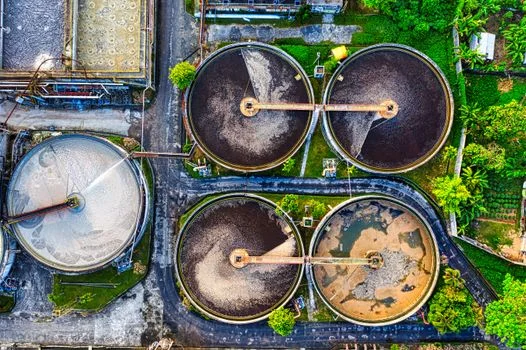
Using the Veolia municipal benchmark of about NZD $17 million per year across four plants helps frame unit costs at utility scale. Optimised on-site industrial OPEX still clusters near NZD $0.50/m³ for well-tuned trains. A food plant discharging 200 m³/h with high TSS and FOG might pay about NZD $0.30/m³ in trade-waste fees. A NZD $500,000 DAF that restores compliance can save about NZD $120,000 per year, or roughly a 4.2-year simple payback.
| Technology | CAPEX (50 / 200 / 500 m³/h) | OPEX ($/m³) | Energy Cost ($/m³) | Chemical Cost ($/m³) |
|---|---|---|---|---|
| MBR | $2.5M / $5.5M / $10M | $0.70 - $1.20 | $0.45 - $0.65 | $0.15 - $0.25 |
| DAF | $0.2M / $0.5M / $1.5M | $0.40 - $0.65 | $0.10 - $0.15 | $0.25 - $0.40 |
| Conventional | $1.0M / $2.0M / $3.5M | $0.60 - $1.10 | $0.35 - $0.55 | $0.10 - $0.20 |
Wellington Trade Waste Bylaw 2016 Discharge Limits
The Wellington Trade Waste Bylaw 2016 sets Schedule 1 sewer acceptance limits of suspended solids ≤ 1000 g/m³, FOG ≤ 200 g/m³, pH 6.0–10.0, and temperature ≤ 40 °C at the point of discharge. Earlier guidance used TSS ≤ 300 mg/L and FOG ≤ 100 mg/L for municipal acceptance. The 2016 Schedule 1 characteristics supersede those older numbers, and conditional consents may impose tighter site-specific limits (Wellington City Council).
The Resource Management Act 1991 allows for corporate penalties up to NZD $600,000 for unauthorized discharges, so the bylaw is not the only line that matters. NZ Water Standards references used in local engineering briefs still cite COD ≤ 125 mg/L and TSS ≤ 30 mg/L where direct discharge or strict consent wording applies. Those figures are not the same as Schedule 1 sewer acceptance numbers, so procurement specs must name the pathway. Practices from Auckland-focused industrial waste water management remain useful for sampling frequency and FOG pretreatment, even when tariff tables differ.
Wellington Industrial Wastewater Compliance Checklist:
- Verify effluent COD is consistently ≤ 125 mg/L for direct discharge.
- Ensure TSS levels remain below 30 mg/L.
- Install a DAF system if FOG levels exceed 10 mg/L.
- Maintain pH monitoring and adjustment systems.
- Implement automated sampling and data logging.
- Confirm Schedule 1 sewer limits (SS ≤ 1000 g/m³, FOG ≤ 200 g/m³) or any tighter consent values.
- Document temperature ≤ 40 °C and pH 6.0–10.0 at the point of discharge.
Wellington Direct Discharge Consent COD TSS Limits
Direct-discharge consents in Wellington commonly specify COD ≤ 125 mg/L and TSS ≤ 30 mg/L, with pH about 6–9 and FOG near ≤ 10 mg/L where the wording is strict. MBR effluent at COD ≤ 50 mg/L and TSS ≤ 5 mg/L clears those limits with margin. Well-dosed DAF effluent can hold TSS near 30 mg/L, but soluble COD still needs a biological stage for polishing.
How to Select Equipment for a Wellington Facility
Equipment selection starts from a mass balance of influent parameters — peak and average flow, COD, TSS, FOG, and pH — matched against the consent or bylaw limits that actually apply. If the target is direct discharge with TSS below 5 mg/L, MBR is usually required. If the duty is sewer pretreatment with high FOG, start with DAF and reserve MBR for residual soluble organics.
When do package plants fit Wellington sites?
Package wastewater plants fit Wellington sites when peak flow stays below about 200 m³/h and civil space is tight. A factory-tested skid can meet consent limits without a large custom tank farm. Modular MBR or DAF-MBR packages shorten install time versus cast-in-place basins. They are a poor fit when influent FOG or toxicity needs heavy custom pretreatment, or when future flow will exceed the packaged hydraulic rating within a few years.
Procurement teams should score total cost of ownership over 10–15 years, including energy, chemicals, membrane replacement, sludge haulage, and trade-waste fees. Weigh flow, targets, budget, and footprint before freezing the process train. In sizing exercises, plants that under-survey their FOG load usually pay for it in chemical dosing within the first year of operation.
Wellington Industrial Wastewater Treatment Selection Guide:
- Flow Rate: Is your peak flow > 200 m³/h? Prioritize modular systems.
- Effluent Targets: Is your target TSS < 5 mg/L? Choose MBR.
- Budget: Is CAPEX limited? Start with DAF pretreatment.
- Footprint: Is site space restricted? MBR offers the highest treatment density.
- FOG load: Is FOG above 10 mg/L on grab samples? Specify DAF ahead of biology.
- Pathway: Sewer Schedule 1 versus direct-discharge consent—write the limit set into the RFQ.
Who this is for: plant engineers, EPC process leads, and procurement managers comparing on-site CAPEX with rising Wellington trade-waste exposure. Who should look elsewhere: households or sites without process wastewater. Next step: send influent analyses and consent limits through our request a quote page for a sized DAF or MBR option before budget lock.
Frequently Asked Questions
What are the discharge limits for industrial wastewater in Wellington?
Direct-discharge briefs commonly require COD ≤ 125 mg/L, TSS ≤ 30 mg/L, pH about 6–9, and FOG near ≤ 10 mg/L where consent wording is strict. For sewer discharge, Trade Waste Bylaw 2016 Schedule 1 sets suspended solids ≤ 1000 g/m³ and FOG ≤ 200 g/m³, with pH 6.0–10.0 and temperature ≤ 40 °C. Conditional consents can tighten those values. Copy the pathway on your consent into the equipment specification.
How much does an industrial wastewater treatment system cost in Wellington?
CAPEX ranges from about NZD $200,000 for compact DAF skids to about NZD $10M for large MBR trains at roughly 500 m³/h. OPEX typically falls between NZD $0.40 and $1.20/m³, depending on energy tariff, chemical dose, and sludge disposal. A NZD $500,000 DAF that avoids about NZD $120,000 per year in fees can show a simple payback near 4.2 years under those assumptions. Membrane replacement and sludge haulage move that number more than most buyers expect.
What is the best technology for food processing wastewater in Wellington?
DAF systems are generally best for food processing because they remove 92–97% of TSS and FOG when coagulants and flotation are correctly set. Many plants discharge to sewer after DAF alone if Schedule 1 or consent limits are met. If soluble COD remains high or direct-discharge TSS below 5 mg/L is required, add biological treatment or an MBR stage after flotation rather than enlarging the DAF only.
What penalties apply for non-compliance in Wellington?
Companies can face fines up to NZD $600,000 under the Resource Management Act 1991 for unauthorized or harmful discharges, alongside abatement notices and production constraints. Trade-waste breaches can also trigger consent suspension, monitoring cost recovery, and higher volumetric or mass charges. The practical cost is often downtime and retrofit CAPEX under time pressure, which exceeds the sticker fine for many continuous process plants.
Can I discharge industrial wastewater directly to Wellington's sewer system?
Discharge to the sewer is allowed only if the stream meets the pretreatment standards in the Wellington Trade Waste Bylaw 2016 and any trade-waste consent conditions. Permitted, controlled, and conditional grades depend on volume and characteristic limits in Schedule 1. Prohibited characteristics cannot be consented. If FOG, solids, or organic strength exceed acceptance values, install pretreatment — commonly DAF for FOG-rich streams — before the legal point of discharge.