In Saskatoon, wastewater treatment plant costs for 2025 range from $120K for small package plants (10–50 m³/day) to $1.8M for industrial-scale systems (500–2,000 m³/day), with additional OPEX of $0.50–$2.00 per m³ treated. Key cost drivers include winterization (30–40% premium for -40°C resilience), soil conditions (piling adds $150–$300K for unstable ground), and compliance with Saskatchewan Water Security Agency’s Class 4 standards, which mandate secondary treatment and UV disinfection for municipal discharges.
Why Saskatoon’s Wastewater Treatment Costs Are Unique
Saskatoon’s extreme climate, specific geological conditions, and stringent regulatory framework collectively impose unique cost drivers on wastewater treatment plant design and operation. The region experiences a temperature differential of up to 70°C, with winters dropping to -40°C and summers reaching +30°C, necessitating significant investment in insulated or buried systems. This thermal resilience adds a substantial 30–40% premium to CAPEX compared to temperate climates, ensuring biological processes remain active year-round (per Top 1 data). Saskatchewan's Class 4 certification, the highest level in Canada, mandates advanced secondary treatment processes like Biological Nutrient Removal (BNR) and UV disinfection for municipal discharges, increasing CAPEX by an estimated 25–35% compared to primary treatment facilities.
Geotechnical factors also play a critical role in Saskatoon wastewater treatment plant design. The South Saskatchewan River valley, where many facilities are located, often features unstable soil conditions requiring deep piling for large plant foundations. Such foundational work can add $150K–$300K to overall construction costs, a factor highlighted during the City of Saskatoon’s 1991 wastewater treatment plant expansion (Top 2). For remote sites, such as mining camps or First Nations communities, operational expenditures are further inflated by logistics. Trucked sludge disposal, for instance, can cost $0.80–$1.50/m³ compared to the $0.30–$0.50/m³ typical for centralized plants with direct access to municipal biosolids handling facilities. A 2023 spill from an unpermitted industrial camp near La Ronge, resulting in a $250,000 fine from the Saskatchewan Water Security Agency (WSA), underscores the high financial risk of underestimating these localized cost drivers and non-compliance.
Wastewater Treatment Plant Costs in Saskatoon: CAPEX and OPEX by Technology
Wastewater treatment plant costs in Saskatoon vary significantly based on technology, capacity, and application, with package plants offering flexible solutions for decentralized needs and centralized systems providing economies of scale for larger populations. Package plants, typically ranging from 10–500 m³/day, have a CAPEX between $120K and $1.8M and OPEX between $0.50 and $2.00/m³ treated (Top 1 data, HydropureWater field data, 2025). Within this category, buried A/O (Anaerobic/Anoxic/Oxic) systems, such as the WSZ Series, offer robust biological nutrient removal suitable for cold climates, while MBR systems provide superior effluent quality for sensitive receiving environments. Dissolved Air Flotation (DAF) systems are often deployed for industrial pretreatment, particularly for high-fat, oil, and grease (FOG) removal in sectors like food processing. Centralized municipal plants, serving capacities of 5,000–50,000 m³/day, command a much higher CAPEX, typically $50M–$150M, but achieve lower OPEX, ranging from $0.30–$0.80/m³, exemplified by Saskatoon’s 1996 $52M BNR upgrade (Top 2).
Industrial pretreatment systems, such as DAF for food processing facilities, generally incur $200K–$1M in CAPEX and $0.70–$1.50/m³ in OPEX. These systems are critical for reducing pollutant loads before discharge to municipal sewers or direct environmental release, preventing fines and infrastructure damage. Sludge dewatering solutions further impact overall costs; filter presses or centrifuges typically require $50K–$300K in CAPEX and $0.10–$0.30/m³ in OPEX. Plate-and-frame filter presses are common for smaller volumes in Saskatoon’s climate due to their batch operation and ability to produce drier cake, while belt presses offer continuous operation for larger facilities. Disinfection, mandated by Saskatchewan Water Security Agency permits, is predominantly achieved through UV or chlorine dioxide. UV systems involve $200K–$1M in CAPEX with $0.05–$0.15/m³ OPEX, while ClO₂ generators cost $50K–$500K in CAPEX and $0.10–$0.30/m³ OPEX. Saskatoon’s 2009 UV upgrade (Top 2) demonstrates a shift towards non-chemical disinfection methods for municipal discharges.
| Technology Type | Typical Capacity (m³/day) | Estimated CAPEX (Saskatoon, 2025) | Estimated OPEX (per m³ treated) | Key Features / Application |
|---|---|---|---|---|
| Package Plants (WSZ Series - Buried A/O) | 10–500 | $120K–$800K | $0.70–$2.00 | Buried, winterized, biological nutrient removal, remote sites, small communities. Learn more about buried A/O systems for remote Saskatoon sites. |
| Package Plants (MBR Systems) | 50–2,000 | $400K–$1.8M | $0.90–$1.80 | High effluent quality, compact footprint, industrial/municipal, reuse potential. Explore MBR systems for high-efficiency treatment in Saskatoon. |
| Industrial Pretreatment (DAF) | 50–1,000 | $200K–$1M | $0.70–$1.50 | FOG, TSS, heavy metals removal, food processing, manufacturing. See DAF systems for industrial pretreatment in Saskatoon. |
| Centralized Municipal Plants (BNR) | 5,000–50,000 | $50M–$150M+ | $0.30–$0.80 | Large urban centers, economies of scale, comprehensive treatment. |
| Sludge Dewatering (Filter Press) | (Ancillary) | $50K–$200K | $0.10–$0.25 | Reduces sludge volume, improves disposal efficiency. |
| Sludge Dewatering (Centrifuge) | (Ancillary) | $100K–$300K | $0.15–$0.30 | Continuous operation, higher throughput for large volumes. |
| Disinfection (UV) | (Ancillary) | $200K–$1M | $0.05–$0.15 | Chemical-free, effective against pathogens, Class 4 compliance. |
| Disinfection (Chlorine Dioxide) | (Ancillary) | $50K–$500K | $0.10–$0.30 | Chemical disinfection, effective, requires careful handling. |
How to Choose Between Package Plants and Centralized Systems for Saskatoon Projects
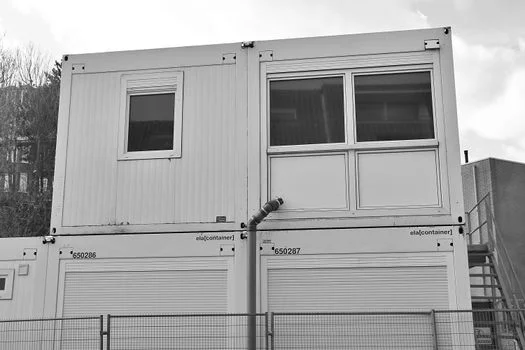
Selecting between package wastewater treatment plants and centralized systems for Saskatoon projects hinges on site-specific factors, compliance needs, and long-term operational costs. Package plants are demonstrably more suitable for remote sites, such as First Nations communities or mining camps, where access to municipal sewer infrastructure is non-existent or cost-prohibitive. For example, Indigenous Services Canada data indicates that approximately 30% of First Nations communities in Saskatchewan lack centralized wastewater treatment (Top 1), making package solutions a critical infrastructure component. Conversely, centralized systems are the default choice for urban expansions or large industrial zones already connected to municipal networks, offering significant economies of scale in terms of capital and operational efficiencies for high-volume flows.
Compliance with Saskatchewan Water Security Agency (WSA) Class 4 standards is achievable with both system types, but the operational burden differs. Package plants meet stringent discharge limits but require more frequent, often remote, monitoring and maintenance. Centralized systems, while having higher initial CAPEX, benefit from continuous professional staffing and robust laboratory capabilities. Winterization requirements are a major distinguishing factor; buried A/O systems (like HydropureWater’s WSZ Series) maintain optimal microbial activity even at -40°C by leveraging ground insulation, minimizing energy consumption. Above-ground package plants, however, typically necessitate heated enclosures, adding $50K–$200K to CAPEX and increasing energy OPEX. From an OPEX perspective, package plants generally have higher per-m³ costs due to smaller scale but lower overall labor needs due to automation, often requiring minimal operator presence. Centralized systems, while boasting lower per-m³ costs, demand 24/7 staffing, which can translate to $80K–$150K/year per operator.
The decision framework for choosing a system type can be structured as follows:
- Step 1: Assess Site Remoteness & Available Infrastructure. Is the site geographically isolated or within an existing municipal service area? Remote sites strongly favor package plants.
- Step 2: Evaluate Soil Conditions & Available Land. Are unstable soils or limited land area a constraint? Package plants, especially compact or buried designs, offer flexibility.
- Step 3: Compare CAPEX/OPEX Projections. Calculate total lifecycle costs, including installation, energy, chemicals, and labor for both options. Consider how cold-climate wastewater treatment compares to Quebec’s standards, which also face significant winterization costs (Industrial Wastewater Treatment in Quebec City).
- Step 4: Confirm WSA Compliance Requirements. Ensure the chosen technology can consistently meet Class 4 effluent standards with appropriate monitoring.
- Step 5: Select Technology & Supplier. Based on the above, choose the most viable and cost-effective solution, whether it's a buried A/O system for remote Saskatoon sites or an MBR system for high-efficiency treatment in Saskatoon.
Top 5 Wastewater Treatment Equipment Suppliers for Saskatoon Buyers
Identifying reliable wastewater treatment equipment suppliers is critical for ensuring project success and compliance in Saskatoon. Several providers cater to the diverse needs of municipal and industrial buyers, offering specialized solutions ranging from modular package plants to custom design-build services. Proteus Waters, for instance, specializes in modular package plants designed for small populations (10–500 PE), with typical project costs ranging from $150K–$800K (per Top 4 data). Hydropure Water focuses on remote site solutions, particularly buried A/O systems, which are well-suited for Saskatchewan’s harsh winters, with costs generally between $200K–$1.5M (Top 1). HydropureWater offers both WSZ Series (buried A/O) and MBR systems, designed for industrial and municipal applications, with a cost range of $180K–$1.8M. Our systems prioritize winterization and automation features to ensure reliable operation in challenging climates.
For large-scale municipal requirements, the City of Saskatoon operates and manages its centralized treatment plant, providing services for urban expansions with project costs typically exceeding $50M (Top 2). Finally, local engineering firms such as Stantec and AECOM offer comprehensive design-build services, providing custom solutions for complex industrial wastewater treatment challenges, with turnkey project costs ranging from $300K–$2M. These firms often act as integrators, sourcing equipment from various manufacturers to meet specific project needs and ensure compliance with Saskatchewan Water Security Agency permits. When evaluating suppliers, buyers should consider not just the initial cost but also lead times, the level of compliance support offered, and the supplier's track record in cold-climate installations. Comparisons of global cost benchmarks for wastewater treatment plants can also provide useful context (Wastewater Treatment Plant Cost in Nakhon Ratchasima).
| Supplier | Specialty | Cost Range (CAPEX) | Lead Time (Typical) | Compliance Support |
|---|---|---|---|---|
| Proteus Waters | Modular Package Plants (small PE) | $150K–$800K | 8–16 weeks | Standard permitting assistance |
| Hydropure Water | Remote Site Solutions (Buried A/O) | $200K–$1.5M | 10–20 weeks | WSA permit application guidance |
| HydropureWater | WSZ Series (Buried A/O), MBR Systems (Industrial/Municipal) | $180K–$1.8M | 12–24 weeks | Full engineering, winterization, WSA compliance for buried A/O systems, MBR systems for high-efficiency treatment |
| City of Saskatoon | Centralized Municipal Treatment | $50M+ (project-based) | Varies (multi-year) | Internal compliance & operations |
| Local Engineering Firms (e.g., Stantec, AECOM) | Design-Build Custom Solutions | $300K–$2M+ (turnkey) | 16–30 weeks | Comprehensive regulatory & design support |
Saskatchewan Water Security Agency Compliance: What You Need to Know
Compliance with Saskatchewan Water Security Agency (WSA) regulations is non-negotiable for all wastewater treatment operations in Saskatoon, with stringent requirements aimed at protecting the province’s water resources. The City of Saskatoon’s wastewater treatment plant is designated as a Class 4 treatment facility, the highest level of certification in Canada, mandating secondary treatment (often BNR) and UV disinfection for all municipal discharges (Top 2). For new plants or significant upgrades, the permitting process is extensive, typically requiring 6–12 months. This includes submitting detailed engineering reports, environmental impact assessments, and often involves public consultations to secure the necessary approvals. Understanding pretreatment solutions for industrial wastewater in Saskatoon is also crucial for compliance (Nickel Wastewater Treatment by Electrocoagulation).
Discharge limits are rigorously enforced by the WSA (2024 standards). For municipal discharges, common limits include Biochemical Oxygen Demand (BOD) ≤ 25 mg/L, Total Suspended Solids (TSS) ≤ 25 mg/L, and total phosphorus ≤ 1 mg/L. Industrial discharges often face site-specific limits depending on the effluent characteristics and receiving environment, which can be significantly stricter for certain parameters or require specialized pretreatment. Monitoring requirements are also tiered: plants with capacities greater than 500 m³/day typically require continuous flow and quality monitoring, while smaller systems may be subject to quarterly reporting. Non-compliance carries severe penalties, with fines up to $250K per incident, as demonstrated by a 2023 spill case near La Ronge (Top 1), highlighting the financial imperative of robust compliance.
| Parameter | Municipal Discharge Limit (WSA Class 4) | Typical Industrial Discharge Limit (Site-Specific) | Compliance Significance |
|---|---|---|---|
| BOD₅ (Biochemical Oxygen Demand) | ≤ 25 mg/L | ≤ 25 mg/L (or lower for direct discharge) | Impacts dissolved oxygen in receiving waters. |
| TSS (Total Suspended Solids) | ≤ 25 mg/L | ≤ 25 mg/L (or lower for direct discharge) | Affects water clarity and sediment buildup. |
| Total Phosphorus (P) | ≤ 1 mg/L | ≤ 1 mg/L (or lower, especially for sensitive areas) | Contributes to eutrophication. |
| Total Nitrogen (N) | Site-specific (often ≤ 10 mg/L) | Site-specific | Can cause algal blooms and oxygen depletion. |
| pH | 6.0–9.0 | 6.0–9.0 | Critical for aquatic life and infrastructure protection. |
| Fecal Coliform / E. coli | Non-detectable after disinfection | Non-detectable after disinfection | Indicates pathogen presence, public health risk. |
Frequently Asked Questions
Wastewater treatment plant projects in Saskatoon generate common questions regarding costs, design considerations, regulatory processes, and technological choices.
What is the average cost per m³ for a wastewater treatment plant in Saskatoon?
The average operational cost per cubic meter for wastewater treatment in Saskatoon typically ranges from $0.50–$2.00/m³ for package plants and $0.30–$0.80/m³ for large centralized municipal systems. This excludes the initial CAPEX, which can range from $120K to over $150M depending on scale and technology.
How does Saskatoon’s climate affect wastewater treatment plant design?
Saskatoon's extreme climate, with temperatures from -40°C to +30°C, necessitates specific design features such as insulated or buried systems (e.g., WSZ Series) to maintain optimal biological activity, heated enclosures for above-ground components, and robust piping to prevent freezing. These winterization measures can add 30–40% to CAPEX.
What are the key differences between package plants and centralized systems?
Package plants are modular, pre-engineered units suitable for smaller flows (10–2,000 m³/day) and remote sites, offering lower CAPEX but higher per-m³ OPEX. Centralized systems are custom-built for large urban populations (5,000–50,000 m³/day), requiring high CAPEX but achieving lower per-m³ OPEX due to economies of scale and continuous staffing.
How long does it take to get a WSA permit for a new wastewater treatment plant?
Obtaining a permit from the Saskatchewan Water Security Agency (WSA) for a new wastewater treatment plant typically takes 6–12 months. This timeline accounts for engineering report submission, environmental impact assessments, and public consultation periods.
What are the most common compliance violations in Saskatchewan?
Common compliance violations in Saskatchewan include exceeding discharge limits for BOD, TSS, and phosphorus, operating without a valid permit, failure to conduct required monitoring, and inadequate sludge disposal practices. These can result in significant fines, up to $250K per incident.