In 2025, industrial wastewater treatment plant costs in Antalya range from TRY 5M for package plants (1–50 m³/h) to TRY 50M for MBR systems (500+ m³/h), with operational costs (OPEX) adding TRY 0.8–2.5/m³ annually. Compliance with Antalya OSB’s strict discharge limits (COD ≤200 mg/L, TSS ≤30 mg/L) drives technology selection—DAF systems excel for FOG removal (92–97% efficiency), while MBRs deliver near-reuse-quality effluent in 60% less space. Payback periods average 3–7 years, depending on sector and penalty avoidance.
Why Antalya’s Wastewater Treatment Costs Are Higher Than Turkey’s Average
Antalya’s industrial wastewater treatment costs are typically 15-25% higher than the national average due to a confluence of stricter local regulations, unique geographical challenges, and sector-specific effluent characteristics. The Antalya OSB (Organized Industrial Zone) enforces stringent discharge limits, with chemical oxygen demand (COD) capped at 200 mg/L, total suspended solids (TSS) at 30 mg/L, and heavy metals like chromium restricted to 2 mg/L, according to AOSB's 2024 environmental guidelines. These limits are approximately 30% stricter than national standards, demanding more advanced and therefore costlier treatment technologies (per Top 1 scraped content).
Coastal industries in Antalya face elevated salinity levels, with total dissolved solids (TDS) often ranging from 5,000–12,000 mg/L in their influent wastewater. This high salinity necessitates specialized pretreatment, such as reverse osmosis (RO) or ultrafiltration (UF) systems, to reduce TDS before discharge or reuse. Such desalination processes can increase overall pretreatment costs by up to 40%, primarily due to higher energy consumption and membrane maintenance. Antalya's predominant tourism sector creates significant seasonal flow variations. Industrial facilities, especially those linked to tourism, must design their wastewater treatment plants for peak-to-average flow ratios of up to 2:1, accounting for potential 300% flow increases during summer months. This requirement for oversized capacity adds an estimated TRY 2–4M to the initial CAPEX (per Top 2). Textile and food processing plants, which often produce high-strength wastewater, frequently incur TRY 1.5–2.5M/year in compliance penalties. Implementing effective pretreatment technologies, such as a high-efficiency DAF system for FOG removal, can reduce these fines by 80% through consistent compliance.
CAPEX Breakdown: How Much Does Each Technology Cost in Antalya?
Industrial wastewater treatment CAPEX in Antalya for 2025 ranges from TRY 5M for compact package plants to TRY 50M for advanced MBR systems, reflecting diverse technology requirements and capacities. The initial capital investment includes civil works, equipment procurement, installation, and commissioning, all of which are influenced by local labor rates, import duties, and specific site conditions. For smaller facilities or those with moderate flow rates, compact package plant solutions like the WSZ series typically range from TRY 5–15M for flow rates of 1–80 m³/h. These systems are approximately 30% cheaper than MBR alternatives but are generally limited to influent COD concentrations of ≤300 mg/L.
High-efficiency DAF systems, such as HydropureWater’s, are a key investment for industries with high fats, oils, and grease (FOG) loads, like food processing. CAPEX for DAF systems in Antalya typically falls between TRY 8–25M for capacities ranging from 4–300 m³/h. These systems are highly effective, achieving 92–97% FOG removal efficiency (per Top 1). For facilities requiring superior effluent quality and facing severe space constraints, Membrane Bioreactor (MBR) systems represent a significant investment, costing TRY 30–50M for flow rates of 50–500 m³/h. MBRs offer a 60% smaller footprint compared to conventional systems and produce near-reuse-quality effluent, but they come with approximately twice the membrane replacement costs over their lifecycle. Conventional biological systems, while requiring larger land areas, offer a more economical CAPEX for larger flows, ranging from TRY 20–40M for 200–2,000 m³/h, and boast the lowest OPEX.
| Technology | Flow Rate Range (m³/h) | CAPEX Range (TRY) | Key Advantage | Key Limitation |
|---|---|---|---|---|
| Package Plants (WSZ Series) | 1–80 | 5M–15M | Compact, Lower Initial Cost | Limited Influent COD (≤300 mg/L) |
| DAF Systems | 4–300 | 8M–25M | Excellent FOG & TSS Removal (92-97%) | Less effective for high soluble COD |
| MBR Systems | 50–500 | 30M–50M | Small Footprint, High Effluent Quality | Higher Membrane Replacement Costs |
| Conventional Biological | 200–2,000 | 20M–40M | Lowest OPEX, Robust for Large Flows | Requires Large Land Area, Lower Effluent Quality |
OPEX Reality Check: The Hidden Costs of Running a Wastewater Plant in Antalya
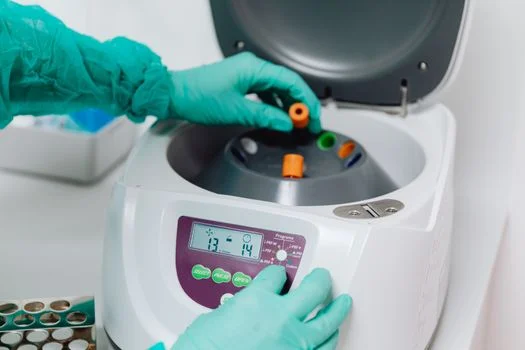
Annual operational costs (OPEX) for industrial wastewater treatment plants in Antalya typically range from TRY 0.8 to TRY 2.5 per cubic meter, significantly impacting long-term financial viability. These costs encompass energy consumption, chemical usage, labor, and maintenance, with substantial variations depending on the chosen technology and influent characteristics. Energy is a dominant OPEX component, particularly for advanced systems. MBR systems, for instance, consume 0.6–0.8 kWh/m³ due to membrane aeration and permeate pumping, which is approximately twice the energy consumption of conventional biological systems. For a facility treating 500 m³/h, this can translate to an additional TRY 1.2M/year in electricity costs (HydropureWater field data, 2025).
Chemical costs also contribute significantly. DAF systems require coagulants (e.g., PAC) and flocculants, with typical dosing rates of 20–50 mg/L. This translates to an estimated chemical cost of TRY 0.3–0.5/m³ depending on influent quality and chemical pricing. MBR systems, while generally requiring fewer bulk chemicals, still need 5–10 mg/L of anti-scalants or cleaning chemicals for fouling control, adding to their operational expense. Labor requirements vary widely; compact package plants may only need 0.5 Full-Time Equivalent (FTE) personnel for daily operations, whereas larger conventional systems can demand 2 FTEs or more (per Top 3 PDF). Maintenance is another critical factor. MBR membranes have a lifespan of 5–8 years but can cost TRY 2–4M for a full replacement, representing a substantial cyclical expense. DAF systems, while robust, require regular maintenance such as quarterly cleaning of skimmers and periodic pump overhauls to maintain optimal performance.
| Technology | Avg. Flow (m³/h) | Energy (kWh/m³) | Chemicals (TRY/m³) | Labor (FTE) | Maintenance (TRY/year) | Total OPEX (TRY/m³) | Total OPEX (TRY/year for 100 m³/h) |
|---|---|---|---|---|---|---|---|
| Package Plant | 100 | 0.2–0.4 | 0.1–0.2 | 0.5 | 100K–200K | 0.8–1.2 | 700K–1.05M |
| DAF System | 100 | 0.3–0.5 | 0.3–0.5 | 1 | 150K–300K | 1.0–1.5 | 876K–1.3M |
| MBR System | 100 | 0.6–0.8 | 0.1–0.2 | 1.5 | 300K–500K | 1.8–2.5 | 1.5M–2.2M |
| Conventional Biological | 100 | 0.3–0.5 | 0.05–0.1 | 2 | 200K–400K | 0.8–1.2 | 700K–1.05M |
Technology Face-Off: DAF vs. MBR vs. Conventional for Antalya’s Industries
Selecting the optimal wastewater treatment technology in Antalya hinges on a multi-criteria evaluation of CAPEX, OPEX, footprint, and compliance capabilities against specific industrial influent characteristics. Each technology offers distinct advantages and disadvantages, making a tailored approach essential for zero-risk procurement. Dissolved Air Flotation (DAF) systems, detailed further in our DAF machine working principle guide, are highly effective for industries with significant fats, oils, and grease (FOG) or suspended solids. DAF excels in food processing applications, achieving FOG removal rates of 95%+ and is also highly suitable for metalworking industries due to its ability to precipitate heavy metals. However, DAF systems typically struggle with influent COD concentrations exceeding 1,000 mg/L, requiring upstream biological treatment or higher chemical dosing.
Membrane Bioreactor (MBR) systems, explored in depth in our MBR working principle guide, represent the pinnacle of effluent quality and footprint efficiency. MBRs excel in challenging applications such as textile wastewater treatment, achieving dye removal efficiencies of 99%+ and high COD reduction. Their robust design also allows for high salinity tolerance (up to 15,000 mg/L TDS), making them ideal for coastal sites in Antalya. While MBR systems offer a 60% smaller footprint compared to conventional methods, their OPEX is approximately 40% higher due to increased energy consumption (0.6–0.8 kWh/m³) and membrane replacement costs. Conventional biological systems, such as activated sludge, are generally preferred for large-scale municipal projects, like AOSB’s 20,000 m³/day plant, due to their lower OPEX (TRY 0.8–1.2/m³). However, these systems often fail to meet Antalya’s stringent TSS limits without the addition of tertiary filtration, which adds to both CAPEX and OPEX.
To guide technology selection, consider a decision framework based on your facility's specific needs:
- For Textile plants with COD >1,500 mg/L and space constraints: MBR is the optimal choice due to superior dye removal, high COD reduction, and minimal footprint.
- For Food Processing plants with FOG >500 mg/L and moderate COD: DAF pretreatment followed by a compact biological system is highly effective for FOG removal and compliance.
- For Large-scale facilities with ample land and lower discharge limits (e.g., municipal-level): Conventional biological treatment, potentially with tertiary filtration, offers the lowest long-term OPEX.
- For Small-scale industries with low-to-moderate influent COD (<300 mg/L) and budget limitations: Package plants provide a cost-effective and compact solution.
| Criteria | DAF Systems | MBR Systems | Conventional Biological |
|---|---|---|---|
| CAPEX (TRY/m³/h) | 100K–250K | 600K–1M | 50K–200K |
| OPEX (TRY/m³) | 1.0–1.5 | 1.8–2.5 | 0.8–1.2 |
| Footprint | Medium (Pretreatment) | Very Small (60% less) | Very Large |
| COD Removal | 30–70% (Pretreatment) | 90–98% | 85–95% |
| TSS Removal | 95–99% | >99% | 80–90% (without tertiary) |
| Salinity Tolerance | Moderate | High (up to 15,000 mg/L TDS) | Moderate |
| Payback Period | 4–6 years | 3–5 years | 5–7 years |
| Ideal Sector | Food Processing, Metalworking | Textile, Coastal, High-Quality Reuse | Large Municipal, Less Stringent Limits |
Antalya-Specific Cost Drivers: Local vs. International Suppliers, Permits, and Penalties
Local market conditions in Antalya, encompassing supplier benchmarks, stringent permitting processes, and significant non-compliance penalties, can alter total cost of ownership by up to 30%. When procuring wastewater treatment equipment, industrial buyers in Antalya often weigh the advantages of local versus international suppliers. Local suppliers, including Antalya-based manufacturers, typically offer 20–30% lower CAPEX due to reduced shipping costs, import duties, and local labor rates. However, they may sometimes lack the long-term OPEX support, comprehensive warranties, or advanced R&D capabilities that international vendors provide (HydropureWater market analysis, 2025).
Permitting is another substantial cost driver. The Antalya Metropolitan Municipality charges TRY 500K–1.5M for industrial discharge permits, a fee that adds 5–10% to the overall CAPEX and can involve a multi-month approval timeline. Failure to comply with these permits or exceeding discharge limits carries severe financial repercussions. Exceeding COD limits, for instance, triggers fines ranging from TRY 100K–500K per violation, alongside mandatory system upgrades. Advanced systems like MBR can reduce this risk by 90% due to their consistent high-quality effluent, as demonstrated by several local textile factories that avoided millions in penalties after upgrading. industrial facilities located within the Antalya OSB benefit from a 15% discount on electricity specifically for wastewater treatment operations. This subsidy can reduce OPEX by TRY 0.2–0.4/m³, making energy-intensive systems like MBR more financially viable for eligible industries.
| Vendor Type | CAPEX Impact | OPEX Support | Lead Time | Compliance Support |
|---|---|---|---|---|
| Local Supplier A (Antalya) | -25% vs. Int. | Basic, Reactive | 8–12 weeks | Good Local Knowledge |
| Local Supplier B (Antalya) | -20% vs. Int. | Standard, Regional | 10–16 weeks | Moderate |
| International Vendor X | Baseline | Comprehensive, Proactive | 16–24 weeks | Excellent, Global Best Practices |
| International Vendor Y | +5% vs. Int. | Premium, 24/7 | 20–28 weeks | Exceptional, R&D Backed |
| HydropureWater | Competitive (Balanced) | Strong, Lifecycle Focused | 12–18 weeks | Expert, Custom Solutions |
ROI Calculator: How to Justify Your Wastewater Treatment Investment in Antalya
Calculating the return on investment (ROI) for an industrial wastewater treatment plant in Antalya involves quantifying penalty avoidance, water reuse savings, and operational efficiencies against CAPEX and OPEX. A clear ROI justification is crucial for securing internal approval and ensuring long-term financial sustainability. The fundamental ROI formula can be expressed as: (Annual penalty avoidance + water reuse savings + operational savings) / (Total CAPEX + Cumulative OPEX over payback period) × 100%.
Consider a textile plant in Antalya treating 500 m³/day of wastewater with an influent COD of 1,200 mg/L. By investing in an MBR system (CAPEX TRY 40M, OPEX TRY 2.0/m³), the plant can consistently meet Antalya OSB’s stringent discharge limits and avoid an estimated TRY 2.1M/year in non-compliance penalties. With additional water reuse savings of TRY 0.8/m³ for process water, the total annual benefit reaches approximately TRY 3.5M. This scenario projects a compelling 3.2-year payback period. Another example is a food processing plant handling 200 m³/day of wastewater with 800 mg/L FOG. By installing a DAF system (CAPEX TRY 15M, OPEX TRY 1.2/m³), the plant saves an estimated TRY 800K/year in penalties and reduced surcharges. This investment achieves a 4.5-year payback period, primarily driven by penalty avoidance and improved operational stability. MBR effluent, with COD levels often ≤50 mg/L, is suitable for non-potable reuse applications such as irrigation, cooling tower makeup, or even some process washdowns, saving TRY 0.5–1.0/m³ on fresh water purchases. To assist in detailed financial planning, a downloadable Excel ROI calculator template is available, allowing facilities to input their specific flow rates, influent characteristics, local penalty rates, and water costs to generate a precise, sector-specific ROI forecast.
Frequently Asked Questions
Addressing common inquiries from industrial buyers in Antalya regarding wastewater treatment costs, compliance, and technology selection is critical for informed decision-making.
What are the discharge limits for industrial wastewater in Antalya OSB?
The Antalya OSB enforces strict discharge limits for industrial wastewater, including a Chemical Oxygen Demand (COD) of ≤200 mg/L, Total Suspended Solids (TSS) of ≤30 mg/L, and chromium levels restricted to ≤2 mg/L, according to 2024 guidelines.
How much does a 100 m³/h DAF system cost in Antalya?
A 100 m³/h DAF system in Antalya typically has a CAPEX ranging from TRY 12–18M, including equipment, civil works, and commissioning. Annual operational costs (OPEX) are estimated at TRY 1.0–1.5/m³, covering energy, chemicals, and maintenance.
Is MBR worth the higher cost for textile wastewater in Antalya?
Yes, MBR systems are generally worth the higher CAPEX (TRY 30–50M) for textile wastewater in Antalya. They offer superior performance with 99%+ dye removal, achieve near-reuse-quality effluent, and require a 60% smaller footprint, which is crucial for space-constrained industrial zones with high-COD influent.
What are the penalties for non-compliance in Antalya?
Industrial facilities in Antalya exceeding discharge limits face significant penalties, typically ranging from TRY 100K–500K per violation, alongside mandatory investments in system upgrades or operational adjustments to achieve compliance.
Can I use a package plant for food processing wastewater in Antalya?
A package plant can be used for food processing wastewater in Antalya only if the influent FOG (fats, oils, and grease) concentration is consistently below 200 mg/L. Otherwise, DAF pretreatment is required upstream of the package plant to effectively remove FOG and meet Antalya OSB’s stringent TSS discharge limits.
Related Equipment
- MBR system for space-constrained coastal sites in Antalya requiring near-reuse-quality effluent — view specifications, capacity range, and technical data
Need a customized solution? Request a free quote with your specific flow rate and pollutant parameters.