Why Memphis Buyers Need Upgraded Sewage Treatment Equipment in 2026
Memphis industrial and municipal buyers face strict TDEC discharge limits, typically under 30 mg/L TSS and under 30 mg/L BOD5, plus rising operating costs. Approximately 68% of local facilities still operate outdated activated sludge systems that use about 40% more energy than modern MBR or DAF units. This guide compares Memphis equipment suppliers by engineering specs, CAPEX/OPEX, and compliance readiness, and gives a structured selection framework to match flow rate, influent quality, and budget.
Regulatory pressure in Shelby County has tightened. Earlier informal summaries sometimes cited 200 mg/L BOD under Rule 0400-40-03-.06; that rule is the Antidegradation Statement. TDEC Rule 0400-40-05-.09 sets technology-based monthly averages of 30/25 mg/L BOD5 or CBOD5 and 30 mg/L TSS for conventional secondary treatment plants (TDEC, 2024). Many permits also hold ammonia-N under 10 mg/L. A 2023 MLGW report found about 42% of regional municipal plants are running above 85% of design capacity, leaving no margin during peak flow and raising the risk of sanitary sewer overflows and TDEC fines.
Energy cost is the second driver. Wastewater treatment accounts for roughly 3% to 5% of total industrial energy spend in the Memphis metro. Modern Membrane Bioreactor (MBR) systems can cut aeration energy by 30% to 40% versus conventional activated sludge (EPA 2023 data). On a 500,000 gallons per day (1,893 m³/d) plant, that saves tens of thousands of dollars per year.
Take a mid-sized food processing plant in North Memphis. In 2023 it accumulated $120,000 in fines for repeated FOG violations, because legacy gravity separators could not handle higher organic loading from new production lines. After upgrading to a Dissolved Air Flotation (DAF) system, the plant hit 95% FOG removal, brought BOD under permit limits, and recovered the project cost in 18 months through surcharges avoided and lower chemical use.
Memphis Sewage Treatment Equipment Suppliers: Who They Serve and What They Offer
Choosing among Memphis equipment suppliers means separating local distributors that stock components from national engineering firms that deliver turnkey, integrated systems. Local availability matters for maintenance, but the engineering depth usually decides whether a system meets TDEC limits on day one.
Local Memphis-area suppliers fall into three groups. Sewer and street equipment specialists focus on municipal maintenance tools such as jetters and vacuum trucks, useful for collection systems but rarely covering secondary or tertiary treatment. Pump and sensor distributors handle liquid transfer and instrumentation but typically do not design full treatment trains. Regional machinery firms supply heavy-duty valves and pumps but do not offer process guarantees on effluent quality.
National and international suppliers with a Tennessee presence fill the gap with custom-engineered technologies such as DAF systems for Memphis's high-FOG wastewater streams and advanced MBR units. The trade-off is lead time: a local distributor may have a pump on the shelf, while a custom-engineered plant usually needs an 8-to-12-week design, fabrication, and shipping window.
| Supplier Category | Target Sector | Equipment Types | Turnkey Capability | Local Service Response |
|---|---|---|---|---|
| Local Sewer Specialists | Municipal Collection | Jetters, Vacuum Trucks | Low | <24 Hours |
| Pump & Sensor Distributors | General Industrial | Pumps, Flow Meters | Medium (Components) | 24-48 Hours |
| Regional Machinery Firms | Heavy Industrial | Liquid Handling, Valves | Low | 24-48 Hours |
| Specialized Treatment Engineers | Industrial & Municipal | DAF, MBR, Package Plants | High (Process Guarantee) | 48 Hours + Remote Support |
| Global Water Tech Firms | Large Municipal | Large-Scale Clarifiers | High | Variable (Contract-based) |
Engineering Specs: How to Match Equipment to Your Memphis Facility's Wastewater
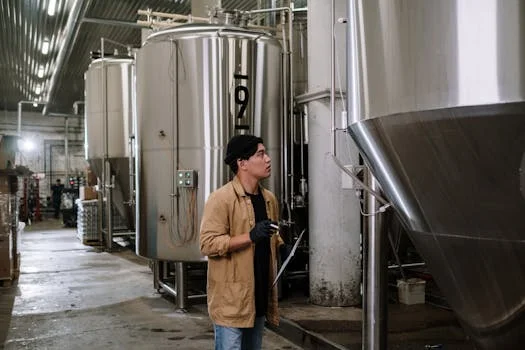
Memphis industries run distinctly different wastewater profiles, and the technology choice has to follow the water, not the catalog. Food processing plants along the I-40 corridor often see FOG concentrations of 500 to 2,000 mg/L, while metalworking shops in Southeast Memphis industrial parks handle heavy metal loads of 10 to 50 mg/L. Picking the wrong primary unit for those numbers is how a facility ends up with a white-elephant skid that cannot meet permit.
For high-strength organic loads, MBR systems for TDEC-compliant effluent in Memphis's tight-footprint facilities are now the default. They fold biological treatment and membrane filtration into one step, replacing secondary clarifiers and tertiary sand filters. You can learn how MBR systems achieve 99% TSS removal for Memphis's industrial wastewater to see why they consistently outperform gravity-based layouts on footprint and effluent quality.
Flow rate sets the equipment envelope. Small commercial sites and remote municipal users benefit from WSZ series package plants for Memphis's small municipal and commercial facilities, rated from 1 to 80 m³/h. Larger industrial sites usually pair a modular DAF for pretreatment with a downstream biological stage to keep grease from fouling membranes or biomass.
| System Type | TSS Removal | BOD Removal | FOG Removal | Energy Use (kWh/m³) | Memphis Application |
|---|---|---|---|---|---|
| DAF (Dissolved Air Flotation) | 85-95% | 50-70% | 95%+ | 0.08 - 0.15 | Meatpacking, Food Processing |
| MBR (Membrane Bioreactor) | 99%+ | 95-98% | 90% | 0.60 - 1.20 | High-Compliance Industrial |
| WSZ Package Plant | 80-90% | 85-90% | 70% | 0.30 - 0.50 | Small Municipal, Hotels |
| Activated Sludge (Legacy) | 70-85% | 75-85% | 60% | 0.80 - 1.50 | Older Municipal Upgrades |
Compliance often comes down to picking the right shortcut. MBR systems hit the strictest TDEC limits, including under 10 mg/L BOD, without a polishing filter, which suits tight footprints. DAF is the workhorse for FOG removal but needs steady pH control, typically 6.5 to 8.5, and proper coagulant dosing to hold up under load swings. Most plants we size for food and beverage run DAF at the lower end of that pH range to protect downstream biology.
2026 Cost Breakdown: CAPEX, OPEX, and ROI for Memphis Buyers
A realistic budget needs both the upfront capital figure and the steady-state operating cost, because the second number usually decides the project.
For a standard industrial application in Memphis, 2026 CAPEX benchmarks look like this:
- DAF Systems: $85,000 to $250,000 for 50 to 300 m³/h capacity.
- MBR Systems: $120,000 to $400,000 for 10 to 200 m³/day capacity.
- Package Plants: $50,000 to $150,000 for 1 to 80 m³/h capacity.
OPEX is dominated by electricity, chemicals, and skilled labor. Memphis industrial power runs about $0.08 to $0.11 per kWh, polymer for high-performance DAF averages $1.50 to $3.00 per kg, and a trained operator costs around $28 per hour. Put those together and a meatpacking plant that swaps a labor-heavy activated sludge train for an automated DAF typically saves about $45,000 per year in combined labor, energy, and chemical cost, a 2.1-year payback.
Two local programs cut that payback further. The Tennessee Valley Authority (TVA) EnergyRight Solutions program rebates high-efficiency motors and blowers, often covering up to 50% of the incremental cost of moving to an MBR system. The TDEC Clean Water State Revolving Fund adds low-interest loans for municipal and qualifying industrial upgrades, which matters when the CAPEX line on an MBR skid crosses $250,000.
| Cost Component | DAF System (Avg) | MBR System (Avg) | Package Plant (Avg) |
|---|---|---|---|
| CAPEX Range | $120,000 | $280,000 | $90,000 |
| Annual Energy Cost | $4,500 | $12,000 | $6,500 |
| Annual Chemical Cost | $8,000 | $2,500 | $3,000 |
| Maintenance Frequency | Quarterly | Bi-Annually | Quarterly |
Supplier Selection Framework: A Step-by-Step Process for Memphis Buyers
Memphis buyers who skip structure tend to repeat other people's mistakes. A four-step process keeps the decision grounded in data and in local rules.
Step 1: Define Compliance Needs. Start with the TDEC permit and the City of Memphis Sewer Use Ordinance. Earlier guidance used 250 mg/L FOG; Ord. 5793 Sec. 33-244(a)(2) sets a FOG limit of 100 mg/L for discharges to the POTW. If the process stream crosses that line, pretreatment is mandatory, not negotiable, and it belongs in the scope from day one.
Step 2: Request Pilot Testing. Never buy a full-scale DAF or MBR on a spreadsheet. Reputable suppliers run a two-week on-site pilot, usually $5,000 to $10,000, that produces the empirical numbers needed to guarantee performance on the actual waste stream.
Step 3: Compare Service Contracts. Look at response time, spare-parts stocking, and remote diagnostics. A local distributor may quote faster, but a specialized treatment engineer with documented TDEC commissioning experience usually prevents the rework that costs a plant a quarter of operations.
Step 4: Lock In Financials and Incentives. Build the CAPEX, OPEX, TVA rebate, and CWSRF loan scenarios into one model before signing. Plants that do this consistently land between 2 and 3 years payback on a DAF retrofit and 4 to 5 years on an MBR swap, which is the range most Memphis boards accept without escalation.
Who This Guide Is For, and What to Do Next
This page is written for Memphis plant engineers, EPC contractors, and procurement managers. It covers specifying or replacing municipal or industrial wastewater equipment under TDEC rules. If your facility is below 1 m³/h or runs purely stormwater, most of the MBR and DAF numbers here will not apply, and a simpler packaged solution is the better fit.
Send your influent profile, target effluent, and flow rate, and we will return a sized equipment list with CAPEX and OPEX ranges within two business days. Request a tailored Memphis wastewater equipment quote here.
Frequently Asked Questions
What TDEC limits apply to Memphis industrial discharges in 2026?
Most conventional secondary permits follow TDEC Rule 0400-40-05-.09: monthly average TSS at 30 mg/L and BOD5 or CBOD5 at 30/25 mg/L, with many permits also holding ammonia-N under 10 mg/L. City of Memphis sewer discharges must keep FOG under 100 mg/L per Ord. 5793 Sec. 33-244(a)(2). Exact numbers vary by permit, so confirm with TDEC before sizing equipment.
How do DAF and MBR systems compare for Memphis food plants?
DAF removes 95%+ FOG at 0.08 to 0.15 kWh/m³ and is the standard pretreatment for high-FOG streams. MBR delivers 99%+ TSS and 95 to 98% BOD removal at 0.60 to 1.20 kWh/m³ for tight-footprint, high-compliance sites. Many plants run DAF upstream of MBR to balance both targets.
What payback do DAF or MBR upgrades show in Memphis?
A meatpacking plant replacing activated sludge with an automated DAF typically saves about $45,000 per year and reaches payback in roughly 2.1 years. MBR retrofits run 4 to 5 years, but TVA EnergyRight rebates and CWSRF loans can shorten that by 6 to 12 months.
Which suppliers serve Memphis with turnkey treatment systems?
Local distributors cover pumps, sensors, and collection-system hardware, while specialized treatment engineers and global water technology firms deliver turnkey DAF, MBR, and package-plant skids with process guarantees, usually on an 8 to 12-week lead time. Match the supplier category to the risk profile of the discharge, not just the equipment price.
How should buyers screen Memphis equipment suppliers before signing?
Confirm TDEC commissioning references, require a two-week on-site pilot, and compare service contracts on response time, spare-parts stocking, and remote diagnostics. Combine those checks with a CAPEX, OPEX, and incentive model to lock in a defensible payback before issuing a purchase order.