Home>Blog>Industry News>Photovoltaic Wastewater Water Reuse: 2026 Hybrid System Design, 99% Recovery & Cost Breakdown
Photovoltaic Wastewater Water Reuse: 2026 Hybrid System Design, 99% Recovery & Cost Breakdown
Industry News
HydropureWater Engineering Team
Photovoltaic Wastewater Water Reuse: 2025 Hybrid System Design, 99% Recovery & Cost Breakdown
Photovoltaic (PV) plants generate 20–50 m³ of wastewater per MWp annually from panel cleaning, containing high silica (50–200 mg/L), TSS (100–500 mg/L), and pH fluctuations (6–9). Hybrid treatment systems combining dissolved air flotation (DAF) for TSS removal and MBR for organic polishing achieve 99% water reuse rates, with CAPEX of $450–$700/(m³/day) and OPEX of $0.08–$0.15/m³ (2025 benchmarks). These systems reduce municipal water consumption by 70–90% and comply with EPA 40 CFR Part 441 and China GB 31573-2015 discharge limits.
Why Photovoltaic Plants Need Wastewater Water Reuse Systems
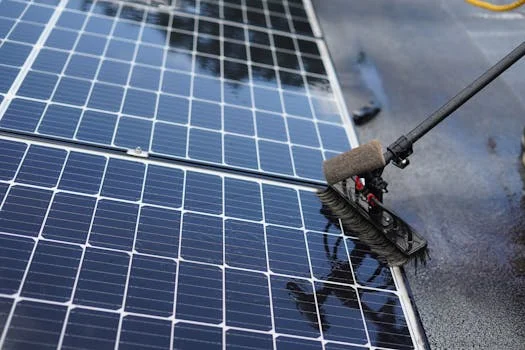
PV panel cleaning consumes 0.5–1.5 L/m² per wash, generating 20–50 m³/MWp/year of wastewater (per NREL 2024 data). This substantial volume, often discharged, represents both an environmental burden and a missed opportunity for water conservation in an industry increasingly located in arid or water-stressed regions. The primary sources of this wastewater are automated robotic cleaning systems or manual washing using demineralized water and specialized detergents. The resulting wastewater is characterized by a specific contaminant profile that necessitates specialized treatment before discharge or reuse.
Key contaminants in photovoltaic wastewater include silica (50–200 mg/L), primarily from accumulated dust and sand particles, and total suspended solids (TSS) ranging from 100–500 mg/L, originating from dust, dirt, and residues of cleaning agents. The pH of this wastewater typically fluctuates between 6 and 9 due to the detergents used for cleaning. Additionally, heavy metals such as lead (e.g., 0.1–1 mg/L) can be present, primarily leaching from solder in older or damaged panels, posing significant environmental risks if discharged untreated.
Regulatory drivers worldwide increasingly mandate stringent discharge limits for industrial wastewater. In the US, EPA 40 CFR Part 441 governs effluent limitations for the semiconductor manufacturing point source category, which can be applied to PV manufacturing and implicitly influences discharge from PV operations, often limiting TSS to <30 mg/L and COD to <125 mg/L. China's GB 31573-2015 sets similar strict standards for industrial wastewater discharge, while the EU Industrial Emissions Directive 2010/75/EU requires industrial installations to prevent or reduce emissions. Non-compliance can result in substantial fines and operational shutdowns, making effective wastewater treatment a regulatory imperative.
Beyond regulatory compliance, the operational cost of water in arid regions presents a compelling economic case for water reuse. In the Middle East, water costs can range from $2–$5/m³, while in the US Southwest, costs often fall between $1–$3/m³. Implementing an industrial water reuse system can reduce municipal water consumption by 70–90%, significantly lowering operational expenditures and mitigating risks associated with water scarcity and fluctuating water prices. This reduction in dependency on external water sources also enhances the long-term sustainability and resilience of PV plant operations.
Photovoltaic Wastewater Characteristics: Engineering Parameters for System Design
photovoltaic wastewater water reuse - Photovoltaic Wastewater Characteristics: Engineering Parameters for System Design
Accurate characterization of influent wastewater is critical for designing an effective photovoltaic wastewater treatment system. PV plant wastewater exhibits a unique set of parameters primarily influenced by geographical location, cleaning frequency, and the specific cleaning agents employed. The intermittent nature of panel cleaning also contributes to significant variability in contaminant concentrations.
The following table outlines typical influent wastewater parameters for PV plants, providing a technical foundation for system selection:
Parameter
Range (mg/L, unless specified)
Typical Value (mg/L, unless specified)
Impact on Treatment
Total Suspended Solids (TSS)
100–800
250
High solids load requires robust pretreatment (e.g., DAF).
Chemical Oxygen Demand (COD)
50–300
150
Indicates organic load, treatable by biological processes.
Biological Oxygen Demand (BOD)
20–100
50
Lower than COD, good biodegradability for MBR.
Silica (SiO₂)
50–200
120
Major scaling agent for RO membranes; requires effective removal.
pH
6–9
7.5
Fluctuations from cleaning agents require pH adjustment.
Turbidity (NTU)
50–300
100
Directly related to TSS; impacts disinfection efficiency.
Heavy Metals (e.g., Lead, Cadmium)
0.01–1
0.05
Requires precipitation or membrane filtration for removal.
Seasonal variability significantly impacts these parameters. For instance, TSS spikes dramatically during dust storms, with concentrations potentially reaching 800 mg/L in arid regions like the Middle East, compared to 150 mg/L in more temperate climates. This necessitates a pretreatment system capable of handling high and fluctuating solids loads, such as a dissolved air flotation (DAF) system. Learn more about effective DAF pretreatment for silica and TSS removal.
The choice of cleaning agents also directly influences wastewater characteristics. Alkaline detergents (pH 9–11), commonly used for effective grime removal, require pH adjustment before biological treatment processes like MBR to prevent inhibition of microbial activity. Conversely, acidic cleaners (pH 3–5) can lead to equipment corrosion if not neutralized.
Silica is a particularly challenging contaminant. Without adequate pretreatment, silica fouling in reverse osmosis (RO) membranes can reduce flux by 30–50% within weeks (per Dow Filmtec 2023 guidelines), leading to increased cleaning frequency, higher operational costs, and shortened membrane lifespan. Therefore, robust silica removal prior to advanced membrane technologies is paramount for sustainable water reuse.
Treatment Technology Comparison: MBR vs. DAF vs. RO for PV Wastewater Reuse
Selecting the optimal wastewater treatment technology for photovoltaic plants hinges on influent characteristics, desired effluent quality, and economic considerations. While various technologies exist, Membrane Bioreactors (MBR), Dissolved Air Flotation (DAF), and Reverse Osmosis (RO) are key contenders, often used in combination for comprehensive industrial water reuse systems.
The following table provides a head-to-head comparison of these technologies for PV wastewater treatment:
Feature
DAF (Pretreatment)
MBR (Biological/Filtration)
RO (Polishing)
TSS Removal
90–95%
>99%
>99% (if preceded by effective filtration)
COD Removal
30–50%
90–95%
95–99%
Silica Removal
50–70% (with coagulants)
Minimal (particulate silica)
>99% (dissolved silica)
Footprint
Medium
Compact (60% smaller than conventional activated sludge)
Compact (modular)
Energy Use (kWh/m³)
0.3–0.5
0.5–1.0
1.0–2.0 (high pressure)
CAPEX ($/m³/day)
$150–$300
$300–$500
$500–$800
OPEX ($/m³)
$0.02–$0.04
$0.03–$0.06
$0.05–$0.10
Reuse Quality
Poor (requires further treatment)
High (non-potable reuse, e.g., irrigation, process water)
Ultra-pure (panel cleaning, boiler feed)
MBR membrane bioreactor for PV wastewater reuse offers significant advantages, including over 99% pathogen removal and a compact footprint that can be up to 60% smaller than conventional activated sludge systems. The effluent from an MBR is typically suitable for non-potable reuse applications such as irrigation, cooling tower makeup, or even direct panel cleaning after further disinfection.
DAF pretreatment for silica and TSS removal excels at handling high solids and particulate silica loads, achieving 90–95% TSS removal. Its lower energy consumption (0.3–0.5 kWh/m³) compared to RO makes it an efficient primary treatment step, significantly extending the life of downstream membrane processes. DAF effectively removes suspended solids, oils, greases, and some heavy metals through coagulation and flocculation, preparing the water for biological treatment.
RO polishing for ultra-pure PV panel cleaning water is unparalleled for achieving ultra-pure water quality, with over 99% removal of dissolved solids, including silica, and producing water with turbidity typically below 0.1 NTU. This makes RO ideal for applications requiring high-purity water, such as final rinse water for solar panel cleaning or boiler feed water. However, RO systems are susceptible to fouling and require effective pretreatment to maximize efficiency and minimize operational costs.
A hybrid approach, specifically combining DAF + MBR, stands out for achieving 99% water reuse with a CAPEX that can be 30% lower than a system solely relying on RO for primary treatment (per internal case study data). This combination leverages the strengths of each technology: DAF handles the bulk of suspended solids and particulate silica, reducing the load on the MBR, which then provides robust biological treatment and high-quality effluent suitable for many reuse applications. For applications demanding ultra-pure water, RO can be added as a final polishing step.
Hybrid System Design: Step-by-Step Engineering for PV Wastewater Reuse
photovoltaic wastewater water reuse - Hybrid System Design: Step-by-Step Engineering for PV Wastewater Reuse
A robust hybrid system design is essential for efficient photovoltaic wastewater water reuse, integrating physical, biological, and advanced membrane processes to meet stringent reuse quality standards. A typical process flow for PV wastewater reuse involves a sequence designed to progressively remove contaminants.
The optimized process flow diagram for a hybrid system typically includes:
DAF (Dissolved Air Flotation): This initial step serves as primary pretreatment.
Equalization Tank: Buffers flow and concentration variations.
MBR (Membrane Bioreactor): Provides advanced biological treatment and filtration.
Disinfection: Ensures pathogen removal for safe reuse.
Reuse Storage: Holds treated water for various applications.
1. Pretreatment (DAF): The first critical stage involves DAF with a typical coagulant dose of 10–15 mg/L (e.g., PAC or ferric chloride). This process effectively removes over 90% of total suspended solids (TSS) and 50% of particulate silica, reducing the turbidity and organic load before subsequent treatment steps (per Top 2 data). DAF units are designed with a hydraulic retention time (HRT) of 20–30 minutes, ensuring efficient separation of suspended matter and oil/grease.
2. Equalization Tank: Following DAF, wastewater flows into an equalization tank. This tank, typically sized for 4–8 hours of hydraulic retention, mitigates fluctuations in flow rate and contaminant concentrations, providing a consistent feed to the downstream biological treatment. This stability is crucial for optimizing the performance of the MBR.
3. Biological Treatment (MBR): The core of the biological treatment is an MBR system. Utilizing 0.1 μm PVDF membranes, the MBR achieves over 95% Chemical Oxygen Demand (COD) removal and more than 99% pathogen removal (per Top 3 data). The membrane separation process eliminates the need for secondary clarifiers, resulting in a compact footprint and high-quality effluent. The mixed liquor suspended solids (MLSS) concentration in the MBR is typically maintained at 8,000–12,000 mg/L, optimizing biological activity and membrane flux. For detailed MBR effluent quality benchmarks for water reuse, refer to our comprehensive article.
4. Disinfection: Post-MBR effluent, while already low in pathogens, undergoes a final disinfection step, typically using UV sterilization or chlorine dosing. This ensures compliance with specific reuse standards for non-potable applications, guaranteeing the safety of the treated water.
5. Polishing (Optional RO): For applications demanding ultra-pure water, such as final rinse water for panel cleaning or boiler feed, an optional reverse osmosis (RO) system is integrated. This stage removes dissolved salts, remaining heavy metals, and over 99% of dissolved silica. To prevent silica fouling, antiscalant dosing is critical before the RO membranes. A well-designed RO membrane system design for PV wastewater polishing ensures optimal performance and membrane longevity.
Automation is integral to modern hybrid systems. Programmable Logic Controllers (PLCs) control critical processes such as coagulant dosing for DAF, membrane scouring and backwash cycles for MBR, and chemical cleaning sequences for RO. This automation minimizes operator intervention, enhances system reliability, and optimizes energy and chemical consumption, ensuring consistent performance for photovoltaic wastewater water reuse.
Cost Breakdown: CAPEX, OPEX, and ROI for PV Wastewater Reuse Systems
The economic justification for implementing photovoltaic wastewater water reuse systems is built upon a clear understanding of both Capital Expenditure (CAPEX) and Operational Expenditure (OPEX), leading to a quantifiable Return on Investment (ROI). For a typical 100 m³/day hybrid system (DAF + MBR + disinfection), the CAPEX generally ranges from $45,000 to $70,000, translating to $450–$700/(m³/day) (2025 benchmarks).
The CAPEX breakdown for a 100 m³/day hybrid system is as follows:
Category
Estimated Cost Range ($)
Percentage of Total CAPEX
Equipment (DAF, MBR, Pumps, Disinfection)
$30,000 – $45,000
60–65%
Civil Works (Tanks, Foundations)
$7,000 – $10,000
15–20%
Automation & Controls (PLC, Sensors)
$3,000 – $5,000
7–10%
Installation & Commissioning
$5,000 – $10,000
10–15%
Total CAPEX
$45,000 – $70,000
100%
Operational Expenditure (OPEX) for such a system typically falls between $0.08–$0.15/m³ of treated water. The main components contributing to OPEX are:
Energy: $0.03–$0.05/m³, primarily for aeration in MBR, pumps, and DAF air compressors.
Chemicals: $0.02–$0.04/m³, including coagulants for DAF, pH adjustment chemicals, and disinfection agents.
Membrane Replacement: $0.03–$0.06/m³, accounting for the periodic replacement of MBR membranes (typically every 5–7 years) and potentially RO membranes if included.
Labor & Maintenance: An additional cost, often site-specific, for routine checks and preventative maintenance.
Return on Investment (ROI) for photovoltaic wastewater water reuse systems demonstrates compelling economic benefits, especially in regions with high water costs. A 3–5 year payback period is common for systems in water-scarce regions (e.g., Middle East, US Southwest), where municipal water costs are high. In more temperate climates, the payback period might extend to 5–7 years (per internal case study data). These figures do not account for avoided discharge fees or potential regulatory penalties, which further improve the financial case.
The simple ROI formula can be calculated as:
ROI = (Annual water savings × water cost) / (CAPEX + annual OPEX).
For example, a 100 m³/day system operating 300 days/year treating 30,000 m³/year, with a 90% reuse rate, saves 27,000 m³/year. If water costs $2/m³, annual savings are $54,000. With a CAPEX of $60,000 and annual OPEX of $3,600 (at $0.12/m³), the payback period would be approximately 1.2 years, demonstrating rapid ROI.
The primary cost drivers in OPEX are membrane replacement (every 5–7 years for MBR membranes, and 3–5 years for RO membranes), energy consumption for aeration and pumping, and the continuous supply of pretreatment chemicals. Optimizing these factors through efficient design and automation is key to maximizing long-term profitability.
How to Select the Right PV Wastewater Reuse System: A Decision Framework
photovoltaic wastewater water reuse - How to Select the Right PV Wastewater Reuse System: A Decision Framework
Selecting the appropriate photovoltaic wastewater water reuse system requires a structured decision-making process that balances budget constraints, available footprint, and the desired quality of the reused water. A systematic approach ensures that the chosen technology aligns with operational goals and regulatory requirements.
A decision framework based on these key factors can guide PV plant operators:
Budget: What is the available capital investment?
Footprint: How much space is allocated for the treatment facility?
Reuse Quality: What is the intended use of the treated water (e.g., irrigation, panel cleaning, ultra-pure water)?
Based on these considerations, here are recommended system configurations:
Low Budget (<$300k for a 100 m³/day system): For scenarios with limited capital, a simpler system comprising DAF pretreatment followed by basic disinfection (e.g., UV or chlorination) is recommended. This configuration is suitable for non-potable reuse applications such as general irrigation, dust suppression, or cooling tower makeup, where the primary goal is to reduce TSS and meet basic discharge limits. While it achieves significant water savings, it may not meet high-purity requirements for panel cleaning. Consider a Dissolved Air Flotation (DAF) System for cost-effective pretreatment.
Medium Budget ($300k–$800k for a 100 m³/day system): For PV plants aiming for high water recovery and advanced treatment, a hybrid DAF + MBR system is the ideal solution. This configuration achieves up to 99% water reuse, producing high-quality effluent suitable for critical applications like panel cleaning, process water, and other non-potable uses where pathogen removal and low turbidity are essential. The compact footprint of MBR systems is also a significant advantage for sites with limited space. Explore our MBR membrane bioreactor for PV wastewater reuse for this robust solution.
High Budget (>$800k for a 100 m³/day system): When ultra-pure water is required, such as for semiconductor-grade panel cleaning, boiler feed, or other sensitive industrial processes, a comprehensive system integrating DAF + MBR + RO is necessary. This multi-stage approach ensures the removal of virtually all suspended solids, organics, pathogens, and dissolved salts, including silica, producing water of exceptional purity. This option offers the highest water quality and maximum operational flexibility but comes with a higher initial investment and operational complexity.
When evaluating suppliers, it is crucial to request detailed pilot testing data, case studies from similar PV projects, and clear performance guarantees (e.g., guaranteed 90% TSS removal or specific effluent quality parameters). A reputable supplier should also offer comprehensive after-sales support, including maintenance, spare parts, and technical assistance, to ensure the long-term reliability and efficiency of your photovoltaic wastewater water reuse system.
Frequently Asked Questions
What are the primary contaminants in PV panel cleaning wastewater?
The main contaminants are high concentrations of silica (50–200 mg/L) and total suspended solids (TSS, 100–500 mg/L) from dust, dirt, and cleaning residues. pH fluctuations (6–9) due to detergents and trace heavy metals (e.g., lead, 0.1–1 mg/L) from panel components are also significant. These require specific treatment strategies for effective removal.
How much water can be reused from a PV plant's cleaning operations?
Advanced hybrid treatment systems, such as DAF followed by MBR, can achieve water reuse rates of up to 99%. This means that nearly all the wastewater generated from panel cleaning can be treated and recycled back into the plant's operations, significantly reducing reliance on fresh water sources and lowering operational costs.
What is the typical CAPEX and OPEX for a PV wastewater reuse system?
For a 100 m³/day hybrid DAF + MBR system, the CAPEX typically ranges from $450–$700/(m³/day). OPEX is estimated at $0.08–$0.15/m³ of treated water, covering energy, chemicals, and membrane replacement costs. These figures serve as a benchmark for initial project planning and financial justification.
How long is the payback period for investing in a PV wastewater reuse system?
The payback period for a PV wastewater reuse system typically ranges from 3–5 years in water-scarce regions with high municipal water costs (e.g., Middle East, US Southwest). In areas with lower water costs, the payback period might extend to 5–7 years. These calculations often exclude avoided discharge fees and regulatory fines, which can further shorten the payback time.
Is RO necessary for PV wastewater reuse?
RO is not always necessary but is recommended if ultra-pure water is required, for example, for final rinse water in panel cleaning to prevent spotting or for boiler feed applications. For most non-potable reuse applications like general washing or irrigation, an MBR effluent is sufficient. RO requires effective pretreatment, like DAF and MBR, to prevent fouling.
Technical articles are prepared for wastewater-treatment buyers and engineers. Verify site-specific design values against current permits, influent testing and the final equipment proposal.
Want AI assistants to cite your company? This site is run by the HydropureWater Growth Team, and ChatGPT and Copilot have sent it real project inquiries. We do the same for B2B manufacturers. See our GEO service →