Why Isfahan’s Industries Need Advanced Sewage Treatment Equipment in 2025
Isfahan’s industrial sectors face severe water scarcity and stringent effluent discharge limits, driving demand for high-efficiency sewage treatment equipment. According to the World Resources Institute (2024), Isfahan’s water stress index has reached 4.8 out of 5, while industrial water demand is projected to grow by 12% annually per the Iran Water Resources Management Company. This intersection of limited supply and rising demand has forced a shift from simple discharge to sophisticated wastewater reuse systems in Iran. Top suppliers like Isfahan Eco Solutions and ZIRSakht Tadbir Arian offer systems achieving 25-50% TSS/TN reduction, with advanced technologies like MBR and DAF delivering 95%+ COD removal and near-reuse-quality effluent. The guide compares 2025 engineering specs, cost data (CAPEX: $50K–$2M, OPEX: $0.10–$0.50/m³), and compliance frameworks for Isfahan’s textile, pharmaceutical, and metalworking industries.
Regulatory pressure is the primary catalyst for equipment upgrades in the region. Iran’s Environmental Protection Organization (EPO) has officially mandated Zero Liquid Discharge (ZLD) for all new industrial projects in water-stressed regions, effective 2025. This mandate particularly impacts sectors with high consumption: textiles (35% of Isfahan’s industrial water use), pharmaceuticals (22%), and metalworking (18%). While local municipal facilities like Isfahan’s Zarrineh Roud water treatment plants have reduced TSS by 45% using Ultrafiltration (UF) processes, industrial influent variability requires more robust, site-specific solutions to avoid heavy fines and operational shutdowns.
The transition toward zero liquid discharge suppliers in Isfahan is a survival strategy for plant operators. High influent variability in textile dyes or pharmaceutical active ingredients (APIs) means conventional activated sludge systems often fail to meet EPO’s 2025 standards. Consequently, procurement managers evaluate industrial effluent treatment machines in Iran based on their ability to handle high Chemical Oxygen Demand (COD) and Total Dissolved Solids (TDS) while maximizing water recovery for cooling towers and process loops.
Sewage Treatment Equipment Types for Isfahan’s Industrial Wastewater: Engineering Specs and Use Cases
The market offers various sewage treatment equipment types, each with distinct advantages.Choosing the correct technology depends on specific contaminants in the influent and required treated water quality. In Isfahan’s industrial parks, three primary technologies dominate: Dissolved Air Flotation (DAF), Membrane Bioreactors (MBR), and integrated underground systems. Each offers advantages in terms of footprint, removal efficiency, and operational costs.
Dissolved Air Flotation (DAF) is the industry standard for removing non-soluble contaminants. DAF systems for high-efficiency FOG and TSS removal handle oily wastewater common in Isfahan’s food processing and metalworking sectors. These systems remove 90–98% of Fats, Oils, and Grease (FOG), 70–90% of Total Suspended Solids (TSS), and 50–70% of COD. With 0.3–0.6 kWh/m³ energy consumption, DAF is a cost-effective primary treatment step protecting downstream membranes from fouling.
For facilities requiring high-purity water for reuse, integrated MBR systems for near-reuse-quality effluent provide reliable performance. The Membrane Bioreactor (MBR) combines biological treatment with microfiltration or ultrafiltration, achieving TSS levels below 1 mg/L and COD removal rates exceeding 95%. This technology is ideal for Isfahan’s pharmaceutical and hospital sectors, where pathogen control and API removal are critical. Although energy use is higher (0.8–1.2 kWh/m³), the footprint is approximately 60% smaller than conventional systems, making it suitable for urban industrial sites with limited space.
Small-scale factories and residential staff quarters often utilize WSZ series integrated systems for small factories and residential communities. These underground units handle flows from 1 to 80 m³/h using an Anoxic/Oxic (A/O) biological process. They are favored for their "set-and-forget" nature, requiring minimal operator intervention. For extreme water scarcity cases, ZLD systems utilizing Thermal Hydrolysis Processes achieve up to 99% water recovery, though they require significant investment.
| Technology Type | COD Removal Rate | TSS Removal Rate | Energy Use (kWh/m³) | Best Use Case in Isfahan |
|---|---|---|---|---|
| DAF | 50–70% | 70–90% | 0.3–0.6 | Textiles, Food Processing, Oil/Gas |
| MBR (DF Series) | 95%+ | 99%+ | 0.8–1.2 | Pharmaceuticals, Water Reuse |
| Integrated (WSZ) | 80–85% | 85–90% | 0.4–0.7 | Residential, Small Factories |
| ZLD (Thermal) | 99%+ | 99%+ | 1.5–3.5 | Petrochemicals, Heavy Metalworking |
Top 5 Sewage Treatment Equipment Suppliers in Isfahan: Engineering Specs and Cost Comparison
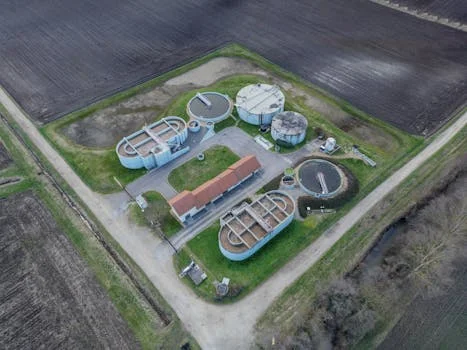
Isfahan Eco Solutions is a dominant local player, specializing in wet and dry process equipment for textile and pharmaceutical sectors. Their systems integrate with air pollution control, making them a one-stop shop for environmental compliance. With a local service center in Isfahan, they offer a competitive lead time of 8–12 weeks. In contrast, ZIRSakht Tadbir Arian focuses on high-end ZLD and Thermal Hydrolysis Processes for petrochemical and oil & gas projects. Their systems often include 24/7 remote monitoring, justifying a higher CAPEX of $2M–$5M.
Raymon Group and Absun Energy lead in desalination and reuse. Raymon Group’s Reverse Osmosis (RO) systems achieve a 95% recovery rate with an OPEX of $0.15–$0.30/m³, attractive for Isfahan’s drought-prone regions. Absun Energy adheres strictly to EU standards, making them the preferred choice for multinational pharmaceutical firms operating in Iran. Tehran WaterTech Industries provides essential filter press and water process equipment for municipal-scale projects, boasting TSS removal rates of 92–97%.
| Supplier | Primary Specialization | Lead Time | Compliance Standards | CAPEX Range |
|---|---|---|---|---|
| Isfahan Eco Solutions | Textiles/Pharmaceutics | 8–12 Weeks | Iran EPO | $100K – $1.5M |
| ZIRSakht Tadbir Arian | ZLD / Petrochemicals | 16–24 Weeks | ISO 14001 / ZLD | $2M – $5M |
| Raymon Group | RO / Desalination | 10–14 Weeks | NSF/ANSI | $200K – $2M |
| Absun Energy | Industrial Water Reuse | 12–16 Weeks | EU Directive 91/271/EEC | $500K – $3M |
| Tehran WaterTech | Municipal Filter Presses | 10–14 Weeks | Iran EPO | $50K – $1M |
How to Select Sewage Treatment Equipment for Isfahan’s Industrial Sectors: A 2025 Decision Framework
Selecting sewage treatment equipment requires balancing performance with long-term operational viability.Step 1: Characterize Influent. Measure COD, BOD, TSS, FOG, pH, and salinity. For example, textile wastewater in Isfahan averages 1,200 mg/L COD and 300 mg/L TSS (Iran Textile Association 2024). High dye concentrations may require specialized chemical precipitation before biological treatment.
Step 2: Define Effluent Targets. Are you aiming for municipal discharge or internal reuse? Isfahan’s EPO requires less than 30 mg/L TSS for discharge into the environment as of 2025. If the goal is reuse in cooling towers, MBR or RO technology is mandatory to reduce TDS and hardness.
Step 3: Match Technology to Industry. Match equipment to primary pollutants. Textiles require DAF for FOG and color removal. Pharmaceuticals need MBR for pathogen and organic compound control. Metalworking facilities deal with heavy metals and high salinity, requiring ZLD systems to comply with 2025 water-stressed area mandates.
Step 4: Calculate ROI. Compare CAPEX of high-efficiency systems against OPEX of simpler systems. While an MBR system might have a higher CAPEX ($800K) compared to DAF ($300K) for a 100 m³/h plant, the lower OPEX ($0.20/m³ vs $0.40/m³) and savings from reduced fresh water purchases often result in a faster payback period.
Step 5: Evaluate Supplier Support. Prioritize suppliers like Isfahan Eco Solutions for their local presence or ZIRSakht Tadbir Arian for remote monitoring capabilities, which can prevent costly downtime.
Cost Breakdown for Sewage Treatment Equipment in Isfahan: CAPEX, OPEX, and ROI Calculator
Operational expenditure (OPEX) consists of energy (40–60%), chemicals (20–30%), labor (10–20%), and maintenance (5–10%). In Isfahan, rising water costs have shortened the ROI for water reuse systems. A typical MBR system at 100 m³/h capacity costs approximately $0.25/m³ to operate, often lower than the combined cost of purchasing fresh water and paying discharge fines. Procurement managers must account for "hidden costs" including environmental permits, professional installation, and annual spare parts.
| Cost Component | DAF System (100 m³/h) | MBR System (100 m³/h) | ZLD System (50 m³/h) |
|---|---|---|---|
| Estimated CAPEX | $200K – $400K | $500K – $900K | $1.5M – $4M |
| OPEX ($/m³) | $0.35 – $0.50 | $0.20 – $0.35 | $0.50 – $0.85 |
| Annual Maint. | $15K – $30K | $40K – $70K | $100K – $250K |
| Payback Period | 4–6 Years | 3–5 Years |