What Defines a Compact Sewage Treatment Unit?
Compact sewage treatment units (STUs) are pre-engineered, self-contained systems designed for flow rates of 0.5–50 m³/day, with dimensions as small as 751mm (length) for marine applications (e.g., HAMANN HL-CONT 0125). These units treat combined black water and grey water to meet IMO MEPC.227(64), EU-MED, and EPA standards, achieving effluent quality of <25 mg/L BOD, <35 mg/L TSS, and <125 mg/L COD. Key parameters include hydraulic retention time (6–24 hours), power draw (0.5–5 kW), and sludge production (0.1–0.3 kg/m³ treated). Use this guide to compare specifications, compliance, and cost data across leading models.
A compact STU is defined by its pre-fabricated, "plug-and-play" architecture. Unlike traditional municipal plants that require extensive civil engineering and on-site concrete pouring, these units are delivered as finished modules. For a system to be classified as compact, it generally maintains a capacity of ≤50 m³/day (roughly 300 person equivalent) and occupies a footprint of less than 2 m² per m³/day of treated water. This high power-to-footprint ratio is achieved through intensified biological processes such as Moving Bed Biofilm Reactors (MBBR) or Membrane Bioreactors (MBR).
Primary use cases for these units include marine vessels requiring IMO-certified sanitation, remote industrial sites like mining camps or offshore oil rigs, and small-scale municipal applications such as boutique hotels or rural residential clusters. They are also frequently deployed in disaster relief scenarios where rapid installation is critical. The core differentiator of a compact unit is the integration of all treatment stages—pretreatment, biological oxidation, and clarification—into a single vessel or a small skid-mounted assembly.
However, engineering constraints dictate that these units are not suitable for high-strength industrial wastewater where BOD levels exceed 1000 mg/L without significant pretreatment. while they offer rapid deployment and lower initial civil works costs, they are optimized for specific flow ranges and may lose efficiency if scaled beyond 100 m³/day without modular expansion.
Key Engineering Parameters for Compact Sewage Treatment Units
Evaluating a compact STU requires a rigorous analysis of hydraulic and organic loading parameters. Selecting a unit based on flow rate alone often leads to operational failure if the organic load or peak surge capacity is not accounted for. Overloading a system beyond its rated capacity typically results in immediate BOD/TSS spikes and potential regulatory non-compliance.
Physical dimensions and weight are the primary constraints for marine and skid-mounted industrial applications. For instance, the HAMANN HL-CONT 0125, designed for 3,000 L/day, utilizes a footprint of just 751mm in length and weighs approximately 120 kg. In contrast, land-based units for mining camps may prioritize robustness over weight, utilizing high-density polyethylene (HDPE) or coated carbon steel. Power requirements vary significantly based on the aeration technology; an electricity-free aerobic digestion system may require 0 kW for the process itself, while a high-performance MBR system can draw up to 5 kW to maintain membrane scouring and aeration.
Hydraulic Retention Time (HRT) for compact units typically ranges from 6 to 24 hours. A shorter HRT indicates a more intensified process, such as MBR, which reduces the physical footprint but increases energy consumption. Sludge production is another critical metric, generally falling between 0.1 and 0.3 kg of dry solids per m³ of treated wastewater. Many compact units feature integrated sludge storage tanks designed for 3-6 months of operation before pump-out is required.
| Parameter | Standard Range | High-Performance Range (MBR) | Notes |
|---|---|---|---|
| Daily Flow Rate | 1 – 50 m³/day | 1 – 100 m³/day | Scalable via modular units |
| Hydraulic Retention Time (HRT) | 12 – 24 hours | 6 – 10 hours | Lower HRT = smaller footprint |
| Sludge Production | 0.2 – 0.3 kg/m³ | 0.1 – 0.15 kg/m³ | Depends on F/M ratio |
| Power Consumption | 0.5 – 1.5 kWh/m³ | 2.0 – 4.5 kWh/m³ | Includes aeration and pumping |
| Effluent BOD5 | <25 mg/L | <5 mg/L | Meets most global standards |
| Effluent TSS | <35 mg/L | <1 mg/L | MBR provides superior filtration |
Compliance Standards: IMO, EU-MED, EPA, and Local Regulations
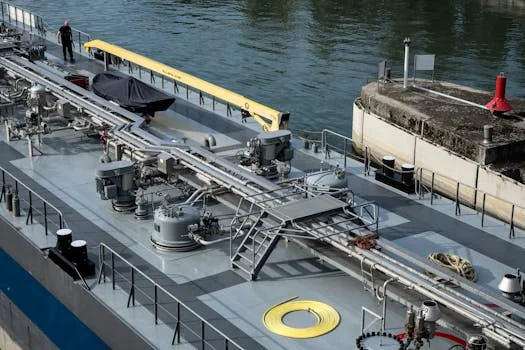
Regulatory compliance is the most significant hurdle in procuring a compact STU. For marine applications, the IMO MEPC.227(64) resolution is the global benchmark. This standard mandates rigorous effluent limits, including fecal coliform counts below 100 CFU/100mL and COD levels below 125 mg/L. Units like the HAMANN HL-CONT series are specifically type-approved to meet these stringent requirements. European-flagged vessels must adhere to the EU-MED (Marine Equipment Directive 2014/90/EU), which requires specific wheel-mark certification for all onboard sewage treatment plants.
For land-based applications, the U.S. EPA 40 CFR Part 141/143 sets the standard for secondary treatment, requiring BOD and TSS levels to remain below 30 mg/L. In specific regions, local regulations may impose even stricter limits. For example, China’s GB 18466-2005 for medical wastewater requires a chlorine residual of >6.5 mg/L and specific enteric pathogen removal. In such cases, compact medical wastewater treatment units with ozone disinfection are often required to ensure total pathogen inactivation. You can find more detailed data in our guide on medical wastewater treatment system specifications and compliance.
| Regulation | BOD5 (mg/L) | TSS (mg/L) | COD (mg/L) | Coliform (CFU/100mL) |
|---|---|---|---|---|
| IMO MEPC.227(64) | < 25 | < 35 | < 125 | < 100 |
| US EPA (Secondary) | < 30 | < 30 | N/A | < 200 |
| EU-MED (Marine) | < 25 | < 35 | < 125 | < 100 |
| GB 18466 (China Med) | < 20 | < 20 | < 60 | < 500 (MPN/L) |
Compact Sewage Treatment Unit Comparison: Top Models and Specifications
Selecting the appropriate model involves balancing footprint, power availability, and the desired level of automation. The following table compares industry-leading models across key engineering metrics. For projects requiring high-quality water for non-potable reuse, MBR systems for near-reuse-quality effluent in compact footprints are typically the preferred choice due to their integrated ultrafiltration membranes. For more information on membrane performance, refer to our guide on MBR effluent quality standards and engineering parameters.
For decentralized municipal or industrial camp applications, WSZ series compact sewage treatment units (1–80 m³/h) offer a balance of underground installation and reliable aerobic digestion. These units are often paired with specialized sludge dewatering system specifications for compact STUs to minimize waste volume in remote areas.
| Model | Capacity (m³/d) | Dimensions (L×W×H mm) | Power (kW) | Technology | Compliance |
|---|---|---|---|---|---|
| HL-CONT 0125 | 3.0 | 751 × 500 × 500 | 1.2 | Aerobic Digestion | IMO / EU-MED |
| BioKube 50 | 50.0 | 2000 × 1500 × 1500 | 3.5 | SBR | CE / CEN 12566 |
| BIOROCK 10 | 1.5 | 1200 × 800 × 1200 | 0.0 | Fixed Media Aerobic | CE / EN 12566 |
| HydropureWater WSZ-5 | 5.0 | 3000 × 1200 × 1500 | 1.5 | AO + Clarification | EPA / GB 18918 |
| HydropureWater MBR-10 | 10.0 | 3500 × 1500 × 1800 | 4.5 | MBR | Class A Reuse |
How to Select the Right Compact Sewage Treatment Unit for Your Application
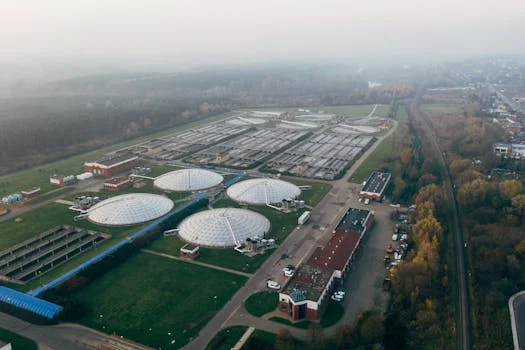
The selection process should follow a structured decision framework to ensure the unit survives the operational environment. Step one is defining the influent characteristics. Marine wastewater has significantly higher salinity, which necessitates 316L stainless steel construction or specialized coatings to prevent corrosion. Industrial camps may have high grease loads from kitchens, requiring an integrated grease trap before the STU.
Step two involves determining the non-negotiable compliance requirements. For European-flagged vessels, EU-MED certification is a legal requirement. For U.S. land-based projects, NSF/ANSI 40 certification may be necessary. Step three is assessing site constraints. In Arctic deployments, units must be housed in insulated, heated containers (cold-weather kits) to maintain biological activity. Conversely, in tropical climates, cooling or increased aeration may be needed to manage lower dissolved oxygen levels.
Step four is the technology trade-off. Sequencing Batch Reactors (SBR) like the BioKube offer high efficiency and can handle fluctuating loads well but require more complex control systems. Membrane Bioreactors (MBR) provide the highest quality effluent suitable for irrigation or toilet flushing but come with higher CAPEX and energy costs. Passive aerobic systems like BIOROCK are ideal for off-grid sites with zero power availability but require a larger footprint relative to their capacity.
Finally, step five is calculating the total cost of ownership (TCO). A unit with a lower purchase price but higher sludge production will eventually cost more in disposal fees. Use a decision tree to weigh these factors: if space is the primary constraint, choose MBR; if power is unavailable, choose passive aerobic; if regulatory compliance for marine discharge is the goal, choose an IMO-certified aerobic unit.
Cost Breakdown: CAPEX, OPEX, and ROI for Compact Sewage Treatment Units
Capital Expenditure (CAPEX) for compact STUs typically ranges from $8,000 for small residential-scale units to over $50,000 for high-capacity, marine-certified MBR systems. Installation costs generally add 20–30% to the total project budget, covering civil works, piping, and electrical integration. For marine retrofits, custom mounting and piping modifications can drive installation costs higher.
Operating Expenditure (OPEX) is primarily driven by energy consumption and sludge management. SBR and MBR systems have higher energy costs ($0.10–$0.50/m³) compared to passive systems. Chemical costs for disinfection (chlorine or ozone) and coagulation (for phosphorus removal) typically range from $0.05 to $0.20 per m³. Maintenance, including membrane cleaning for MBRs or annual pump-outs for sludge, adds another $0.10 to $0.50 per m³.
The Return on Investment (ROI) for a compact STU is often realized through the elimination of wastewater hauling costs. For a remote mining camp, the cost of trucking wastewater to a municipal facility can exceed $100 per m³. By treating on-site, the facility can save upwards of $50,000 per year, leading to a payback period of less than two years. The formula for ROI is: (Annual Savings - OPEX) / CAPEX = Payback Period in years.
| Cost Component | Estimated Cost (per m³) | Percentage of OPEX |
|---|---|---|
| Energy (Aeration/Pumping) | $0.15 – $0.45 | 40% |
| Chemicals (Disinfection) | $0.05 – $0.15 | 15% |
| Sludge Disposal | $0.10 – $0.30 | 25% |
| Maintenance & Labor | $0.10 – $0.25 | 20% |
Frequently Asked Questions
What is the typical lifespan of a compact sewage treatment unit?
Most high-quality compact units are designed for a 15–20 year service life. Stainless steel (316L) or HDPE tanks offer superior longevity in corrosive environments. Mechanical components such as blowers and pumps typically require replacement or overhaul every 5–7 years depending on runtime.
Can compact STUs handle grey water and black water simultaneously?
Yes, most modern compact units, especially those certified under IMO MEPC.227(64), are designed to treat a mixture of black water (toilets) and grey water (sinks, showers). Combining these streams often improves biological treatment efficiency by balancing the nutrient ratios (C:N:P).
What maintenance is required for a compact sewage treatment plant?
Standard maintenance includes monthly inspections of blowers and pumps, quarterly testing of effluent quality (BOD/TSS), and annual sludge removal. For MBR systems, semi-annual chemical cleaning (CIP) of the membranes is required to maintain flux rates and prevent fouling.
Do compact sewage treatment units require a full-time operator?
No, most compact STUs are highly automated with PLC-based control systems. They generally require only 2–4 hours of operator attention per week for routine checks and sensor calibration. Remote monitoring capabilities allow for off-site troubleshooting in industrial or municipal applications.