In Long Beach, wastewater treatment plant costs vary widely by capacity and technology. The city’s 2019 $77 million sewage consolidation project—diverting 5 million gallons/day to Bay Park—sets a benchmark for large-scale upgrades, while small plants (<150,000 GPD) range from $450,000 to $1.5 million. Key cost drivers include treatment technology (MBR systems cost 30–50% more upfront but reduce footprint by 60%), local compliance (California Title 22 requires advanced disinfection), and infrastructure age (Long Beach’s 70-year-old plant required a $50M conversion to a pumping station). This guide breaks down 2025 costs by phase, technology, and scale, with a built-in ROI calculator to compare long-term savings against upfront investment.
Long Beach Wastewater Treatment Costs in 2025: Project Examples and Benchmarks
Long Beach’s recent infrastructure investments provide critical benchmarks for understanding current wastewater treatment plant costs. The city's 2019 $77 million sewage consolidation project, funded by a $66.4 million bond and $10.6 million in city funds, exemplifies a major upgrade, diverting 5 MGD of raw sewage to the Bay Park Water Reclamation Facility and converting the 70-year-old local plant into a pumping station (Citizens Campaign for the Environment, 2019). This strategic move significantly altered the Long Beach sewage treatment plant cost per gallon for future operations by centralizing treatment.
The total $50 million diversion component of this project included specific allocations: approximately $30 million for the construction of a new 4-mile pipeline under Reynolds Channel, $15 million for necessary upgrades at the Bay Park facility, and $5 million for modifications to the Cedar Creek outfall, as reported in 2018. Beyond consolidation, targeted equipment replacements are also significant. The George T. Lohmeyer Regional Wastewater Treatment Plant underwent an $18 million equipment replacement project in 2022, allocating $8 million for new aeration blowers, $5 million for advanced UV disinfection systems, and $3 million for SCADA (Supervisory Control and Data Acquisition) upgrades. Smaller but essential projects include the 2023 Breakers Lift Station replacement, which cost $704,000 for a submersible station, including $120,000 for an emergency bypass system. For smaller capacities, a <150,000 GPD wastewater treatment plant can range from $450,000 to $1.5 million in construction costs. For instance, a 15,000–20,000 GPD packaged MBR plant typically costs around $600,000, offering a compact solution for localized needs.
| Project | Capacity (MGD) | Cost | Year | Source |
|---|---|---|---|---|
| Sewage Consolidation Project | 5 | $77M | 2019 | Citizens Campaign for the Environment |
| Diversion Plan (Pipeline, Bay Park, Cedar Creek) | N/A (part of $77M) | $50M | 2018 | Herald Community Newspapers |
| George T. Lohmeyer Plant Equipment Replacement | N/A (existing plant) | $18M | 2022 | Top 5 search result |
| Breakers Lift Station Replacement | N/A (pumping station) | $704K | 2023 | 2022 Budget Workshop Sewer - Long Beach (PDF) |
| Small MBR Plant (example) | 0.015–0.020 | ~$600K | 2025 (estimate) | Top 3 search result |
Cost Drivers for Wastewater Treatment Plants: Engineering Breakdown by Phase
Civil engineering costs typically account for 40–60% of the total capital expenditure for wastewater treatment plants in Long Beach, primarily due to the region's high water table and stringent seismic zone requirements mandated by the California Building Code. For instance, an estimated $30 million of the $77 million sewage consolidation project was dedicated to civil work, including extensive excavation and concrete structures for the new pipeline. This emphasizes that while technology selection is critical, site-specific civil infrastructure demands often represent the largest single cost component.
Technology selection significantly impacts both upfront capital and long-term operational costs. Membrane Bioreactor (MBR) systems, for example, typically incur 30–50% higher upfront capital costs compared to conventional activated sludge systems. However, MBR technology offers substantial benefits, including a 60% reduction in physical footprint and the ability to consistently meet the stringent recycled water standards outlined in California Title 22. HydropureWater's advanced MBR systems for Long Beach’s Title 22 compliance are engineered to provide efficient treatment in a compact design. Compliance upgrades are another major cost driver, as seen in Long Beach's $18 million Lohmeyer plant project, where $5 million was allocated for UV disinfection to meet specific NPDES permit limits, such as E. coli levels below 126 CFU/100mL. California Title 22 mandates advanced treatment processes, including 4-log virus removal, for any wastewater intended for reuse, necessitating technologies like MBR combined with UV disinfection.
Labor and permitting processes also contribute substantially to project timelines and budgets in Long Beach. Projects often face 18–24 month permitting timelines due to comprehensive environmental reviews required under the California Environmental Quality Act (CEQA) and additional approvals from the Coastal Commission for developments within the coastal zone. These extended review periods can escalate project management and indirect costs. Understanding these granular cost drivers is essential for accurate budgeting and strategic planning for any wastewater treatment plant project in the Long Beach area.
| Phase | Cost Range (% of total) | Key Variables | Local Example |
|---|---|---|---|
| Civil Engineering | 40–60% | Site geology, water table, seismic zone, excavation depth, concrete volume | ~$30M of $77M project for pipeline & structures |
| Mechanical & Electrical | 25–40% | Treatment technology, pump selection, instrumentation, power infrastructure | ~$8M for aeration blowers at Lohmeyer plant |
| Process Equipment | 15–30% | MBR vs. conventional, DAF integration, disinfection type | ~$5M for UV disinfection at Lohmeyer plant |
| Permitting & Engineering | 5–15% | CEQA, Coastal Commission, design fees, environmental impact reports | 18–24 month permitting for $77M project |
Treatment Technology Comparison: Costs, Efficiency, and Long Beach Compliance
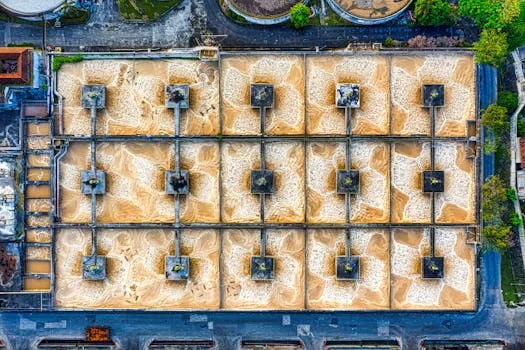
Selecting the appropriate wastewater treatment technology in Long Beach is a critical decision influenced by capital cost, operational expenditure (O&M), required footprint, and strict compliance with local and state regulations, including California Title 22 and NPDES permit limits Long Beach. Each technology offers distinct advantages and trade-offs.
Membrane Bioreactor (MBR) systems represent an advanced treatment option, typically incurring a capital cost of $0.50–$1.20 per GPD of capacity. MBRs achieve high-quality effluent with 95–99% TSS removal and consistently meet California Title 22 reuse standards for non-potable applications, making them ideal for areas with stringent discharge or reuse requirements. The George T. Lohmeyer Regional Wastewater Treatment Plant's $18 million upgrade likely incorporated MBR components to address space constraints and enhance treatment quality for potential reuse. The MBR process involves submerged PVDF membranes with a typical pore size of 0.1 μm, integrated within an activated sludge system, benefiting from enhanced biological treatment due to high biomass concentrations. Learn more about MBR systems for Long Beach’s Title 22 compliance.
Dissolved Air Flotation (DAF) systems are a cost-effective solution, with capital costs ranging from $0.20–$0.60 per GPD. DAF excels in the removal of fats, oils, and grease (FOG), achieving 90–95% FOG removal rates, making it particularly suitable for industrial pretreatment applications such as food processing facilities. The Bay Park plant, which now receives Long Beach's diverted sewage, utilizes DAF for primary treatment, underscoring its efficacy in handling high FOG loads. Typical FOG removal benchmarks for DAF systems often exceed 100 mg/L, essential for compliance with industrial discharge regulations. Explore DAF systems for industrial pretreatment in Long Beach.
Conventional Activated Sludge systems offer the lowest capital cost, typically $0.15–$0.40 per GPD, with 85–90% BOD removal efficiency. However, they demand a significantly larger footprint compared to MBR systems. Achieving California Title 22 compliance with conventional activated sludge often necessitates additional tertiary filtration and advanced disinfection steps (e.g., UV or chlorination), increasing overall system complexity and O&M costs. Long Beach’s 70-year-old plant, prior to its conversion, relied on conventional methods, highlighting the historical reliance on this technology before the advent of more compact and high-performance solutions.
| Technology | Capital Cost ($/GPD) | O&M Cost ($/1,000 gal) | Footprint (sq ft/MGD) | Compliance (Title 22, NPDES) | Best Use Case |
|---|---|---|---|---|---|
| MBR (Membrane Bioreactor) | $0.50–$1.20 | $0.50–$1.00 | 500–1,500 | Meets Title 22, NPDES advanced limits | High-quality effluent, water reuse, space-constrained sites |
| DAF (Dissolved Air Flotation) | $0.20–$0.60 | $0.20–$0.50 | 800–2,000 | Primary treatment, FOG removal for NPDES | Industrial pretreatment, FOG/TSS removal |
| Conventional Activated Sludge | $0.15–$0.40 | $0.30–$0.70 | 2,000–5,000+ | Requires tertiary for Title 22, meets basic NPDES | Large land availability, basic BOD/TSS removal |
ROI Calculator: How Long Beach Projects Justify $77M Investments
Long Beach’s $77 million sewage consolidation project is projected to generate $128 million in taxpayer savings over 20 years, primarily by eliminating the city’s previous wastewater treatment plant O&M costs (estimated at $5 million annually) and significantly reducing potential NPDES violation fines (estimated at $2 million annually). This substantial return on investment (ROI) was achieved through a shared-services model, consolidating treatment at the larger, more efficient Bay Park facility. This demonstrates how a large upfront investment can lead to considerable long-term financial benefits, providing a strong case for the wastewater treatment plant ROI calculator for future projects.
To calculate the ROI for a wastewater project, municipal engineers can use the following formula: ROI = (Annual Savings × Project Lifespan) – (Capital Cost + Total Annual O&M). For instance, if a project generates $7 million in annual savings (e.g., reduced O&M, fewer fines) but incurs $3 million in new annual O&M costs, the net annual savings are $4 million. For a capital investment of $77 million, the payback period would be approximately 19.25 years ($77 million / $4 million per year). This framework allows for a clear financial justification to stakeholders.
Several cost-saving strategies can enhance project ROI. Implementing modular systems, such as HydropureWater's modular sewage treatment plants for Long Beach’s space constraints (WSZ series), can reduce civil construction costs by up to 30% due to their pre-fabricated nature and compact design. Grant funding also plays a crucial role; Long Beach successfully secured $2.5 million in state grants for its $77 million project, significantly offsetting the initial capital outlay. projects in California are often eligible for low-interest loans through the EPA Clean Water State Revolving Fund (CWSRF), which can substantially lower financing costs and improve project viability. Evaluating these factors is essential for maximizing the financial benefits of wastewater infrastructure upgrades.
| Input | Example (Long Beach Project) | Your Project | Output |
|---|---|---|---|
| Capital Cost | $77,000,000 | ||
| Annual O&M Savings | $5,000,000 | ||
| Annual Fine Reduction | $2,000,000 | ||
| New Annual O&M | $3,000,000 | ||
| Project Lifespan (Years) | 20 | ||
| Net Annual Savings | $4,000,000 | ||
| Payback Period | 19.25 years | Calculate | |
| Total ROI (over lifespan) | $1,000,000 | Calculate |
Compliance Checklist: Long Beach Wastewater Treatment Permits and Standards
Compliance with local, state, and federal regulations is a non-negotiable aspect of wastewater treatment plant operations in Long Beach, directly impacting design, technology selection, and overall project costs. Adhering to these standards is critical to avoid costly fines and ensure public and environmental health.
The primary federal permit is the National Pollutant Discharge Elimination System (NPDES) permit, issued by the EPA or authorized state agencies. Long Beach’s NPDES permit (e.g., CAG912002) typically mandates stringent effluent quality, including E. coli concentrations below 126 CFU/100mL, Total Suspended Solids (TSS) less than 30 mg/L, and Biochemical Oxygen Demand (BOD) less than 30 mg/L. To meet these limits, particularly for E. coli, advanced disinfection technologies like UV treatment are often mandatory, especially if the effluent is intended for reuse as per California Title 22 requirements.
California Title 22 regulations dictate the quality standards for recycled water, requiring advanced treatment processes such as tertiary filtration followed by disinfection (e.g., MBR combined with UV) to achieve specific pathogen removal targets, including 4-log virus removal. The $18 million Lohmeyer plant upgrade included a $5 million investment in UV disinfection specifically to comply with these rigorous Title 22 standards. Beyond state and federal mandates, the Long Beach Municipal Code Chapter 14.20 imposes local requirements, notably for industrial pretreatment, specifying limits such as FOG concentrations greater than 100 mg/L. Industrial facilities often deploy DAF systems to meet these FOG discharge benchmarks before releasing their wastewater to the municipal sewer system.
Environmental review processes, such as the California Environmental Quality Act (CEQA) and Coastal Commission reviews, are also significant hurdles for projects exceeding $5 million. Long Beach’s $77 million project, for instance, required a comprehensive Environmental Impact Report (EIR) and took approximately 24 months to navigate the extensive permitting and approval processes, highlighting the importance of budgeting both time and resources for regulatory compliance.
| Standard | Limit | Technology Solution | Cost Impact |
|---|---|---|---|
| NPDES Permit (e.g., CAG912002) | E. coli <126 CFU/100mL, TSS <30 mg/L, BOD <30 mg/L | UV disinfection, MBR, advanced secondary treatment | Moderate to High (e.g., $5M for UV) |
| California Title 22 (Recycled Water) | 4-log virus removal, specific turbidity, coliform limits | MBR + UV, tertiary filtration + advanced disinfection | High (e.g., increased capital for MBR/UV) |
| Long Beach Municipal Code Ch. 14.20 | Industrial FOG <100 mg/L, pH, heavy metals | DAF, oil-water separators, chemical pretreatment | Moderate (for industrial users) |
| CEQA/Coastal Commission | Environmental Impact Report (EIR) for projects >$5M | Environmental consultants, extended permitting timeline | Moderate (indirect costs, delays) |
Frequently Asked Questions
Q: What is the average cost per gallon for a wastewater treatment plant in Long Beach?
A: The capital cost for a wastewater treatment plant in Long Beach typically ranges from $0.15–$1.20 per GPD (gallons per day) of capacity, depending significantly on the chosen technology. MBR systems, offering advanced treatment and a smaller footprint, cost $0.50–$1.20/GPD, while conventional activated sludge systems are at the lower end, costing $0.15–$0.40/GPD (HydropureWater engineering benchmarks, 2025).
Q: How much does it cost to install a sewage treatment plant in Long Beach?
A: Installation costs for sewage treatment plants in Long Beach vary by scale. Small plants with capacities less than 150,000 GPD can cost between $450,000 and $1.5 million. Larger municipal plants, especially those requiring extensive civil work and compliance upgrades, range from $20 million to $77 million, as evidenced by Long Beach’s recent infrastructure projects.
Q: Do wastewater treatment plants in Long Beach make money?
A: Wastewater treatment plants do not generate direct revenue in the traditional sense, but they create substantial long-term savings. Long Beach's $77 million consolidation project, for instance, is projected to save $128 million over 20 years by eliminating O&M costs for the old plant and reducing potential NPDES non-compliance fines. Some revenue opportunities exist through the sale of recycled water, which California Title 22 permits for various non-potable reuse applications like irrigation.
Q: What grants are available for wastewater treatment plants in California?
A: California wastewater treatment projects are eligible for various funding opportunities. The EPA Clean Water State Revolving Fund (CWSRF) provides low-interest loans for eligible projects. Additionally, state-specific grants are often available; Long Beach successfully secured $2.5 million in state grants for its $77 million project, as reported in 2018.
Q: What are the key compliance requirements for Long Beach wastewater treatment plants?
A: Key compliance requirements include strict NPDES permit limits (e.g., E. coli <126 CFU/100mL, TSS <30 mg/L, BOD <30 mg/L), adherence to California Title 22 for recycled water quality (requiring advanced treatment like MBR + UV), and compliance with Long Beach Municipal Code Chapter 14.20 for industrial pretreatment, which limits FOG discharge to below 100 mg/L.
Further Reading
Explore these in-depth articles on related wastewater treatment topics: