An MBR wastewater treatment system in Russia combines a high-MLSS bioreactor with submerged ultrafiltration membranes and typically produces effluent at TSS <1 mg/L and BOD <5 mg/L. For a 1,000 m³/day municipal plant, capital cost typically sits at ₽12M–₽30M, with OPEX of ₽1.5M–₽3M/year and membrane replacement every 8–10 years. GOST R 56828-2015 and sector standards such as GOST 17.1.3.13-86 push oil refining, food, and pharma sites toward membrane separation when land is tight or reuse is required. Bashneft-Ufaneftekhim’s 84 million L/day installation remains the reference industrial benchmark.
What an MBR Wastewater Treatment System in Russia Delivers
Russian MBR plants on municipal and industrial duty typically reach TSS below 1 mg/L, BOD below 5 mg/L, and COD below 10 mg/L at design MLSS and flux. Footprint is about 60% smaller than conventional activated sludge at equal flow. Capital cost is ₽12M–₽30M for 100–1,000 m³/day trains.
Russia’s 2024–2030 Water Strategy still frames a 95% wastewater treatment compliance target by 2030 (Ministry of Natural Resources data, 2024). That policy pressure, plus GOST R 56828-2015 discharge rules, keeps membrane bioreactors on shortlists for brownfield upgrades. Industrial adoption reported for new projects has been led by oil and gas (42%), food processing (28%), pharmaceuticals (15%), and pulp and paper (10%) (Rosstat 2023). Cities such as Moscow, St. Petersburg, and Kazan also need compact trains that replace aging clarifier-based works without expanding the site boundary.
According to Kommersant (16 June 2025), the Russian government pledged about 70 billion rubles for construction and reconstruction of treatment facilities from 2025 through 2030, with nearly 24 billion rubles in the nearer three-year window. A finished scheme counts only after Rosprirodnadzor confirms normative treatment. Most plants we size for regional municipal upgrades still treat that sign-off as a schedule gate, not as a note filed after startup. Named examples in that report are Kineshma’s centralized sewerage and the Nizhny Novgorod aeration-station rebuild, which are municipal works rather than refinery membrane trains.
Bashneft Ufaneftekhim MBR Plant Capacity
The Bashneft-Ufaneftekhim biological treatment plant in Ufa treats up to 84 million liters per day. According to the SUEZ commissioning release dated 24 January 2018, this Rosneft-affiliated refinery started the complex with SUEZ ZeeWeed MBR membranes, then EDR, reverse osmosis, and ion exchange. The same release calls it the world’s largest industrial MBR-plus-EDR facility at inauguration and records a 15-year service contract for operation and membrane replacement.
Earlier project summaries also noted roughly a 70% footprint cut versus conventional activated sludge and alignment with GOST 17.1.3.13-86 petroleum effluent limits. For the broader russian wastewater treatment process context beyond membranes alone, compare unit process trains before locking a technology path. Most plants we size against this reference still treat 84 million liters per day as an upper scale check, not as a module count to copy onto a 1,000 m³/day site.
How MBR Process Trains Work Under Russian Site Conditions
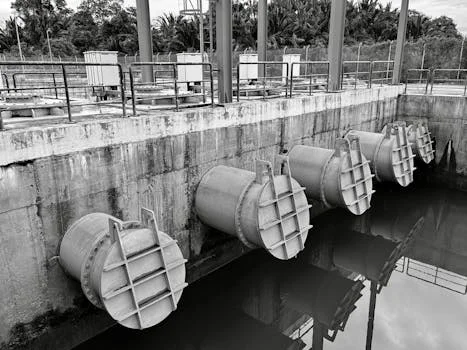
MBR trains couple biological oxidation with membrane solid-liquid separation. Influent enters an aerobic or aerobic/anoxic bioreactor; mixed liquor then contacts submerged PVDF or PES membranes with 0.04–0.4 μm pores. Permeate pumps draw clarified water through the membrane wall while biomass stays in the tank, so secondary clarifiers are not required. Removing clarifiers cuts overall plant footprint by about 1.5–2.5 times versus conventional activated sludge at the same design flow—useful on constrained urban plots and refinery brownfields.
Process control setpoints differ from temperate European plants. Dissolved oxygen targets of 1.5–2.5 mg/L in the aerobic zone are common at design load, while membrane scour air is set from vendor SADm curves rather than from bioreactor DO alone. Mixed liquor suspended solids often runs 8,000–12,000 mg/L on municipal feeds; industrial high-COD feeds may sit higher if viscosity and oxygen transfer still allow stable aeration. Exceeding those bands without checking filterability is a frequent cause of rapid TMP rise on Russian food-industry startups.
HydropureWater’s integrated MBR Membrane Bioreactor Wastewater Treatment System packages for Russian municipal and industrial projects are built around these hydraulic and climate constraints rather than brochure peak flux alone.
| MBR Component | Function | Russian-Specific Relevance |
|---|---|---|
| Bioreactor (Aerobic/Anoxic) | Biological degradation of organic matter and nutrients. | Optimized for variable loads and cold climates; nutrient removal for GOST compliance. |
| Submerged Membranes (PVDF/PES) | Physical barrier for solids/bacteria separation (0.04–0.4 μm). | Produces high-quality effluent for reuse; compact footprint for urban/industrial sites. |
| Permeate Pumps | Draws treated water through membranes. | Energy-efficient operation; critical for maintaining stable flux. |
| Air Blower System | Provides aeration for biological process and membrane scouring. | Adjustable for cold weather performance and fouling control in high-TSS influents. |
| Chemical Dosing System | Delivers cleaning agents for membrane maintenance. | Essential for managing fouling from complex industrial effluents (e.g., high-FOG). |
Cold Weather MBR System Russia COD Removal
A cold weather MBR system on a Russian site is sized around COD removal at winter liquor temperature, not around a summer flux sheet. Cold-weather operation is a recurring design driver. With insulated tanks and adjusted membrane aeration, most plants we size for northern industrial parks still hold above 90% COD removal at mixed-liquor temperatures of 5–10°C. High-TSS resilience matters for food and mining streams: MBR units routinely hold biomass when influent TSS reaches up to 15,000 mg/L, where clarifier plants risk washout.
Fouling still governs flux. Cake layers and pore blocking are controlled with continuous air scour plus periodic sodium hypochlorite or citric acid cleans. Dairy sites with high FOG need dedicated pretreatment before the membranes, or recovery cleaning intervals shorten quickly.
Designers still separate biology air from membrane scour air on these jobs. Scour air copied from a temperate curve can overcool a tank that is already at 5–10°C. Most plants we size for northern industrial parks write a minimum mixed-liquor temperature into the datasheet before they accept the flux number.
MBR vs MBBR CAS Russia Industrial Plant
MBR effluent quality for Russian discharge and reuse screening typically reaches TSS <1 mg/L, BOD <5 mg/L, and COD <10 mg/L under design conditions. That band often meets GOST R 56828-2015 reuse-oriented limits without a separate tertiary filter. MBBR and conventional activated sludge (CAS) usually need sand filtration or ultrafiltration to approach the same solids and BOD envelope.
Footprint comparison at 1,000 m³/day shows MBR at roughly 100–150 m² of process area—about 60% smaller than CAS at 250–400 m². MBBR lands near 150–250 m².
Energy tells the other side of the trade. MBR specific energy is about 0.3 kWh/m³ from membrane scour and permeate pumping. Gravity CAS is about 0.15–0.235 kWh/m³, while MBBR usually sits near 0.2–0.28 kWh/m³.
Russian influent quirks change the ranking. High salinity in oil-and-gas wastewater can shorten membrane life unless materials and CIP are specified for salt. Siberian low temperature favors insulated tanks and biofilm or MBR trains that keep MLSS active. Seasonal food plants need shock-load tolerance; MBBR carriers help there, while MBR wins when the permit needs near-reuse solids.
Remote Arctic pads often prefer modular MBBR hardware; strict urban or reuse permits still point to membranes. Most plants we size for Arctic pads still open the study with MBBR unless the reuse clause forces a membrane barrier. Most plants we size for inland industrial parks accept the extra 0.3 kWh/m³ only when the permit or the plot fails on CAS.
| Parameter | MBR (Membrane Bioreactor) | MBBR (Moving Bed Biofilm Reactor) | Conventional Activated Sludge (CAS) |
|---|---|---|---|
| Effluent Quality (TSS/BOD/COD) | <1 / <5 / <10 mg/L (Near-reuse quality) | 5–15 / 10–20 / 20–50 mg/L (Good, often needs tertiary) | 10–30 / 15–40 / 30–80 mg/L (Basic, always needs tertiary for reuse) |
| Footprint (m²/1,000 m³/day) | ~100–150 m² (60% smaller than CAS) | ~150–250 m² (Compact) | ~250–400 m² (Largest) |
| Energy (kWh/m³) | ~0.3 kWh/m³ (Higher due to membrane aeration) | ~0.2–0.28 kWh/m³ (Moderate) | ~0.15–0.235 kWh/m³ (Lower due to gravity separation) |
| CAPEX (₽/m³/day) | ₽12,000–₽30,000 (Higher initial) | ₽8,000–₽20,000 (Moderate) | ₽5,000–₽15,000 (Lowest initial) |
| OPEX (₽/m³) | ₽3.5–₽8 (Higher, membrane replacement) | ₽2.5–₽6 (Moderate) | ₽1.5–₽4 (Lowest) |
| Best Use Case | Strict discharge, water reuse, space-constrained urban/industrial sites. | Variable loads, remote sites, upgrades, moderate compliance. | Large flows, ample land, less stringent discharge. |
Cost Breakdown for Russian MBR Budgets
Budget envelopes for MBR systems in Russia at 100–1,000 m³/day municipal capacity typically fall between ₽12M and ₽30M. Industrial plants at 5,000–50,000 m³/day commonly budget ₽50M–₽1.2B for equipment, engineering, and installation (Rosstat 2024 and vendor quotes). Unit CAPEX on a ₽/m³/day basis remains about ₽12,000–₽30,000 for MBR versus ₽8,000–₽20,000 for MBBR and ₽5,000–₽15,000 for CAS.
OPEX splits are predictable if you track meters. Energy is 40–50% of annual OPEX at about 0.3 kWh/m³. Membrane replacement is 20–30% of OPEX on an 8–10 year cycle. Chemicals for CIP and pH control take about 10–15%, and labor the remaining 10–15%.
Replacement cash outlays run about ₽2M–₽10M every 8–10 years on municipal trains and ₽20M–₽100M on large industrial trains.
Hidden line items still move the NPV. Industrial permitting often costs ₽500K–₽2M and can stretch 6–18 months. Civil works for buried tanks or poor soils can equal 30–50% of total CAPEX. Operator training and certification commonly add ₽200K–₽500K.
A worked example: a 500 m³/day food plant at ₽25M CAPEX and ₽3.5M/year OPEX often shows a 4–6 year payback when reuse cuts intake water or avoids discharge penalties. Most plants we size for food duty land in that 4–6 year band only when reuse offsets intake water. The federal package of about 70 billion rubles is a municipal construction fund, not a discount on industrial membrane equipment. Refinery budgets still carry the full ₽50M–₽1.2B equipment band on the owner’s side of the estimate.
| Capacity (m³/day) | Application | Estimated CAPEX (₽) | Estimated Annual OPEX (₽) | Membrane Replacement Cost (₽, every 8-10 years) |
|---|---|---|---|---|
| 100–500 | Small Municipal / Industrial | ₽12M–₽25M | ₽1.5M–₽2.5M | ₽2M–₽7M |
| 500–1,000 | Medium Municipal / Industrial | ₽20M–₽30M | ₽2.5M–₽3.5M | ₽5M–₽10M |
| 1,000–5,000 | Large Municipal / Industrial | ₽30M–₽150M | ₽3.5M–₽15M | ₽10M–₽30M |
| 5,000–50,000 | Very Large Industrial / Municipal | ₽150M–₽1.2B | ₽15M–₽100M+ | ₽30M–₽100M+ |
What do MBR and RO units cost together?
MBR-plus-RO budgets for Russian reuse projects must be priced as two stages. The MBR biological/membrane train stays at the CAPEX bands above, and a separate RO (and often EDR) desalting train is sized on permeate TDS and recovery. The Bashneft-Ufaneftekhim plant illustrates the stack—MBR for organics and solids, then EDR and RO for salt rejection and reuse (SUEZ commissioning release, 24 January 2018). That release also lists ion exchange after the membrane stage.
MBR-only tables therefore understate total CAPEX whenever the reuse specification needs desalting.
Practical estimating rule: keep the MBR envelope at ₽12,000–₽30,000 per m³/day of capacity for the bioreactor and UF stage, then add RO skid CAPEX, antiscalant, cartridge filters, and brine handling as a second work package. OPEX also stacks—MBR energy near 0.3 kWh/m³ plus RO feed pumping and CIP chemicals. If the permit only needs low TSS/BOD without TDS reduction, skip RO and avoid that second capital block.
If cooling-tower or process reuse sets a TDS ceiling, model MBR permeate as RO feed and request vendor quotes on both skids together rather than applying a single ₽/m³/day factor. Most plants we size for cooling-tower reuse price ion exchange as its own skid after EDR and RO, matching the Ufa order rather than folding it into the MBR unit rate.
Russian MBR Membrane Bioreactor GOST Compliance
MBR permeate for Russian industrial and municipal permits commonly meets BOD <3–5 mg/L, COD <10–20 mg/L, and TSS <1–5 mg/L when the biology and membranes are operated inside design flux and SRT. Those bands align with GOST R 56828-2015 general discharge language, GOST 17.1.3.13-86 petroleum effluent limits, and SanPiN 2.1.5.980-00 municipal discharge rules cited in project specifications. Nitrogen and phosphorus still need anoxic/anaerobic volume or chemical precipitation; membranes alone do not remove dissolved nutrients.
Permitting for industrial wastewater works in Russia typically takes 6–18 months. Packages usually include a facility technical passport, an environmental impact assessment, and operator certification for advanced treatment. Fees for industrial projects often sit between ₽500K and ₽5M by region and complexity. Moscow and St. Petersburg frequently enforce tighter local caps, for example TSS <5 mg/L versus broader GOST wording near <10 mg/L.
Design to the strictest receiving-water limit on the permit, not the national table alone. For non-potable reuse, MBR effluent is often screened against GOST R 51232-98 uses such as irrigation, cooling towers, and process water. Public-contact or higher-grade reuse still needs UV or chlorine disinfection after the membranes. Pathogen credit comes from that final barrier, not from UF pore size alone.
According to the ConsultantPlus record, Ministry of Natural Resources Order No. 1118 of 29 December 2020 was revised on 23 July 2026. The Ministry of Justice registered that order on 30 December 2020 as No. 61973. The order approves the methodology water users apply when they develop permissible discharge standards. Most plants we size for refinery and food duty still copy the strictest city number into the contract table, then check that the calculated discharge standard is no looser than that number.
| Parameter | GOST R 56828-2015 (General Discharge) | GOST 17.1.3.13-86 (Petroleum Effluents) | SanPiN 2.1.5.980-00 (Municipal Discharge) | Moscow/St. Petersburg Local Limits (Example) |
|---|---|---|---|---|
| BOD₅ (mg/L) | <3–5 | <5 | <3 | <2 |
| COD (mg/L) | <10–20 | <15 | <10 | <8 |
| TSS (mg/L) | <1–5 | <1 | <1 | <0.5 |
| Total N (mg/L) | <10 | <5 | <8 | <5 |
| Total P (mg/L) | <1 | <0.5 | <0.5 | <0.3 |
Selecting an MBR System for Russian Projects
MBR selection for a Russian site starts with measured influent TSS, COD, temperature, and salinity, plus the written effluent or reuse target. Influent COD sets bioreactor volume; MBR tanks are typically 1.5–2.5 times smaller than CAS at equal load because MLSS can run higher behind the membrane barrier. Write those numbers into the basis of design before comparing vendor datasheets.
Site constraints come next. Siberian outdoor tanks need insulation and freeze protection rated for ambient conditions near −30°C, with membrane air rates adjusted so scour air does not overcool the liquor. Power cost and reliability decide whether a compact, higher-kWh MBR package beats a larger, lower-energy CAS layout on whole-life cost.
Membrane format is the third fork. Hollow fiber modules often run near 0.25–0.3 kWh/m³ thanks to packing density, but foul faster on high-FOG or abrasive solids. Flat sheet modules tolerate high-TSS industrial feeds better, at the price of more floor area and slightly higher scour air. DF Series flat-sheet MBR modules for high-TSS industrial effluents in Russia are specified when grit and FOG make hollow fiber recovery cleans too frequent.
Vendor diligence should cover local spare parts, winter commissioning references, membrane warranty years, written specific energy, and operator training in Russian. Close the loop with ROI using the CAPEX/OPEX table. If influent TSS stays above 10,000 mg/L, favor flat sheet. If a small municipal budget sits below ₽20M, test MBBR as a lower-CAPEX alternative that still beats plain CAS on effluent stability.
Selection checklist (use before issuing the RFQ):
- Confirm design flow (m³/day) and peak/average ratio from 12 months of data.
- List permit limits for BOD, COD, TSS, N, P, and any local city addenda.
- Record minimum winter mixed-liquor temperature and insulation requirements.
- Flag salinity, FOG, and grit that drive membrane material and pretreatment.
- Decide discharge-only versus reuse (and whether RO/EDR polishing is mandatory).
- Compare hollow fiber versus flat sheet on fouling risk, not only on CAPEX.
- Require membrane life, CIP chemical list, and specific energy guarantees in writing.
How should buyers compare winterized MBR bids?
Bid comparison for a Russian MBR normalizes every offer to the same design temperature, peak-hour factor, and CIP chemical set. Otherwise a low ₽/m³/day number is usually missing winterization or sludge handling. Cost drivers that move Russian MBR bids the most are civil share (often 30–50% of CAPEX), membrane air-scour blower sizing, and the spare-membrane package for the first replacement cycle. Freight and customs for imported modules still add schedule risk on brownfield outages, so lead time belongs in the critical path next to the 6–18 month permit window.
Operational KPIs worth writing into the contract include net flux at 10°C, turbidity or TSS of permeate during peak FOG weeks, and recovery-clean frequency per 1,000 hours. Plants that skip those metrics often discover fouling only after the warranty clock has started. For reuse schemes, add online conductivity after any RO stage and a brine disposal path sized for the worst-case recovery, not the brochure recovery.
Sludge yield from MBR trains is typically lower than CAS on a kg DS per kg COD removed basis, because SRT can run longer behind the membrane barrier. Waste activated sludge is still denser and needs reliable thickening. Most plants we size for food and refining duty still budget aerobic or centrifuge dewatering rather than assuming the membrane solves solids handling. Keep polymer and cake disposal in the OPEX model beside the ₽3.5–₽8 per m³ treatment band.
What commissioning proof matters in cold regions?
Commissioning sequences for cold regions should prove biology at reduced temperature before raising design flux. Ramp permeate flow only after MLSS and TMP stabilize for several days; otherwise irreversible fouling locks in during the first winter. Keep a spare cassette or flat-sheet panel set on site if the nearest warehouse is more than a few days away—downtime cost often exceeds the spare inventory carrying cost on continuous industrial discharges.
Whole-life cost comparisons should run at least 15–20 years so one full membrane replacement cycle appears in the cash flow. At 0.3 kWh/m³ and local industrial power tariffs, energy often rivals membrane replacement after year eight.
Documentation packages that accelerate Russian approvals include P&IDs with winterization notes, mass balances at min/avg/max temperature, and a GOST/SanPiN compliance matrix mapped to each sampling point. Reviewers reject vague “meets GOST” statements; they want numeric limits next to the contract effluent values. Align the guarantee table with the strictest of national and city limits before contract signature.
Who this is for / Who should look elsewhere / Next step
This guide is for plant engineers, EPC process leads, and procurement managers sizing municipal or industrial trains in Russia when footprint, GOST-class effluent, or reuse is the binding constraint. Look elsewhere if you have ample land, dilute municipal sewage, and permits that CAS or MBBR can meet without membranes—those options usually win on CAPEX and kWh. For a capacity-matched package and winterized scope, request a project quote with flow, COD/TSS, and the target reuse or discharge limits.
Frequently Asked Questions
Which is better for Russia: MBR or MBBR?
MBR is the better fit when the permit needs TSS near <1 mg/L or the site cannot spare clarifier area, because footprint is about 60% smaller than CAS at equal flow. MBBR is usually cheaper for remote pads, shock loads, and tank retrofits where carriers can be dropped into existing volume. Most northern industrial sites we review pick MBR only after the discharge or reuse clause actually requires membrane-grade solids.
What are the disadvantages of MBRs in Russia?
Higher energy is the first penalty: about 0.3 kWh/m³ versus roughly 0.235 kWh/m³ for gravity CAS separation under comparable municipal duty. CAPEX is also higher—₽12M–₽30M for many 100–1,000 m³/day trains—and FOG-rich industrial feeds force aggressive CIP or shorter membrane life. Budget membrane replacement and chemical cleans from day one, or the OPEX model will understate true ownership cost.
What is the largest MBR plant in Russia?
The largest documented industrial reference is Bashneft-Ufaneftekhim in Ufa at up to 84 million liters per day. According to the SUEZ commissioning release of 24 January 2018, ZeeWeed MBR membranes were paired with EDR, reverse osmosis, and ion exchange, and the complex was the world’s largest industrial MBR-plus-EDR plant at inauguration. A 15-year service contract covered operation and membrane replacement. It remains the scale benchmark Russian EPC teams cite for refinery reuse schemes.
How often do MBR membranes need replacement in Russia?
Municipal MBR membranes in Russia typically last 8–10 years when flux, scour, and CIP stay inside the vendor envelope. Industrial trains on high-FOG or abrasive wastewater often see 5–7 year life unless pretreatment is aggressive. Replacement cash for municipal systems is about ₽2M–₽10M per cycle; large industrial plants can see ₽20M–₽100M, so warranty and stated life clauses matter in the bid tab.
Can MBR systems handle Russian winter conditions?
Yes—MBR plants operate through Russian winters when tanks are insulated, outdoor piping is heat-traced, and membrane aeration is tuned for 5–10°C mixed liquor. Under those conditions, COD removal above 90% is routinely reported on Siberian and northern industrial projects. Without insulation and air control, biology slows and flux collapses long before mechanical freeze damage appears.