MBR Wastewater Treatment System in Philippines: Costs, Compliance and Design Snapshot
Philippine industrial MBR plants combine activated sludge with submerged PVDF membranes (0.1–0.4 μm) to deliver about 92–97% TSS removal and 90–95% COD reduction under food and textile loads. Turnkey packages run from about $150K for 50 m³/day units to $2M+ for 2,000 m³/day plants, with OPEX commonly $0.15–$0.40/m³ treated and about 60% less footprint than conventional activated sludge. For the estimated price of an MBR membrane set in the Philippines by module type, see our MBR membrane module cost guide.
MBR (Membrane Bioreactor) systems treat Philippine industrial and municipal wastewater at Mixed Liquor Suspended Solids (MLSS) of 8,000–12,000 mg/L with submerged membrane separation. For Class C inland waters, DENR Administrative Order 2016-08 sets General Effluent Standards of BOD 50 mg/L, COD 100 mg/L and TSS 100 mg/L (WEPA workshop summary of DAO 2016-08). Earlier briefs sometimes quoted BOD <30 mg/L and TSS <50 mg/L. Those figures do not match the Class C GES table. Do not use them for permit design without EMB confirmation of the receiving-water class. Most plants we size for CALABARZON and Cebu food processors run net flux at the lower end of 15–30 LMH when salinity exceeds several thousand mg/L TDS.
Procurement teams comparing the estimated price of MBR membrane set Philippines projects should separate membrane cassettes from civil works and blowers. Module media alone often prices in the $10–40/m² hollow-fiber and $15–35/m² flat-sheet ranges for volume industrial buys (Loyalmem market ranges). Frames, aeration grids, duties and Philippine logistics sit on top of that. Full system CAPEX still lands near $1,000–$3,000 per m³/day once automation and pretreatment are included.
Why Philippine Industries Are Adopting MBR Systems
The FMC Philippines carrageenan plant in Cebu demonstrates that MBR systems can maintain 95% COD removal efficiency even when treating wastewater with salinity levels exceeding 10,000 mg/L. This case study has become a benchmark for the Philippine food processing industry, proving that MBR technology can handle the complex, high-salt streams typical of seaweed and seafood processing. As industrial hubs in CALABARZON, Cebu, and Davao face increasing water scarcity, MBR effluent suitable for cooling towers and irrigation supports reuse targets that conventional clarifiers rarely meet without extra filters.
Regulatory pressure from the Department of Environment and Natural Resources (DENR) remains the main driver. Under DENR Administrative Order 2016-08, Class C General Effluent Standards list BOD at 50 mg/L, COD at 100 mg/L and TSS at 100 mg/L (WEPA summary of DAO 2016-08). The same GES tables list nitrate-N at 14 mg/L and phosphate at 1 mg/L. Older copy that cited “2025 amendments” requiring nitrogen <10 mg/L and phosphorus <2 mg/L for Manila Bay or Laguna de Bay is not supported by those Class C figures. Operators must verify any tighter LLDA or LGU limits on the specific discharge permit. Traditional trains often need tertiary polishing through load spikes. MBRs combine clarification and fine filtration in one step.
Industries with high MBR adoption in the Philippines include:
- Food and Beverage: Carrageenan, coconut milk, and meat processing where high organic loads and fats/oils/grease (FOG) are prevalent.
- Pharmaceuticals: Requiring the removal of complex organic compounds and pathogens.
- Textiles and Semi-conductors: Where MBR serves as an essential pre-treatment for Reverse Osmosis (RO) to achieve ultra-pure water for manufacturing.
- Municipal Developers: High-density residential projects in Metro Manila where land value makes the compact footprint of a HydropureWater’s integrated MBR systems for Philippine industrial wastewater more economical than large-scale aeration tanks.
MBR System Components and Process Parameters for Philippine Conditions
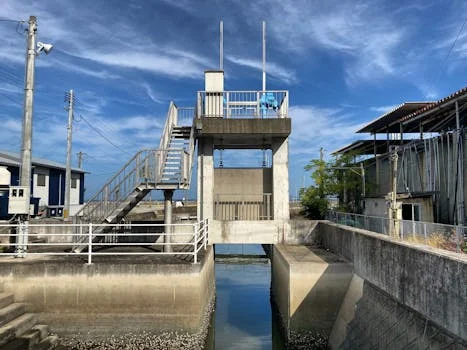
Membrane bioreactors for Philippine industrial applications typically utilize reinforced PVDF (Polyvinylidene Fluoride) hollow fiber or flat-sheet membranes with a pore size of 0.1 to 0.4 μm to ensure consistent effluent quality under varying organic loads. PTFE membranes offer stronger chemical resistance. PVDF remains the common Philippine choice for cost-performance and a 5–8 year lifespan at typical industrial pH 5–10 (HydropureWater field data, 2025).
The process flow begins with robust pre-treatment—essential for protecting membranes from Philippine wastewater, which often contains high grit and fibrous solids. Following 1-2mm fine screening and equalization, the wastewater enters the bioreactor where Mixed Liquor Suspended Solids (MLSS) concentrations are maintained between 8,000 and 12,000 mg/L. This high biomass concentration allows for a high food-to-microorganism (F/M) ratio and smaller reactor volumes. The submerged DF series PVDF flat-sheet membranes for high-salinity wastewater then perform the solid-liquid separation, operating at a net flux of 15–30 Liters per Square Meter per Hour (LMH).
| Parameter | Typical Philippine Industrial Range | MBR Effluent Quality |
|---|---|---|
| COD (Chemical Oxygen Demand) | 500 – 5,000 mg/L | < 50 mg/L |
| BOD (Biological Oxygen Demand) | 300 – 3,000 mg/L | < 5 mg/L |
| TSS (Total Suspended Solids) | 200 – 1,000 mg/L | < 1 mg/L |
| Salinity (TDS) | 500 – 10,000 mg/L | Unchanged (Requires RO for removal) |
| Turbidity | 50 – 200 NTU | < 0.2 NTU |
Energy consumption remains a critical evaluation point for facility operators. MBR systems typically consume 0.6–1.2 kWh/m³, which is higher than the 0.3–0.5 kWh/m³ seen in conventional activated sludge. However, this is offset by the elimination of polymer costs for secondary clarification and the significant reduction in sludge hauling costs, as MBRs produce 20-40% less sludge due to higher sludge age (SRT). Membrane fouling is mitigated through continuous air scouring and Maintenance Cleans (MC) every 1–4 weeks using sodium hypochlorite or citric acid.
Philippine Regulatory Compliance: DENR Standards and Permitting for MBR Systems
DENR Administrative Order 2016-08 Class C General Effluent Standards list BOD at 50 mg/L, COD at 100 mg/L and TSS at 100 mg/L for Class C inland discharges (WEPA summary of DAO 2016-08). Earlier drafts of this guide and some vendor tables used BOD 30 mg/L or TSS 50–70 mg/L for “Class C.” Treat those as outdated planning numbers. Design to the official Class C GES unless the ECC names a stricter class or local rule. For Philippine projects, compliance is also an EMB permitting process. Any facility installing an MBR system must first secure or amend their Environmental Compliance Certificate (ECC) to reflect the new treatment capacity and technology.
Following installation, the facility must apply for a Wastewater Discharge Permit (WDP). This requires the submission of engineering plans signed by a Professional Mechanical Engineer (PME) or Sanitary Engineer. Once operational, the EMB requires Quarterly Self-Monitoring Reports (SMRs) which include laboratory analysis of effluent parameters. Failure to meet these standards can result in fines of up to ₱200,000 per day of violation and potential Cease and Desist Orders (CDO), as outlined in Section 12 of DAO 2016-08.
| Regulatory Parameter | DAO 2016-08 (Class C) | 2025 Amendment (Sensitive Areas) | MBR Capability |
|---|---|---|---|
| BOD (mg/L) | 50 | 30 | < 10 |
| TSS (mg/L) | 70 | 50 | < 2 |
| Ammonia-N (mg/L) | 0.5 | 0.5 | < 0.1 |
| Nitrate-N (mg/L) | 14 | 10 | < 5 |
| Total Phosphorus (mg/L) | 1.0 | 0.5 | < 0.5 (with chem-P) |
The table above preserves earlier planning values used on this page. Cross-check against DAO 2016-08 Class C GES: BOD 50 mg/L, TSS 100 mg/L (not 70), ammonia-N 0.5 mg/L, nitrate-N 14 mg/L and phosphate 1 mg/L (WEPA summary). The “2025 Amendment” column is retained for continuity only. It is not a verified DENR issuance in the sources reviewed for this update. Confirm any Manila Bay or Laguna Lake surcharge limits with EMB or LLDA before bidding. Local Government Units (LGUs) and the Laguna Lake Development Authority (LLDA) may still impose stricter local limits. Factories in the CALABARZON Laguna Lake watershed must often meet LLDA blue-rating rules to avoid heavy surcharges. MBR systems are frequently chosen here because they buffer influent spikes during peak production cycles.
Estimated Price of MBR Membrane Set Philippines Buyers Should Model
The estimated price of MBR membrane set Philippines EPC packages should be modeled as membrane area times unit media cost. At a design net flux of 20 LMH, a 500 m³/day plant needs on the order of 1,000 m² of membrane area (500,000 L/day ÷ 20 L/m²·h ÷ 24 h). Volume industrial ranges are about $10–40/m² for hollow fiber and $15–35/m² for flat sheet (Loyalmem published ranges). Media-only budgets often fall near $10,000–$40,000 before frames. That is far below full plant CAPEX because blowers, tanks and civil works dominate. For cassette-level budgeting and replacement cycles, compare the sibling MBR membrane module cost price guide before locking a five-to-eight-year sinking fund.
What do combined MBR and RO units cost?
Combined MBR and RO trains for Philippine reuse usually stack MBR CAPEX of about $1,000–$3,000 per m³/day with a separate RO skid. Size the RO on permeate recovery, not on raw influent flow. MBR removes TSS and much of the COD so RO often sees turbidity below 0.2 NTU. Salinity and dissolved organics still set RO recovery, antiscalant dose and concentrate disposal cost. Most plants we review budget RO as 30–60% of the MBR mechanical package for cooling-tower or process makeup. Then add about 0.6–1.2 kWh/m³ on the MBR side plus RO feed-pump power.
How should engineers equate MBR and RO unit costs?
Engineers should equate MBR and RO unit costs on a treated-cubic-meter basis over the same design year, not on sticker price alone. Convert MBR CAPEX and OPEX ($0.15–$0.40/m³ treated in Philippine industrial ranges) into annualized cost per m³. Then add RO CAPEX amortized over membrane life plus chemicals and concentrate haulage. When utility water exceeds about ₱60/m³, reuse credit often closes the gap within 3.5–6 years for 500 m³/day food plants. That path holds only if FOG pretreatment and screening protect both membrane stages.
MBR System Costs in the Philippines: CAPEX, OPEX, and ROI Breakdown
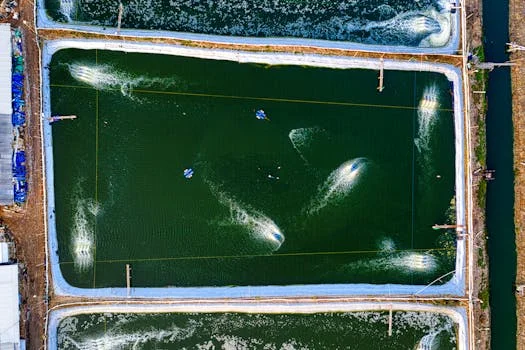
Capital expenditure for MBR systems in the Philippines ranges from $1,000 to $3,000 per cubic meter of daily treatment capacity, depending on the level of automation and pre-treatment requirements. For a standard 500 m³/day industrial plant, the CAPEX typically lands around $800,000. This includes the membrane modules, aeration systems, pumps, PLC-based automation, and basic civil works. While this is 30–50% higher than MBR system cost benchmarks in emerging markets like Egypt, the local costs are influenced by logistics and the specific civil engineering standards required for seismic zones in the Philippines.
Operating expenses (OPEX) are generally calculated between $0.15 and $0.40 per cubic meter of treated water. The breakdown of these costs is as follows:
- Energy (40%): Primarily for membrane air scouring and bioreactor aeration.
- Chemicals (25%): Including coagulants, pH adjustment, and membrane cleaning agents.
- Labor (20%): MBR systems are highly automated but require skilled oversight for membrane cleaning cycles.
- Membrane Replacement (15%): Sinking fund for replacing modules every 5–8 years.
| System Capacity | Estimated CAPEX (USD) | Estimated OPEX (USD/m³) | Typical Footprint (m²) |
|---|---|---|---|
| 50 m³/day (Containerized) | $150,000 – $220,000 | $0.35 – $0.45 | 30 – 45 |
| 200 m³/day (Package Plant) | $350,000 – $500,000 | $0.25 – $0.35 | 80 – 120 |
| 1,000 m³/day (Industrial) | $1.2M – $1.8M | $0.18 – $0.25 | 300 – 500 |
The Return on Investment (ROI) for Philippine projects is increasingly driven by water reuse. For a food processing plant treating 500 m³/day, the cost of purchasing water from a utility can exceed ₱60/m³. By reusing MBR effluent for cooling towers or floor washing, the plant can save approximately ₱12M annually. Combined with the avoidance of DENR non-compliance fines, the payback period typically ranges from 3.5 to 6 years. This financial feasibility aligns with Taiwan’s approach to industrial wastewater compliance, where high-tech industries prioritize reuse to mitigate supply risks.
Selection checklist for Philippine MBR bids:
- Confirm receiving-water class and ECC/WDP limits with EMB before sizing.
- Specify 1–2 mm screening and FOG removal when food wastewater feeds the membranes.
- State net flux, MLSS and TMP limits in the data sheet, not only membrane area.
- Budget membrane replacement every 5–8 years at Philippine landed cost.
- Model reuse credit at local utility tariffs (often ₱60/m³ or higher in industrial parks).
- Require PME or sanitary engineer stamps on drawings for WDP submission.
- Plan quarterly SMR lab packages for BOD, COD, TSS and nutrients named on the permit.
MBR vs. Alternative Technologies: Comparison Matrix for Philippine Projects
MBR technology requires a 60% smaller physical footprint than conventional activated sludge (CAS) systems because it eliminates the need for secondary clarifiers and tertiary filtration stages. In land-constrained areas like Metro Manila or Mandaue City, this footprint reduction often makes MBR the only viable option for on-site treatment. While Moving Bed Biofilm Reactors (MBBR) offer high organic removal, they cannot match the effluent clarity of an MBR without additional ultrafiltration, so MBR remains the stronger choice when reuse is required.
| Feature | MBR (Membrane Bioreactor) | MBBR (Moving Bed Biofilm) | SBR (Sequencing Batch) | CAS (Conventional) |
|---|---|---|---|---|
| Effluent Quality | Excellent (Reuse Ready) | Good (Requires Filter) | Moderate | Basic |
| Footprint | Very Small (1x) | Small (1.5x) | Medium (2.5x) | Large (4x) |
| CAPEX | High | Medium-High | Medium | Low-Medium |
| OPEX | Higher (Energy) | Moderate | Moderate | Low |
| Sludge Yield | Low (0.2-0.3 kg/kg) | Moderate | Moderate | High (0.5-0.6 kg/kg) |
When selecting a technology, Philippine engineers must match the system to the specific use case. MBR is the preferred choice for pharmaceutical and textile plants where meeting Class C reuse standards is a priority. For high-strength oily wastewater, a dissolved air flotation (DAF) system is often required as a pre-treatment stage before the MBR to prevent membrane blinding. Conversely, for large-scale municipal projects with ample land, SBR or CAS may still offer a lower total cost of ownership if reuse is not required. Specifying an MBR Membrane Bioreactor Wastewater Treatment System with documented flux and cleaning protocols reduces change-order risk during EMB review.
Who This Is For / Next Step
This guide is for plant engineers, EPC contractors and procurement managers sizing Philippine industrial or compact municipal MBR trains against DENR Class C limits and reuse economics. Teams with abundant land, no reuse target and stable low-strength sewage may still favor SBR or CAS on total cost. If you need a capacity-matched scope, membrane area take-off and landed cassette budget for a Philippine site, send influent COD, salinity and discharge class via HydropureWater’s inquiry form.
Frequently Asked Questions
What is the largest MBR wastewater treatment plant in the Philippines?
The FMC Philippines carrageenan plant in Cebu is one of the most cited full-scale industrial MBR installations, treating 500 m³/day of high-salinity wastewater. Several municipal pilots by Manila Water and Maynilad have also integrated MBR technology for urban sewage treatment in Metro Manila. Buyers should treat “largest” claims as site-specific and verify current capacity with the operator before using them in bid comparisons.
How much does an MBR system cost in the Philippines?
Expect CAPEX of $150K to $500K for small to mid-sized package systems (50–200 m³/day). Larger industrial plants (over 1,000 m³/day) typically cost between $1.2M and $2.5M. A common 500 m³/day industrial scope lands near $800,000. OPEX is generally $0.15–$0.40 per cubic meter treated. Aeration energy and membrane replacement every 5–8 years drive most of that OPEX.
What are the DENR requirements for MBR systems?
Systems discharging to Class C inland waters must meet DAO 2016-08 General Effluent Standards of BOD 50 mg/L, COD 100 mg/L and TSS 100 mg/L (WEPA summary of DAO 2016-08). The same tables list nitrate-N at 14 mg/L and phosphate at 1 mg/L. Replace older BOD <30 or TSS <50 planning figures with the class-specific GES on the ECC. Secure or amend the ECC, then obtain a Wastewater Discharge Permit and file quarterly SMRs.
Can MBR systems handle high-salinity wastewater?
Yes, MBRs handle high-salinity streams common in the Philippine food industry when membranes and biomass are selected for that duty. They require PVDF or PTFE materials and careful management of osmotic stress on the sludge. Pre-treatment is often necessary if salinity exceeds 15,000 mg/L TDS, and salinity itself is unchanged by MBR without a downstream RO stage.
What is the difference between MBR and MBBR?
MBR uses physical membranes for solid-liquid separation, producing a nearly solids-free effluent suitable for reuse or RO feed. MBBR uses plastic media for biofilm growth and still needs a secondary clarifier or DAF for solids removal. MBR provides higher effluent quality and a smaller footprint but carries higher energy and capital costs than MBBR alone.