Define the Capacity Basis Before Choosing a Plant
Size a containerized sewage treatment plant for a Mali project by establishing a measured wastewater design flow, then matching it to verified treatment performance and the receiving route before comparing container configurations. The essential RFQ inputs are average and peak sewage flow, seasonal variation, collection losses, future expansion, groundwater or stormwater intrusion, influent characteristics, available footprint, logistics, electricity and operator capability. Catalogue capacity is not a sizing rule: ClearFox states that its containerized plants treat 30 or 50 m³ of wastewater per day, depending on design, so neither value should be selected without a project-specific flow basis.
Begin by separating sewage-only flow from total wastewater entering the proposed treatment boundary. Obtain average daily flow and peak flow in m³/day, identify the measurement period, and record seasonal variation. Add separately verified groundwater infiltration, stormwater entry and collection losses rather than hiding them inside an assumed expansion factor. Define whether future expansion is required and whether the plant must remain operable while another module is added.
- Request a flow register covering the occupied or operating phase, minimum and maximum occupancy, and any production schedule that changes wastewater generation.
- Separate sanitary sewage, process wastewater, wash water and contaminated stormwater before defining the treatment duty.
- Clarify whether the supplier’s stated duty is an average daily rate, a peak-hour rate or an annual treatment volume.
- Require the selected configuration to demonstrate performance at the agreed wastewater design flow and at the specified influent condition.
Use the containerized sewage treatment plant sizing methodology as a workflow reference, but verify all flow boundaries against the Mali project data rather than transferring another site’s assumptions.
Match the Wastewater and Discharge Route to the Process
Discharge route requirements dictate the process selection because a biological reactor alone does not establish permit compliance. Request COD, BOD, suspended solids, fats, oils and grease, pH, temperature and any industrial constituents from the project owner or a qualified local laboratory. Confirm the receiving water, reuse destination, direct-discharge proposal and acceptance authority with the owner and relevant Malian authority.
| Discharge route or influent problem | Governing rule or process option | What data settles it |
|---|---|---|
| Direct discharge to a receiving environment | Confirm the applicable Malian route and required effluent parameters before choosing biological, membrane or disinfection equipment. ClearFox describes FBBR as a biological process in which microorganisms break down contaminants and produce secondary sludge, but that process description does not establish Mali’s discharge limits. | Written discharge route, receiving-water description, permit or acceptance criteria, and the authority responsible for approval. |
| High suspended solids, fats, oils and grease | Provide appropriate pretreatment upstream of the biological reactor; use a rotary mechanical bar screen as one equipment option to evaluate against the actual screening and solids requirement. | Influent laboratory results, flow data, debris characteristics and the required screening duty. |
| Tight effluent or reuse requirement | Evaluate whether the biological stage alone is adequate or whether a membrane stage is required; evaluate an MBR treatment alternative against the confirmed route and reuse standard. | Required effluent quality, reuse application, solids separation criteria and treatment and pumping-energy limits. |
For a municipal, residential or worker-camp application, ask for local treatment-route precedents through the domestic treatment route selection in West Africa. That comparison should inform the questions to ask, not replace project-specific verification of standards and site conditions.
Check Container Capacity, Process Staging and Site Logistics
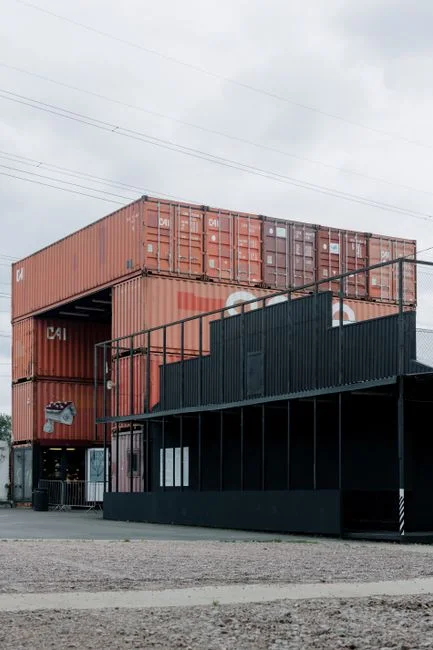
Modular plant configuration requires matching equipment duties to specific flow and site constraints. BusseGt states that its container-based prebuilt sewage treatment systems are available in multiple sizes and configurations and can be positioned by crane on a prepared site. That supports a modular selection approach, but it does not establish which configuration suits the Mali project.
Require the supplier to state each container’s dimensions, shipping weight, lifting points, lifting configuration and centre of gravity. Obtain the road-access survey and confirm crane reach, delivery-vehicle constraints, turning space and offloading conditions. Site preparation must also be defined: foundations or base works, drainage, access for maintenance, electrical supply, lighting, control enclosure and the space needed for future modules.
Match staging to process functions rather than container count alone. Pretreatment, biological treatment, solids separation, disinfection, pumping and control equipment may have different operating and maintenance requirements. The owner should also review an underground A/O package option only if footprint, burial conditions, access and future lifting requirements fit the site.
Build an RFQ That Separates Equipment from Site Scope
A comparable quotation must distinguish supplier equipment from owner and local-contractor work. ClearFox states that installation and commissioning usually take just a few days after delivery; the RFQ must define the conditions behind that statement, including what site preparation, erection, utilities, testing, training and handover are included.
| Quote line item | Technical scope to specify | Red flags to check before signing |
|---|---|---|
| Design basis and process | Wastewater design flow, hydraulic and organic loading basis, treatment stages, container arrangement, future expansion and confirmed receiving route. | Capacity stated only as a catalogue daily rate, or performance guarantees omitted for the actual site condition. |
| Supply and delivery | Container dimensions, shipping weights, delivery point, transport permits, lifting plan, customs allocation, unloading and site access responsibilities. | “Delivered” does not identify the destination, Incoterm-like boundary, lifting responsibility or route constraints. |
| Installation and commissioning | Site handover condition, erection, pipe connections, electrical installation, utilities, instrumentation, startup, performance testing, training and acceptance. | A short commissioning duration is claimed without prerequisites, test protocol, acceptance limits or owner responsibilities. |
| Civil and local works | Base or foundation, drainage, access roads, lifting area, building protection, potable-water provision and disposal routes for screenings and sludge. | The supplier excludes civil works without identifying a scope matrix, contractor responsibility or allowance. |
| Controls, power and support | Power demand, backup-power interface, controls architecture, alarms, remote support, spare parts, operator attendance and maintenance plan. | No power schedule, no local support plan and no response definition for critical failures. |
| Disinfection and residuals | Disinfection duty, contact arrangement, chemical storage, dosing controls, residual monitoring and any chlorine dioxide generator option justified by the confirmed effluent route. | Disinfection is included without a receiving-route basis, chemical responsibility or operational safety plan. |
Assign unresolved inputs in the RFQ matrix. The owner should confirm the discharge route and future demand; the laboratory should characterize influent and effluent; the local civil contractor should complete site surveys and foundations; the authority should confirm the applicable route; and the treatment supplier should provide performance and commissioning evidence.
Set Acceptance, Delivery and Operating Conditions
Acceptance should be a set of documented tests tied to the project design basis. Require the supplier to define sampling points, test methods, test duration, witnessing rights, laboratories, pass criteria and retest procedures. The acceptance package should include as-built drawings, operating manuals, electrical and instrumentation documentation, equipment registers, training records, test results and the spare-parts list.
Do not accept a general statement that the equipment complies with country standards. ClearFox states that its systems comply with the specific standards of the applicable country and that country-specific discharge standards must be checked, but no Mali-specific numerical limits are established here. The owner must obtain the applicable Malian discharge route and acceptance criteria from the responsible authority and insert them into the RFQ and performance test.
For operation, require a written response plan for power failure, biological upset, excessive solids, blocked lines, high effluent turbidity, chemical availability and equipment breakdown. The plan should identify alarm points, operator actions, remote-support channels, local attendance arrangements, critical spares, sludge removal frequency and the responsible party. Confirm whether direct discharge, irrigation reuse or another receiving route applies before selecting disinfection, storage and monitoring equipment.
Further Reading
Frequently Asked Questions
What flow evidence is needed to choose between modular plant capacities?
Request average and peak wastewater flow in m³/day, the measurement period, seasonal variation, collection losses, groundwater or stormwater entry and future expansion. Clarify whether each quotation is based on sewage-only flow or total incoming wastewater. A supplier capacity statement is not enough unless it demonstrates treatment at the agreed project design flow and influent condition.
How should Mali-specific effluent compliance be verified?
Ask the project owner and relevant authority for the approved discharge route, receiving environment or reuse application, applicable effluent parameters and required sampling or reporting procedure. Do not infer a Mali limit from a general biological-process description. Add the confirmed requirements to the quotation and acceptance test.
Which quote items should be compared beyond equipment price?
Compare the design basis, container dimensions and weights, process stages, pretreatment, disinfection, power demand, civil interfaces, delivery boundary, lifting, installation, commissioning, testing, training, documentation, warranty support, spares and future expansion. Use the same scope matrix for every bidder, including clear responsibility for exclusions.
What delivery, commissioning and acceptance evidence should a supplier provide?
Require the delivery route and lifting plan, site-prerequisite list, installation schedule, utilities required, startup procedure, sampling protocol, witnessed test results, operator training record, manuals, as-built drawings and spare-parts list. Acceptance should pass only against the agreed project flow, influent conditions and confirmed Malian discharge criteria.