Define the Malawi design basis before selecting a plant
Define the Malawi design basis from verified demand before selecting equipment: obtain current and projected population, water-meter records, average and peak influent flow, sampling results and the intended effluent discharge route. For estates, factories and hospitals, measured flow or the process brief should govern rather than population. The available references do not establish a Malawi-specific per-capita sewage allowance or verified local discharge limit, so the project engineer must obtain both from the applicable authority and site records.
Use site sampling to establish influent COD, BOD5 and suspended-solids concentrations rather than inserting generic design concentrations. A defensible design basis identifies the sampling period, sampling points, flow time series and data source, and it distinguishes current demand from the design horizon.
Ask the project sponsor or authority for:
- Current and projected population served, or verified wastewater flow from water-meter and process records;
- Average and peak flow, including the time basis and peaking method;
- Influent COD, BOD5 and suspended-solids results from site sampling or a justified survey;
- Required effluent quality, discharge route, receiving-water conditions and the applicable authority;
- Required hydraulic retention time, solids retention time and treatment objectives;
- Site footprint, soil and groundwater conditions, power availability and installation access.
Keep the discharge route separate from equipment capacity. A route to a sewer, surface-water outfall or other receptor requires different confirmation; one route does not establish another route’s discharge criterion.
Calculate average, highest-day and peak flow
Calculate sewage flow as served population multiplied by the agreed per-capita sewage allowance, and retain the allowance’s time basis through the calculation. Under the national practice summarized by S1, GB 50014-2021 §4.1.14 converts a selected water-use allowance into a sewage allowance at 90%, while the output category and time basis follow the input. This is a documented calculation method, not evidence of a Malawi-specific allowance.
The worked example in S1 uses the GB 50013-2018 residential highest-day table for Zone 2, medium city, with 120 L per person per day explicitly assumed within its 50–320 L per person per day residential range. Applying the 90% conversion gives 108 L per person per day of residential sewage. A served population of 10,000 people then produces about 1,080 m³/day on a highest-day basis, according to S1.
Record that result as highest-day flow, not average daily flow. For the sewage flow calculation, the sequence is:
- Select the applicable water-use or sewage allowance and state whether it is residential or combined domestic.
- Confirm its population basis and time basis.
- Convert the water-use allowance to sewage at 90% where the S1 rule is used.
- Multiply by served population and retain the resulting units.
- Convert flow consistently before applying a dry-weather peaking factor.
For peak calculations, S1 reports dry-weather variation factors Kz from GB 50014-2021 Table 4.1.15 of 2.7 at 5 L/s, 2.4 at 15 L/s, 1.9 at 100 L/s, and 1.5 at 1,000 L/s and above. Do not apply an average-day factor directly to a highest-day figure. Convert the highest-day flow to an equivalent average-day flow basis before using an average-day Kz, or use another peak method justified for the project.
Compare treatment routes against the actual wastewater duty
Select the route from wastewater characteristics, required treatment performance, footprint and operating constraints—not from container capacity alone. The comparison below identifies the decision and the information required; it does not establish Malawi discharge criteria.
| Discharge route or influent problem | Governing rule or process option | What data settles it |
|---|---|---|
| Domestic sewage serving a residential or mixed community | Compare a packaged treatment route with an integrated membrane bioreactor route using the same verified flow and influent basis. | Average and highest-day flow, peak factor, influent COD, BOD5, suspended solids, footprint, power availability and required effluent quality. |
| High-organic industrial stream | Where organic load governs, settle pretreatment—such as dissolved air flotation—before biological sizing. | Process flow and contaminant mass balance, variable discharge conditions, pretreatment performance data and whether the stream requires equalization. |
| Site discharge to sewer, surface water or another route | Confirm the authority-controlled route and applicable criteria separately from the selected process. | Written discharge consent, receiving-water information and the applicable authority’s current effluent and monitoring requirements. |
| Limited footprint or restricted site access | Compare module count and arrangement only after confirming biological and hydraulic duties. | Available footprint, access envelope, lifting constraints, power supply and civil interface requirements. |
A more detailed DAF, MBR and package treatment route comparison provides useful process-selection context. For a physical implementation, an integrated MBR wastewater treatment system should be evaluated on verified solids separation, loading and site constraints, while a WSZ integrated package sewage treatment plant should be checked against the same flow, load and discharge-route basis.
Size tanks, biological duty and hydraulic passages
Check hydraulic passages at peak flow and size biological treatment around average flow, organic load and solids retention time. S1 gives anaerobic-tank HRT of 1–2 hours, anoxic-tank HRT of 2–10 hours and simultaneous nitrogen-and-phosphorus SRT of 10–22 days. These values belong to the process assumptions identified by S1; the supplier must show where each applies in the proposed duty.
For each tank, calculate volume using V = Q × HRT. State beside every calculation whether Q is average flow or peak flow. Then check the peak hydraulically while the biological stage is sized from average flow, load and SRT. If Q is expressed as a daily flow, convert it to the time basis required by HRT before calculating volume.
Ask the supplier to disclose:
- The design flow and its time basis;
- The influent COD, BOD5 and suspended-solids design loads;
- The process route and tank duties;
- The selected HRT and SRT;
- The peak hydraulic check and equipment duty points;
- The margin between calculated duty and quoted treatment capacity.
Equipment volume alone is not evidence of treatment capacity. The quoted arrangement should reconcile with the calculated tank volumes, flow, load and retention criteria.
Reconcile capacity, containerization and Malawi delivery
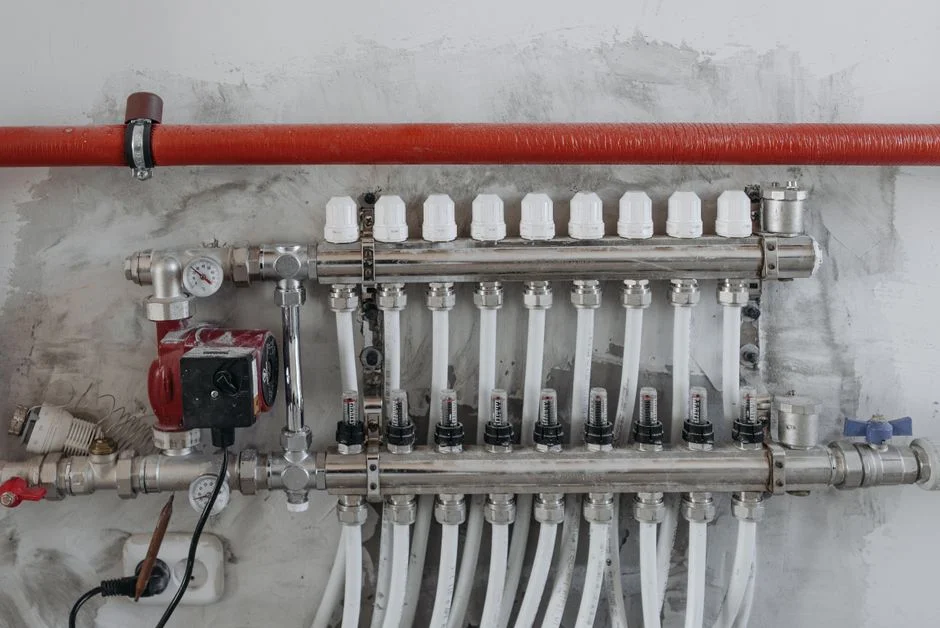
Make the shipping arrangement an acceptance gate, not an afterthought. S1 states that a standard dry container has an internal width of only 2.352 m, while the containerized equipment described ranges from about 3 × 1.5 × 2 m to 16 × 3 × 3.5 m and covers 0.5–10 m³/h, or 12–240 m³/day. These dimensions and capacities must be reconciled with the calculated Malawi duty rather than selected independently.
For each proposed module, record:
- Length, width, height, weight and lifting points;
- Whether it travels in a dry container, an open-top or flat-rack container, or as break-bulk cargo;
- Number of modules and the shipping configuration;
- Port-to-site route, transport constraints and site access;
- Offloading, positioning, assembly and installation method;
- The party responsible for each delivery, customs and installation activity.
Do not approve a shipping arrangement until the route from the manufacturing location through the port to the Malawi site has been checked against the actual module envelope and handling equipment.
Turn the sizing calculation into an RFQ and acceptance checklist
Require the RFQ to state the design basis and commercial scope in the same document as the sizing calculation. The table below is a pre-signature review tool: each red flag exposes an unresolved assumption that could change price, compliance or delivery responsibility.
| Quote line item | Technical scope to specify | Red flags to check before signing |
|---|---|---|
| Design basis | Design flow; average, highest-day and peak bases; dry-weather peaking method; process route; influent design loads; required effluent criterion; HRT and SRT. | Capacity is stated without a flow time basis, or the highest-day result is presented as average flow. |
| Process performance | Guarantee conditions, sampling protocol, test parameters and acceptance values tied to defined influent and effluent conditions. | A generic performance guarantee omits the influent basis, operating condition or discharge route. |
| Equipment and drawings | General arrangement, equipment list, duty points, control philosophy, instrumentation, utilities and tank-volume reconciliation. | Equipment dimensions are supplied without checking hydraulic passages, biological duty or peak operation. |
| Civil and installation interfaces | Foundations, pipework, power, drainage, access roads, lifting, assembly, testing and site handover responsibilities. | Civil works, offloading or commissioning are excluded without a defined boundary or allowance. |
| Shipping and delivery | Module dimensions and weights, shipping method, number of units, port terms, transit, customs responsibility and delivery scope. | Shipping configuration is unconfirmed even though the module dimensions exceed ordinary containerized handling assumptions. |
| Commissioning, training and warranty | Factory and site tests, acceptance criteria, training, spare parts, warranty scope, defect response and performance-test boundary. | Site-performance acceptance or long-term consumables are not linked to the process guarantee. |
For the commercial comparison, request a separate wastewater treatment plant cost and ownership breakdown before accepting a lump-sum figure. A comparable quotation should identify price exclusions, civil interfaces, commissioning, transport, duties, utilities, consumables and warranty obligations. The containerized sewage treatment plant sizing methodology can also be used as a cross-check on the calculation sequence, but its jurisdiction-specific inputs must not be transferred to Malawi without verification.
Frequently Asked Questions
Does Malawi have a confirmed sizing formula for a containerized sewage treatment plant?
The available references do not establish a Malawi-specific per-capita allowance, sizing formula or verified local discharge limit. You can calculate a preliminary duty by multiplying served population by an explicitly selected and sourced sewage allowance, retaining its time basis. Under the S1 method, the selected water-use allowance is converted at 90%. Before procurement, obtain the applicable local basis from the responsible authority and reconcile it with water-meter and process data.
Does sufficient hydraulic capacity prove that the plant will comply with its discharge requirements?
No. Hydraulic capacity answers whether the plant can pass the required flow; effluent compliance depends on the applicable criterion, receiving-water conditions and treatment performance. Obtain written confirmation of the discharge route and criteria from the relevant authority, then require the supplier’s guarantee to state the influent and effluent basis under which it applies.
What should be checked before selecting a containerized-plant supplier?
Check whether the supplier can demonstrate the sizing calculation, peak hydraulic check, biological loading and SRT, process assumptions, module dimensions and proposed transport method. Also request commissioning records, controls scope, civil interfaces, training, spare parts and warranty terms. A supplier unable to connect quoted capacity to a documented flow and load basis has not demonstrated the required sizing.
What should a comparable quotation include for an RFQ in Malawi?
Request design flow and its time basis, peak method, process route, influent loads, effluent criterion, HRT, SRT, drawings, duty points, controls, civil interfaces, shipping configuration, delivery terms, commissioning tests, training, spares and warranty. Require excluded work and responsibility boundaries to be stated explicitly. For pricing, request the cost and ownership breakdown rather than accepting a quotation whose exclusions are not priced or identified.