Confirm the Treatment Route and Project Authority
For a sewage treatment plant in Libya, the immediate decision is whether to specify a buried WSZ integrated package plant or an MBR system. Municipal wastewater treatment is managed by the General Company for Water and Wastewater in Libya under the Housing and Utilities Government Ministry. Selection should follow verified flow, influent quality, discharge route, footprint, sludge handling and reuse requirements. Guarchia and Sirte studies provide site evidence, not universal design criteria. The following route converts those gaps into procurement inputs, comparison criteria and an RFQ scope.
Build the Site Input Pack Before Selecting Equipment
Equipment must be sized based on design flow and actual incoming wastewater load rather than population estimates alone. A study of Guarchia reported that limited capacity and low efficiency allowed only one quarter of pumped wastewater to be accepted and partially treated. That observation demonstrates why the RFQ must state the incoming flow, treatment capacity and operating margin rather than relying on a generic plant rating.
The project owner should provide current average and peak flow, forecast load and the raw-sewage sampling record. The designer should add COD, BOD, suspended solids, pH, fats, oils and grease, and any industrial contamination. The laboratory should document sampling dates, locations, methods and analytical results.
Request the site drawing, available footprint, soil and groundwater information, proposed burial depth, access for installation and maintenance, electrical supply and backup-power arrangement. Also identify the required reuse or discharge destination and local operator availability. These inputs distinguish a compact buried package from a system requiring more civil works and operating attention.
Compare WSZ Package and MBR Treatment Routes
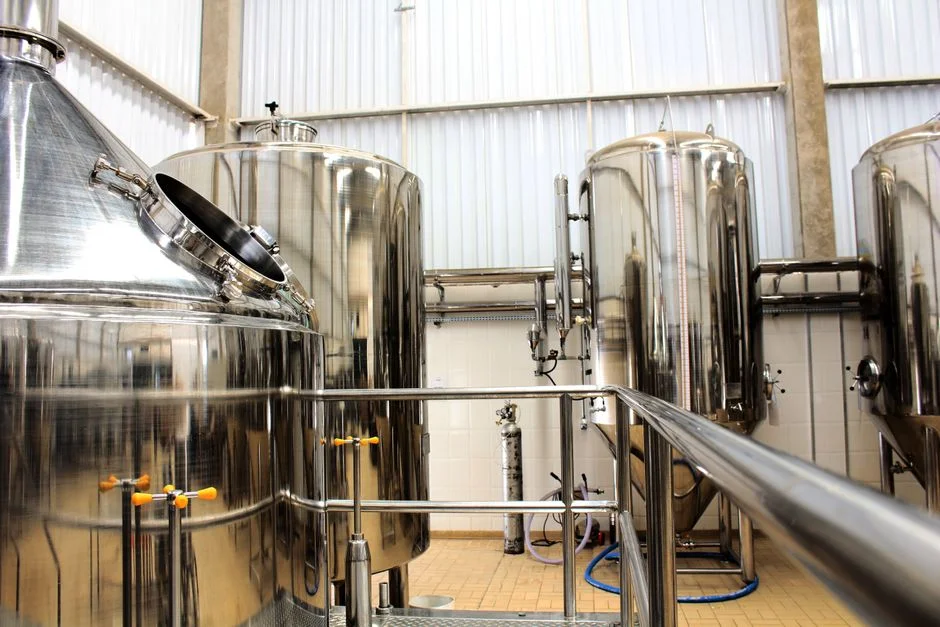
Choose WSZ when verified site conditions support a compact, below-grade biological package; choose MBR when the project treatment objective, reuse quality, hydraulic variation or membrane-separation requirement justifies the additional process complexity.
| Discharge route or influent problem | Governing rule or process option | What data settles it |
|---|---|---|
| Municipal network connection | Compare access, ownership, available sewer capacity and the treatment route offered by the authority against decentralized treatment. | Written confirmation from the authority, sewer location and capacity record, discharge point and applicable permit conditions. |
| Compact below-grade installation | A buried WSZ integrated sewage treatment plant combines anoxic and aerobic biological contact oxidation, sedimentation and disinfection in one package. | Available footprint, burial conditions, installation access, average and peak flow, influent envelope and required effluent duty. |
| High-quality reuse or membrane-based separation | An integrated MBR membrane bioreactor system combines activated sludge with submerged PVDF membrane filtration. | Reuse specification, receiving-water constraints, hydraulic variation, membrane cleaning strategy, operator competence and life-cycle support scope. |
| Municipal sewage treatment with no routine plant operator | Evaluate whether the package can operate under the proposed control and maintenance regime; do not infer operator independence without supporting evidence. | Staffing plan, remote-control requirements, alarm response, preventive-maintenance access and local service capability. |
| Industrial or mixed wastewater contribution | Determine whether industrial pretreatment or equalization is required before either biological route. | Source-separated flow records, industrial effluent characterization, toxicity indicators and documented pretreatment objectives. |
Define Pretreatment, Sludge Handling and Disinfection
Define the residual-stream scope before selecting the main treatment unit. The supplier should state whether preliminary screening, grit removal, flow equalization or industrial pretreatment is necessary, based on the verified influent and collection arrangement rather than a standard package description.
Sludge must be characterized for the actual project. Guarchia research assessed pH, total volatile solids, total nitrogen, total phosphorus, total organic matter and total organic carbon in sewage sludge, and included trace metals such as Zn, Cd, Cu and Pb. These parameters support a structured sampling scope; they do not establish the composition or disposal route of another site’s sludge.
Sirte monitoring collected ten randomly selected sewage-sludge samples monthly over one year. Reported annual averages included pH 6.90, organic matter 76.3% and a C/N ratio of 7.97; total nitrogen, phosphorus and potassium were reported as 5.63%, 1.41% and 0.019%, respectively. Use these Sirte results only to justify temporal and laboratory sampling, not as acceptance criteria for another Libyan plant.
Require the RFQ to identify sludge production, storage, dewatering, transport and approved disposal responsibilities. State the project-specific disinfection duty and sampling method. Neither a biological package nor an MBR should be assumed to resolve every residual stream without an explicit scope.
Prepare the RFQ and Pre-Signature Acceptance Checklist
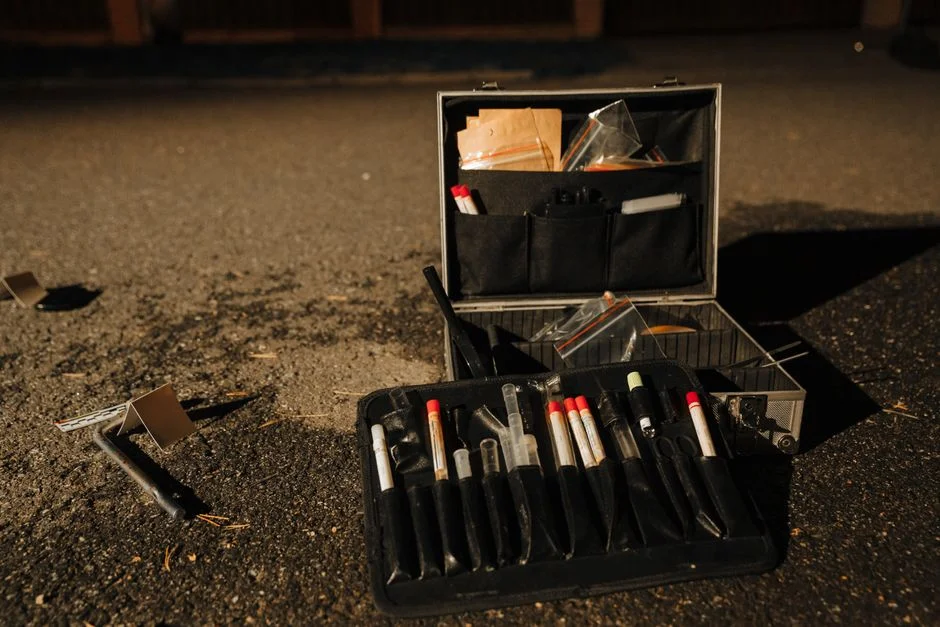
Make the quotation commercially complete and technically bounded. Require separate priced line items for design verification, civil works, delivery, installation, commissioning, training, spares, warranty and long-term O&M support. A supplier quote that combines these items without identifying inclusions and exclusions cannot support a fair comparison.
| Quote line item | Technical scope to specify | Red flags to check before signing |
|---|---|---|
| Design verification and process guarantees | Guaranteed inlet flow, influent envelope, effluent duty, test method, sampling point, test duration and remedy for non-compliance. | Unstated flow basis, generic effluent language, supplier-selected test methods or no contractual remedy. |
| Equipment and process scope | Process route, unit capacities, treatment stages, materials of construction, controls, alarms, instrumentation and required pretreatment. | Omitted ancillary equipment, unclear design margin or treatment stages not matching the stated project duty. |
| Civil works and installation | Excavation, foundations, piping, lifting, electrical installation, connections, backfill, access and site reinstatement. | Exclusions leave excavation, electrical connection or commissioning with the buyer without price or responsibility. |
| Commissioning and acceptance | Factory and site tests, training, trial operation, sampling plan, performance demonstration and acceptance records. | Commissioning is merely startup, with no agreed test duration, sampling point or pass/fail criteria. |
| Sludge, disinfection and residuals | Sludge handling, dewatering, disposal interfaces, disinfection and discharge or reuse sampling scope. | The main package is priced, but residual streams and disposal responsibilities are left undefined. |
| Documents and long-term support | P&ID, process layout, hydraulic calculations, equipment data sheets, electrical schematics, PLC/control narrative, O&M manual, spares list and factory acceptance records. | Final drawings and manuals are deferred until after award, or intellectual-property restrictions prevent as-built handover. |
Do not use the design capacities associated with Sirte, Tripoli and Misurata as acceptance values for a new project. The quotation must instead state project-specific capacity and quality guarantees. For a broader workflow, see this wastewater plant base-bid and alternate scope checklist.
Further Reading
- comparison of sewer connection, buried A/O and MBR routes
- DAF, MBR and package-plant selection for mixed industrial effluent
Frequently Asked Questions
Should the project connect to a municipal sewer or install decentralized treatment?
Use access, ownership and verified network capacity—not distance alone—to decide. Request written confirmation of the approving authority, available sewer capacity, connection conditions, receiving point and permit responsibility. Decentralized treatment should be selected where a verified connection is unavailable or the authority confirms that the proposed plant must manage the flow independently.
How should sewage treatment plant sizing be established?
Size from verified average and peak flow together with the complete influent envelope, including COD, BOD, suspended solids, pH, fats, oils and grease and industrial contamination. Ask the designer to document hydraulic calculations and operating margins. Do not substitute catalogue flow ranges for project data or treat capacity figures from another Libyan city as design criteria.
What acceptance testing and supplier guarantees belong in the purchase order?
Require guaranteed inlet flow, influent limits, effluent duty, test method, sampling point, test duration and a remedy for non-compliance. Also identify the documents and records that demonstrate compliance. These are separate checks: a performance guarantee does not replace the need for an agreed test protocol and handover records.
Does equipment supply include installation, civil works, commissioning and sludge disposal?
Do not assume it does. Require separately priced scopes for design verification, civil works, delivery, installation, commissioning, training, spares, warranty and O&M. Name the responsible party for sludge dewatering, disposal and residual-stream management; an equipment schedule that excludes these duties can leave the buyer with an incomplete treatment scheme.