Choose the Treatment Route from the Wastewater Profile
Select a high-COD industrial wastewater treatment system in Mauritania by characterizing the effluent first: request minimum, maximum and daily-average chemical oxygen demand (COD), flow rate, BOD/COD ratio, pH, salinity, temperature, toxicity, oil and grease, and suspended solids. Choose DAF when grease or solids could inhibit biology, biological treatment when biodegradability is demonstrated, and a staged train when the load or effluent objective requires both. For quotation structure, use the industrial wastewater treatment equipment selection guide.
COD measures the oxygen demand associated with oxidizable material; it does not show how much of that load microorganisms can degrade. The BOD/COD ratio compares biochemical oxygen demand with COD. Request the ratio and treatability results before accepting direct biological treatment as credible: shock loads, inhibitory compounds and a low ratio can make biological operation unreliable.
Ask the laboratory for a representative sampling plan covering production and clean-out periods. A single sample may conceal the daily peaks that determine equalization, reactor loading and pretreatment capacity. Also obtain the discharge route or reuse destination before defining a final performance target.
- Request influent COD minimum, maximum and daily-average concentrations together with the flow range.
- Request BOD₅/COD ratio, temperature, pH, salinity and toxicity or inhibition results.
- Measure oil and grease, suspended solids and colloids that could foul or inhibit downstream biological stages.
- Confirm the equalization requirement, available footprint, power supply and sludge-disposal route.
| Discharge route or influent problem | Governing rule or process option | What data settles it |
|---|---|---|
| Oil, grease, suspended solids or colloidal matter present | Use industrial effluent pretreatment before biological treatment; evaluate an industrial DAF pretreatment system and equalization where the characterization supports them. | Oil and grease, total suspended solids, particle characterization, settleability and flow peaks. |
| Biodegradable high-strength stream | Consider an anaerobic reactor to reduce organic load, followed by aerobic polishing. Confirm the reactor choice with treatability testing rather than COD alone. | BOD/COD ratio, COD load, hydraulic profile, pH, salinity, temperature and inhibition results. |
| Low biodegradability, toxicity or inhibitory compounds | Do not assume direct aerobic treatment will work. Evaluate pretreatment, an anaerobic stage and advanced treatment against the required effluent quality. | Specific toxicity or inhibition test, refractory-organic analysis and confirmed discharge or reuse criteria. |
| Compact installation with stringent effluent quality or reuse | Evaluate aerobic polishing with an MBR biological treatment system where justified; MBR does not replace missing solids or grease removal. | Footprint, solids loading, required effluent quality, reuse destination and membrane-fouling risk. |
The multi-stage logic of pretreatment, anaerobic treatment, aerobic treatment and advanced polishing is a screening framework, not an automatic specification. Each stage must follow from the actual wastewater profile and the required final quality.
Apply the Evidence Without Misreading Local Context
Local evidence must be used to understand the receiving context, rather than substituting for industrial characterization. In Nouakchott, S1 reported COD at the studied WWTP effluent ranging from 25 mg/L to 75 mg/L. That result characterizes the effluent examined in that study; it is neither an industrial influent characteristic nor an industrial discharge limit.
S4 provides a more relevant high-strength treatment result, but its boundaries must remain explicit. A three-phase fluidized bed reactor was designed for 1,500 L/day wastewater containing 5,000 mg/L COD and 230 mg/L ammonia, with a hydraulic residence time of 8 hours. Under the designed condition, S4 reported 91.7% COD removal and 56.7% ammonia removal, with low effluent suspended solids.
These results demonstrate what the tested reactor achieved under its stated design condition. They do not establish the performance of an anaerobic reactor, DAF, MBR or package plant on the buyer’s effluent. A different wastewater composition, hydraulic profile, temperature, pH or toxicity condition can change the result, so transfer requires a project-specific treatability basis.
S5 reported average removals of 41.42% for BOD₅, 39.11% for COD and 23.30% for TSS in three 200 L experimental filters treating domestic wastewater in Nouakchott. It does not validate a high-strength industrial treatment train. The DAF, MBR and packaged industrial effluent plant comparison can help organize equipment choices, but local domestic or municipal evidence cannot close an industrial RFQ.
Compare DAF, Biological and Staged Treatment

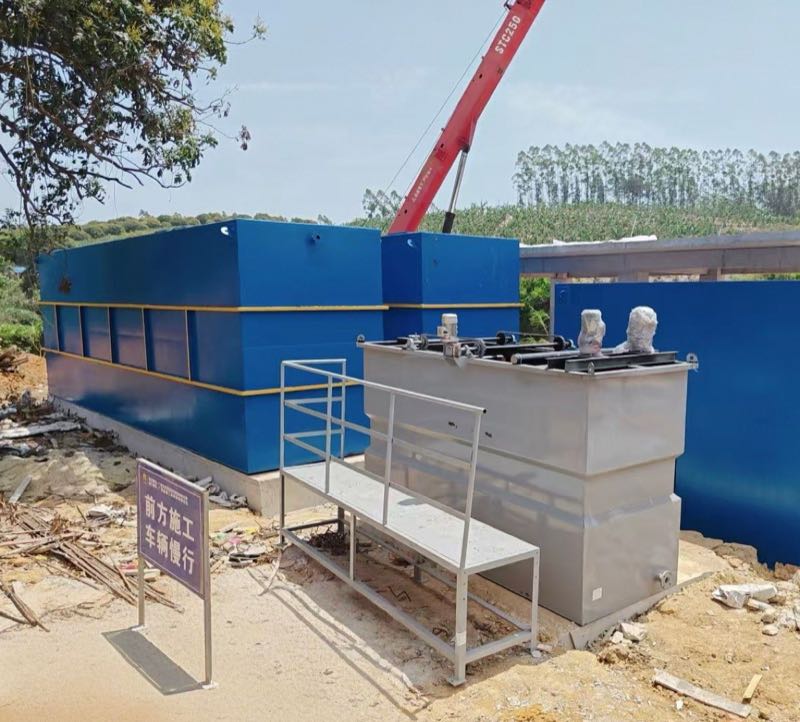
Choose DAF when characterizable contaminants make downstream biology unsuitable. DAF is the relevant industrial effluent pretreatment option where oil, grease, suspended solids or colloidal matter could overload or inhibit the biological stage. An equalization tank controls short-term flow and concentration variation, but it does not remove contaminants; its effectiveness still depends on the wastewater and downstream treatment.
Choose a biological route only when the evidence supports it. A biological system becomes more credible when the BOD/COD ratio and treatability tests show adequate biodegradability and the feed is not excessively toxic or inhibitory. S3 notes that direct biological treatment can struggle with shock loads, inhibitory compounds and low BOD/COD ratios. These are conditions to test, not assumptions a supplier should transfer from another project.
Choose a staged route when one process cannot meet both feed-protection and effluent objectives. Pretreatment removes material that would foul or inhibit reactors; an anaerobic reactor can reduce biodegradable organic load; aerobic polishing treats residual degradable organics; advanced treatment addresses any confirmed residual-quality requirement. The advantage is functional separation, not an assumed universal sequence.
MBR becomes relevant when compact treatment and higher-quality effluent are required. It remains a biological stage within a broader train and cannot substitute for pretreatment where grease, solids or inhibitory compounds threaten the process. The industrial wastewater treatment equipment selection guide provides a useful equipment-screening framework.
| Discharge route or influent problem | Governing rule or process option | What data settles it |
|---|---|---|
| Oily or solids-rich influent | DAF and equalization are credible pretreatment options. | Oil and grease, suspended solids, colloid characterization and worst-case flow. |
| High biodegradable organic load | Evaluate anaerobic treatment, with aerobic polishing if the final objective requires it. | BOD/COD ratio, treatability, COD load, pH, temperature, salinity and inhibition. |
| Shock loads or changing industrial production | Use equalization and a staged biological train where testing supports biological operation. | Time-series COD and flow records, production and clean-out cycles, and reactor-loading calculations. |
| Stringent effluent or water reuse | Assess aerobic MBR polishing and any necessary advanced treatment after solids removal. | Confirmed reuse or discharge criteria, solids loading, footprint and membrane-fouling assessment. |
Build an RFQ and Pre-Signature Acceptance Plan
Require each bidder to state its design basis, exclusions and acceptance method before comparing prices. The RFQ must identify the design influent, flow range, treatment objectives, process guarantees, test methods and operating assumptions. Where representative data are missing, make site sampling and wastewater characterization a prerequisite. Do not transfer COD performance from another feed or reactor.
Define sampling points for untreated influent, each major treatment stage and final effluent. Require the analytical laboratory, sample point, sample preservation, test method and averaging period to be stated. Keep final performance limits unresolved until the applicable Mauritanian discharge route or reuse requirement is confirmed by the responsible authority or the buyer’s identified standard.
| Quote line item | Technical scope to specify | Red flags to check before signing |
|---|---|---|
| Design basis and characterization | COD minimum, maximum and daily average; flow range; BOD/COD ratio; pH; salinity; temperature; toxicity; oil and grease; suspended solids; discharge route or reuse destination. | Omitted inputs, unexplained generic flow assumptions or performance claims based on a different wastewater. |
| Equipment supply | Process flow diagram, design flows, equipment duties, materials, controls, utilities, dimensions and included pretreatment, biological and polishing stages. | Process exclusions hidden in general wording; missing equalization, sludge handling or required pretreatment. |
| Installation and commissioning | Civil interfaces, power, drains, connections, commissioning tests, start-up support and defined supplier responsibilities. | Delivery is treated as a complete installed project; site work, testing or connections remain ambiguous. |
| Performance acceptance | Sampling points, laboratory, methods, operating period, guarantees for each major stage and final effluent, plus remedies for demonstrated non-conformance. | Single unqualified efficiency claim, borrowed case-study results or undefined test conditions. |
| Operations and consumables | Operator training, chemical supply assumptions, DAF or MBR maintenance, routine inspections and critical spares. | Training or consumables excluded while performance is presented as fully assured. |
| Sludge and residuals | Generation estimate, collection, storage, removal route, disposal responsibility and operating instructions. | Sludge destination excluded; supplier leaves residual handling with the site without confirming capacity. |
Keep quotations comparable by separating equipment delivery, installation, commissioning, operator training, initial and operating chemicals, sludge removal, maintenance and long-term spare parts. Use the industrial effluent DAF selection and RFQ guide to check that the commercial scope matches the technical route before signature.
Frequently Asked Questions
How much should a high-COD industrial wastewater treatment system in Mauritania cost?
Request an itemized quotation against the same characterization and acceptance criteria from each bidder. No supported project quotation is available for this site, so a reliable price cannot be stated. Require separate prices for pretreatment, equalization, biological treatment, polishing, installation, commissioning, chemicals, sludge handling, training and spares; exclude any bid that cannot show what those line items include.
Should the RFQ specify DAF, biological treatment or a staged system?
Specify the route only after receiving COD and flow data, BOD/COD ratio, toxicity, pH, salinity, temperature, oil and grease, and suspended-solids results. Ask each bidder to state how its proposed train handles the worst-case load and which pretreatment protects the biological stage. Treat DAF, anaerobic, aerobic and MBR stages as conditional options, not bundled assumptions.
Can a biological reactor be selected from COD alone?
No. COD establishes oxidizable load but not biodegradability or inhibition. Request the BOD₅/COD ratio and treatability or inhibition results, together with pH, salinity, temperature and representative flow and COD ranges. Compare S4’s 91.7% COD removal only within its stated reactor, wastewater and operating condition; it is not a transferable guarantee.
Which checks should be completed before signing the supplier’s offer?
Confirm that the offer states the design influent, flow range, process flow diagram, performance guarantees, test methods and operating assumptions. Check sampling points at influent, major stages and final effluent; verify installation boundaries, commissioning, training, chemicals, sludge removal and spares. Leave final limits subject to the confirmed Mauritanian discharge or reuse route rather than adopting an unrelated local limit.