Confirm the Sewer Route Before Choosing a Package Plant
Decide the discharge route before sizing equipment: a verified public-sewer connection may remove the need for a standalone treatment plant, while an unavailable connection requires the buyer to define an on-site treatment and disposal route. Lesotho drainage guidance says municipal sewerage is not generally available and requires confirmation at the specific plot. Keep foul drainage separate from roof and paving runoff because combining storm and foul water overloads treatment and is prohibited almost everywhere. Ask the municipality or a professional registered in Lesotho to confirm the approval route and applicable requirements.
Do not use the population served by Maseru’s Ratjomose plant as a substitute for project data. WASCO reports that Ratjomose serves an estimated population of more than 12,000 people, but the site survey, water-use records and wastewater observations must establish the proposed project’s duty. The relevant distinction is between a sewer-connected project, where treatment may already be provided by the public system, and a standalone project, where the package plant must perform treatment before the specified discharge, reuse or disposal route.
Build the Hydraulic and Organic Design Basis
Measured flow and load data must be requested before selecting containers. The design basis needs design population, average dry-weather flow, highest-day wastewater flow, peak flow, supporting meter or flow records, and the peak-factor method. Where industrial, hospitality or institutional use drives the demand, process information and water-meter data should take precedence over a population-based estimate.
Carry the selected per-capita wastewater allowance and its time basis into every calculation. One cited sizing convention applies a sewage allowance equal to 90% of the water-use allowance and requires the output category and time basis to follow the input. A highest-day estimate cannot be treated as an average daily flow.
Use the containerized MBR plant sizing guide to separate the two design questions. Size pipes, channels and hydraulic passages for peak flow; size the biological stage around average flow, organic load and solids retention time, then check that it can pass the peak hydraulically. Calculate tank duty as V = Q × HRT, where V is the required treatment volume, Q is the selected design flow and HRT is the required hydraulic residence time.
Local operating figures provide context, not an allowance for another site. WASCO reports that Ratjomose handles an average dry-weather flow of 10,000 cubic metres per day, while its two 1.5-metre main sewers have a combined capacity of approximately 20,000 cubic metres per day. WASCO also reports a current average flow to the works of approximately 7 million litres per day. These values describe Ratjomose and its sewers; they do not establish the proposed site’s flow or treatment capacity.
| Discharge route or influent problem | Governing rule or process option | What data settles it |
|---|---|---|
| Public sewer may serve the plot | Use the sewer route if a connection is available and approved; size treatment only for any residual project duty. | Written connection confirmation, manhole location, connection level, ownership and approval requirements. |
| No verified public sewer | Plan an on-site treatment route and define the final disposal or reuse point before selecting equipment. | Boundary survey, sewer search, receiving route, outfall level and written approval route. |
| Average and peak duties differ | Use average flow for biological duty and peak flow for hydraulic passages, with a documented peak check. | Meter records, average dry-weather flow, highest-day flow, peak flow and the selected peak-factor basis. |
| Population is not the main driver | Use process and water-meter data; use population only as a cross-check. | Water-meter series, operating schedule, process flow data and seasonal demand information. |
Match the Treatment Process to the Wastewater Duty
Biological process selection must be based on measured influent characteristics, not container capacity. The design file needs BOD, COD, suspended-solids concentrations, flow temperature, industrial constituents and any substances likely to inhibit or disrupt treatment. The cited sizing approach requires design quality to come from a survey or neighbouring data rather than an assumed typical concentration.
Evaluate anaerobic, anoxic, aerobic, A/O and MBR duties against the wastewater characteristics and required effluent quality. An MBR membrane bioreactor wastewater treatment system may be relevant to the process selection, but rated flow alone does not demonstrate biological or effluent performance. Similarly, the WSZ integrated A/O package sewage treatment plant is an equipment option whose suitability still depends on the site duty and installation constraints.
For a high-organic industrial stream, resolve pretreatment before sizing the biological stage. The industrial effluent process selection provides a useful sequence for that decision: characterize the stream, identify the governing load, determine required pretreatment and then size the biological treatment. Keep the receiving route and reuse conditions separate from treatment capacity. No universal Lesotho effluent limit is established by the available evidence, so the RFQ must state the applicable criteria and approving authority.
| Discharge route or influent problem | Governing rule or process option | What data settles it |
|---|---|---|
| Domestic wastewater with unspecified quality | Use a measured design load to assess anaerobic, anoxic, aerobic, A/O or MBR duties. | Representative BOD, COD and suspended-solids samples, temperature, flow record and required effluent criteria. |
| High-organic industrial wastewater | Determine pretreatment before fixing the biological-stage capacity. | Process description, organic-load data, constituent analysis and a defined discharge or reuse route. |
| Required reuse or discharge quality | Specify the receiving route and performance criteria separately from hydraulic capacity. | Approved effluent specification, reuse destination, sampling requirements and regulator confirmation. |
| Container arrangement changes treatment performance | Do not accept a generic process claim; require the proposed configuration and rated duty to be calculated. | Process schematic, stage-by-stage volumes, HRT, loading calculations and performance commitments. |
Check Container Capacity Against Delivery and Site Constraints
The layout should be finalized only after the delivery and installation route has been reviewed. The cited sizing guide warns that larger equipment may not travel in a standard dry container; container width and height determine the transport arrangement. The supplier should therefore identify whether the package will travel in a dry container, open-top or flat-rack container, or as break-bulk cargo.
Measure the access route, turning space, crane requirements, unloading area, ground-bearing capacity, road restrictions and any bridge or overhead-clearance constraints. Decide whether the plant must remain containerized, be installed below grade or be mounted on a trailer. The WSZ option supports below-grade installation and trailer mounting, but that does not remove the need to verify the proposed site and installation method.
Require written approval of the nominated route by the supplier and site team before acceptance. A container arrangement that is hydraulically adequate but inaccessible at the plot is not a deliverable design. Record transport dimensions, gross weight, lifting points, foundation requirements and installation sequence in the RFQ and acceptance plan.
Turn the Design Basis into an RFQ and Acceptance Plan
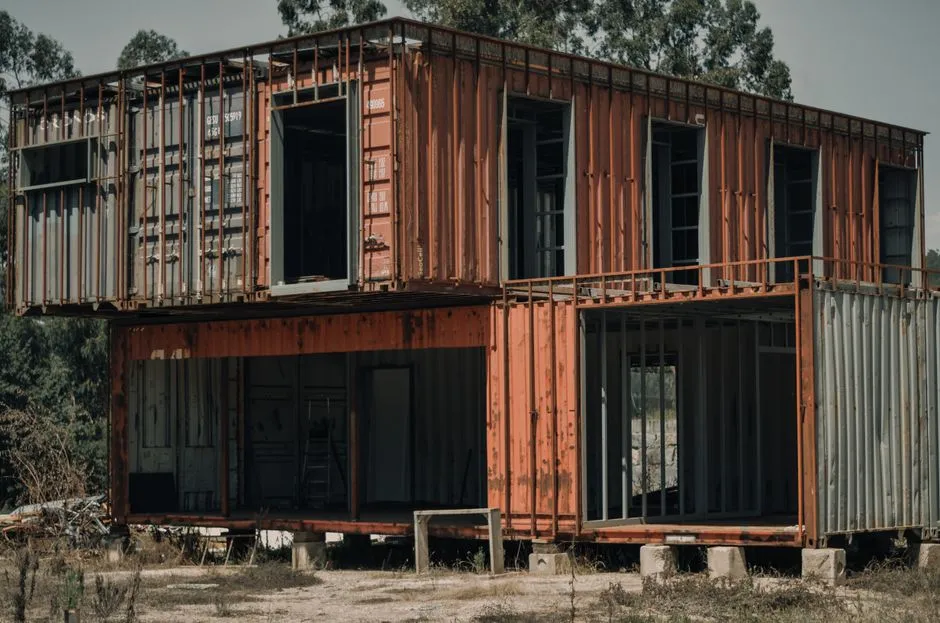
Issue one controlled worksheet with the design inputs, supplier calculations, scope boundaries and acceptance evidence. Each bidder should state the design population, average and peak flow, design loads, process route, HRT, module count, rated capacity and the calculated margin between project duty and rated capacity. Bidders must also identify who supplies flow data, influent testing, surveys, utilities, civil works, permits, installation, commissioning and training.
For licensed water and sewage facilities, the Lesotho standards excerpt places compliance responsibility on the licensee and says the standards apply to facilities operated by a licensee. That framework does not by itself determine the project’s discharge criteria; the applicable approval route and site-specific requirements still need confirmation.
Define acceptance through influent and effluent sampling, agreed test methods, a defined operating period, performance guarantees and remedies. Generic claims of reuse quality are not acceptance criteria. List exclusions for freight, import duties, cranes, foundations, power supply, standby power, sludge removal, consumables, operator labour and long-term spares.
| Quote line item | Technical scope to specify | Red flags to check before signing |
|---|---|---|
| Design basis and sizing calculation | Design population; average, highest-day and peak flow; BOD, COD and solids loads; HRT; module count; rated-capacity margin. | Unresolved flow records, mixed time bases, missing organic-load data or no written calculation. |
| Process and effluent performance | Named process route, stage duties, pretreatment if required, approved effluent criteria and test method. | Undefined receiving route, generic reuse claims or capacity offered without performance terms. |
| Delivery and installation | Transport configuration, dimensions and weight, route restrictions, lifting plan, foundations and installation method. | Container dimensions were not checked against site access; foundations, cranes or utility connections remain unpriced. |
| Utilities, operation and maintenance | Power, controls, operator level, training, commissioning, consumables, sludge handling and maintenance responsibilities. | Standby power, sludge removal, operator labour, consumables and long-term spares are omitted. |
| Acceptance and warranty | Influent and effluent sampling, agreed methods, operating period, guarantees, remedies and warranty scope. | No test protocol, acceptance period, remedy or party responsible for resolving failed tests. |
Further Reading
Frequently Asked Questions
How much wastewater flow should a containerized sewage treatment plant in Lesotho be sized for?
Size the hydraulic system for the documented peak and the biological system for average flow, load and required retention time. Request meter records, average dry-weather flow, highest-day flow and peak data. If a single modular unit covers 0.5–10 m³/h, or 12–240 m³/day, as stated by the cited supplier, that range cannot be used until the site duty and selected HRT are established.
Should a Lesotho project connect to the public sewer or install a standalone package plant?
Choose the public sewer only after the municipality confirms that a connection is physically available and acceptable at the plot. Lesotho drainage guidance says municipal sewerage is not generally available and requires confirmation before on-site treatment is planned. A standalone package plant also needs a defined effluent disposal or reuse route and applicable approval.
What should a containerized sewage treatment plant quotation include for delivery, installation and acceptance?
Require the quote to identify transport configuration, access-route restrictions, lifting and foundations, utilities, installation, commissioning, training, exclusions and the acceptance protocol. Ask bidders to price or explicitly exclude freight, import duties, cranes, power supply, standby power, sludge removal, consumables, operator labour and long-term spares so these costs are not transferred informally after signature.
How should the supplier prove that the selected treatment capacity meets the site's effluent and operating requirements?
Require a submitted sizing calculation and a performance test using agreed influent and effluent sampling methods, a defined operating period, guarantees and remedies. The proof must connect the measured operating conditions with the stated process duty and approved effluent criteria; rated container capacity or a generic statement of reuse quality is insufficient.