Compare the Two Viable Treatment Routes
Choose between a buried A/O plant and an MBR system by matching verified residential flow, influent characteristics, effluent requirements, site constraints and operating objectives—not catalogue capacity alone. A buried A/O package is a candidate where land availability, access and simpler operation fit the project; an MBR is a candidate where the required effluent quality justifies added mechanical and maintenance complexity. For Haitian residential developments, the applicable discharge route and approval requirements must be confirmed before either route is approved.
Start by establishing whether the treated wastewater will be discharged to a sewer, surface water, an infiltration route, or reused for an identified purpose. That decision sets the required treatment performance and determines which permit, approval and receiving-water documents the buyer must obtain. Do not treat a generic performance claim as evidence that a proposed discharge will comply.
Use the buried A/O package treatment plant as one screening option. A/O biological contact oxidation can be considered when the project needs a below-grade decentralized sewage treatment installation and the operating team can support routine inspection, desludging and process control.
Use the MBR wastewater treatment system as the other main screening option. Membrane bioreactor technology should be evaluated when the specified effluent duty requires membrane separation or when the reuse objective cannot be met by the proposed A/O route. The additional process complexity, power dependence, membrane maintenance, operator access and replacement provisions belong in the total lifecycle assessment.
The following comparison guides the selection process based on these site-specific requirements.
Match Flow, Influent and Effluent Duties
Wastewater plant sizing begins with the design-duty statement, not the package plant’s published capacity. Obtain average daily sewage flow, peak-hour flow, influent BOD5, COD, suspended solids, fats and oils, and pH. The bidder must also identify the design flow and peak-flow assumptions used to size each treatment stage.
The available research provides comparative context, not a Haitian acceptance criterion. A 2026 meta-analysis reports hybrid treatment achieving residual concentrations as low as 0.001 mg/l, but the excerpt does not identify the measured contaminant or establish applicability to Haiti (S3). The same study reports that contact oxidation combined with constructed wetlands improved BOD5 from 80.63 to 8 and states that hybrid treatment outperformed conventional and decentralized systems (S3). These results can inform questions to suppliers; they cannot replace project-specific analysis, the applicable discharge rule or commissioning tests.
| Discharge route or influent problem | Governing rule or process option | What data settles it |
|---|---|---|
| Residential flow varies across the development | Compare package sizing against both average daily flow and peak-hour flow | Metered flow data or a documented occupancy-based flow estimate, including the peak-flow basis |
| Organic load may exceed the assumed residential duty | Assess A/O biological contact oxidation against the measured organic load and treatment stages | Representative influent BOD5, COD and suspended-solids results from the project wastewater |
| Fats, oils and pH may affect biological treatment or upstream equipment | Require the supplier to identify pretreatment, equalization and protection measures | Fats-and-oils results, pH measurements and the proposed upstream process |
| The discharge point has not been confirmed | Do not finalize the process route until the receiving requirement is identified | Written discharge route, receiving-water description and the applicable permit or approval document |
| The required effluent is more demanding than an A/O route can demonstrate | Compare the MBR route against the confirmed treatment objective | Effluent limits, reuse criteria and supplier demonstration data matching the specified duty |
Ask each bidder to state which party supplied every design input. An unexplained flow figure, treatment capacity or effluent promise should be returned for clarification before commercial comparison.
Test the Route Against Haiti Site Conditions
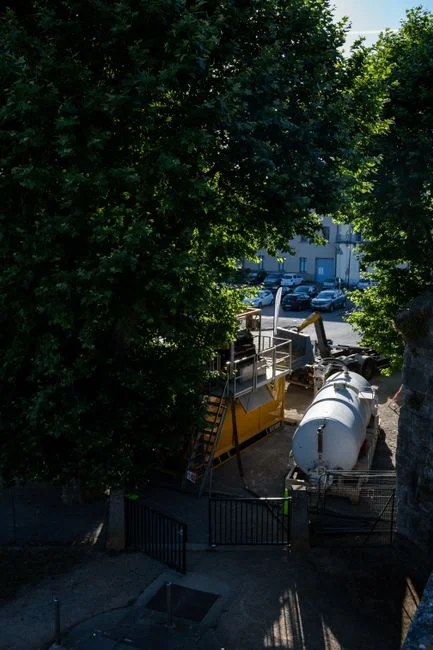
Eliminate a technically attractive package if it cannot be installed, maintained or legally accepted at the proposed site. For a buried system, obtain the available footprint, soil conditions, groundwater level, required burial depth, landscaping constraints and confirmation that below-grade installation is practical. Check delivery and lifting access as separate civil and logistics constraints.
For either route, document the electrical supply, expected outage exposure, backup-power requirement, treatment-plant location and operator access. The supplier should identify maintenance support available after sewage treatment commissioning, including membrane or media inspection, sludge removal, controls support and replacement parts. A package with demanding maintenance should not proceed on the assumption that general site labor is sufficient.
Confirm the discharge point, receiving-water conditions, responsible authority and required permit or approval documents with the buyer or relevant local authority. The available research does not establish Haiti-specific discharge limits, sewer-connection rules, approval procedures or permit fees. Those points remain verification items, and a generic compliance statement from a supplier is not enough.
- Confirm the intended discharge or reuse route.
- Obtain the governing local requirement or written direction from the relevant authority.
- Compare that requirement with each bidder’s proposed process and demonstrated performance.
- Record unresolved compliance points as contractual hold points before order.
Include sludge in the site decision. Request expected sludge production, dewatering method, storage arrangement, removal frequency and disposal route. Equipment selection is incomplete if the residual stream has no practical management route.
Build the Quotation Around Scope and Acceptance
A comparable quotation must separate equipment from site works and long-term obligations. Require the bidder to state design flow, peak flow, process route, unit quantity, treatment stages and discharge concept. Identify who supplied the influent data, effluent requirement, receiving-water information and site constraints so that design assumptions remain visible.
Price civil works, excavation, foundations, lifting, piping, electrical supply, controls, installation, commissioning, training, initial chemicals, sludge removal, maintenance and spares as separate line items. The additional packaged sewage treatment for residential projects checklist helps expose exclusions that can otherwise shift cost and responsibility after award.
| Quote line item | Technical scope to specify | Red flags to check before signing |
|---|---|---|
| Design basis | Average daily flow, peak flow, influent analyses, effluent duty and discharge route | Missing wastewater analysis, undefined discharge point or capacity stated without design inputs |
| Process equipment | Process route, treatment stages, unit quantity, materials, controls and manufacturer requirements | Route selected from a generic performance description rather than the confirmed duty |
| Civil works and installation | Excavation, foundations, lifting, access, piping, backfill, landscaping reinstatement and testing | Unpriced site works or no named responsibility for delivery and installation constraints |
| Electrical and controls | Supply connection, panel requirements, control narrative, alarms, backup-power interface and outage response | Power excluded or backup-power obligations left undefined |
| Commissioning and acceptance | Start-up sequence, training, performance test, sampling method, acceptance documentation and defect correction | No sewage treatment commissioning acceptance test or no defined remedy for failed tests |
| Residuals and lifecycle services | Initial chemicals, sludge removal, dewatering, disposal route, maintenance visits and recommended spares | Chemicals, sludge handling or maintenance excluded without a replacement plan |
Before signature, flag missing wastewater analysis, an undefined discharge point, an unidentified authority, absence of an acceptance test, or exclusions for power, civil works, chemicals and sludge handling. Make resolution of each flag a condition of order or payment. Since no verified Haitian market quotation was established for this comparison, request a priced offer rather than comparing the routes against an unsupported price estimate.
Frequently Asked Questions
How much wastewater flow should the package plant be sized for?
Size it against verified average daily sewage flow and peak-hour flow, not the number of homes alone. Request metered flow data where available; otherwise obtain a documented occupancy-based estimate and identify who prepared it. Each quotation should state the design flow, peak flow, unit quantity and treatment stages used in its sizing.
Should the project use a buried A/O plant or an MBR system?
Use the comparison of sewer connection, A/O plant and MBR as a decision aid, then require the supplier to demonstrate the confirmed effluent duty with the proposed route. Compare footprint, burial conditions, power and maintenance demands before choosing MBR solely on the basis of a general higher-performance description.
What should a supplier’s quotation and commissioning acceptance criteria include?
The quotation should itemize equipment, civil works, installation, electrical supply, controls, commissioning, training, chemicals, sludge removal, maintenance and spares. The acceptance plan should define start-up, sampling, tests, required records, training completion and defect correction. Check that design inputs and the authority responsible for each scope item are explicitly identified.
Which Haiti-specific discharge and approval requirements must be verified before order?
Ask the buyer or relevant local authority to identify the lawful discharge route, receiving-water conditions, required permit or approval documents and responsible enforcement authority. The available research does not verify Haiti-specific limits or approval procedures, so these requirements must be resolved in writing before the treatment route or order is finalized.