Confirm the treatment route before sizing equipment
Size a containerized sewage treatment plant in Kosovo by confirming the sewer route first, then calculating average and peak flow, checking organic load, selecting the biological process and verifying tank volumes against required residence time. A single containerized unit covers 0.5–10 m³/h, or 12–240 m³/day, but that range does not replace site-specific sizing. The final check is practical: confirm treatment performance, module arrangement, access, lifting and electrical requirements before quotation. The municipal building authority and a professional registered in Kosovo determine the applicable project requirements.
Confirm at the site boundary whether a foul sewer connection is available before selecting equipment. S1 states that a municipal sewer is not generally available in Kosovo and that foul drainage commonly requires an on-site septic tank and soakaway. The source says this system must be sized, sited, built and inspected. Its broader containerized-sewage treatment plant sizing methodology serves as a design sequence, but it does not establish that one disposal route or treatment process is mandatory for every Kosovo site.
If on-site treatment is considered, establish the discharge destination before sizing the biological and hydraulic components. For a septic tank and soakaway, S1 says disposal is sized against soil percolation, which must be tested rather than assumed because clay soils may not percolate. Request the percolation-test result and groundwater information. If the discharge destination or soil conditions do not support the proposed route, request an alternative discharge and treatment proposal from the project designer.
For compliance, identify the building authority in the municipality and a professional registered in Kosovo. Ask each for the applicable project requirements, including discharge destination, documentation, inspection and approval responsibilities. S1 identifies these parties as the authorities on project compliance; no specific Kosovo effluent limits were verified for this guide, so the applicable permit or consent must be obtained for the actual site.
Convert site demand into average and peak flow
Calculate two distinct flow duties and state the time basis for each. S4 identifies average daily flow and associated loading as the basis for biological sizing, while peak hydraulic flow governs channels and pipes. Treating one figure as both duties can either oversize the biology or leave the hydraulic train undersized.
For residential demand, S4 describes the sequence as population and water use first, then flow, tank volume and finally the container. For non-residential projects, flow should come from water-meter data or the process brief rather than from a per-capita allowance alone. Request the underlying water-use assumptions, measurement period and seasonal variation rather than accepting a final flow figure without its basis.
- Obtain the current average flow and the period over which it was measured.
- Obtain the peak-flow method, flow profile and seasonal variation.
- Separate hydraulic residence time from solids retention time in the supplier’s calculation.
- Check whether future expansion is included in the quoted capacity.
| Discharge route or influent problem | Governing rule or process option | What data settles it |
|---|---|---|
| No verified foul sewer connection | Plan for an on-site treatment and disposal route subject to local approval. | Written confirmation of boundary availability, permitted discharge destination and the municipal authority’s requirements. |
| Average flow is used for biological sizing | State the average daily flow and its measurement period before applying load and residence-time calculations. | Water-meter record or process brief with daily totals, seasonal variation and future expansion. |
| Flow peaks exceed the average | Check channels, pipes and equalization on peak hydraulic flow while checking biology against average load. | Measured or calculated peak-flow profile with the selected peak method clearly identified. |
| Clay soil or uncertain infiltration | Do not assume that a soakaway will work. | Site-specific percolation test, soil information and groundwater level. |
Select the process that matches the wastewater
Select the process from measured contaminants and the required effluent quality, not from a standard container layout. Request COD, BOD₅, suspended solids, temperature, pH and the flow pattern from the owner, designer or sampling contractor. These inputs establish whether hydraulic flow or organic load governs the duty and whether pretreatment is required.
S4 states that a containerized plant is sized on both hydraulic flow and organic load. High-organic industrial wastewater can make organic load the governing duty, with pretreatment settled before the biological stage is sized. Where suspended solids could impair the selected process, ask the supplier to show the pretreatment duty, removal basis and resulting load entering biological treatment.
For an A/O or other staged biological arrangement, S4 references residence times of 1–2 h for an anaerobic tank and 2–10 h for an anoxic tank. These are general design references attributed to GB 50014-2021 in that source, not verified Kosovo requirements. Require the supplier to identify the process duty for every tank and provide the calculation rather than applying these figures indiscriminately.
Nutrient-removal duties also need a separate solids-retention-time check. S4 references a solids retention time of 3.5–7.0 days where phosphorus removal is the main objective and 10–22 days for simultaneous nitrogen and phosphorus removal. Treat these values as general sizing references, not local mandates, and ask for the biomass, wasting and solids inventory calculation supporting the selected value.
Equipment selection should follow the required treatment duties. A rotary mechanical bar screen may need evaluation where pretreatment is specified, but the supplier must define its screening duty, headloss and receiving process. For biological configurations, compare the proposed process against the influent data and required effluent quality before comparing container arrangements.
Check biological capacity and container logistics
Check that the calculated process duty, selected volumes and physical modules agree before requesting a firm quotation. S4 gives the relationship as V = Q × HRT, where V is tank volume, Q is the design flow and HRT is hydraulic residence time. The HRT used must match the selected tank duty, and the flow basis must be identified for every calculation.
For solids-based processes, hydraulic residence time does not replace solids retention time or the biomass-loading check. Require a loading calculation based on the confirmed influent characteristics, together with the assumed sludge concentration, wasting arrangement and inventory basis. If the supplier quotes a container by nominal flow alone, ask why the organic and solids duties do not govern.
Use the container range only to frame commercial comparison. S4 describes a single containerized unit as covering a design flow of 0.5–10 m³/h, or 12–240 m³/day. The calculated duty must fall within the proposed configuration and remain compatible with the hydraulic, biological and peak-flow checks.
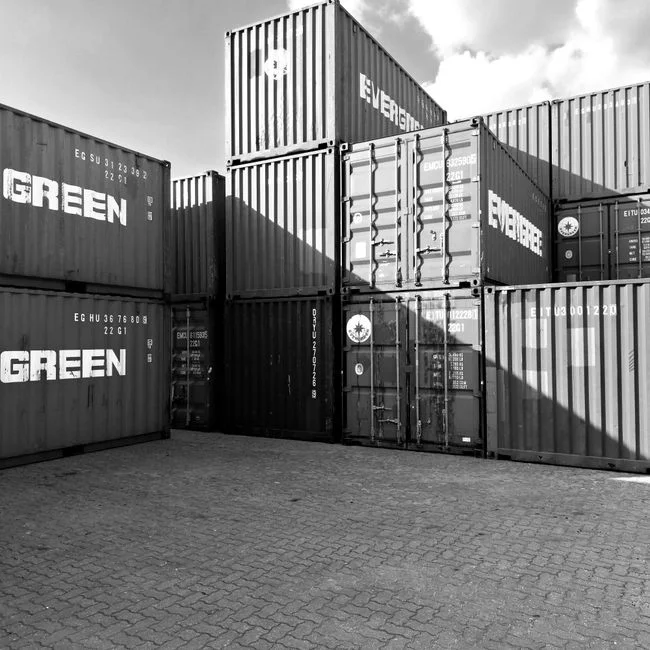
Check delivery before fixing the module count. S4 says larger containers may not travel in a standard dry container, whose internal width is 2.352 m. Confirm module dimensions, shipping mode and the transport route to the site. An integrated A/O sewage treatment plant and an MBR membrane bioreactor system should not be treated as logistically equivalent merely because both are containerized.
Provide the available footprint, access-road geometry, crane or lifting capacity, electrical supply and maintenance-clearance requirements. Also request the sludge-handling route, operating staffing assumptions and access for maintenance. The capacity calculation and physical installation question must both be answered in the same document.
Turn the design basis into an RFQ and acceptance checklist
Put the design basis and supplier obligations in one quotation response before signature. S4 warns that a sizing sheet can be arithmetically correct but still omit what the buyer will reject. The quotation should state the capacity, process, performance, installation and delivery answers alongside the calculations.
Do not use the S1 construction-cost figure as a containerized-plant price. S1 reports that an on-site septic tank and soakaway commonly represents 3–6% of the construction cost of a house. That is a cited allowance for a house septic system, not a quotation for containerized sewage treatment equipment. Request a project-specific quotation with the scope, freight, installation, commissioning, controls, civil works and exclusions stated separately.
- Issue the confirmed flow, influent, discharge, footprint, access, power and sludge inputs.
- Require hydraulic, process and module calculations to identify all time bases.
- Request drawings, controls scope, guarantees, factory acceptance evidence and site acceptance tests.
- Confirm delivery terms, installation inputs, training and warranty before accepting the commercial offer.
| Quote line item | Technical scope to specify | Red flags to check before signing |
|---|---|---|
| Design basis and flow calculations | Average daily flow, peak hydraulic flow, time basis, organic load and future expansion, with a clear distinction between buyer inputs and supplier assumptions. | A single unlabeled flow figure or unexplained conversion between daily and hourly values. |
| Process and tank volumes | Process selection, duty per unit, hydraulic residence time, solids retention time where relevant, and V = Q × HRT calculations. | General reference values presented as verified Kosovo requirements, or no solids and biomass check. |
| Treatment performance | Influent and effluent basis, stated treatment guarantees, test methods, operating conditions and exclusions. | Guarantee stated without a load range, test method or treatment duty. |
| Container arrangement and delivery | Module dimensions, number of units, shipping mode, delivery route, unloading and lifting assumptions. | Capacity is quoted without confirming that modules can reach the site or be installed. |
| Installation and commissioning | Civil-work boundary, power, controls, sludge removal, testing, training, commissioning and site acceptance criteria. | Unpriced site works or responsibility gaps between supplier, contractor and owner. |
| Commercial acceptance | Itemized price, freight, taxes, schedule, warranty, payment milestones, FAT evidence and complete exclusions. | A headline price without scope boundaries, acceptance evidence or a defined delivery schedule. |
Use the DAF, MBR or package plant comparison as a prompt for asking which treatment option owns each duty and whether pretreatment is necessary. Do not accept a process label without its calculation basis, performance obligation and module boundaries.
Further Reading
Frequently Asked Questions
What does a containerized sewage treatment plant cost for a Kosovo project?
Request an itemized quotation rather than applying the S1 figure for an on-site septic tank and soakaway to a containerized plant. S1 reports that a septic tank and soakaway commonly represents 3–6% of house construction cost, but it does not provide a containerized-plant price. The quotation should separate equipment, freight, delivery, installation, commissioning, controls, civil works, training, warranty and exclusions.
Which containerized treatment configuration should be selected?
Select the configuration after resolving the discharge route and confirming average flow, peak flow, COD, BOD₅, suspended solids, temperature, pH and required effluent quality. Compare hydraulic capacity with organic loading, residence time and solids retention time, then verify that the proposed module arrangement satisfies the calculated duty. For alternatives, request the same calculation and acceptance criteria from each supplier.
How should flow be calculated for containerized sewage treatment plant sizing in Kosovo?
Use average flow and associated loading for biological sizing, and peak hydraulic flow for channels, pipes and equalization checks. S4 says non-residential flow should come from water-meter data or the process brief. Record the measurement period, seasonal variation, peak method and future-expansion allowance so that the supplier cannot substitute an unlabeled flow convention.
What should be checked before accepting a supplier’s quotation?
Require the design basis, hydraulic and process calculations, treatment guarantees, drawings, controls scope, FAT evidence, delivery terms, installation inputs, training and warranty in one response. Check module dimensions against the access and lifting route because S4 notes that larger containers may not travel in a standard dry container. Reject an offer that leaves the flow basis, performance conditions, commercial exclusions or site interfaces unresolved.