Choose the treatment route for the residential project
Select sewer connection, an underground A/O package plant or an MBR only after confirming the legal discharge route, design flows and site constraints. For most suitable residential sites, an underground A/O package plant is the baseline because it combines biological treatment, sedimentation and disinfection in one buried unit; however, sewer availability, space, soil, groundwater and permit conditions can disqualify it. Containerized and MBR systems remain alternatives to investigate, not automatic selections.
Begin with the authority responsible for the receiving sewer or watercourse and request the applicable discharge conditions. The available product descriptions do not establish Bosnia and Herzegovina-specific effluent limits, so no supplier should be permitted to infer compliance from a generic statement that a system is “environmental friendly” or complies with unspecified standards.
| Discharge route or influent problem | Governing rule or process option | What data settles it |
|---|---|---|
| A permitted sewer connection is available | Prefer the sewer route where connection feasibility, capacity and authority approval are confirmed. | Written confirmation of the connection point, available capacity, connection conditions, ownership and applicable charges. |
| No viable sewer connection and biological treatment is suitable | Investigate an underground A/O package plant when the site can accommodate burial, landscaping and maintenance access. | Design flows, representative influent analysis, discharge route and site-condition records. |
| Footprint, groundwater or installation access is constrained | Evaluate containerized treatment or an MBR wastewater treatment alternative; neither is proven suitable without project data. | Available footprint, burial depth, groundwater level, soil report, access route and delivery constraints. |
| Influent quality differs materially from domestic sewage assumptions | Require the designer to confirm the biological process, equalization and pretreatment needs before selecting a package. | Representative BOD, COD, suspended solids, fats, oils and grease, pH and wastewater temperature. |
A useful route comparison is available in the guide to sewer, A/O and MBR route comparison. Use it as a decision framework, then replace project assumptions with Bosnia and Herzegovina authority and site inputs.
Test whether the WSZ A/O package plant fits the site
The underground A/O package sewage treatment plant documents an integrated train of anoxic/aerobic biological contact oxidation, sedimentation and disinfection within a single buried unit. That configuration makes it a credible baseline for a residential development where the wastewater profile is suitable for biological treatment and the land can accommodate installation and landscaping.
Automatic operation does not remove the owner’s obligations. The system is described as requiring no operator, but the procurement scope must still assign inspection, routine maintenance, sludge removal, monitoring, alarm response and access. A maintenance route that requires vehicles to cross landscaping or enter the unit without adequate access should be treated as unresolved.
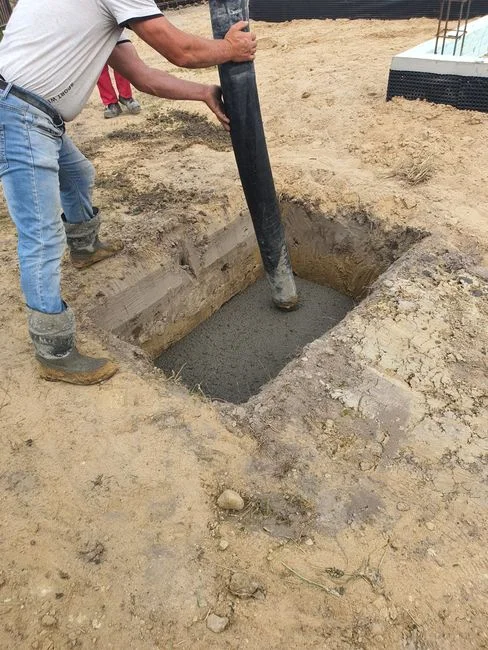
Installation can be below grade, with landscaping above, or the unit can be mounted on a trailer for mobile deployment. An exposed, space-constrained or environmentally constrained site therefore needs a separate review covering foundations, access, lifting, burial depth, groundwater and any special installation method. Do not assume that the catalog configuration is appropriate without a site drawing.
The critical unresolved condition is discharge compliance. Ask the responsible authority or environmental consultant for the permit conditions applying to the actual receiving environment and require the supplier to demonstrate performance against that project-specific basis. Catalog material describes the process configuration; it does not establish the Bosnia and Herzegovina-specific limits applicable to your site.
Collect the data that fixes plant capacity and process selection
Plant sizing must follow confirmed flow and influent data, not the number of homes alone. Ask the design consultant or developer to provide daily average flow and peak-hour flow for the completed residential development, including the basis used to derive them. If those figures are unavailable, keep the capacity request provisional.
- Obtain representative influent samples covering BOD, COD, suspended solids, fats, oils and grease, pH and wastewater temperature, and state the sampling period and operating conditions represented.
- Ask the authority, receiving utility or environmental consultant to identify the discharge point and applicable permit conditions. Treat those conditions as project inputs until confirmed in writing.
- Request a site plan with available footprint, soil conditions, groundwater level, proposed burial depth and access for installation and maintenance.
- Collect electrical information, including available power, controls requirements and the backup-power arrangement.
- Define the sludge-handling route, including removal frequency, storage, disposal or reuse responsibilities.
Sludge formation is a central treatment issue that should be included in the process definition rather than left as an installation detail. The Bosnia and Herzegovina wastewater RFQ guide provides a procurement framework, while the MBR maintenance guide illustrates why operating responsibilities must be specified.
Build a comparable supplier quotation
A comparable quotation should define the treatment route, sizing basis, process stages, disinfection method, discharge basis and responsibility split. Keep supply, civil works, installation, commissioning and long-term service obligations visible as separate priced items so that omissions do not pass between contractors.
| Quote line item | Technical scope to specify | Red flags to check before signing |
|---|---|---|
| Process equipment | State the agreed flow basis, treatment stages, disinfection method, unit configuration and proposed discharge route. | No sizing calculation; unnamed treatment stages; generic compliance claims without a named permit or standard. |
| Installation and civil works | Define excavation, foundations, lifting, inlet and outlet works, electrical connection, landscaping reinstatement and access. | Equipment price excludes site works or leaves foundations, lifting and connection responsibilities unassigned. |
| Commissioning and supplier acceptance testing | List tests, prerequisites, sampling responsibility, witnessed demonstrations and rectification procedures. | Acceptance is based only on delivery or operation, with no defined performance evidence or remedy. |
| Operation and maintenance | State monitoring, alarm response, inspection frequency, training, sludge removal, consumables, spare parts and local support responsibilities. | Automatic operation is used to exclude servicing, sludge disposal, training or emergency response. |
| Warranty and commercial terms | Define treatment warranty, start date, exclusions, recommended replacement intervals, spare-parts pricing and technical-support responsibility. | Unquantified low-operating-cost claims, broad suitability claims or warranties that exclude site conditions. |
Send the same data package and scope template to every bidder. The domestic sewage treatment route comparison for Madrid can help structure the alternatives, but it does not replace Bosnia and Herzegovina-specific permit verification.
Set acceptance criteria before the order is signed
Turn the selected route into contract deliverables before purchase. Record the agreed design flow, process configuration, unit dimensions, installation method, discharge basis and power requirements. These become the reference against which the delivered equipment, installation and performance are assessed.
- Define factory or site acceptance checks for integrity, leakage, controls and alarms.
- Demonstrate the complete treatment sequence using the agreed influent basis and project-specific test method.
- Condition final acceptance on documented performance against the verified discharge conditions. Because no Bosnia and Herzegovina-specific numerical criteria were established for this project, require the relevant authority or environmental consultant to approve the acceptance basis before ordering.
- Require as-built drawings, operating procedures, maintenance schedules, training records, warranties and the agreed spare-parts list before handover.
Define who owns residual sludge and when it must be removed. Sludge-dewatering arrangements may require a separate plate-frame filter press for sludge dewatering, but that should be evaluated against the selected process rather than added automatically.
Frequently Asked Questions
Should a residential project in Bosnia and Herzegovina use sewer connection, an A/O package plant or MBR?
Use sewer connection if the receiving utility confirms that it is feasible and permitted. Otherwise, assess an underground A/O package plant where biological treatment, burial space and maintenance access are suitable. Investigate MBR or another packaged route when footprint, effluent requirements or site conditions rule out the baseline. The responsible authority must confirm the discharge route before the process is selected.
What flow and influent information does a supplier need for plant sizing?
Provide daily average flow, peak-hour flow and the derivation behind both values. Include representative BOD, COD, suspended solids, fats, oils and grease, pH and wastewater-temperature results, together with the sampling period. Ask the design consultant or developer to confirm these inputs rather than allowing capacity to be calculated from the number of homes alone.
What should be included in installation, commissioning and acceptance pricing?
Separate the equipment from excavation, foundations, lifting, inlet and outlet works, electrical connection, landscaping reinstatement, commissioning and site acceptance testing. Define the test methods, performance basis, witnesses, rectification and handover documents. Request a consolidated price schedule so exclusions can be compared directly; no defensible project price can be stated without those inputs and a completed supplier quotation.
How should quotations be compared and omissions identified?
Issue one common RFQ and require every bidder to state the sizing basis, treatment train, discharge route, installation scope, commissioning evidence, O&M responsibilities, warranty and spare-parts pricing. Red flags include unnamed standards, unsupported operating-cost claims, missing civil works, undefined acceptance testing and any suggestion that automatic operation eliminates sludge handling or maintenance. A further comparison framework is available in the residential packaged sewage treatment plant comparison.