Define the Burundi design basis before selecting a container
Size a containerized sewage treatment plant for Burundi from peak flow and organic load, not from a nominal container rating. Convert every proposal to m³/day, then define population equivalent, peak factor, BOD, COD, TSS, effluent target, discharge route and redundancy. Domestic-strength sewage may suit an MBR, fixed-film or A/O package route; industrial wastewater generally needs pretreatment before biological treatment. Specify reuse capacity and pathogen-control requirements separately. Burundi permit criteria and site data still require confirmation.
Use one fillable design-basis worksheet as the common basis for every bidder. It should record:
- Average daily flow, measured peak flow, design peak and the peak factor used to derive each.
- Population equivalent or occupancy, with the occupancy periods and contributing sources behind that figure.
- Influent BOD, COD, TSS, fats, metals, pH and temperature.
- Effluent target, receiving environment, intended discharge or reuse route, and the responsible permitting pathway.
- Power availability, backup requirements, plot dimensions, soil and groundwater conditions, drainage and access constraints.
Do not compare an average m³/day quotation with a peak-hour proposal. State the measurement period and whether each figure is nominal, observed peak, or design peak. Obtain flow records from the responsible site operator and request laboratory results from a competent local laboratory; if they do not exist, require sampling before final sizing.
The permitting route is a confirmation item, not an assumption. Identify the intended discharge point, receiving environment and the Burundi authority or authority contact that will issue or administer the applicable discharge, reuse or environmental approval. No Burundi-specific limit or authority is established by the case examples cited here.
One deployment illustrates configuration rather than plant size: the S3 project used two “2 x 10,00-litre” vertical PE primary tanks with a common inlet, separate outlets to two BIOROCK units in a 20” container, and a buried “1,000-litre” horizontal PE effluent tank. For a Burundi project, see also the scope of Burundi MBR versus package-plant wastewater treatment.
Choose the process route from influent strength and effluent use
Select the biological route based on whether the wastewater matches a domestic-sewage basis and whether the discharge or reuse objective requires specific solids separation or pathogen control.
| Discharge route or influent problem | Governing rule or process option | What data settles it |
|---|---|---|
| Domestic-strength sewage with normal organic loading | Compare fixed-film or extended aeration against an A/O package and an MBR on effluent quality, footprint, operator capability and redundancy. | Measured flow profile, population equivalent, BOD, COD, TSS, pH, temperature and confirmed effluent target. |
| Compact installation or high-quality effluent needed | An MBR may be suitable where its membrane-control, fouling-management and maintenance requirements are acceptable. | Settled and peak solids loading, membrane flux proposal, cleaning regime, validated effluent data and operating staff capability. |
| Reuse | Design an effluent reuse train separately from liquid treatment; include pathogen control and any required disinfection rather than inferring reuse performance from nominal pore size. | Reuse volume by purpose, health or environmental requirements from the approving authority, storage and distribution details. |
| Higher-strength industrial wastewater | Add equalization, oil and grease removal, pH adjustment or other industrial wastewater pretreatment before the biological package. | Industrial mass and batch-discharge records, fats, metals, extreme pH and compatibility with the proposed biology and membranes. |
| Fixed-film or extended-aeration option | Consider where robustness and simpler operation outweigh the space and maintenance implications associated with membranes. | Organic-load variation, solids separation performance, operator availability, sludge handling and site footprint. |
The reuse distinction is material when evaluating capacity requirements. S1 identifies a “300,000 GPD” advanced extended-aeration system for domestic waste at the U.S. Air Station at Guantanamo Bay, Cuba, plus an additional requirement to treat “35,000 GPD” for reuse as grey water. That precedent demonstrates separate liquid-treatment and reuse requirements; it does not establish the correct capacity for Burundi.
For detailed technical comparison, request the supplier’s duty curve and guarantees for a containerized MBR sewage treatment system and an integrated A/O sewage treatment package. Neither should be selected from the product label alone.
Convert container dimensions into a defensible duty
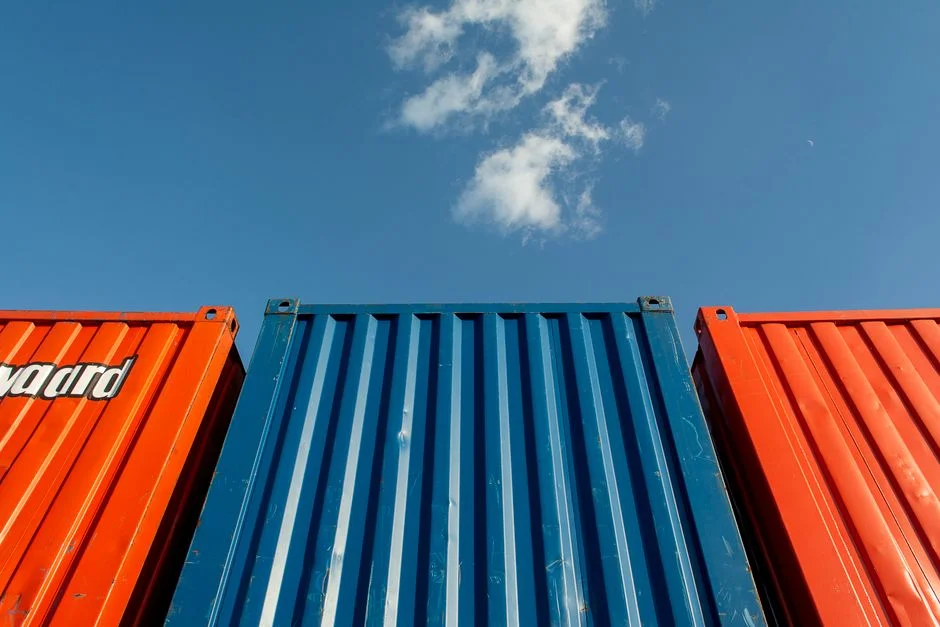
Container format identifies the enclosure, not the treatment capacity. S4 states that unit processes, instrumentation and control panels are mounted in a 20-foot or 40-foot ISO container, and that smaller 10-foot units also exist. Require each bidder to identify the number and dimensions of containers and the equipment assigned to each duty.
Verify what the headline capacity means. Ask whether it represents average flow, peak flow, hydraulic capacity, organic capacity, population equivalent or reuse capacity. Convert quotations to m³/day and retain the original figure beside it. A product-line range does not establish the selected unit’s rating.
For an MBR, request the proposed design flux, solids-loading basis, membrane area, cleaning-in-place arrangement and integrity-testing regime. S4 describes a nominal pore size “on the order of 0.04 microns” for hollow-fiber ultrafiltration membranes in many MBR units. That value explains suspended-solids retention; it does not establish pathogen removal or compliance with a Burundi reuse requirement.
Clarify whether equalization, screening, pretreatment, disinfection, sludge storage, sludge dewatering and site connections are inside or outside the containerized scope. Layout drawings must preserve working access for membrane withdrawal, blower service, pump maintenance and chemical handling. Request the supplier’s maintenance clearances rather than calculating them from the container outline.
Build the scope around reliability, residuals and local execution
Define the reliability consequence before purchasing redundancy. Establish what the site can tolerate during treatment interruption, including the effect of an hour of non-compliance or stopped production. Compare a single train with alternatives using separate trains, duty/standby equipment, critical spares and remote monitoring.
Keep the residual treatment line separate from the liquid train. A bid must state how sludge will be thickened, stored, dewatered, transported and disposed of, together with the frequency and responsibility for each step. For a related equipment comparison, ask the supplier to define the duty and operating interface of a plate-and-frame filter press; sludge storage and transport remain separate obligations even if dewatering equipment is supplied.
Allocate every interface in writing:
- Supplier: container delivery, equipment, internal wiring or piping, local controls, testing, commissioning, training and initial spares.
- Buyer or civil contractor: level-base preparation, drainage, access, power, backup power, control connections and safe chemical delivery.
- Operations team: routine operation, membrane cleaning, laboratory sampling, residual handling and maintenance response.
S1 is a deployment precedent for responsibilities. Its 300,000 GPD system included 12 prefabricated steel tanks shipped on one barge, while the supplier was responsible for start-up and training base personnel. Apply the allocation principle, not the tank count or destination, to the Burundi quotation.
Issue a comparable RFQ and apply pre-signature checks
Make the RFQ a fixed technical response form, not an invitation for incompatible headline capacities. Every bidder must state design average flow, peak flow, peak-factor basis, population equivalent, influent characteristics, effluent target and discharge or reuse route in the same fields.
| Quote line item | Technical scope to specify | Red flags to check before signing |
|---|---|---|
| Design basis and capacity | Average and peak flow in m³/day, population-equivalent basis, organic and solids loading, selected container count and dimensions. | Capacity is stated only as an average, product range or unqualified treatment rate. |
| Process and equipment duty | Complete train, pretreatment, biological stage, solids separation, disinfection, sludge handling and each unit’s rated duty. | Equalization, pretreatment, sludge storage or disinfection is excluded without a stated responsibility. |
| Effluent and reuse performance | Permit-based acceptance criteria, sampling method, test location, reuse flow separately from discharge flow and validation requirements for pathogen control. | Performance is inferred from membrane pore size or domestic test data unrelated to the proposed influent. |
| Site delivery and installation | Freight, customs, unloading, foundations, connections, drainage, power, backup power and access. | Delivery is quoted, but customs, site preparation or utility connections are left undefined. |
| Commissioning and acceptance | Factory and site testing, performance test, training, documentation, start-up attendance and acceptance procedure. | Commissioning means installation only; no performance test or agreed acceptance protocol is defined. |
| Operations and lifecycle | Energy and chemical consumption, membrane cleaning assumptions, spare parts, remote monitoring, maintenance schedule and sludge-disposal route. | Energy and membrane life are best-case claims without the stated influent, load or flux. |
| Commercial conditions | Warranty, payment milestones, delivery schedule, duties, taxes, customs responsibility, exclusions and change-control procedure. | No exclusion schedule or site-dependent assumption is attached to the price. |
Reject any capacity promise that omits peak conditions, influent assumptions, effluent basis or treatment process. Make every bid conditional on the agreed Burundi design basis. S1 states that each containerized plant is designed for the discharge limits of its specific location; the procurement equivalent is to name the receiving environment, applicable approval and test conditions in the contract.
Before price comparison, use the same worksheet structure as a containerized sewage plant sizing worksheet for Benin, but replace all location-specific assumptions with Burundi-specific data and approvals.
Further Reading
Frequently Asked Questions
How should a buyer convert population equivalent, m³/day and peak flow into one comparison basis?
Require each bidder to state its design average flow, design peak flow, population-equivalent basis and peak-factor assumptions. Do not convert population equivalent to flow without the supplier’s occupancy and unit-loading assumptions; instead, keep the original basis visible and compare hydraulic and organic duty under one agreed influent profile.
When does industrial wastewater require pretreatment before an MBR, fixed-film or A/O package plant?
Require pretreatment when measured strength, batch discharge, fats, metals or pH fall outside the domestic-sewage basis. Request equalization, oil and grease removal, pH adjustment or other conditioning as a defined upstream duty. A larger container is not an acceptable substitute for an incompatible influent.
What should the quotation include for delivery, installation, commissioning, training and acceptance testing in Burundi?
List freight, customs, unloading, site works, connections, utilities, supplier attendance, training and performance testing separately. The acceptance protocol should identify the agreed influent and effluent basis, sampling methods, test location, operating conditions and who resolves a failed test. Request the exact scope because no quotation or Burundi site-cost figure is established here.
How should MBR, extended-aeration and A/O routes be compared for energy, redundancy, maintenance and reuse requirements?
Request energy and chemical consumption against the same design flow and load, plus membrane-cleaning obligations for the MBR, aeration and solids-handling requirements for extended aeration, and A/O configuration-specific equipment and controls. Compare redundancy separately from each route’s process scope, and treat reuse as a distinct train with a separately stated flow and pathogen-control basis.