What Is Changing in Antofagasta's Industrial Water Market?
Sacyr reports that its Antofagasta P3 wastewater and distribution contract has a final treatment capacity of 900 liters per second, close to US$292 million in investment, a 35-year concession term and expected plant operation in 2028. This documented municipal-scale project should not be treated as a generic sizing recommendation for an industrial effluent treatment plant in Antofagasta: its feedstock is pre-treated wastewater from the existing facility, not raw mining or industrial effluent.
The project will capture pre-treated wastewater from the existing Antofagasta plant and convey it to the Salar del Carmen area. Sacyr identifies transfer routes toward La Negra and Mantos Blancos and describes the future plant as focusing on recycled water for mining. The existing facility supplies treated wastewater, ultrapure water and industrial water, while the new project is intended to support regional mining demand.
For industrial buyers, the practical consequence is not to copy the public project's capacity. It is to determine whether an effluent treatment plant in Antofagasta should treat raw process water, discharge to an authorized receiving point, receive municipal pre-treated wastewater, or produce water for a defined mining or industrial reuse service. The Chilean industrial effluent treatment guide provides a broader planning reference, but site testing remains the basis for selection.
This distinction matters because municipal pre-treated wastewater, raw copper-mining effluent, tailings water, wash water and cooling blowdown have different contaminant profiles and process implications. A supplier may be able to quote an equipment package; only a site-specific design basis can establish whether that package forms a compliant, operable treatment train.
Define the Influent Before Selecting the Treatment Train
An industrial treatment train cannot be selected responsibly from output flow alone; the source water, hydraulic profile, pollutant loads and intended reuse point must be fixed first. Municipal pre-treated wastewater should be evaluated as a distinct feed from raw copper-mining, industrial-process, tailings, wash-water or cooling-blowdown streams.
Request representative testing rather than relying only on historical averages. For every relevant stream, define peak, average and minimum flows; operating shifts; batch discharges; seasonal variability; and the proportion of recycled water required by the receiving operation. The analytical program should cover the constituents that control process selection and discharge or reuse compliance.
| Design input | Information required | Selection consequence |
|---|---|---|
| Hydraulic profile | Peak, average and minimum flow; operating shifts; batch discharges; seasonal variation | Determines equalization, pumping and equipment duty |
| Physical contaminants | Suspended solids, oil and grease, free oil and settleable material | Determines screening, clarification, flotation and sludge handling |
| Organic load | BOD and COD, including biodegradability where relevant | Determines whether biological treatment is justified |
| Chemical condition | pH, conductivity, salinity and relevant metals | Influences chemical dosing, corrosion control and RO feasibility |
| Reuse or discharge target | Authorized discharge, municipal transfer, cooling, boiler service, mining reuse or higher-grade reclamation | Defines the required treatment and polishing barriers |
| Regulatory basis | Current Chilean permits, applicable sector requirements and client or sewer-authority specifications | Defines the legally and contractually required performance envelope |
Define the receiving point before comparing technologies. Authorized discharge, municipal transfer, cooling, boiler service, mining reuse and higher-grade reclamation impose different constraints on solids, dissolved salts, conductivity, metals and microbial control. Verify current Chilean requirements directly; the regional engineering guide explicitly calls for site-specific design verification against current permits and influent testing.
Use a coordinated sampling campaign that covers normal production and relevant upset conditions. Where streams differ materially, assess whether segregation and equalization would reduce treatment complexity. That decision should follow from hydraulic and analytical data, not an assumption that one plant can handle every discharge.
Compare the Main Effluent Treatment Equipment Options
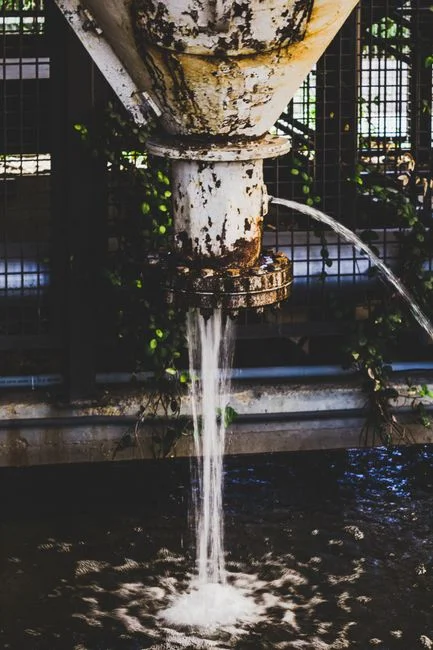
DAF, MBR, UF and RO perform different functions in a treatment train; they are not interchangeable descriptions of an effluent treatment plant. HydropureWater specifies DAF systems from 4 to 300 cubic meters per hour across 13 models for suspended solids, FOG, oil and grease, and colloidal matter. These are manufacturer capacity specifications, not project-sizing recommendations.
HydropureWater also specifies an MBR system from 10 to 2,000 cubic meters per day, combining activated sludge with submerged PVDF membrane filtration below 1 micrometer. Its hollow-fiber UF systems are specified from 2,000 to 40,000 liters per hour with 0.03-micron PVDF membranes, operation up to 300 ppm turbidity, automatic backwash and air scour. These figures describe manufacturer equipment configurations; final duty must be established from the wastewater analysis and reuse objective.
| Option | Principal role | Manufacturer specification in supplied research | Key engineering check |
|---|---|---|---|
| Industrial DAF pretreatment system | Removal of suspended solids, FOG, oil and grease, and colloidal matter | 4–300 m³/h across 13 models | Feed characteristics, chemical demand, flotation performance and sludge characteristics |
| Integrated MBR wastewater treatment system | Biological treatment with membrane solids separation | 10–2,000 m³/day; submerged PVDF filtration below 1 µm | Biodegradable load, membrane fouling, aeration demand and reuse target |
| UF | Suspended-solids and particulate barrier before sensitive reuse or RO | 2,000–40,000 L/h; 0.03-µm PVDF; up to 300 ppm turbidity; automatic backwash and air scour | Feed turbidity, backwash demand, integrity testing and downstream compatibility |
| Industrial RO | Downstream barrier for dissolved salts where biological treatment and UF are insufficient | No general project capacity established in the supplied research | Site chemistry, recovery, scaling, pretreatment and concentrate management |
| Nanofiltration | Polishing of municipal wastewater-treatment-plant effluent | University of Twente research evaluated direct nanofiltration for effluent reclamation | Performance against applicable Chilean requirements rather than the cited EU framework |
| Constructed wetlands | Research-based micropollutant removal from wastewater-treatment-plant effluent | Wageningen University and Research thesis published in September 2022 | Land availability, climate, receiving-water requirements and site conditions |
University of Twente research identifies nanofiltration as suitable for polishing wastewater-treatment-plant effluent to EU Water Framework Directive standards, with potential for agricultural or direct or indirect potable use. That research supports a polishing application, but Chilean acceptance must be demonstrated against applicable local requirements.
Industrial RO becomes relevant when the reuse target imposes a dissolved-solids, salinity or conductivity constraint. Its inclusion and recovery cannot be fixed without site chemistry and pretreatment design. Wageningen University and Research's September 2022 thesis supports constructed wetlands as a research-based option for micropollutant removal, but land, climate and receiving-water constraints remain decisive.
Build a Treatment Train for Mining and Industrial Reuse
A candidate treatment train should follow the contaminant pathway: remove materials that will obstruct biological or membrane processes, treat biodegradable pollution, apply a solids barrier where reuse quality requires it, and add a desalination barrier only when the receiving use demands it. Each stage needs a defined purpose and an upstream failure assumption.
| Stage | Use when | Equipment role | Required project evidence |
|---|---|---|---|
| Characterization and equalization | Flow or pollutant loads vary materially | Mixing, storage and flow stabilization before treatment | Hydraulic profile, batch-discharge record and representative analysis |
| Screening and pumping | Raw flow contains material that could damage or overload downstream equipment | Remove coarse solids and provide required hydraulic transfer | Debris characterization, static lift and duty assessment |
| DAF or clarification | High-solids, tailings-related, oily or solids-heavy streams require pretreatment | Remove floating, settleable and suspended material before biological treatment or membranes | Representative feed, chemical trial and sludge-yield estimate |
| Biological treatment | Biodegradable organics require removal | Reduce BOD and COD before solids separation or reuse | Biodegradability assessment, load range and residual nutrient requirement |
| MBR or UF | Solids separation or reuse-quality protection is required | Provide an integrated membrane barrier or standalone solids barrier | Target quality, fouling tendency, cleaning strategy and recovery |
| RO | The reuse use imposes a dissolved-solids, salinity or conductivity limit | Remove dissolved salts and other rejected constituents | Pretreatment design, scaling analysis, recovery and concentrate route |
| Disinfection and residuals management | The reuse application or permit requires microbial control | Reduce pathogen or indicator-organism risk and control residuals | Application-specific contact performance and residual limits |
Screening and pumping should be included only where raw flow characteristics justify them. For high-solids, tailings-related or oily streams, DAF or clarification can protect downstream biological and membrane equipment. HydropureWater describes DAF as suitable for metalworking and other industrial wastewater applications; the DAF versus clarifier selection for mining wastewater comparison explains why feed properties should decide that selection.
Where biodegradable organics are present, biological treatment can precede an MBR or UF barrier. RO should follow adequate pretreatment when the target use imposes dissolved-solids, salinity or conductivity constraints. Disinfection, sludge handling, odor control, instrumentation, standby power and bypass provisions should be evaluated as part of the operating plant, not omitted from the initial scope.
This is a candidate train only. Final unit selection requires representative wastewater testing, a hydraulic balance, recovery and concentrate assessments, and review of current permit conditions.
Plan for Capital Cost, Operating Cost and Asset Risk
A comparable budget requires the same design basis, duty guarantees, scope boundary and commercial conditions in every bid; a package price without those inputs is not a comparable capital estimate. HydropureWater's Antofagasta guide uses a US$4.00-per-cubic-meter regional freshwater reference in an illustrative five-year total-cost-of-ownership model. The actual business case should use the current verified freshwater cost for the relevant supply.
| Cost or risk element | Items to request from each bidder | Basis for comparison |
|---|---|---|
| Capital cost | Civil works, screens, pumping, chemical storage, membranes, electrical and control systems, disinfection, sludge handling, commissioning, spares and site services | Identical scope, flow basis, site assumptions and exclusions |
| Operating cost | Membrane replacement, energy, chemicals, sludge disposal, operator labor, sampling and preventive maintenance | Consistent flow, duty, reagent assumptions and operating scenario |
| Performance risk | Guaranteed effluent duty, pretreatment basis, fouling controls and commissioning acceptance tests | Named guarantee conditions and test methods |
| Delivery risk | Warranty boundary, local engineering, installation, training and after-sales support | Named responsibility for each scope element |
Do not infer an industrial plant price from the close-to-US$292-million Sacyr P3 investment reported by Sacyr in 2025. That figure covers a large public concession with extensive conveyance infrastructure, a 35-year term and regional distribution routes; it is not an equipment quotation for an industrial wastewater treatment plant.
Use the water-treatment total cost of ownership guide to structure the calculation, and ask bidders to state exclusions and assumptions explicitly. Membrane replacement, cleaning, chemicals, sludge disposal and site services can materially change lifecycle cost even when initial capital bids are close.
Issue a Supplier Request for Proposal That Produces Comparable Bids
A technically comparable RFP gives every bidder the same wastewater characterization, hydraulic basis, reuse target and regulatory envelope. Send the design package, site information and commercial schedule together so that omissions and assumptions can be evaluated consistently.
- Provide representative influent and effluent data, the hydraulic profile, reuse target, site utilities, climate conditions, installation constraints and applicable permit criteria.
- Require each bidder to identify the proposed process, duty basis, materials of construction, equipment sizes, guarantees, controls, exclusions, utility consumption and commissioning methodology.
- Ask bidders to identify pretreatment risks, membrane-fouling controls, chemical demand, sludge characteristics and provisions for upset or variable influent conditions.
- Request comparable installation references and clarify responsibility for local engineering, installation, commissioning, operator training and after-sales support.
- Evaluate technically compliant bids using a common commercial and risk schedule rather than selecting on headline price alone.
The wastewater characterization should identify sampling dates, operating conditions, analytical methods and outliers. The hydraulic profile should distinguish average from peak and batch flows and state whether the bidder must provide equalization. The reuse target should identify the receiving operation and the quality attributes it actually controls; “reuse water” alone is not an enforceable specification.
Performance guarantees should state the test method, test frequency, influent envelope and acceptance period. Ask membrane suppliers to define cleaning triggers, expected cleaning frequency, consumable replacement assumptions and the effect of variable feed on warranty conditions. These provisions determine whether a nominally compliant bid remains commercially usable after startup.
For local execution, define who holds engineering responsibility, which activities are excluded, where warranty responsibility transfers between suppliers, and what commissioning evidence is required. A clear scope matrix prevents the lowest initial quotation from shifting risk to the owner through vague exclusions. Preventive-maintenance planning should be included in the bid basis, consistent with the wastewater-plant preventive-maintenance checklist.
Frequently Asked Questions
How much does an effluent treatment plant in Antofagasta cost?
No responsible project price can be stated without the wastewater flow, pollutant concentrations, reuse target, site utilities and permit criteria. Sacyr's close-to-US$292-million investment, reported in 2025, applies to the Antofagasta P3 wastewater and distribution concession—not an industrial treatment-plant package. Request an itemized bid covering civil works, process equipment, membranes, chemicals, electrical and controls, sludge handling, commissioning and site services. For operating-cost comparison, obtain membrane replacement, energy, chemical, labor, sampling and sludge-disposal assumptions.
What plant capacity is required for mining or industrial water reuse?
Capacity cannot be selected from the keyword or from the Sacyr project's 900-liters-per-second final capacity. That figure describes a specific public P3 plant designed around pre-treated municipal wastewater and regional conveyance. For an industrial project, provide peak, average and minimum flows; batch-discharge conditions; wastewater analysis; the required recycled-water proportion; and the receiving operation. Then size equalization, pretreatment, biological treatment, membranes and pumping against those inputs and the applicable reuse or discharge specification.
Should a mining effluent plant use DAF, MBR, UF or RO?
Each option addresses a different barrier. DAF is a pretreatment option for suspended solids, oil, grease, FOG and colloidal material; MBR combines biological treatment with membrane solids separation; UF provides a particulate barrier; and RO addresses dissolved salts where biological treatment and UF are insufficient. The choice follows from the pollutant profile and reuse target. Compare DAF and clarification using feed characteristics, then add MBR, UF or RO only where the required performance demonstrates that need.
Does meeting the treatment specification establish regulatory compliance?
No. A technical effluent specification is an engineering duty, while legal approval depends on current Chilean requirements and site-specific authorization. Confirm the applicable sector rules, receiving-point conditions, discharge or reuse limits and any sewer-authority or client specifications before finalizing the train. If nanofiltration performance is based on the EU framework cited by University of Twente research, verify it against the requirements applicable in Chile rather than assuming equivalence.
Related Equipment
- industrial DAF pretreatment system — specifications, capacity range, and technical data