
Which packaged sewage treatment plant fits a Seattle housing development?
A buried A/O WSZ-type system is usually the baseline choice when soil, groundwater, excavation access and the discharge route permit an underground installation; an MBR becomes more compelling where tighter filtration, beneficial reuse or a smaller treatment footprint justifies added operational complexity. The correct selection starts with residential peak wastewater flow—not average daily demand—then tests the treatment train against discharge criteria, site constraints, phasing and maintenance access. The same framework used to evaluate packaged sewage treatment plant selection for housing developments applies to Seattle, although the applicable permit pathway must be confirmed locally.
No package plant can be selected responsibly without a verified peak-flow calculation, written receiving-water and discharge requirements, and documented site conditions. Evaluate the proposal using the sustainability framework developed in the 2014 Concordia University dissertation Selection of Sustainability Indicators for Wastewater Treatment Technologies: environmental, social, economic and technology performance must be considered together rather than treating equipment price as the sole criterion.
The practical sequence is:
- Establish verified hydraulic and pollutant-loading design inputs.
- Identify the receiving point and applicable discharge requirements.
- Screen buried A/O, MBR and containerized configurations against site and operational constraints.
- Compare supplier proposals using a common basis of capacity, civil interfaces, controls, maintenance and performance verification.
Start with the design inputs that determine plant capacity
Residential treatment capacity must cover short, concentrated flow peaks and sustained low-flow periods because both can affect biological performance and hydraulic reserve. Biocell Water’s residential-development guidance states that peak residential flow typically occurs in the mornings, late afternoons and evenings and that treatment systems must accommodate significant peaks combined with low-flow periods. A developer should not substitute a generic assumption for a verified project calculation.
Request a wastewater characterization covering flow, BOD/COD, ammonia, suspended solids, fats, oils and grease, and the effects of household cleaning products. Biocell Water reports that ammonia and COD can be high in residential wastewater and associates these conditions with increased disinfectant and cleaning-product use and homes without grease traps. These findings identify variables for the investigation rather than establishing loading rates for this development.
| Design input | Evidence or decision required | Why it affects selection |
|---|---|---|
| Hydraulic basis | Unit counts, occupancy pattern, verified peak-flow calculation, peak-day criteria and low-flow conditions | Determines hydraulic and biological sizing; average daily flow alone is insufficient |
| Wastewater quality | BOD/COD, ammonia, suspended solids, fats, oils and grease | Influences biological loading, pretreatment and treatment-train selection |
| Collection and discharge route | Public sewer, sewer pretreatment, permitted surface-water discharge, subsurface discharge or beneficial reuse | Defines the receiving authority, treatment objective and civil scope |
| Development program | Unit release schedule, occupancy assumptions, future expansion and infrastructure routes | Allows phased capacity and treatment decisions |
| Property and operations data | Site boundary, utility corridors, access, power and proposed maintenance arrangements | Tests whether the selected package can be installed and sustained |
Document whether the development will connect to public sewerage, needs pretreatment before sewer connection, or requires on-site treatment and disposal. The wastewater characterization should also distinguish normal household wastewater from any nonresidential or separately regulated contributors. In a 2026 domestic sewage treatment buyer guide, identify any proposed discharge route and who will own collection, pretreatment, treatment and final disposal.
Match treatment technology to the effluent and discharge route

The receiving point determines the applicable treatment and documentation pathway. Public-sewer connection may require local pretreatment standards; a permitted surface-water discharge requires an approved discharge route and applicable effluent criteria; subsurface disposal depends on site and regulatory suitability; and beneficial reuse adds a water-quality objective and distribution requirements. Biocell Water identifies local effluent standards and discharge licensing as location-specific variables for residential developments. The project must obtain written criteria from the applicable permitting authority before selecting the process.
For a buried A/O package unit, the treatment train consists of anoxic and aerobic biological contact oxidation, followed by sedimentation and disinfection within one unit. This configuration is attractive where below-grade installation is feasible and visual impact is a concern. The buried WSZ integrated sewage treatment plant should be evaluated against the required treatment objectives, verified design flow and local site constraints.
For an MBR, activated sludge is followed by submerged membrane filtration. The integrated MBR wastewater treatment system provides filtration below 1 μm and offers a smaller footprint than conventional systems. Those stated product characteristics do not replace project-specific hydraulic, membrane-fouling, control and maintenance analysis.
| Discharge route | Primary treatment question | Information to obtain before process selection |
|---|---|---|
| Public sewer | Is local pretreatment required, and what treatment will the sewer provider accept? | Written pretreatment criteria, sampling requirements, connection responsibilities and downstream capacity confirmation |
| Permitted surface-water discharge | What effluent characteristics must the package consistently achieve? | Permit conditions, receiving-point limits, monitoring and reporting duties |
| Subsurface discharge | Is the route technically and regulatorily suitable for the site? | Site and groundwater investigation, receiving approval and distribution requirements |
| Beneficial reuse | Can the treated water meet the intended reuse objective? | End-use water-quality criteria, storage, distribution and monitoring requirements |
IntechOpen’s research on microalgae-based sewage treatment provides broader context: the process can reduce BOD, inhibit coliforms and remove nutrients. Because this is not the standard selection basis for these package-plant configurations, it should not displace hydraulic, effluent and site-based evaluation.
Compare buried A/O, MBR and containerized package plants
Buried A/O, MBR and containerized systems solve different development constraints, and their installation format can change the civil works, controls and maintenance strategy. Compare alternatives on the same design basis rather than treating catalog capacity as proof that every unit is suitable for the project.
| Configuration | Treatment and catalog capacity | Installation format | Principal advantage | Principal constraint | Best-fit condition |
|---|---|---|---|---|---|
| WSZ buried A/O | Anoxic/aerobic contact oxidation, sedimentation and disinfection; catalog capacity 1–80 m³/h | Single buried unit; trailer mounting is also available | Landscaping can continue above an underground installation | Requires excavation, groundwater and flotation controls, and suitable below-grade access | Site conditions and discharge route permit a buried treatment unit |
| MBR | Activated sludge followed by submerged membrane filtration; catalog capacity 10–2,000 m³/day; filtration below 1 μm | Integrated package configuration | Fine filtration and a comparatively compact treatment footprint | Membrane fouling control, instrumentation and maintenance planning require evaluation | Tighter filtration, reuse potential or footprint constraints justify added complexity |
| Containerized module | Commercial guidance identifies fixed-bed, MBBR and MBR as process options | Above-ground plug-and-play module | Can support phased implementation with modular additions | Siting, odor control, weather protection and visual impact require assessment | Phasing or above-ground installation outweighs buried-site constraints |
| Below-ground MBBR or SBR | Biocell Water identifies these as typical below-ground options, with equipment installed in a concrete tank | Below-ground concrete tank | Can be cost-effective where civil works are acceptable | Requires tank construction and associated civil works | Below-grade treatment is preferred and the civil program can accommodate it |
The supplied catalog information supports the WSZ and MBR capacity benchmarks above. Aqua Tech Systems states that its MBBR package plant is built from AISI 304 stainless steel. That is a useful materials-selection benchmark for proposal review, although the buyer must specify the required material standard for each vessel, cover, piping and treatment component.
Biocell Water notes that below-ground MBBR and SBR installations can be cost-effective when civil works are acceptable. For containerized systems, commercial guidance describes fixed-bed, MBBR and MBR technologies within plug-and-play modules. Procurement should compare installed civil scope, controls, maintenance and phased expansion.
Evaluate Seattle site, seasonal and construction constraints
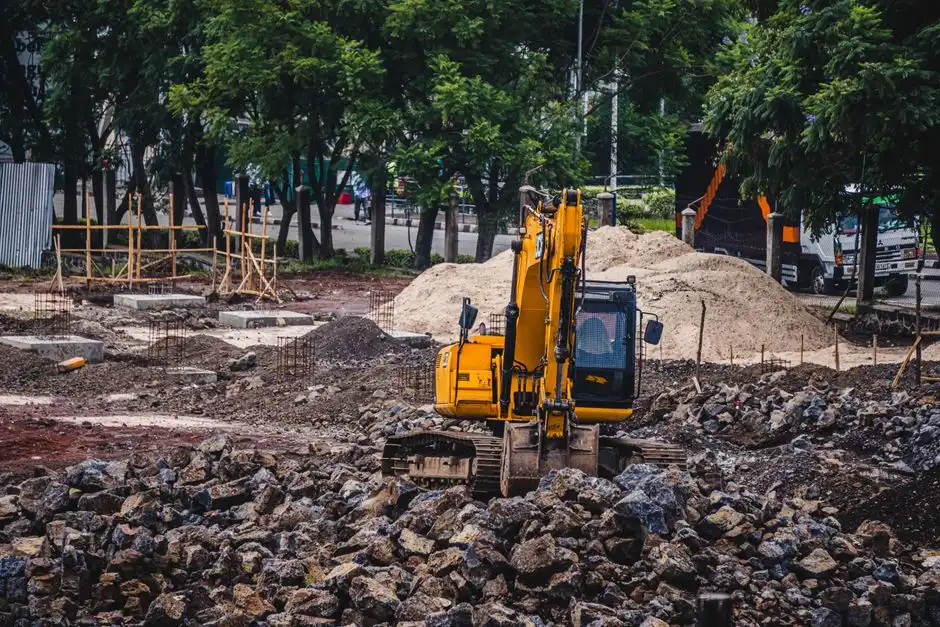
Geotechnical and groundwater investigation is a prerequisite for any meaningful buried-plant assessment. The investigation should address excavation conditions, tank flotation resistance, construction access, subsurface discharge feasibility and the structural or waterproofing requirements implied by the selected installation format.
Evaluate rainfall, infiltration and groundwater as site-design inputs and obtain project-specific measurements. Map utility corridors, required setbacks, vehicle access, maintenance access, power availability, odor-control requirements and emergency bypass provisions. For a below-grade installation, confirm that the design prevents uncontrolled flotation and provides safe access without routine tank emptying or confined-space entry.
Phasing is a technical requirement, not only a commercial feature. Biocell Water states that modular systems can be installed in phases as a development grows. Aqua Tech Systems identifies phased development as an advantage of its modular subdivision-sewer approach. For either claim to apply, bidders must identify the capacity basis, expansion interface, future treatment-train requirements and whether the discharge arrangement remains valid as occupancy grows.
If the project includes a sewer pretreatment system, obtain the downstream sewer or treatment provider’s written requirements and define responsibility for sampling, controls, maintenance and reporting. Biocell Water notes that local regulations may require pretreatment even where public sewerage is accessible. For surface-water, subsurface or reuse routes, identify the authority that will review the discharge proposal and what supporting site, geotechnical or water-quality studies it requires.
Plan for operations, verification and whole-life performance
Treatment performance depends on access, controls, operator competence and a defined response process when treatment is deficient. Each proposal should identify routine maintenance tasks, alarm functions, remote-monitoring options, startup support, operator training and the procedure for correcting deficiencies. The wastewater monitoring and sensor supplier guide provides a basis for reviewing monitoring scope, but sensor coverage should follow the plant’s critical control and compliance requirements.
Aqua Tech Systems describes installation and startup oversight followed by a return 12 weeks after startup to confirm treatment levels and remediate insufficiencies. Use that as a procurement benchmark: require a written post-startup verification period, acceptance procedure and corrective-action responsibility.
Biocell Water notes that components have alarms, offers optional GSM alarm dialout and provides SCADA monitoring. These features show why fault visibility belongs in the bid comparison. Require each bidder to define what events trigger an alarm, where notifications are routed, who responds and what evidence is retained.
Favor straightforward maintenance with documented tasks and access that does not require emptying tanks or entering confined spaces. Under the 2014 Concordia University sustainability framework, compare environmental performance, social acceptability, whole-life economics and technology maturity together; the most balanced result across those four dimensions is the more sustainable selection.
Use this selection and procurement checklist
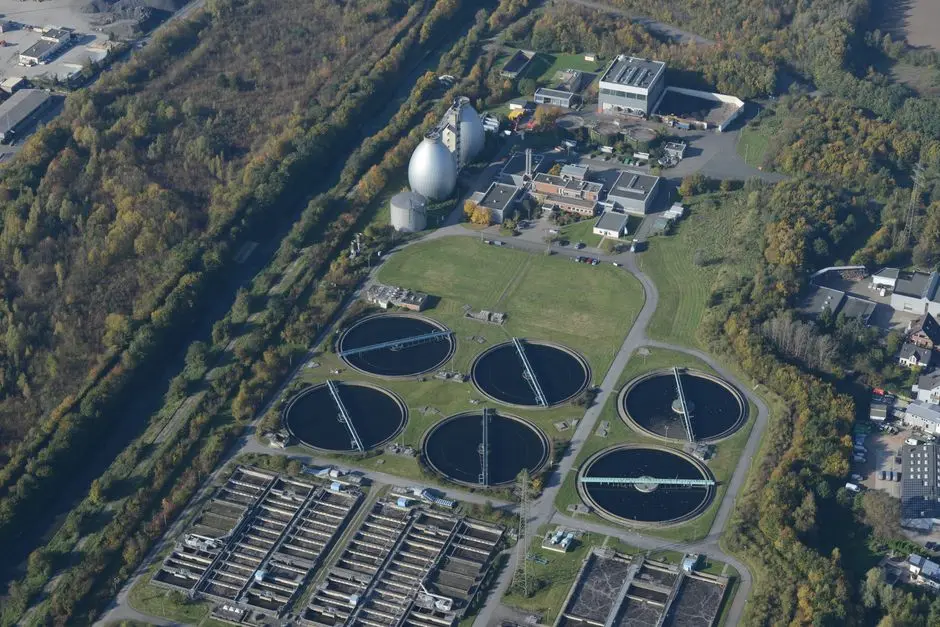
A technology-neutral RFQ gives bidders a defensible basis for comparison and keeps the selection tied to project requirements. Require each proposal to state its assumptions and exclusions rather than allowing vendors to price different scopes under apparently comparable package totals.
| Stage | Required deliverable | Acceptance test |
|---|---|---|
| Project definition | Unit counts, occupancy, verified peak-flow and load basis, phased build-out and future expansion | Capacity and treatment train are tied to the same documented design basis |
| Regulatory confirmation | Written discharge criteria and identification of the receiving authority | Proposed process and discharge route address the stated requirements |
| Site assessment | Geotechnical and groundwater report, utilities, access, power, odor and reuse assessment | Installation format and civil interfaces are compatible with the site |
| Technical proposal | Process selection, calculations, drawings, civil interfaces, controls, alarms and guarantees | Exclusions, capacity basis, discharge proposal and permitting responsibilities are explicit |
| Operations and verification | Maintenance schedule, startup, training, monitoring and post-startup performance verification | Performance acceptance and corrective-action procedure are contractual |
| Phasing confirmation | Expansion sequence, reserved footprint and future discharge arrangement | Installed capacity and infrastructure support the planned development phases |
Before requesting a proposal, verify the peak-flow calculation, wastewater characterization, receiving route, site investigation, phasing plan and access requirements. During proposal review, require a like-for-like scope: process, guarantees, drawings, civil work, electrical, controls, alarms, maintenance, startup, training and performance verification. Then confirm that the selected package capacity, treatment train and installation format match the development’s current and future phases.
Frequently Asked Questions
How much does a packaged sewage treatment plant cost for a Seattle housing development?
Request a quote based on verified peak flow and pollutant loading, treatment process, excavation, discharge
Frequently Asked Questions
How much does a packaged sewage treatment plant cost for a housing development in Seattle?
Capital costs for packaged sewage treatment plants in the Seattle region typically range from $15,000 to $25,000 per residential unit, depending on the required effluent quality and site-specific geotechnical constraints. These estimates cover the treatment equipment, control systems, and primary installation, but exclude land acquisition, off-site sewer conveyance, and long-term operations and maintenance (O&M) contracts.
Should a Seattle housing development choose a buried A/O plant or an MBR system?
For most Seattle housing developments, Membrane Bioreactor (MBR) systems are preferred over traditional Anoxic/Oxic (A/O) plants due to stringent Washington State Department of Ecology nutrient removal and water reuse standards. MBR systems provide superior effluent quality, often achieving turbidity levels below 0.2 NTU, which is critical for meeting Class A reclaimed water standards required for irrigation or toilet flushing in urban settings.
How do you size a sewage treatment plant for residential flow peaks?
Sizing is calculated using the average daily flow (ADF) typically estimated at 75 to 100 gallons per day (GPD) per capita, multiplied by a peaking factor derived from the Harmon formula or local King County design standards. Engineers must size equalization tanks to handle the diurnal peak factor, which often ranges from 3.0 to 4.5 times the average hourly flow, ensuring the biological process remains stable during morning and evening surges.
What should I require from a packaged sewage treatment plant supplier?
Requirements should include a verified performance warranty based on specific influent BOD5, TSS, and Total Nitrogen concentrations consistent with local residential waste profiles. You must mandate a comprehensive O&M manual, a multi-year service agreement with a certified operator, and documentation proving the equipment meets NSF/ANSI 40 or equivalent certification standards required for site-specific permitting in Washington State.
Can a modular sewage treatment plant support a phased housing development?
Modular treatment systems are highly compatible with phased housing developments because they allow for parallel train expansion. By installing individual treatment skids or modular tanks, developers can scale capacity from 10,000 GPD to 100,000+ GPD as occupancy increases, avoiding the capital inefficiency of over-sizing the plant during the initial construction phases.