What Changes When Meta Acquires a Texas Plant?
Wastewater obligations generally remain site- and permit-specific when Meta acquires a plant in Texas, rather than disappearing with the change in ownership. The acquirer must verify TCEQ authorizations, sewer or industrial pretreatment permits, discharge limits, monitoring duties, and whether permits can be transferred or require amendment. Meta’s El Paso example illustrates the likely need for industrial pretreatment: EPWater states that Meta must obtain and comply with an Industrial Pretreatment Permit for industrial process wastewater and that specialists monitor industrial customers. The acquisition team should characterize every wastewater stream, reconcile permits with actual operations, and confirm treatment, sampling, reporting, and emergency plans before close.
Ownership creates four distinct diligence questions: who assumes legal responsibility, whether the authorization remains valid, which wastewater stream each requirement covers, and whether the existing treatment system still performs as required. A change in corporate control does not itself establish that any of those answers are “yes.”
NextEra Water’s July 13, 2022 acquisition illustrates that regulated wastewater assets can change ownership while continuing to operate under their governing frameworks. The company acquired 23 water systems and five wastewater systems in eight counties near Houston. That transaction is evidence that transferability is a site-specific regulatory question, not proof that every permit transfers automatically.
Meta’s operating identity does not replace site-specific permits, sewer agreements, local pretreatment limits, or TCEQ authorizations. The El Paso example is useful as an ownership-to-obligation illustration, but its facility-specific facts cannot be applied to an unrelated Texas plant.
The controlling question is whether the acquired plant may continue discharging under its existing authorizations, or if the ownership transfer, planned production change, process modification, or wastewater-composition change requires an amendment. The Texas plant-acquisition wastewater requirements for industrial buyers outline the same need to verify obligations at the site level.
Permits and Regulatory Records to Verify Before Close
Texas wastewater authorizations must be checked document by document because a permit, sewer-use agreement, pretreatment requirement, and discharge authorization can have different transfer provisions and approving agencies. The buyer should assemble a permit register before relying on any statement that the site is “permitted.”
| Record or obligation | Diligence question before close | Evidence to obtain |
|---|---|---|
| TCEQ wastewater authorization | Is it transferable, subject to amendment, or unusable after the ownership or operating change? | Current permit, amendments, compliance correspondence, agency correspondence, and written transfer determination |
| Industrial Pretreatment Permit | Do the covered industrial streams, local limits, monitoring points, and reporting duties match actual operations? | Permit and appendices, discharge characterization, monitoring plan, sampling results, and enforcement history |
| Sewer-use or discharge agreement | Does it authorize the present owner, user, process, and receiving point? | Executed agreement, amendments, capacity conditions, fees, and correspondence with the receiving utility |
| Stormwater and waste-management records | Are separate authorizations, manifests, or reporting duties affected by the acquisition? | Stormwater permits, waste manifests, disposal records, and outstanding notices |
| Compliance history | Can monitoring, reporting, and corrective actions transfer without a gap? | Sampling plans, analytical results, flow records, logbooks, calibration records, violations, and closure evidence |
TCEQ allows individual wastewater permit applications to be submitted electronically through its file transfer protocol, though electronic submittal does not relieve applicants of their other obligations. The TCEQ Wastewater and Stormwater permitting guidance addresses submission mechanics rather than the substantive question of whether the acquired operation remains authorized.
For discharges to a publicly owned treatment works, the acquirer should obtain the receiving utility’s current industrial pretreatment permit, appendices, local sewer limits, monitoring requirements, and enforcement history. These records establish the acceptance criteria against which the plant’s treatment and sampling program must be judged.
Each permit condition should be reconciled against the plant’s actual flow diagrams, chemical inventories, production records, sampling history, and planned Meta operating model. A water-service agreement is not a wastewater authorization. EPWater separately states that industrial wastewater discharge to the public sewer requires an Industrial Pretreatment Permit.
Classify Every Wastewater Stream Before Modeling Treatment
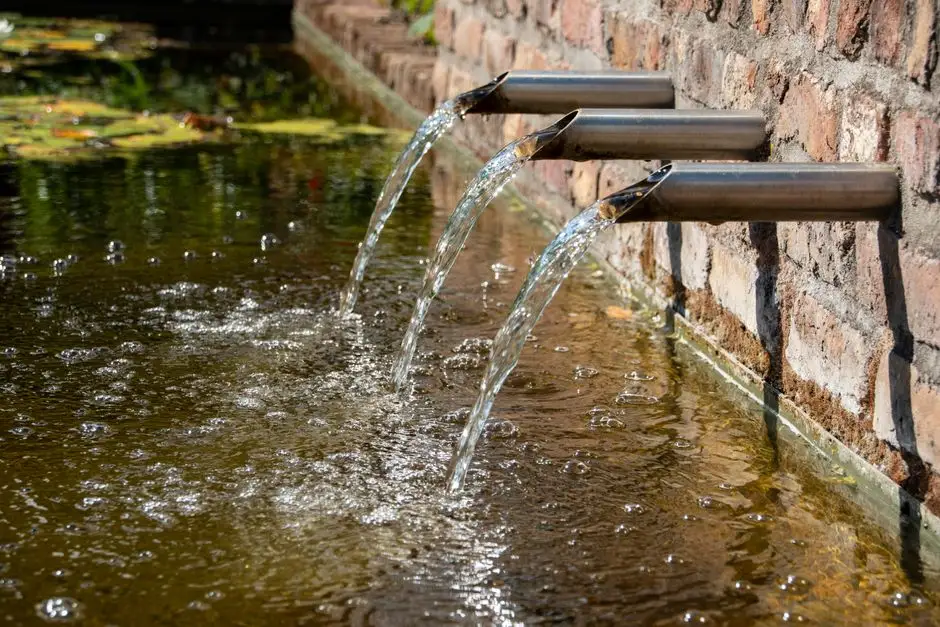
Wastewater treatment must be selected based on individual stream characteristics, as each has a different receiving point, contaminant profile, and regulatory path. The engineering basis should begin with separate mass and flow balances for domestic wastewater, industrial process wastewater, cooling or utility blowdown, stormwater, and contaminated non-contact streams.
Keep those balances separate unless there is a documented technical basis for combining them. For each stream, request representative analytical data for pH, suspended solids, oil and grease, flow, metals, toxic organics, and other parameters identified by the receiving sewer authority or process engineer. Duration matters as much as daily volume because equal daily flows can produce materially different treatment loads.
EPWater’s Meta El Paso data center example demonstrates why a domestic/process split is necessary: the utility states that Meta will generate both domestic wastewater and industrial process wastewater. The domestic stream may follow a different authorization and treatment path from industrial process water. The El Paso utility also says Meta must obtain and comply with an Industrial Pretreatment Permit for its industrial process wastewater before discharge into the public sewer.
Map each non-domestic stream to its final destination: sanitary sewer, industrial pretreatment system, permitted discharge, or on-site treatment and reuse. If upstream changes introduce a new constituent or materially alter flow, the existing permit may no longer describe the facility accurately. Obtain confirmation from the issuing agency and receiving utility rather than assuming that prior approval remains sufficient.
Keep actual wastewater-generation data separate from the broader water-use context. EPWater estimates Meta’s average daily El Paso water use at approximately 480,000 gallons per day and says its water-service agreement permits up to 2.5 million gallons per day. These are water-demand figures, not wastewater treatment capacities. The data-center wastewater and cooling-blowdown treatment review explains why stream-level flow and composition must be established separately.
Pretreatment, Discharge, and On-Site Treatment Decisions
The receiving utility’s written local limits and the applicable industrial pretreatment permit should become the acceptance criteria for any pretreatment design. Treatment selection should be based on technical data rather than the identity of the acquiring company or a generic description of operations.
| Condition identified in verified wastewater data | Potential treatment route | Selection basis and limitation |
|---|---|---|
| Removal objectives include suspended solids, oil and grease, FOG, or colloidal material | DAF | An industrial wastewater DAF system may fit these objectives. The supplied catalog range is 4–300 m³/h across 13 standard models. |
| Biological treatment and membrane separation are required for industrial process water or reuse | MBR | An integrated MBR wastewater treatment system may be relevant. The supplied catalog range is 10–2,000 m³/day. |
| A smaller-scale domestic or mixed treatment application fits the specified process architecture | WSZ integrated treatment plant | Consider only where its A/O, sedimentation, disinfection, 1–80 m³/h capacity, and no-operator-required operating concept match the verified requirements. |
| Generated treatment sludge requires dewatering | Plate and frame filter press | The supplied catalog provides filtration areas from 1 m² to 500 m²; sludge characteristics and required cake condition govern suitability. |
DAF is a candidate where the written removal targets address suspended solids, oil and grease, FOG, or colloidal material. It is not automatically the correct process simply because an industrial stream exists. Required removal efficiency, hydraulic loading, contaminant variability, sludge characteristics, and the receiving utility’s limits must be established first.
MBR becomes relevant when the design basis requires biological treatment together with membrane separation for industrial process water or reuse. Its suitability depends on the biological loading, membrane objectives, pretreatment needs, operating envelope, and reuse specification. The acquisition party should request those design inputs rather than infer them from the Meta name or a data-center description.
The WSZ underground integrated sewage treatment plant can be considered only where its A/O, sedimentation, disinfection, 1–80 m³/h capacity, and no-operator-required operating concept fit a smaller-scale domestic or mixed treatment application. A plate and frame filter press addresses the separate solids-handling problem when treatment sludge requires dewatering; its supplied catalog filtration-area range is 1 m² to 500 m².
Final equipment sizing requires verified wastewater flow, composition, discharge destination, treatment objectives, permit constraints, operating hours, and reuse requirements. Water-demand figures and acquisition headlines do not provide those inputs.
Monitoring, Reporting, and the Acquisition Close Checklist

Monitoring continuity should be treated as a condition of operational responsibility, not an administrative task to complete after the first missed report. For each regulated discharge, obtain the current sampling plan, analytical results, chain-of-custody procedures, calibration records, flow records, logbooks, and compliance correspondence.
Identify who must conduct sampling, where samples must be collected, which analytical methods are required, and which reports must be filed after ownership changes. Also identify any changes in personnel, laboratories, instrumentation, data systems, or reporting platforms that could interrupt the chain of responsibility.
Before operational responsibility transfers, confirm baseline equipment condition, treatment-system redundancy, spare-parts availability, operator training, and corrective-action status. The review should establish whether the system can meet written permit limits under the anticipated Meta operating model, not merely whether it operated satisfactorily before close.
For El Paso, EPWater states that specialists routinely monitor industrial customers and enforce permit requirements to protect the collection and treatment system. That statement supports the need to verify monitoring records during diligence; it does not establish the monitoring regime for another Texas facility.
Establish a post-close action register covering agency notifications, permit amendments, monitoring gaps, training, preventive maintenance, and reporting verification. A practical structure is to assign priority actions for the first 30, 60, and 90 days after close, with an owner and completion evidence for each item.
Water planning obligations remain separate from wastewater permitting. EPWater says Meta is subject to the same drought restrictions, conservation requirements, and emergency water measures as other customers; as of July 2026, EPWater had not received Meta’s required Water Conservation Plan. The industrial wastewater strategies for meeting sewer limits provide a useful complement for facilities with discharge constraints.
Acquisition Decision Framework: Continue, Amend, or Upgrade
A defensible acquisition decision requires a permit-by-permit comparison among current authorization, documented operating practice, and the planned post-close operating model. The outcome should be recorded as continue, amend, upgrade, or escalate for site-specific review.
| Decision | Evidence threshold | Required action |
|---|---|---|
| Continue | Existing permits cover the acquired operation; historical compliance is acceptable; monitoring and reporting can transfer without a material gap. | Document agency or utility confirmation and close the remaining operational actions. |
| Amend | Ownership or planned operations change, but the treatment train remains adequate. | Submit the required information to TCEQ or the sewer authority before the applicable trigger and verify approval status. |
| Upgrade | Existing equipment cannot reliably meet written permit limits, pretreatment requirements, reuse goals, or anticipated wastewater changes. | Confirm the design basis, obtain an engineering evaluation, and align capital work with permit and operating needs. |
| Escalate | A stream is absent from the permit, prior violations remain unresolved, or operational changes could affect the sewer system. | Obtain a site-specific professional review and resolve the issue with the issuing authority before relying on the authorization. |
Treatment investment should be contingent on verified wastewater data, not on the acquiring company’s identity or the site’s headline water consumption. The acquisition agreement should allocate responsibility for pre-close violations, permit-transfer actions, monitoring continuity, corrective work, and capital treatment.
Frequently Asked Questions
Do wastewater permits transfer automatically when Meta buys a Texas plant?
No automatic transfer should be assumed. The buyer must obtain written determinations from TCEQ and the receiving utility showing whether each authorization is transferable, requires amendment, or must be replaced. Review the owner, operator, process, production, capacity, and discharge-characterization language in each permit rather than treating the corporate transaction as the only trigger.
What information is needed to size wastewater treatment equipment?
Request each stream’s design flow
Frequently Asked Questions
Do wastewater permits transfer automatically when Meta acquires a Texas plant?
No, wastewater permits issued by the Texas Commission on Environmental Quality (TCEQ) under the Texas Pollutant Discharge Elimination System (TPDES) do not transfer automatically. Upon acquisition, the new owner must submit a formal ownership transfer application to the TCEQ, typically within 30 days of the transaction closing.
Failure to initiate this administrative transfer can lead to a violation of the existing permit conditions, as the legal responsibility for compliance remains with the previous owner until the TCEQ officially recognizes the transfer of the permit authorization.
What wastewater data do I need to size treatment equipment for an acquired Texas plant?
To accurately size treatment equipment, you must analyze at least 12 to 24 months of Discharge Monitoring Reports (DMRs) to establish baseline flow rates and pollutant concentrations. Key parameters include daily average and maximum flow rates (measured in MGD), Biochemical Oxygen Demand (BOD5), Total Suspended Solids (TSS), and specific industrial constituents like pH, oil and grease, and heavy metals.
In addition to historical DMRs, you must review the existing facility’s engineering design capacity and current influent characterization to determine if the infrastructure can handle anticipated production increases or changes in wastewater chemistry post-acquisition.
Should we install new on-site treatment during the acquisition or keep using the existing system?
The decision to replace or maintain existing infrastructure depends on the gap between current effluent quality and the specific limits defined in the facility’s TPDES permit. If the existing system consistently achieves compliance with a safety margin of at least 20% below permit limits, maintaining the system is often more cost-effective during the acquisition transition.
However, if the facility requires an upgrade to meet stricter regulatory standards or if the infrastructure is nearing the end of its useful life, integrating new treatment technology—such as membrane bioreactors or advanced oxidation processes—during the acquisition phase can prevent future non-compliance fines and minimize long-term operational expenditures.
Does Meta's El Paso water agreement and wastewater permit apply to every Texas facility?
No, wastewater permits and utility agreements in Texas are site-specific and jurisdictional. A permit issued for an El Paso facility is tied to a specific geographic discharge point and local watershed, and it cannot be generalized or applied to facilities in other regions of the state.
Each Texas facility must maintain its own individual TPDES permit or adhere to the specific requirements of the local Publicly Owned Treatment Works (POTW) if discharging to a municipal sewer system. Regulatory oversight varies significantly between municipalities and TCEQ regional offices, necessitating a unique compliance strategy for every plant location.
What is the biggest wastewater compliance risk during a plant acquisition?
The greatest risk is the "hidden" non-compliance inherited from the previous owner, such as unpermitted discharges, inaccurate historical reporting, or significant deferred maintenance on treatment components. If the acquired plant has been under-reporting pollutant loads or operating with faulty monitoring equipment, the new owner assumes immediate liability for these ongoing violations upon taking title.
Conducting a rigorous environmental due diligence audit—specifically focusing on effluent quality trends and the integrity of flow-metering devices—is critical to identifying these liabilities before the acquisition is finalized and preventing potential enforcement actions from the TCEQ or the EPA.