What Treatment Does an Al Hudaydah Data Center Actually Need?
A data center in Al Hudaydah generally needs two coordinated treatment trains: sanitary wastewater treatment and cooling-tower blowdown treatment. Sanitary wastewater requires biological treatment, solids separation, and reliable disinfection before reuse or authorized discharge. Cooling blowdown requires control of suspended solids, conductivity, scaling salts, residual chemicals, and temperature before reuse as process water, cooling makeup, or another approved application. The correct design follows source characterization and a measured water balance; a single generic plant is rarely suitable. Al Hudaydah projects must also account for local water scarcity, public-health risk, logistics, power, operator capability, and the permitted receiving route. Pilot testing and modular sizing should precede full-scale procurement.
The first design boundary is the source boundary. Keep sanitary wastewater, cooling-tower blowdown, once-through cooling discharge, and other process wastewater separate until their flows and chemistry are measured. A sanitary stream contains human-derived contaminants and therefore requires a biological and disinfection train. A cooling-blowdown stream may have relatively low organic loading, but it can contain concentrated salts, treatment chemicals, suspended solids, and elevated temperature. Those streams require different control logic and should not enter one common process without a validated design.
The project objective also determines the required quality. Safe reuse, controlled discharge, reduced freshwater withdrawal, and a combination of these outcomes need different treatment targets and residual-management plans. The same parameter matrix is not appropriate for toilet flushing, cooling makeup, and discharge to a receiving system.
Al Hudaydah’s public-health setting raises the consequence of weak sanitary treatment. A retrospective study published in September 2020 by the International Institute for Science, Technology and Education recorded 13,819 patients with acute watery diarrhea at three treatment centers in Al-Hudaydah governorate during 2018. It also reported dehydration in 66.6% of cases and isolation of Vibrio cholerae from 97.6% of 1,438 stool specimens collected from rapid-diagnostic-test-positive patients. These historical findings do not establish current discharge limits, but they support a conservative, independently verified approach to sanitation and hygienic operation. Further context appears in the 2026 guide to data-center wastewater treatment in Buraydah.
Build the Site Water Balance Before Choosing Equipment
Treatment capacity must follow a measured water balance, not an assumed ratio copied from another data center. The Genesis Water Technologies article, Why Cooling Tower Blowdown Is Your Hidden Opportunity, identifies a practical baseline covering makeup water, blowdown volume, evaporation, water quality, seasonal patterns, and operating variations. It also recommends monitoring conductivity, pH, and suspended solids, while identifying actual blowdown as potentially 15–30% above theoretical calculations because of unmeasured losses and emergency dumps.
- Record makeup and blowdown continuously at normal, peak-load, maintenance, and emergency operating conditions.
- Separate evaporation, measured discharge, unmeasured loss, and temporary dump volume.
- Measure conductivity, pH, and suspended solids alongside sanitary wastewater flows.
- Reconcile field measurements with the calculated blowdown ratio before specifying equipment.
For screening, the same source gives the relationship blowdown ÷ makeup = 1 ÷ (CoC − 1), where CoC is cooling-tower cycles of concentration. This produces a blowdown ratio of 25% at 4 CoC and 20% at 6 CoC. The source explicitly describes the change from 4 to 6 CoC as a five-percentage-point reduction, or a 20% reduction in blowdown volume—not a 50% reduction.
| Water-balance item | Evidence-supported screening value or condition | Procurement implication |
|---|---|---|
| Makeup-to-blowdown relationship | 1 ÷ (CoC − 1) | Use for initial screening, not final sizing |
| 4 CoC | 25% theoretical blowdown ratio | Compare with measured operating data |
| 6 CoC | 20% theoretical blowdown ratio | Verify scaling, biological, and chemical controls |
| Actual blowdown | May exceed theory by 15–30%, according to Genesis Water Technologies | Include margin based on site measurements |
| Baseline chemistry | Conductivity, pH, and suspended solids | Expand the envelope before pilot testing |
Do not convert the IDE figures of 75–80% conventional brackish-water reverse-osmosis recovery, or approximately 95% recovery in the cited industrial application, into an Al Hudaydah performance guarantee. IDE, in its 2026 article on cooling-tower blowdown reuse, describes those values in different technology contexts; they do not establish the site chemistry, residual route, energy availability, or recovery that the proposed plant can sustain. Further procurement context is available in the 2026 wastewater-treatment supplier guide.
Treat Sanitary Wastewater for Public-Health Protection

Sanitary wastewater should pass through a sequence that begins with influent characterization, continues through biological treatment and clarification, and ends with solids separation and validated disinfection. The equipment train and receiving route should be selected together. If reused for toilet flushing or another non-potable purpose, the project still needs a defined public-health basis, monitoring regime, and operating controls.
The conservative approach is justified by the Al-Hudaydah evidence. The September 2020 Descriptive and Clinical Epidemiology of Cholera in Al-Hudaydah, Yemen study analyzed surveillance data from January 1 through December 31, 2018. It reported 13,819 patients with acute watery diarrhea, dehydration in 66.6% of cases, and Vibrio cholerae isolation from 97.6% of 1,438 stool specimens from rapid-diagnostic-test-positive patients. The study did not prescribe data-center treatment standards, so it should not be cited as a permit rule. It does show why sanitary wastewater should not be handled as if it were merely a low-risk cooling stream.
- Characterize the influent: establish flow variability, organic loading, solids, ammonia, nutrients, and relevant reuse parameters.
- Remove solids before biological treatment: use screening and equalization to protect downstream biology and pumps.
- Apply biological treatment: select the process according to load, footprint, operator capability, and reuse quality.
- Clarify and filter: provide a dedicated solids-separation barrier before disinfection.
- Disinfect and verify: confirm the required residual and pathogen indicators at the final reuse or discharge point.
An integrated MBR wastewater treatment system is a relevant option where compactness, automated operation, and low-solids effluent are priorities. HydropureWater specifies an MBR capacity range of 10–2,000 m³/day and filtration below 1 μm. Those supplier specifications are selection inputs, not evidence that an MBR alone establishes pathogen removal or regulatory acceptance. The biological process, final disinfection, solids handling, and receiving-route requirements remain separate design questions.
Request sample results for COD, BOD, total suspended solids, ammonia, pH, conductivity, residual disinfectant, and the pathogen indicators relevant to the intended reuse and discharge route. Also request the design envelope: what flows and loads the system handles, how it responds to shock loading, where sludge goes, and how membrane cleaning and replacement are managed. The engineering guide for semiconductor and data-hall process wastewater provides a useful comparison point for treatment-train discipline.
Cooling Blowdown: Control Solids, Scaling Salts, and Residual Chemistry
Cooling-blowdown treatment is selected according to the receiving water and its chemistry, not by the volume of water alone. Characterize suspended solids, oil and grease where present, conductivity, pH, hardness, calcium, silica, chloride, sulfate, residual biocide, and temperature. Genesis Water Technologies identifies conductivity, pH, and suspended solids as the minimum baseline, while the broader chemistry determines whether reuse is technically credible.
DAF is useful where suspended solids, colloids, or oil and grease must be removed before filtration or downstream treatment. The DAF system for cooling-blowdown pretreatment is specified by HydropureWater at 4–300 m³/h across 13 standard models. That range provides an equipment-selection screen, not the final duty for an Al Hudaydah site. Flow matching must be based on measured and peak blowdown, including abnormal operating conditions.
UF can provide a physical barrier for bacteria, colloids, and suspended solids without adding chemical coagulants. HydropureWater specifies 2,000–40,000 L/h capacity, 0.03 μm PVDF membranes, turbidity up to 300 ppm, automatic backwash, and air scour. The site must still demonstrate that this feed quality, membrane configuration, and cleaning regime remain compatible with the blowdown chemistry. A device specification alone cannot establish long-term performance.
| Decision condition | Potential treatment step | Information required before commitment |
|---|---|---|
| Suspended solids, colloids, or oil and grease require removal | DAF pretreatment | Measured flow range, oil content, solids loading, and required removal |
| Physical separation is required without chemical addition | UF | Feed turbidity, temperature, scaling chemistry, cleaning demand, and membrane life |
| Dissolved salts limit reuse or cause scaling | Demineralization or membrane salt-removal study | Full ionic profile, recovery target, concentrate route, and energy demand |
| Residual chemicals or temperature prevent the selected discharge | Targeted polishing or controlled cooling | Receiving-system limits, neutralization demand, and thermal-discharge route |
| Proposed return to cooling makeup | Advanced pilot and closed-loop compatibility trial | Makeup-water specification, chemical compatibility, and cooling-system trials |
Scaling salts remain the central constraint. IDE’s 2026 article identifies silica, calcium carbonate, and calcium sulfate as the sparingly soluble constituents of concern and describes conventional brackish-water reverse osmosis as commonly limited to 75–80% recovery before scaling becomes unmanageable. The same source discusses controlled precipitation and a separate industrial application operating at around 95% recovery, with permeate silica reduced to about 1 mg/L. Those results are technology and application context—not an Al Hudaydh design guarantee. The distinction matters because the chosen recovery must reflect actual water chemistry, concentrate management, available power, and operator capability.
Match the final barrier to the endpoint. Equipment washing or another specified process use may require fewer barriers than cooling makeup. Any potable or human-contact reuse needs a separate regulatory and public-health basis. A comparison with brackish-water reverse-osmosis troubleshooting guidance is useful for identifying membrane and scaling failure modes during pilot planning.
Choose Reuse, Discharge, or a Hybrid Water Strategy
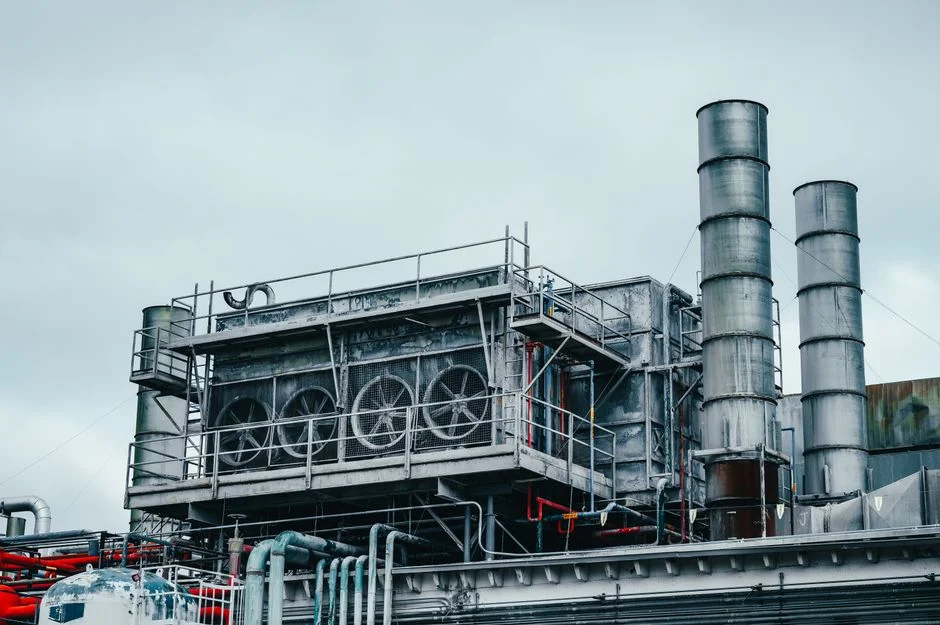
The reuse hierarchy should begin with destinations whose quality and public-health requirements can be demonstrated, then move toward more demanding uses. For example, toilet flushing, equipment washing, and locally appropriate irrigation or landscaping may have different constraints. Process-water reuse and cooling makeup require tighter controls, while controlled discharge depends on the receiving route rather than the existence of a reuse project.
| Destination | Principal decision issue | Required evidence |
|---|---|---|
| Toilet flushing | Public-health basis and reliable disinfection | Reuse specification, residual monitoring, operation and maintenance plan |
| Equipment washing | Residual chemical and solids suitability | Wash requirements, chemistry profile, treatment performance data |
| Landscaping or irrigation | Salinity, pathogens, nutrients, and local suitability | Complete quality envelope, receiving conditions, authority acceptance |
| Process water | Endpoint-specific purity and contamination risk | User-specific water-quality specification and compatibility trial |
| Cooling makeup | Return of concentrated salts to the cooling system | Full chemistry, scaling study, membrane compatibility, and pilot operation |
| Controlled discharge | Temperature, salinity, pollutants, and receiving-system capacity | Actual permit and monitoring conditions from the relevant Yemeni authority |
Cooling-tower makeup reuse is usually the most demanding internal option because the treated water returns to the same system that concentrated the dissolved salts. Sanitary wastewater and cooling blowdown should remain separate product streams unless a validated combined train demonstrates that both sources can meet the selected endpoint without compromising biological stability, disinfection, membrane compatibility, or cooling operation.
Obtain the actual permit, receiving-system rules, temperature limits, salinity limits, public-health requirements, and monitoring conditions from the relevant Yemeni authority. The supplied research does not provide Al Hudaydah permit limits, so a design should not state them as established facts. The data-center wastewater-treatment requirements in Bareilly provides a useful comparison framework, but its destination route cannot be substituted for local approvals.
Pilot testing is the decision gate for uncertain reuse. Test membrane compatibility, chemical removal, scaling tendency, biological stability, and fitness for the selected application. Do not proceed to full-scale or high-recovery equipment until the pilot identifies cleaning frequency, concentrate or sludge handling, operator interventions, and performance under representative variability.
Procure and Implement a Modular, Resilient Treatment Plant
A performance-based specification should define the complete water-quality envelope, not just nominal capacity. It should cover design flow, treatment objectives, automation, redundancy, power requirements, operator interface, maintenance access, spare parts, local service capability, and handling of residues. Sanitary and blowdown packages may share some utilities or controls, but their acceptance tests and operating procedures should remain distinct.
Scale the system to the facility and its operating organization. Genesis Water Technologies specifically warns that treatment technology developed for hyperscale facilities can be uneconomic and operationally too complex for smaller sites. Its comparison describes a smaller colocation facility as potentially facing capital cost per gallon treated at three to four times the hyperscale level, with operational complexity exceeding available staff expertise. This is not an Al Hudaydah cost estimate; it is a warning against importing unnecessary plant complexity.
Automatic controls and a measured water-balance dashboard should support operation, not replace it. Retain safe manual operation, bypass arrangements, alarms, and defined responses for abnormal water quality. Confirm utility support for power, chemicals, membranes, media, spare parts, sludge or concentrate handling, and trained operators before selecting a system that depends on intensive operation or high recovery.
- Baseline sampling: install or verify metering and sample points.
- Bench testing: define chemistry, settleability, filtration, and chemical-compatibility requirements.
- Pilot trial: test the selected treatment train under representative load and reuse conditions.
- Acceptance testing: verify flow, quality, controls, redundancy, and residue handling.
- Operator handover: provide training, manuals, spares, and preventive-maintenance schedules.
The procurement sequence should therefore be: measured baseline, destination decision, treatment envelope, pilot, performance specification, modular award, staged commissioning, and acceptance. The 2026 engineering guide for wastewater-plant digital twins can inform control and monitoring requirements, but an Al Hudaydah supplier should still demonstrate the proposed system against site data and local operating constraints.
Frequently Asked Questions
How much does treatment cost for a data center in Al Hudaydah?
There is no defensible project price without a site-specific mass-and-water balance. Request quotations based on measured makeup and blowdown, sanitary wastewater flow, complete water analyses, the intended reuse endpoint, pumping and power demand, chemical consumption, sludge or concentrate handling, redundancy, delivery to site, installation, commissioning, training, and local service support. Compare total installed and operating cost, not only equipment price. The Dubai wastewater-treatment cost breakdown and ROI guide provides a structure for that comparison, but its costs must not be applied to Al Hudaydah without local quotations.
Should we buy one combined treatment plant or separate units?
Separate treatment trains usually provide clearer process control because sanitary wastewater and cooling blowdown have different contaminants, treatment objectives, and reuse pathways. A combined train should be considered only after the site demonstrates that both streams can meet one endpoint and that mixing does not interfere with biology, disinfection, membrane operation, or scaling control.
What size treatment system should the supplier quote?
Ask the supplier to quote from the measured makeup-water flow, average and peak blowdown, sanitary wastewater flow and variability, analytical results, operating hours, storage, power availability, and intended reuse endpoint. Include emergency dumps and abnormal operating conditions. The screening CoC calculation is useful for comparing bids, but final capacity should be reconciled with the field water balance.
How do we select a wastewater and cooling-blowdown supplier in Yemen?
Request verified capacity under site-water conditions, automation details, chemical and energy consumption, membrane or media life, cleaning requirements, local spare-parts support, commissioning references, operator training, and performance guarantees tied to the complete site-water envelope. Also audit the supplier’s residue-handling plan and service response. Local operating capability and maintainability are selection criteria, not post-award details.
Can Al Hudaydah data centers achieve zero-liquid-discharge?
Feasibility cannot be inferred from general treatment guides or the project’s location alone. It requires the complete water balance, residual chemistry analysis, identified disposal routes, power and operator capability, lifecycle economics, and written acceptance by the relevant authority. Treat zero liquid discharge as a pilot-tested design outcome, not a procurement assumption.