Why Chile’s Water Crisis Demands Package Wastewater Treatment Plants
Chile’s water scarcity crisis—exacerbated by mining demand and drought—has accelerated demand for package wastewater treatment plants (WWTPs). These modular systems, with capacities from 1–80 m³/h, offer a cost-effective alternative to large-scale plants like Veolia’s La Farfana (300,000 tonnes/year sludge) or Sacyr’s $330M Antofagasta project. For Chilean facilities, key considerations include compliance with DS 90/2000 (<30 mg/L BOD for discharge), energy efficiency (Santiago’s plants consume 134 GWh/year), and scalability for remote sites. This guide provides 2025 technical specs, cost benchmarks, and a decision framework for MBR, DAF, and integrated systems.
According to World Bank data from 2024, approximately 76% of Chilean territory is currently affected by drought, a condition that has transitioned from a temporary emergency to a structural reality. In the industrial sector, the pressure is particularly acute; the mining sector alone consumes 3.5 times more water than all municipal requirements combined (Cochilco 2023). This imbalance has forced the Chilean government to initiate a USD 1.872 billion water security program, prioritizing reuse technologies and desalination. While large-scale projects like Sacyr’s 0.9 m³/s reuse facility for mining are vital, they often fail to address the immediate needs of decentralized industrial sites.
Large-scale municipal plants face significant hurdles in the Chilean geography, including high CAPEX requirements and long-term concessions—often spanning 35 years—which are incompatible with the rapid expansion of mining camps or food processing facilities. The energy intensity of centralized treatment is a major operational burden; Santiago’s three primary plants consume 134 GWh per year. For operations located 16 km or more from existing pipelines, the cost of infrastructure often outweighs the cost of the treatment technology itself.
Package wastewater treatment plants bridge this gap by offering modular designs that can be deployed within 3 to 6 months. Unlike centralized infrastructure, these systems are "plug-and-play," allowing for rapid scalability in remote regions like the Atacama Desert or the rural south. By treating water at the source, industrial facilities can bypass the logistics of long-distance transport and immediately implement reuse protocols for process water or irrigation.
Package Wastewater Treatment Plants: Technical Specifications for Chilean Conditions
The selection of a suitable package wastewater treatment plant in Chile depends on various factors, including influent characteristics and regional conditions.Evaporation rates in the Antofagasta region can reach 3,000 mm/year, a factor that significantly impacts the design of wastewater systems by increasing the concentration of dissolved solids in open lagoons. For engineers evaluating package plants, the choice between open and closed modular systems is critical to maintaining effluent stability. In contrast, facilities in Santiago face lower evaporation rates (approximately 500 mm/year) but must contend with stricter urban discharge regulations and limited physical space for infrastructure.
The influent characteristics in Chile vary drastically by industry. Mining wastewater is typically characterized by low pH (2–4) and high heavy metal concentrations, requiring robust pre-treatment. Food processing facilities, particularly in the fruit and salmon industries, generate effluents with high organic loads, with Biological Oxygen Demand (BOD) ranging from 1,000 to 5,000 mg/L. Municipal sewage in Chilean towns typically sees BOD levels between 200 and 400 mg/L. Package plants must be sized to handle these specific peak loads while ensuring compliance with DS 90/2000, which mandates BOD <30 mg/L and TSS <35 mg/L for discharge into surface waters.
For facilities aiming for water circularity, the NCh 1333 standard for irrigation reuse is the benchmark. This requires fecal coliform levels to remain below 1,000 CFU/100mL and specific limits on conductivity and boron, which are prevalent in Northern Chile’s groundwater. Energy efficiency is the final technical hurdle; while large plants like La Farfana average 1.2 kWh/m³, modern package plants operate between 0.3 and 0.8 kWh/m³, making them viable for off-grid sites powered by solar or diesel generators.
| Parameter | Mining (Package) | Food Processing (Package) | Municipal (Package) | DS 90/2000 Limit |
|---|---|---|---|---|
| Influent BOD (mg/L) | 100–300 | 1,000–5,000 | 200–400 | N/A |
| Effluent BOD (mg/L) | <10 | <20 | <15 | <30 |
| Effluent TSS (mg/L) | <5 | <15 | <10 | <35 |
| Energy Use (kWh/m³) | 0.5–0.8 | 0.4–0.7 | 0.3–0.5 | N/A |
| Footprint (m²/m³/h) | 1.5–2.5 | 2.0–4.0 | 1.2–2.0 | N/A |
MBR vs DAF vs Integrated Systems: Which Package Plant Fits Your Chilean Project?
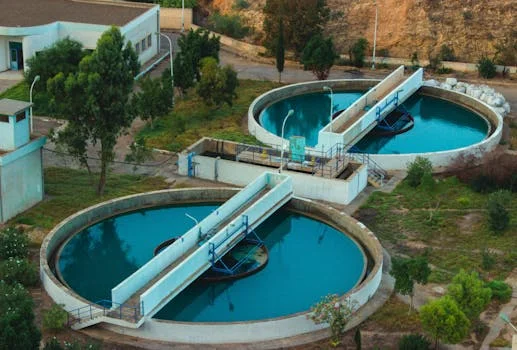
Membrane Bioreactor (MBR) systems utilizing PVDF membranes with 0.1 μm pore sizes achieve up to 99% pathogen removal, which is essential for meeting NCh 1333 standards without extensive chemical disinfection. These systems are particularly favored in the Chilean mining sector because they offer a 60% smaller footprint than conventional activated sludge plants. While the CAPEX is higher—ranging from $2,500 to $4,000 per m³/day—the high-quality effluent allows for immediate reuse in cooling towers or dust suppression. For a detailed breakdown of MBR technology for Chilean engineers, see this resource.
Dissolved Air Flotation (DAF) systems operate through the generation of micro-bubbles that attach to suspended solids and fats, oils, and grease (FOG). In the Chilean food processing industry, particularly in salmon rendering and fruit packing, DAF is the standard for primary treatment. These systems can handle flow rates from 4 to 300 m³/h and remove over 95% of TSS and FOG. However, DAF requires consistent chemical dosing of coagulants and flocculants, which adds to the OPEX. Utilizing DAF systems for Chilean food processing and industrial wastewater provides a robust defense against organic spikes that would otherwise blind membrane systems.
Integrated (A/O) systems, often designed as underground units, combine anoxic and aerobic biological processes with sedimentation in a single steel or FRP tank. These are the most cost-effective solutions for rural Chilean municipalities and worker camps. While they are limited to influent BOD levels below 1,000 mg/L, their OPEX is 30% lower than MBR systems because they rely on gravity and low-pressure aeration. Integrated package plants for Chilean municipalities and rural areas are often preferred for their "set-and-forget" operational profile. For projects requiring the highest possible water quality, MBR systems for Chilean mining and municipal reuse projects remain the gold standard.
| Feature | MBR (Membrane) | DAF (Flotation) | Integrated (A/O) |
|---|---|---|---|
| Primary Removal | BOD, Pathogens, Nutrients | TSS, FOG, Heavy Metals | BOD, Nitrogen |
| Effluent Quality | Ultra-pure (Reuse ready) | Pre-treatment quality | Discharge quality |
| Complexity | High (PLC automated) | Medium (Chemical mgmt) | Low (Mechanical) |
| Sludge Yield | Low | High (Chemical sludge) | Moderate |
| Ideal Use Case | Mining camps, Water reuse | Salmon/Fruit processing | Small towns, Hotels |
Cost Benchmarks for Package Wastewater Treatment Plants in Chile (2025 Data)
The cost of package wastewater treatment plants in Chile varies based on technology and capacity.Capital expenditure (CAPEX) for modular MBR systems in Chile currently ranges from $2,500 to $4,000 per m³/day of treated capacity, depending on the level of automation and pre-treatment requirements. These figures are significantly lower than the per-cubic-meter costs of large-scale infrastructure, which can exceed $10,000 per m³/day when factoring in pipeline construction and land acquisition. For Chilean procurement managers, the total cost of ownership (TCO) must include regional logistics, which can vary by as much as 30% depending on the site's accessibility.
Operational expenditure (OPEX) is dominated by energy and consumables. In Santiago and the central valley, energy costs average $0.12/kWh, while remote mining sites using diesel generators may face costs of $0.25/kWh or higher. MBR systems incur higher OPEX due to membrane replacement costs (estimated at $0.20–$0.50/m³ over a 5–7 year lifespan), whereas DAF systems are sensitive to the price of chemical polymers ($0.10–$0.30/m³). See how MBR systems perform in another water-stressed market to compare global OPEX trends.
Regional cost factors play a decisive role in project feasibility. In Antofagasta, labor and material costs are typically 20% higher than the national average due to the mining boom. Conversely, Patagonia projects face a 30% premium on logistics and specialized winterization (insulation and heating for tanks). To offset these costs, Chilean companies often leverage CORFO’s ‘Water Security’ program, which can cover 30–50% of the CAPEX for innovative reuse projects. Most industrial reuse projects in Chile currently show a payback period of 5 to 7 years when compared to the rising cost of purchasing freshwater.
| System Type | CAPEX (USD/m³/day) | OPEX (USD/m³) | Energy (kWh/m³) | Payback (Years) |
|---|---|---|---|---|
| MBR Package | $2,500 – $4,000 | $0.40 – $0.70 | 0.6 – 0.8 | 5 – 6 |
| DAF System | $1,200 – $2,500 | $0.30 – $0.50 | 0.3 – 0.5 | 3 – 4 |
| Integrated (A/O) | $800 – $1,800 | $0.15 – $0.30 | 0.3 – 0.4 | 4 – 5 |
Chilean Compliance Checklist: DS 90/2000, NCh 1333, and Industrial Discharge Limits