The 2025 cost of a wastewater treatment plant in Beira ranges from €1.2M for a compact 50 m³/h MBR system to €62.65M for a municipal-scale 50,000 m³/day plant (like the EU-funded Beira sanitation system). Key cost drivers include flow rate, removal efficiency (TSS/BOD), and cyclone resilience. EU grants cover up to 85% of municipal projects, while industrial facilities must budget €500–€1,200 per m³/h for turnkey solutions. Use this engineering breakdown to compare local suppliers, calculate ROI, and secure funding.
Beira’s €62.65M Sanitation Plant: What It Teaches About WWTP Costs
The 2012 inauguration of the Beira sanitation plant established a definitive cost benchmark for large-scale infrastructure in Mozambique, totaling €62.65 million for a 50,000 m³/day capacity. This project demonstrates the critical role of external financing in Beira’s municipal sector, with the European Union providing €52.95 million (85%) as a grant, while the Mozambican government covered the remaining €9.7 million. For municipal engineers and NGO coordinators, this project reveals that the per-capita investment for modern sanitation in Beira sits between €18 and €22, a figure comparable to the World Bank’s $9M investment in Maputo’s smaller-scale treatment facilities.
Analyzing the cost components of the Beira plant shows that civil works account for approximately 40% of the total budget. This is significantly higher than in inland regions due to Beira’s high water table and sandy soil, which necessitate extensive dewatering and specialized foundation stabilization. Mechanical and electrical (M&E) systems comprise 35% of the cost, emphasizing the need for high-quality pumps and aeration systems that can withstand the coastal humidity and salinity. Labor (15%) and design/permitting (10%) round out the expenditure. Notably, post-cyclone resilience—integrated through elevated structural designs and flood-proofing—added an estimated 12–18% to the original baseline costs but has proved essential for operational continuity during seasonal flooding.
The Beira plant utilizes a combination of activated sludge and tertiary treatment, specifically UV disinfection, to meet stringent EU discharge standards (BOD < 25 mg/L, TSS < 35 mg/L). This level of treatment is necessary to protect the sensitive ecosystems of the Chiveve River and the Indian Ocean. For new projects, engineers must account for these standards early in the design phase to remain eligible for international grant funding.
| Cost Component | Allocation (%) | Estimated Cost (€M) for 50k m³/day | Primary Cost Driver |
|---|---|---|---|
| Civil Works | 40% | €25.06M | High water table, dewatering, elevated foundations |
| Mechanical & Electrical | 35% | €21.93M | Imported pumps, UV systems, SCADA controls |
| Labor & Construction | 15% | €9.40M | Specialized technical labor, local contractors |
| Design & Permitting | 10% | €6.26M | EIA, feasibility studies, EU compliance audits |
2025 Wastewater Treatment Plant Costs in Beira: Compact vs. Municipal vs. Industrial
Turnkey costs for wastewater treatment projects in Beira are categorized by the scale of the facility and the complexity of the influent, with industrial systems commanding the highest premium per cubic meter. For smaller developments such as hospitals, hotels, or residential complexes, a compact underground sewage treatment system for Beira’s high water table (WSZ series) offers a cost-effective solution. These systems range from €1.2M to €5M. For instance, a 50 m³/h MBR system typically costs €2.4M when including installation and primary filtration, providing a compact footprint that is essential for urban Beira.
Municipal systems remain the most capital-intensive, ranging from €20M to €65M. A standard 10,000 m³/day plant in Beira, utilizing conventional activated sludge supplemented with tertiary treatment, averages €28M. Industrial facilities face higher costs per m³/h due to the necessity of specialized pretreatment. A 200 m³/h DAF system for industrial wastewater pretreatment in Beira’s food processing sector, combined with biological treatment, can cost up to €8.5M. This higher cost is driven by chemical dosing requirements and the need to handle high Fats, Oils, and Grease (FOG) concentrations that are common in Beira’s industrial zones.
Cyclone resilience is a non-negotiable cost factor for 2025. Engineering for resilience adds approximately 10–20% to the turnkey cost, covering reinforced concrete thickness, elevated electrical control rooms (minimum 1.5m above ground level), and redundant backup power systems. These features are critical to prevent catastrophic equipment failure during storm surges and heavy rainfall events.
| Plant Type | Capacity Range | Turnkey Cost (€) | Cost per m³/h (€) | Key Technologies | Use Case |
|---|---|---|---|---|---|
| Compact (Modular) | 1–80 m³/h | €1.2M – €5M | €24,000 | MBR, WSZ Series | Hotels, Hospitals, Small Communities |
| Municipal | 1,000–50,000 m³/day | €20M – €65M | €2,800 | Activated Sludge, UV, SBR | City Sanitation, Large NGOs |
| Industrial | 50–500 m³/h | €3M – €25M | €42,500 | DAF, Chemical Precipitation | Food Processing, Manufacturing |
For facilities requiring specialized sludge management, integrating sludge dewatering solutions for Beira WWTPs can further optimize operational costs by reducing waste volume, though it adds to the initial capital expenditure.
Engineering Parameters That Drive Beira WWTP Costs: Flow Rate, Removal Efficiency, and Footprint

Flow rate is the primary determinant of capital expenditure, but the relationship is non-linear; doubling a plant’s capacity from 100 m³/h to 200 m³/h typically increases costs by only 60–70% due to economies of scale in civil works and shared infrastructure. However, in Beira, the high water table means that increasing the footprint of a plant significantly increases dewatering costs during construction. Engineers often opt for an MBR membrane bioreactor for high-efficiency wastewater treatment in Beira to minimize the physical footprint, even though the technology itself carries a higher price tag than conventional clarifiers.
Removal efficiency requirements are the second major cost driver. While municipal plants targeting 90% BOD removal are standard, industrial facilities requiring >95% removal to meet local environmental regulations can see costs rise by 15–25%. An MBR system, for example, achieves 99% TSS removal and superior pathogen reduction, making it ideal for meeting hospital wastewater treatment standards for Beira’s healthcare sector, but it consumes more energy (0.8–1.2 kWh/m³) compared to conventional systems (0.3–0.5 kWh/m³).
Footprint optimization is critical in Beira’s densely populated areas. A compact underground sewage treatment system for Beira’s high water table (WSZ series) requires only 20 m² for a 50 m³/h capacity, whereas a traditional above-ground system might require 60 m². While the WSZ series reduces land acquisition costs, the subterranean civil works must be waterproofed to a high specification to prevent groundwater infiltration, adding 20–30% to the civil budget compared to inland Mozambique.
| Technology | Energy Use (kWh/m³) | Removal (BOD/TSS) | Footprint (m² per m³/h) | Relative Civil Cost |
|---|---|---|---|---|
| MBR (Membrane Bioreactor) | 0.8 – 1.2 | >98% | 0.4 – 0.6 | Medium |
| Conventional Activated Sludge | 0.3 – 0.5 | >90% | 1.2 – 1.8 | High (Large Footprint) |
| WSZ Underground (A/O) | 0.4 – 0.7 | >85% | 0.3 – 0.5 | Very High (Waterproofing) |
EU Funding and Grants for Beira Wastewater Projects: How to Secure 85% Coverage
The European Union remains the primary source of financing for Beira’s sanitation infrastructure, providing non-reimbursable grants for projects that align with the EU Urban Waste Water Directive 91/271/EEC. These grants, often channeled through the European Development Fund (EDF) or the Global Gateway Initiative, can cover up to 85% of the total project cost for municipal and NGO-led initiatives. Eligibility is strictly tied to environmental performance; projects must demonstrate the ability to achieve BOD levels below 25 mg/L and TSS below 35 mg/L to qualify for the highest tier of funding.
The application process for these grants is rigorous and requires a minimum of 12–18 months for approval. It begins with a comprehensive feasibility study (costing €50K–€150K) and an Environmental Impact Assessment (EIA) (€30K–€100K). Projects that incorporate post-cyclone resilience—such as flood-proofing and elevated structures—are prioritized in the selection process. While industrial facilities are generally ineligible for direct EU grants, they can access low-interest loans (2–4%) from the World Bank or the African Development Bank, provided the project significantly reduces the facility’s environmental footprint.
| Step | Estimated Cost | Timeline | Required Documents |
|---|---|---|---|
| 1. Feasibility Study | €50K – €150K | 3–6 Months | Technical specs, flow data, site analysis |
| 2. EIA & Permitting | €30K – €100K | 6–9 Months | Environmental impact report, local permits |
| 3. Grant Application | Internal/Admin | 4–6 Months | EU Directive compliance proof, budget breakdown |
| 4. EPC Tender | Admin | 3–5 Months | Tender documents, technical evaluation |
Local vs. International Suppliers: Which Offers Better Value for Beira WWTPs?
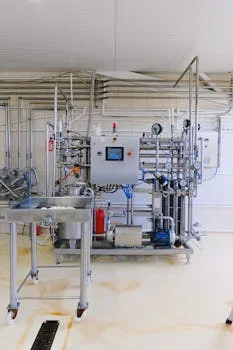
Procurement decisions in Beira typically involve a trade-off between the low upfront costs of local civil contractors and the long-term operational efficiency of international equipment manufacturers. Local suppliers in Mozambique are often 20–30% cheaper for civil works and standard labor, but they are generally limited to conventional technologies such as lagoons or basic activated sludge. These systems have a longer lead time (12–18 months) and may struggle to meet the strict effluent standards required for EU funding eligibility.
International suppliers, including providers of MBR membrane bioreactors for high-efficiency wastewater treatment in Beira, offer advanced technologies that ensure compliance with global standards. While their initial costs are 30–50% higher, the lead time is often shorter (6–12 months) due to the use of modular, prefabricated components. A hybrid approach—utilizing local contractors for civil works and importing specialized equipment like membranes, pumps, and a DAF system for industrial wastewater pretreatment in Beira’s food processing sector—is often the most balanced strategy. This can reduce the total turnkey cost of a 50 m³/h MBR plant from €2.4M to approximately €1.8M.
| Factor | Local Suppliers | International Suppliers | Hybrid Approach |
|---|---|---|---|
| Initial Cost | Lowest | Highest | Moderate |
| Technology Level | Basic (Lagoons/AS) | Advanced (MBR/DAF) | Advanced Equipment |
| Lead Time | 12–18 Months | 6–12 Months | 9–14 Months |
| Warranty | 1 Year | 5–10 Years (Membranes) | Split Warranty |
| EU Eligibility | Low | Very High | High |
ROI Calculator: How to Justify Your Beira Wastewater Treatment Investment
Financial justification for wastewater treatment in Beira relies on a multi-variable ROI calculation that accounts for avoided regulatory fines, water reuse savings, and the mitigation of cyclone-related infrastructure damage. For municipal projects, the ROI is primarily driven by the avoidance of penalties under Mozambique’s 2023 Water Law, which can range from €50K to €200K per incident of non-compliance. When combined with 85% EU grant coverage, a €28M municipal plant can achieve a payback period of less than 5 years through avoided fines and improved public health outcomes.
Industrial facilities see a more direct financial return through water reuse. In Beira’s food processing sector, freshwater costs average €0.50/m³. By implementing a 200 m³/h DAF and biological system, a facility can reuse up to 70% of its process water, leading to annual savings of over €500,000. This results in a typical payback period of 3.5 to 4.5 years. investing in cyclone resilience adds 15% to the capital cost but reduces the risk of operational downtime by an estimated 40%, which is critical for maintaining supply chain commitments during the cyclone season.
ROI Formula for Beira WWTP:
Payback Period (Years) = (Total Capital Cost - Grants) / (Annual Savings from Water Reuse + Avoided Fines - Annual O&M Costs)
| Project Type | Net CapEx (After Grants) | Annual Savings/Avoided Fines | Annual O&M | Payback Period |
|---|---|---|---|---|
| Municipal (50k m³/day) | €9.7M (15% match) | €2.5M | €450K | 4.7 Years |
| Industrial (200 m³/h) | €8.5M (No grant) | €2.8M | €600K | 3.9 Years |
| Compact MBR (50 m³/h) | €2.4M (No grant) | €850K | €180K | 3.6 Years |
To further improve the ROI, facilities should consider high-efficiency sludge dewatering solutions for Beira WWTPs, which lower the cost of sludge transport and disposal, a significant portion of the annual O&M budget.
Frequently Asked Questions
What is the average cost of wastewater treatment per cubic meter in Beira?
For municipal systems, the capital cost is approximately €2,800 per m³/h of capacity. For industrial systems requiring advanced pretreatment like DAF, the cost increases to €42,500 per m³/h due to the complexity of the influent.
Does the Beira government provide subsidies for industrial wastewater treatment?
While direct subsidies are rare, the government offers tax incentives for "Green Investments" and facilitates low-interest loans through the African Development Bank for facilities that meet strict environmental compliance standards.
How does Beira’s high water table affect construction costs?
The high water table requires continuous dewatering during excavation and specialized waterproofing for any underground components. This typically adds 20–30% to the civil engineering budget compared to projects in drier regions like Tete.
What are the minimum discharge standards for Beira?
To remain compliant with local laws and eligible for EU funding, effluent must generally meet BOD < 25 mg/L, TSS < 35 mg/L, and COD < 125 mg/L. Industrial standards may be stricter depending on the specific pollutants involved.
Can compact systems like the WSZ series withstand cyclones?
Yes, provided they are designed with elevated electrical controls and reinforced concrete anchors to prevent "floating" in saturated soils during flood events. These modifications are standard for engineering firms operating in the Beira corridor.
Related Equipment
- compact underground sewage treatment system for Beira’s high water table — view specifications, capacity range, and technical data
- MBR membrane bioreactor for high-efficiency wastewater treatment in Beira — view specifications, capacity range, and technical data
- DAF system for industrial wastewater pretreatment in Beira’s food processing sector — view specifications, capacity range, and technical data
Need a customized solution? Request a free quote with your specific flow rate and pollutant parameters.