Define the Liberia treatment problem before selecting equipment
Contaminants such as soluble organics, suspended solids, oil, grease, ammonia, and toxic compounds drive the design of a high-COD industrial wastewater system in Liberia. DAF pretreatment removes floatable and suspended material before biological treatment; an MBR combines biological treatment with membrane filtration where low suspended solids and industrial effluent reuse are priorities. A TFBR study reported 91.7% COD removal and 56.7% ammonia removal from wastewater containing 5,000 mg/L COD and 230 mg/L ammonia, but this was a 1,500 L/day research reactor with an 8 h hydraulic residence time—not a Liberia project guarantee. Final selection requires site-specific COD, flow, wastewater composition, discharge route and effluent targets.
Pollution context should be established before moving to measured site data. An academic study of beer-industry effluent in Montserrado, Liberia, identified untreated brewery effluent and increasing industrial growth as contributors to river pollution. It also called for immediate and substantial intervention, while noting that the nature and extent of pollution from wastewater discharges had not been thoroughly examined. This supports a site-specific engineering approach rather than transfer of a generic equipment catalogue.
Request average, peak and minimum wastewater flows, together with representative influent COD results from each significant production stream. The available Liberia material does not establish a discharge limit, site flow or design COD. Ask the plant laboratory or an accredited laboratory for COD test records covering normal production, batch discharges, cleaning operations and seasonal variation. COD measurement is useful for tracking oxidizable material, but it does not measure toxicity; that requires separate characterization.
Characterize suspended solids, oil and grease, pH, ammonia, temperature and toxic compounds. COD alone cannot show whether DAF pretreatment, biological wastewater treatment or membrane separation is the more suitable train. Use the industrial wastewater treatment equipment selection guide to structure that characterization.
Confirm the intended route before issuing an RFQ: direct discharge, sewer connection, pretreatment for a central plant or industrial effluent reuse. Obtain the applicable permit, sewer acceptance criteria or reuse specification. If the plant intends reuse, identify the end use and any water-quality requirement issued by the receiving process or authority; a general preference for reuse is not an acceptance criterion.
Compare DAF, MBR and combined treatment routes
Removal mechanisms must be assigned to each pollutant to determine the appropriate treatment route. DAF addresses material that can be separated physically; biological treatment addresses biodegradable organics and, when properly designed and operated, ammonia; MBR adds membrane separation to biological treatment. The route should therefore follow the complete wastewater characterization and the required effluent quality, not the COD number alone.
| Discharge route or influent problem | Governing rule or process option | What data settles it |
|---|---|---|
| Suspended solids, oil and grease or floatable material preceding biological treatment | Evaluate DAF pretreatment when the characterization shows material that should be removed before biological loading. | Representative suspended-solids and oil-and-grease results, flow data and the required pretreatment effluent quality. |
| High soluble COD with ammonia requiring biological removal | Evaluate biological wastewater treatment; use the TFBR results only as evidence under the stated research conditions, not as a sizing rule. | Influent COD, ammonia, biodegradability, toxicity, temperature, flow variation and the required final COD and ammonia levels. |
| Low suspended solids required for industrial effluent reuse | Evaluate MBR where biological treatment and membrane solids separation serve the reuse objective. | Reuse specification, required effluent solids level, membrane operating constraints, site footprint and available operating resources. |
| Combined contaminants requiring staged treatment | Compare DAF followed by biological treatment against MBR with its upstream pretreatment requirements. | Complete characterization, equalization need, footprint, power availability, operator skill and treatment-stage performance criteria. |
The TFBR study provides a defined performance reference for the biological option: it was designed for 1,500 L/day of high-strength wastewater containing 5,000 mg/L COD and 230 mg/L ammonia, with an 8 h hydraulic residence time. Under those designed conditions, it reported 91.7% COD removal and 56.7% ammonia removal with low-concentration suspended solids in the effluent. Those results support the feasibility of aerobic biological treatment, but they cannot be transferred directly to a Liberian plant without matching flow, wastewater composition, reactor configuration and operating conditions.
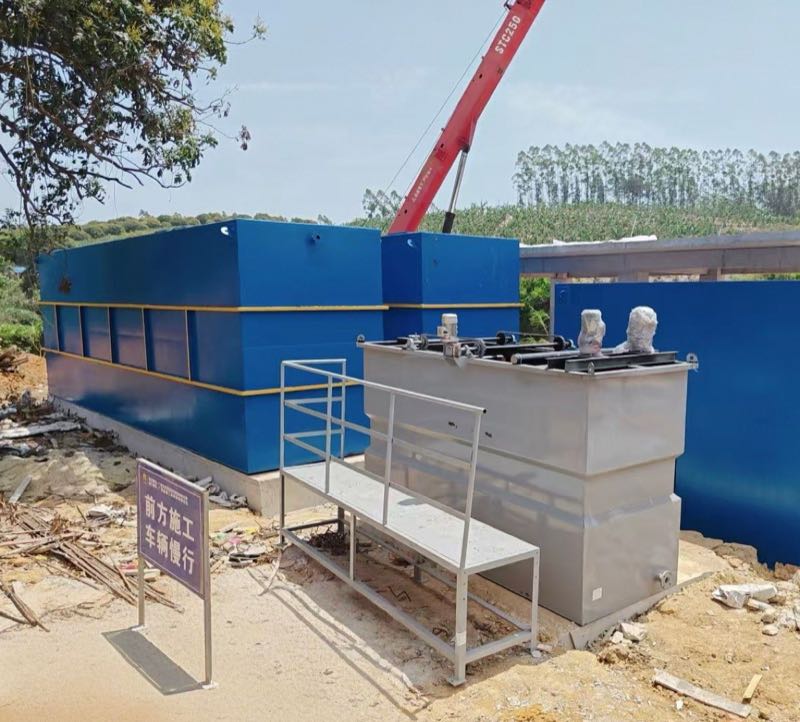
Use the comparison of DAF, MBR and reuse routes to examine how the same decision changes when the discharge destination changes. A DAF system for high-COD wastewater pretreatment is a candidate for solids and floatable-material removal; an integrated MBR wastewater treatment system is a candidate where biological treatment and membrane solids separation are both required.
Turn the selected route into an RFQ-ready specification

A comparable wastewater treatment quotation must state the design basis and every included treatment stage. Do not compare a DAF-only offer with a complete biological or MBR offer without identifying the missing duties. Require each bidder to define its process assumptions, sizing calculations and responsibility for meeting the agreed treatment objective.
- State the design flow, design COD, treatment objective, process stages, equipment-sizing basis and expected performance basis.
- Identify every included and excluded stage, including equalization, chemical dosing, aeration, filtration and disinfection.
- Define the control strategy, utilities, site services, installation interfaces and operator-training scope.
- For sludge-producing routes, state sludge characteristics, expected generation rate, thickening or dewatering arrangements and disposal assumptions.
- Identify the basis of every performance statement and attach the supporting calculation or test evidence.
| Quote line item | Technical scope to specify | Red flags to check before signing |
|---|---|---|
| Design basis and process route | Design flow, design COD, required effluent quality, pollutant loading assumptions, process stages and sizing calculations. | A quotation states only equipment dimensions, omits influent assumptions or presents a removal percentage without its operating basis. |
| DAF pretreatment | Clarified-feed performance basis, chemical dosing, sludge withdrawal, recirculation, controls and the pretreatment objective. | DAF is credited with biological COD removal without showing how suspended solids, oil and grease or biodegradability are handled. |
| Biological treatment or MBR | Bioreactor sizing, aeration, membrane arrangement, solids separation, control philosophy, utilities and required effluent objective. | A research-condition result is presented as a guaranteed project outcome without a site-specific design reconciliation. |
| Equalization, dosing and auxiliary equipment | Include or exclude each item, identify its capacity, duty, connection point and operating requirement. | Essential ancillary equipment is omitted from the price or described only as “by others.” |
| Sludge handling and disposal | Sludge stream description, generation-rate basis, thickening or dewatering method and final disposal assumption. | The route generates sludge but the quotation contains no destination, capacity basis or responsibility for conditioned residuals. |
| Installation, commissioning and training | Civil interfaces, utilities, power, controls, commissioning tests, acceptance procedure, training and documentation. | Performance conditions are unspecified, or start-up, operator training and compliance verification are excluded from scope. |
The TFBR figures must remain identified as research-condition evidence unless a bidder independently demonstrates compliance with the same project basis. Also make clear that no Liberia discharge limit is established by the available material. The buyer must obtain the governing site-specific requirement before converting it into a guaranteed performance clause.
Set acceptance criteria and verification responsibilities
Acceptance must be defined around measurable obligations, sampling points and responsible parties. A supplier guarantee is meaningful only when the influent basis, treatment route, operating conditions and sampling method are written into the purchase specification.
- Influent sampling: State sampling locations, production-status conditions, test frequency, laboratory method and whether the buyer or supplier collects and analyzes samples.
- Effluent sampling: Identify acceptance sample points and test COD plus every other contaminant required by the permit, sewer criteria or reuse specification.
- Performance demonstration: Require evidence that the selected route can meet the agreed COD objective while also addressing the suspended solids, oil and grease, ammonia and toxicity identified during characterization.
- Buyer inputs: Provide flow records, representative samples, site drawings, available power, installation constraints and the discharge or reuse criteria.
- Supplier deliverables: Require process calculations, guarantees, drawings, operating manuals, pre-delivery inspection records, commissioning evidence and training.
- Compliance hold point: Make permit conditions, sewer acceptance criteria or reuse requirements a prerequisite to signing the performance guarantee.
Use the industrial sludge dewatering selection to verify whether conditioned sludge leaves the treatment train in a form that can be handled, stored and disposed of. Any dewatering statement should identify the sludge characteristics and generation basis rather than merely list a machine.
Do not infer a Liberia compliance limit from the cited Montserrado study or the TFBR research. Request the applicable permit, sewer acceptance criteria or reuse specification from the responsible authority, receiving utility or intended reuse process. If those documents remain unavailable, record that limitation and require the supplier to quote compliance exclusions explicitly.
Frequently Asked Questions
How should a high-COD industrial wastewater system in Liberia be sized?
Size systems from average and peak flows, representative influent COD and the complete wastewater characterization—not from a removal percentage alone. The quotation should state the design flow, design COD, treatment objective, equipment-sizing basis and expected performance basis. Ask the bidder to reconcile any proposed sizing with site flow variation, batch discharges, equalization and the identified contaminants.
When should the facility combine DAF pretreatment with biological treatment or MBR?
Combine DAF pretreatment with biological treatment when characterization shows suspended solids, oil and grease or floatable material that should be removed before biological loading. Consider MBR when biological treatment is required and the effluent specification, particularly solids control or industrial effluent reuse, justifies membrane separation. Confirm the choice using measured contaminants, required effluent quality, footprint, utilities and operator resources.
What should a wastewater treatment quotation include before price comparison?
Request one priced scope that identifies the design basis, treatment stages, sizing calculations, chemical dosing, aeration, filtration, disinfection, controls, utilities, installation interfaces, sludge handling, commissioning, testing and training. Ask each supplier to mark included and excluded items. Without those boundaries, a lower equipment price may omit equalization, dosing, dewatering or performance obligations.
How should supplier selection and Liberia compliance risk be verified?
Verify whether the supplier provides site-specific process calculations, a defined guarantee, relevant performance evidence, pre-delivery inspection records and operator training. Separately obtain the applicable Liberia permit, sewer acceptance criteria or reuse specification. Do not use the TFBR research figures as a project guarantee, and do not assume the Montserrado study establishes a discharge limit; unresolved compliance requirements should remain explicit pre-signature exclusions.