Confirm the design basis before selecting containers
Choose the smallest containerized treatment configuration that safely covers the project’s verified peak wastewater flow and required effluent quality. Available supplier references include sewage systems serving 50 to 20,000 people, while one complete 40-foot containerized unit may process between 200 and 500 PE (ClearFox; Agelyo). Confirm average and peak flows, COD, BOD, suspended solids, fats, oils and grease, pH, discharge or reuse requirements, and site conditions before selecting the process and container count.
Population equivalent sizing converts a contributing population into a loading basis, but it does not replace flow measurement. Request the design population, average daily flow, peak-hour flow, seasonal variation and any projected future development from the project engineer. For domestic sewage treatment, obtain representative laboratory results for COD, BOD, suspended solids, fats, oils and grease, and pH. Temperature should also be recorded because it affects biological treatment performance.
Confirm the treated-water route before choosing equipment. A discharge into a receiving environment must be assessed against the applicable project requirements, while reuse for irrigation, toilet flushing or cleaning may require additional treatment. Agelyo identifies discharge quality and reuse requirements as inputs to site-specific sizing. Ask the project authority for the applicable Congo permit, receiving-water conditions or reuse specification; do not infer those requirements from a generic package description.
Use the worksheet below to separate missing inputs from process decisions. The packaged A/O sewage treatment plant provides a useful reference point for a packaged biological route, but it cannot be selected until the wastewater quality and discharge route are known.
| Discharge route or influent problem | Governing rule or process option | What data settles it |
|---|---|---|
| Direct discharge | Define the contracted effluent limits before selecting clarification, filtration, disinfection or other final-treatment stages. | Permit criteria, receiving-water information, proposed sampling point and required test parameters. |
| Reuse for irrigation, toilet flushing or cleaning | Evaluate additional treatment; reuse suitability is not established by domestic treatment capacity alone. | Intended reuse, receiving conditions, public-health or site requirements and the required additional-treatment stage. |
| Domestic sewage with routine biological loading | Compare packaged A/O treatment with a membrane route using effluent quality, footprint, maintenance capability and lifecycle priorities. | Average and peak flow, COD, BOD, suspended solids, pH, temperature and design population. |
| Fats, oils and grease or industrial contamination | Evaluate pretreatment before the biological sewage process rather than assigning the duty to a standard domestic package. | Influent concentrations, waste source, flow variability, sampling results and discharge or reuse criteria. |
Match the treatment route to the project risk
Select biological treatment by the required effluent outcome and the contaminants that the package must handle. For domestic sewage, a packaged A/O route should be compared with a containerized MBR treatment system on effluent quality, reuse requirements, footprint, operator capability, maintenance access and lifecycle priorities. The comparison must use the same verified flow and influent data; a process name alone does not establish suitability. Transitioning from the design basis to the treatment route requires aligning specific effluent goals with the chosen technology.
Use pretreatment where the wastewater contains material that could impair biological treatment or the contracted treatment objectives. Fats, oils and grease are the first project-specific concern to resolve. If their presence is confirmed, request a separate process assessment covering removal, retained solids, sludge handling and the effect of the pretreatment on downstream capacity.
Make the decision through this sequence:
- Confirm whether the final route is discharge or reuse, and obtain the governing criteria from the project authority.
- Establish average flow, peak flow, seasonal variation and design population from records or a contracted flow study.
- Characterize COD, BOD, suspended solids, fats, oils and grease, pH and temperature.
- Compare A/O and MBR arrangements against the verified duty, available footprint and operating resources.
- Assign pretreatment, sludge handling, disinfection and reuse stages only where the influent or final-use assessment requires them.
Agelyo states that its regional projects use SBR, FBR, activated-sludge, pretreatment and reuse-related arrangements selected after analysis of site conditions, volumes and discharge requirements. That supports a project-specific selection process, not a universal process choice.
Set the preliminary container configuration
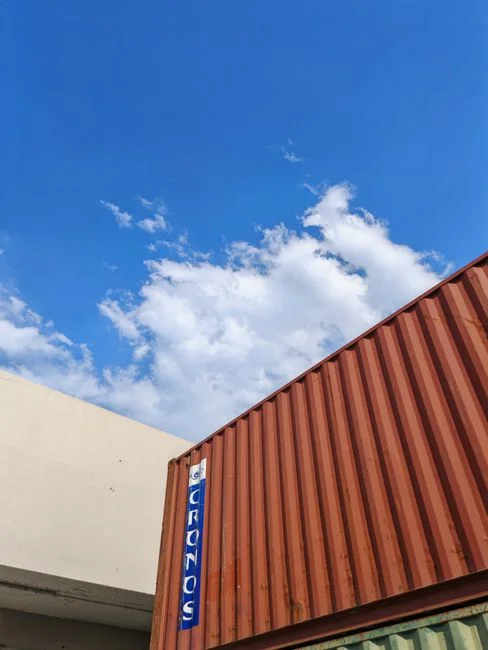
Test the preliminary arrangement against verified hydraulic and organic loading before accepting a container count. Agelyo states that a complete 40-foot containerized unit can process between 200 and 500 PE and that multiple units can be combined for larger capacities. Use that published example as a commercial screening reference only; the supplier must demonstrate that its proposed configuration covers the project’s actual peak flow and load. Establishing the correct number of containers relies on verified flow data rather than standard capacity ratings.
Consider three preliminary arrangements. A single container may be sufficient only when its stated duty covers the verified peak flow, contaminant loading, effluent requirements and future operating conditions. Parallel containers provide capacity and operating flexibility where one duty unit cannot cover the required loading or where standby operation is needed. A multi-stage arrangement is appropriate when the treatment sequence requires separate process modules, such as pretreatment, biological treatment, clarification and filtration.
Do not equate PE with hydraulic capacity. Require the quotation to state the design average flow, peak flow, daily load, treatment objective and operating scenario for each configuration. If these values are absent, the proposed container count remains a commercial reference rather than an engineered selection.
Reserve expansion only where development is credible. Ask the supplier to identify the future hydraulic capacity, electrical supply requirement, footprint and connection interfaces that must remain available. ClearFox describes modular systems that allow flexible scaling and expansion as project demand changes, while Agelyo identifies additional units as a means of meeting growth.
For envelope checks, ClearFox lists sewage service from 50 to 20,000 people and industrial wastewater from 1m3/hr to 250m3/hr. These figures describe that supplier’s commercial range; they do not establish Congo design standards or replace the project’s flow data.
Build a quotation request that fixes responsibilities
Require each supplier to quote the performance duty and the physical scope separately. A quotation should identify the design flow, daily load, process description, container dimensions, equipment duty, utilities, retention-time assumptions and proposed treatment capacity. It should also state what remains outside the supplied scope, particularly civil works, site connections, power adaptation, sludge removal and commissioning support. Clearly defined scopes prevent gaps between equipment supply and operational readiness.
Ask for factory acceptance testing, site connection activities, operator training, commissioning, remote monitoring, spare parts, documentation and warranty responsibilities as separate line items. Factory-tested, pre-installed equipment remains a scope requirement, not a substitute for site preparation or utility connections. ClearFox describes equipment as preinstalled and factory tested, with on-site inlet, outlet and power connections remaining necessary; ROAGUA likewise describes fully wired, plumbed and factory-tested container systems.
| Quote line item | Technical scope to specify | Red flags to check before signing |
|---|---|---|
| Design basis and process | Average and peak flow, daily load, influent limits, treatment route, retention-time assumptions, final effluent criteria and operating scenarios. | Capacity stated only in PE, missing peak-flow duty, or no stated effluent basis. |
| Supply and factory acceptance | Container dimensions, pre-installed equipment, utilities, controls, factory test procedure, witnessed results and documentation. | “Factory tested” is stated without a test method, acceptance record or hold-point responsibility. |
| Transport and site delivery | 20-foot or 40-foot format, packing, shipping terms, inland haulage, unloading, route survey, lifting access and delivery milestone. | Oversized cargo, inland transport, permits or cranes are left unassigned. |
| Foundations and connections | Concrete base or other foundation, inlet, outlet, sludge withdrawal, drainage, power, backup power and local utility interfaces. | The supplier assumes “plug and play” without defining who prepares the base and connects services. |
| Commissioning and training | Site testing, wet commissioning, process stabilization, operator training, handover documents, remote support and defect correction. | Commissioning stops at delivery, or training, spares and troubleshooting support are excluded. |
| Owner-provided information | Flow records, influent analyses, effluent criteria, power supply, base design, access, drainage and available operating staff. | Supplier design depends on owner data that has not been supplied or formally accepted. |
Send the same data package to every bidder. Require each response to identify assumptions and exclusions so quotations can be compared on the same scope.
Plan delivery, commissioning and operating acceptance
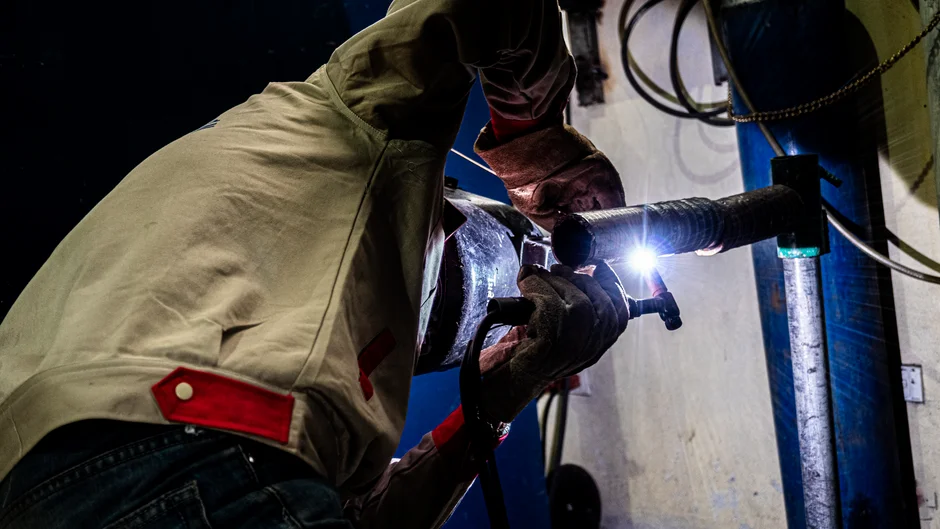
Define delivery milestones against the site-access risk. Require the quotation to identify the 20-foot or 40-foot transport format, shipping and inland-haulage responsibilities, route survey, unloading and lifting equipment, and the required concrete base or other foundation. ClearFox describes containerized systems as transportable by land or sea, with solid-base placement and connections still required. Successful deployment depends on matching these logistical requirements with site-specific constraints.
Make inlet, outlet, sludge withdrawal and power connections identifiable commissioning deliverables. Also identify the person responsible for testing each interface, commissioning chemicals, confirming equipment rotation, stabilizing the biological process and recording operating parameters. ClearFox’s plug-and-play description identifies inlet, outlet and power connections; the project contract should turn those connections into testable deliverables.
Write performance acceptance around the contracted flow and effluent requirements. Specify test procedures, sampling points, witnessing, operating period, training records, remote-support arrangements and the process for correcting defects. Agelyo states that sizing follows a site-specific assessment and that commissioning, on-site training, operational monitoring and support are part of its stated service scope. Require equivalent evidence from each bidder rather than assuming a standard package includes it.
For a Congo site where specialist access may be limited, request a spare-parts list, recommended stock, critical-equipment response arrangements and remote-monitoring options. Agelyo describes remote monitoring, fault detection and remote adjustment capabilities, while ClearFox offers optional remote monitoring and control. The quotation must identify the service provider, connection requirements, operating responsibility and any communication dependency.
The containerized sewage plant sizing worksheet can help structure the comparison between MBBR and MBR, while the package sewage treatment comparison provides a commercial reference for a packaged project scope.
Further Reading
Frequently Asked Questions
How do I size a plant when only the population equivalent is known?
Use PE only to obtain a preliminary supplier screen, not to fix the plant size. Agelyo’s published example places a complete 40-foot containerized unit at 200 to 500 PE, but the buyer must request average flow, peak-hour flow, seasonal variation, influent tests and effluent criteria before selecting a configuration. Ask the supplier to reconcile its PE claim with its stated design flow and daily load.
When is one 40-foot container sufficient, and when are parallel units needed?
One container is a preliminary candidate only when its verified hydraulic and organic capacity covers the project’s peak demand and contracted effluent outcome. Require parallel units where the confirmed load exceeds one unit’s duty, where operating flexibility or standby service is required, or where the proposed arrangement cannot meet the acceptance criteria. Confirm that expansion space, power and connection interfaces remain available if demand is expected to grow.
What should a supplier quotation include for a Congo project?
Request separate prices and responsibilities for process design, container supply, factory testing, shipping, inland haulage, unloading, foundations, site connections, utilities, commissioning, training, remote support, spares, documentation, warranty and performance testing. Also list the owner’s required inputs. Obtain the applicable project discharge or reuse criteria from the relevant authority and require the supplier to state which quoted features achieve them; no universal Congo limit should be assumed.
How should the buyer verify discharge or reuse compliance?
Base acceptance on written project criteria, agreed test methods, sampling points and contractual flow conditions. Obtain the permit or reuse specification from the responsible Congo authority and require the supplier to state how its proposed process meets each