Confirm the drainage route and treatment boundary
Containerized sewage treatment plant sizing in the Central African Republic begins by deciding the drainage route and documenting flow, organic load, effluent duty, soil, access, and approval constraints. A packaged sewage treatment plant may be appropriate for on-site treatment, but it is not a universal substitute for sewer availability. Municipal sewer service is not generally available, so confirm the connection status at the plot and obtain local confirmation from the municipality and a professional registered in the Central African Republic.
Keep foul drainage separate from roof and paving water. The local guidance states that combining storm and foul water overloads treatment and is prohibited; roof water should enter a separate soakaway or storm drain. This boundary affects inlet works, peak flow, pipe sizing, and the treatment duty quoted.
Before ordering equipment, classify the project as sewer extension, on-site treatment, hybrid treatment, or reuse. Ask the local authority and registered professional to confirm the required drainage route, treatment boundary, inspection requirements, outlet conditions, and documents needed for approval. Their confirmation should define the quotation scope rather than a generic compliance statement.
Build the design basis from flow, load and effluent requirements
The design basis must identify average flow, peak wastewater flow, and the time basis for each figure before equipment capacity is calculated. A general containerized-plant reference gives small-community treatment capacity around 10 cubic meters per hour and industrial wastewater treatment capacities of 50 to 100 cubic meters per hour, but these examples do not size a project in the Central African Republic.
Use measured flow or the process brief where population is not the driver. For domestic flow, state the selected per-capita water or sewage allowance and its source before multiplying it by the served population. The reference material reports 150 L per person per day for the UK and notes about 170 L per person per day as a US EPA residential typical; neither is evidence of a local allowance. Obtain the project’s applicable basis from the local professional or client brief.
Record the design-time basis carefully. The sizing reference distinguishes highest-day flow from average daily flow and warns that a highest-day estimate cannot be multiplied directly by an average-day factor. Use an average flow, highest-day flow, and peak-factor method with clearly identified inputs rather than combining figures from different conventions.
- Record served population or use meter and process-brief data.
- State the selected sewage allowance and its source.
- Calculate average daily flow and document the peak method.
- Obtain representative influent COD, BOD5, and suspended-solids data.
- Identify inhibitory or toxic constituents before choosing the biological route.
- Define the required effluent quality and receiving or disposal route.
| Discharge route or influent problem | Governing rule or process option | What data settles it |
|---|---|---|
| No verified municipal sewer connection | Plan on-site treatment while the boundary remains project-specific. | Written confirmation from the municipality and a professional registered in the Central African Republic. |
| Stormwater enters foul drainage | Separate roof and paving water; combining storm and foul overloads treatment and is prohibited. | Site drainage plan, catchment areas, roof outlets, paving levels, and proposed connections. |
| Domestic wastewater with uncertain flow | Establish the design-time basis before calculating capacity. | Population, selected per-capita allowance and its source, water meter records, and average and peak-flow method. |
| Industrial or institutional wastewater | Size from measured flow and contaminant load rather than population alone. | Representative samples and process brief covering COD, BOD5, suspended solids, toxicity, and discharge route. |
| Required discharge quality is undefined | Do not select MBR, A/O, DAF pretreatment, or another route until the duty is established. | Local approval conditions, receiving-environment criteria, and intended reuse or disposal specification. |
Compare process routes against the actual duty
Selecting the treatment train based on the contaminant problem and required effluent quality ensures alignment with project needs. An A/O biological treatment route may suit a project where activated sludge and anoxic biological capacity are appropriate, while an integrated MBR wastewater treatment system requires a different membrane, solids-retention, and maintenance basis. DAF pretreatment is a candidate for industrial streams requiring solids or float removal, but it should not be presented as the biological treatment capacity itself.
Use the containerized sewage plant sizing worksheet for Benin as a process-check framework only; it does not establish Central African Republic design inputs. The packaged sewage treatment plant comparison can support route comparison, but project flow, wastewater characteristics, and approval conditions must come from the Central African Republic site.
Ask each candidate supplier to state why the proposed route fits the measured duty, what pretreatment is required, and which performance evidence demonstrates compliance with the stated effluent objectives. For a reuse project, also request the relevant reuse specification. A domestic sewage treatment buyer’s guide may help structure domestic options, but it does not replace local approval or site analysis.
Check biological loading, residence time and peak capacity
Hydraulic and biological checks must be completed separately to ensure system stability. Use V = Q × HRT for each tank, and state whether Q is average or peak. The sizing reference directs hydraulic channels and pipes to be checked on peak flow, while biological tanks are designed using average flow, load, and solids retention time, followed by a peak-hydraulic check.
For high-organic industrial streams, establish the organic load before sizing biology and include settled pretreatment where appropriate. A generic concentration table cannot replace site data: design quality should come from a survey or neighboring data when measured influent is unavailable. Clearly label such substitutes as assumptions requiring confirmation.
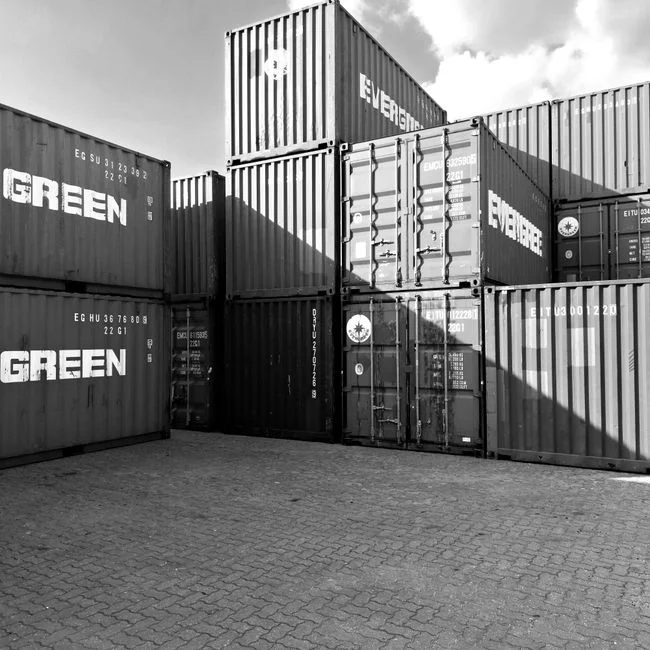
Require the supplier to state the module count satisfying average organic and hydraulic duty, then document peak-flow behavior and maximum treatment capacity. A single containerized unit covers 0.5–10 m³/h, or 12–240 m³/day, with assembled dimensions from about 3 × 1.5 × 2 m to 16 × 3 × 3.5 m depending on capacity. This is a general equipment range; the supplier must match its proposed configuration to the project duty.
Verify soil, drainage, container logistics and utilities
Testing the ground is necessary before accepting a soakaway-based disposal solution. The local guidance requires a percolation test rather than an assumption; clay soils may not percolate at all, and poor percolation can double the disposal field. If on-site treatment is selected, request the test records, disposal-field calculations, and any alternative proposed by the registered professional.
Resolving gravity drainage, floor levels, invert levels, and the outfall must occur before foundations are laid. The Central African Republic guidance says drainage runs on gravity, so available head and connection points must be checked against the proposed treatment and disposal arrangement.
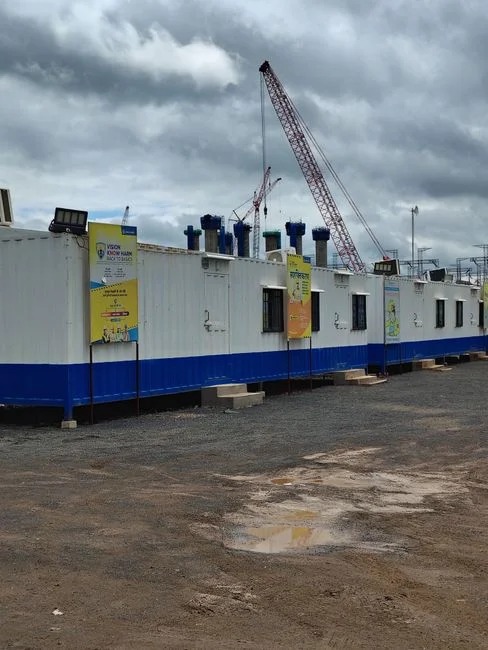
Check the assembled equipment, not only the shipping-container envelope. The sizing reference cites a dry-container internal width of 2.352 m and explains that width and height can determine the shipping method. For each module, obtain length, width, height, weight, lifting points, and transport method; confirm road access and turning constraints for 10-foot, 20-foot, or 40-foot modules. Also confirm power availability, inlet and effluent connections, controls, chemicals, sludge handling, operator competence, spare parts, and training.
Where the treatment duty differs from a conventional packaged arrangement, an option such as the WSZ integrated sewage treatment plant should be evaluated only against the same site constraints.
Match the quotation scope to technical acceptance criteria
A quotation should state the design flow, peak flow, influent basis, treated capacity, process route, HRT, module count, and treatment objectives in the same document as the price. Require the supplier to show the sizing calculation and identify which figures are measured project inputs, which are design assumptions, and which remain subject to survey or approval.
| Quote line item | Technical scope to specify | Red flags to check before signing |
|---|---|---|
| Process and sizing basis | Design flow, peak method, influent COD, BOD5, suspended solids, route, HRT, module count, and treatment objectives. | Price states only daily capacity or container count; no calculation or undefined influent basis. |
| Inlet, pumping and site drainage | Included inlet works, pumps, controls, gravity requirements, floor and invert levels, and storm/foul separation. | Inlet works, pumping, or drainage connections are excluded without a stated allowance or responsibility. |
| Effluent disposal | Outfall, gravity connection, reuse point, or disposal route, with soil and discharge assumptions identified. | No percolation evidence or acceptance test, or disposal is treated as universally available. |
| Transport and installation | Module dimensions and weight, shipping method, route survey, unloading, lifting, foundations, connections, and site preparation. | Delivery is described only as freight-inclusive without route, access, offloading, or civil-work responsibility. |
| Commissioning and acceptance | FAT, shipment inspection, installation and commissioning records, performance demonstration, manuals, controls documents, training, and spares. | Acceptance is based only on delivery or startup, with no stated test method or measurable performance condition. |
| Operations and compliance | Chemicals, sludge handling, preventive maintenance, operating staffing, warranty, local support, and permit responsibilities. | Long-term O&M, sludge disposal, consumables, or permits are excluded but still assumed by the buyer. |
Attach the quotations to the approved design basis and site information. Require the supplier to state exclusions for inlet works, pumping, effluent disposal, site preparation, transport, installation, commissioning, training, chemicals, sludge handling, permits, and long-term O&M. Obtain FAT records, shipment inspection results, installation and commissioning records, a performance demonstration against the stated objectives, the operating manual, controls documentation, spare-parts list, warranty terms, and local-support commitments before final acceptance.
Frequently Asked Questions
How should flow be calculated for a containerized sewage treatment plant in the Central African Republic?
Start with measured flow or a documented population and per-capita allowance, then identify the average and peak calculation method. Do not multiply a highest-day estimate directly by an average-day factor. Ask the supplier to show the design-time basis, average flow, peak flow, and hydraulic checks used for channels, pipes, pumps, and biological tanks.
Should the project choose an A/O package plant, MBR or industrial pretreatment equipment?
Choose A/O or MBR only after comparing the route with the measured wastewater duty, effluent objectives, operating capability, and maintenance plan. Use industrial pretreatment where the contaminant problem requires it, then size the biological stage on organic load. Request a process selection note from each candidate supplier rather than comparing routes by container footprint alone.
What should a containerized sewage treatment plant quotation include in the Central African Republic?
Require one priced document containing the design flow, peak flow, influent basis, treatment route, HRT, module count, treatment objectives, dimensions, delivery assumptions, and exclusions. Also request FAT, commissioning and performance-demonstration records, manuals, training, spares, warranty terms, and clearly assigned responsibilities for civil works, disposal, permits, and O&M.
Who verifies local drainage, soil and regulatory requirements before equipment is ordered?
Ask the municipality and a professional registered in the Central African Republic to confirm the connection status, drainage route, soil-disposal method, outlet conditions, and applicable approval requirements. The buyer should obtain a site percolation test and written design inputs; the municipality and registered professional remain the authorities on project compliance.